Gamba
Gamba occupies a basement address on West George Street in Glasgow's city centre, operating as one of the city's most focused seafood rooms. The kitchen's reputation rests on sourcing discipline and a wine list built to match the produce. Book ahead; tables at this price point move quickly in Glasgow's tightening mid-to-upper dining tier.
 Discover on Pearl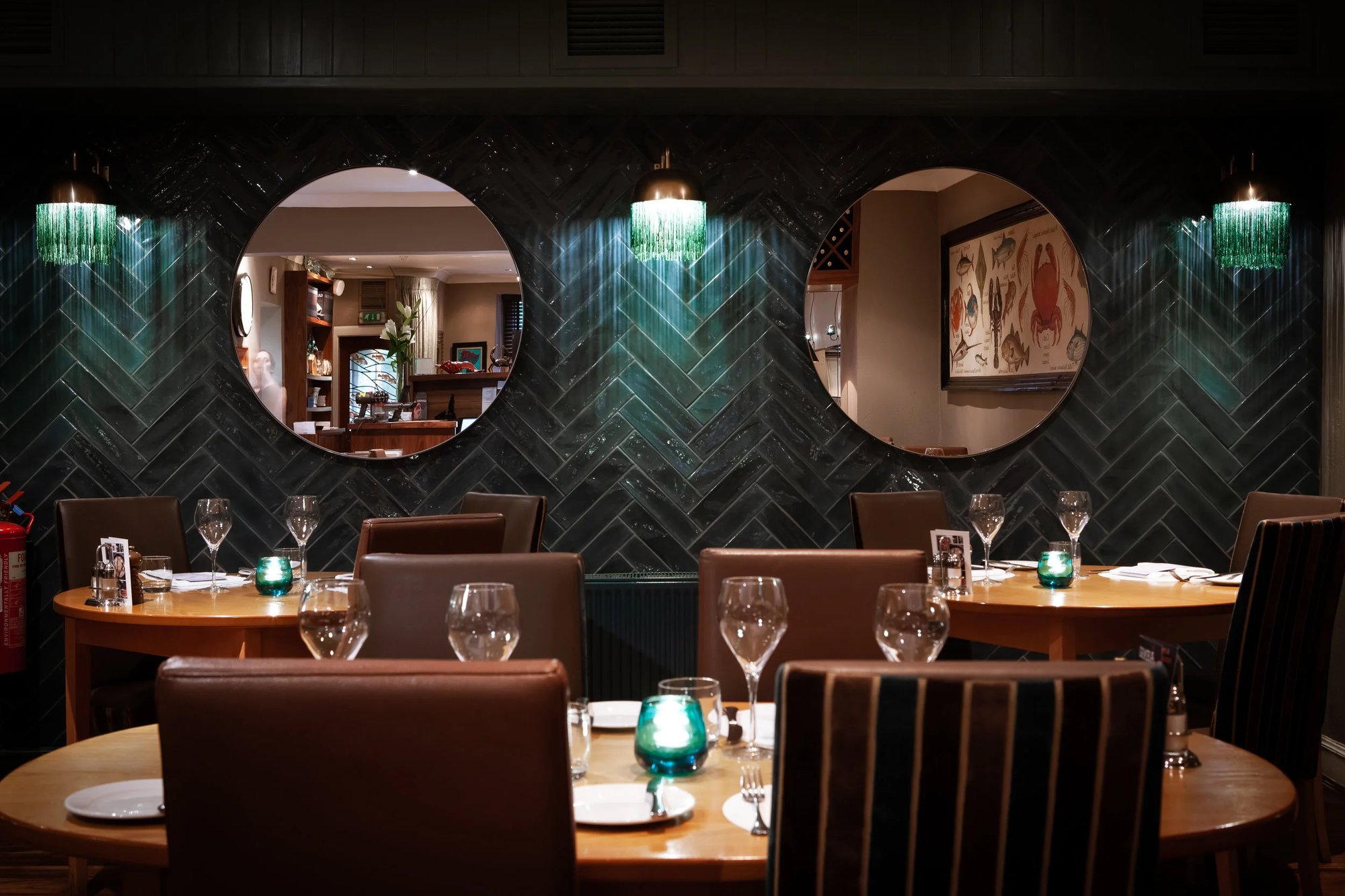
A Basement Address in Glasgow's Seafood Tradition
Glasgow's relationship with seafood has always been more complicated than the city's landlocked centre suggests. The Clyde once defined the city's industrial identity, not its dining culture, yet the west of Scotland's access to west-coast shellfish, Hebridean langoustines, and Atlantic fish has quietly shaped a class of restaurants that take the sea seriously. In that context, Gamba, on the lower ground floor of 225A West George Street, belongs to a specific and relatively small cohort: city-centre seafood rooms that operate at a price point where the sourcing has to justify the positioning.
The basement setting matters more than it might seem. In a city where ground-floor visibility often drives footfall, basement restaurants self-select for guests who have already decided. That filtering effect shapes the room's atmosphere as much as any interior decision. You descend into Gamba rather than stumbling across it, and the dining rhythm that follows tends toward intention rather than impulse.
The Back Bar and What It Says About the Room
Glasgow's cocktail culture has evolved sharply over the past decade. The city's bar scene now spans everything from high-volume West End pubs to technically serious programmes, with venues like Hillhead Bookclub and Carlton George Hotel operating at different points along that spectrum. What distinguishes the bar programmes at focused restaurant rooms like Gamba is not volume or theatre but curation built around the food. A back bar in a serious seafood restaurant earns its depth through pairing logic: spirits that work against brine and fat, vermouth selections broad enough to construct a proper martini, and a whisky range that acknowledges the Scottish context without turning the bar into a gift-shop proposition.
Across the UK, the bars attached to independently operated seafood restaurants have become increasingly considered. Operations like Bramble in Edinburgh have demonstrated how technically disciplined programmes build long-term loyalty in markets where novelty alone doesn't sustain repeat business. The lesson transfers: in a room where guests are spending seriously on food, the spirits list is an extension of sourcing credibility, not an afterthought. A well-assembled back bar at a seafood counter typically signals the same procurement rigour applied to the kitchen, whether that means small-batch gins that complement shellfish courses or aged Cognac positioned as a post-meal alternative to dessert wine.
Comparable approaches are visible in bars outside Scotland that share a similar philosophy. Schofield's in Manchester and Academy in London have both demonstrated that curation depth, rather than list length, is what separates a considered spirits programme from a standard restaurant offering. In a Glasgow context, that standard is increasingly the expectation at the upper end of independent dining.
Where Gamba Sits in Glasgow's Dining Tier
Glasgow's independent restaurant scene has consolidated around a recognisable upper-middle tier: rooms that price above the casual end without reaching the formal tasting-menu bracket. This cohort competes on sourcing credibility, room quality, and the reliability of execution rather than on ceremony or chef celebrity. Gamba operates within that peer set, where the practical question for a regular diner is not whether the kitchen can cook fish but whether the whole experience the room, the list, the service holds together at the price.
That tier has become more competitive. Dining out in Glasgow's city centre and West End now involves a wider set of credible options than it did ten years ago, and guests at the upper end of casual spending have more alternatives. For a reference point on what the West End itself offers across categories, 182 Queen Margaret Dr and 39 Ashton Ln reflect the neighbourhood's range. The city-centre dining tier, where Gamba operates, tends to draw a slightly different crowd: office lunches that extend, pre-theatre dinners, and the kind of midweek booking that a resident makes when they want to eat well without committing to a full tasting format.
For broader context on how Glasgow's dining and drinking scene maps across neighbourhoods and price points, the full Glasgow restaurants guide covers the current picture in detail.
Sourcing as the Editorial Argument
The strongest case for any Scottish seafood restaurant at this price level is provenance specificity. West-coast langoustines, hand-dived scallops from the Hebrides, and day-boat fish from west-coast harbours represent a procurement argument that restaurants further south cannot replicate with the same logistics. Whether a given kitchen uses those advantages consistently is the actual test, and it is one that only repeated visits and current reporting can answer with confidence.
What the format of a room like Gamba implies, structurally, is that the kitchen is built around fish. That focus tends to produce better sourcing relationships than broader menus that treat seafood as one section among several. Specialist rooms can justify direct supplier relationships, shorter menus that allow daily adjustments based on availability, and staff training oriented toward explaining provenance rather than reciting a static list. That structure is common among the seafood restaurants that hold sustained reputations in British cities.
Internationally, the pattern holds across different markets. Bar Kismet in Halifax and Bar Leather Apron in Honolulu both demonstrate how focused rooms in secondary cities build authority through consistency and specificity rather than scale. Dear Friend Bar in Dartmouth operates in a coastal context where the sourcing proximity is itself the positioning, a model that city-centre seafood rooms like Gamba approximate through supplier relationships rather than geography. Mojo Leeds offers a contrast: a room built around a different kind of curation entirely, which underlines how varied the mid-to-upper independent tier has become across UK cities.
Planning Your Visit
Gamba is located at 225A West George Street in Glasgow's city centre, accessible from the main grid of the central business district. The basement location means the entrance requires a short descent from street level. Booking ahead is the sensible approach for this price tier in Glasgow; walk-in availability is more reliable at lunch midweek than on weekend evenings, when demand across the city-centre dining bracket tightens. Arriving without a reservation on a Friday or Saturday evening is a reasonable gamble only if your schedule is flexible.
Frequently Asked Questions
A Pricing-First Comparison
A quick peer list to put this venue’s basics in context.
| Venue | Price | Awards | Notes |
|---|---|---|---|
| Gamba | This venue | ||
| The Absent Ear | |||
| The Loveable Rogue West End | |||
| Carlton George Hotel | |||
| Hillhead Bookclub | |||
| Horseshoe Bar Glasgow |
Need a Table?
Our members enjoy priority alerts and concierge-led booking support for the world's most difficult bars and lounges.
Get Exclusive Access