Gaetano's
Gaetano's on Tejon Street occupies the older, neighborhood-Italian stratum of Denver dining that predates the city's current cocktail boom — a room where the bar program and the food still answer to each other. Located in the LoHi corridor, it draws regulars who value the continuity of the space as much as what arrives at the table. The address at 3760 Tejon St places it within walking distance of Denver's more recent cocktail destinations.
Pearl is the En Primeur Club membership app — saves, bookings, and concierge access live there. Same editors, same standards.
- Address
- 3760 Tejon St, Denver, CO 80211
- Phone
- +1 303 455 9852
- Website
- gaetanositalian.com
- Directions
- Get directions
 Saves & bookings on Pearl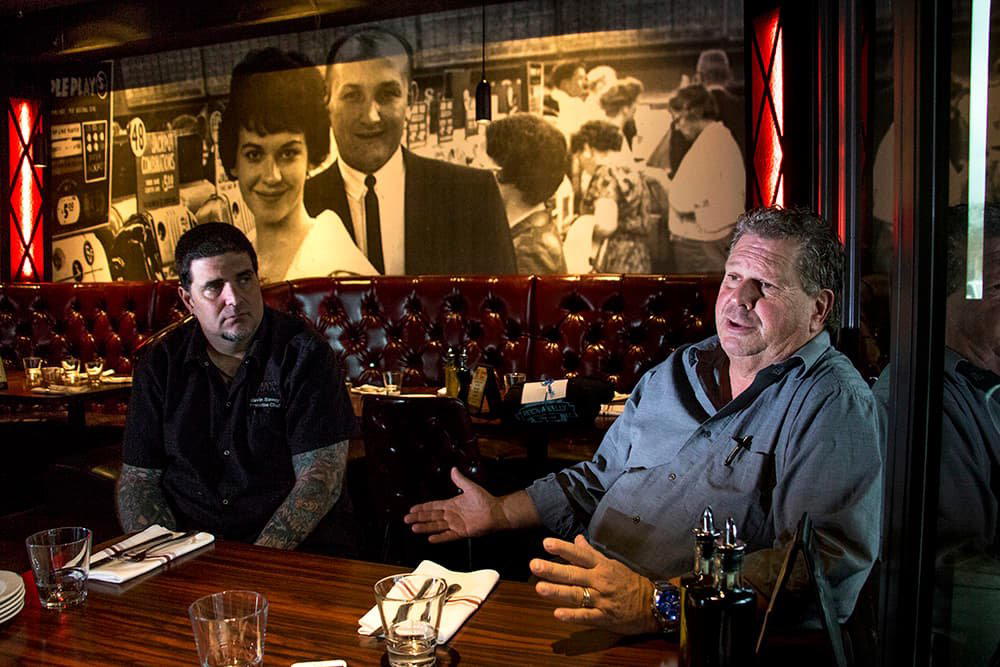
The Room Before the Drink Order
LoHi — Lower Highlands — has accumulated more cocktail bars per block than almost any other Denver neighborhood over the past decade. The strip along and around Tejon Street now includes purpose-built cocktail programs, chef-driven small plates rooms, and the kind of dimly lit corners that photograph well. Gaetano's at 3760 Tejon St predates most of that. The building carries the particular atmosphere of places that were not designed to be atmospheric: low light that arrived by necessity rather than by interior designer, a room that feels used in the way only years of actual use produces. Walking in, you are entering a space that the neighborhood built around rather than a space the neighborhood was built to contain.
That positioning matters when reading the food-and-drink relationship here. Newer bar programs in Denver, from the meticulous cocktail architecture at Death & Co (Denver) to the library-room formality of Williams & Graham, treat the food component as a supporting cast for the drink. Gaetano's reverses that logic, or at least refuses to settle it cleanly. The kitchen and the bar exist in the kind of uneasy parity that Italian-American neighborhood restaurants have always operated under: the bottle of house red is as consequential as the plate of pasta, and neither is subordinate.
Food and Drink as a Single Argument
The food-and-drink pairing question at places like Gaetano's is less about menu engineering and more about tradition. Italian-American restaurants of this vintage operate from a specific playbook: red-sauce anchor dishes, a bar that pours without ceremony, and a rhythm that moves between the two without calling attention to itself. The drinks list at a room like this is not performing. It is functioning. Amaro after a heavy plate, a Negroni before one, a glass of something cold alongside, these are not curated pairings in the contemporary tasting-menu sense. They are the habits of a room that has been open long enough to develop its own logic.
That stands in contrast to Denver's more explicitly food-forward cocktail rooms. Ace Eat Serve and Yacht Club both approach the food-drink relationship as a designed program, the bar menu and the kitchen menu written in conversation with each other. Gaetano's relationship is older and less articulated. The pairing works because the food and the drinks come from the same cultural register, not because anyone sat down to engineer it.
Nationally, the bars that handle this leading tend to be the ones with the deepest kitchen roots. Jewel of the South in New Orleans anchors its cocktail program in a cuisine tradition specific enough to give the bar genuine context. Kumiko in Chicago treats Japanese culinary technique as the organizing principle for both the food and the drinks. ABV in San Francisco built its identity around the proposition that bar food should be taken as seriously as restaurant food. In each case, the food-drink relationship is the editorial point of the room. Gaetano's arrived at a version of that proposition decades before it became a concept worth naming.
Where Gaetano's Sits in Denver's Current Scene
Denver's bar and restaurant scene has split along a line that is becoming visible across most mid-sized American cities: on one side, technically ambitious programs with clear chef or bartender identities attached; on the other, neighborhood institutions that carry their authority through longevity and local loyalty rather than accolades. Gaetano's falls into the second group. It does not operate in the same competitive tier as the cocktail-destination rooms on the full Denver restaurants guide, and it is not trying to.
The LoHi corridor it occupies has changed substantially around it. The neighborhood shifted from a working-class Italian enclave to one of Denver's more expensive zip codes over roughly two decades, and Gaetano's on Tejon Street absorbed that transition without fully joining it. The address is now surrounded by higher-rent concepts and newer builds, which makes the room itself read differently depending on when you first encountered it. For newer residents, it functions as a legacy anchor. For the neighborhood's longer-term visitors, it is simply where it has always been.
That kind of spatial continuity has value that is difficult to replicate. Rooms like Julep in Houston and Superbueno in New York City have built identity through a defined point of view executed from opening day. Gaetano's identity is accumulated rather than designed. It is the sum of the room's history rather than any single decision made about it.
The Seasonal Consideration
Winter is when rooms like Gaetano's pay off most clearly. Denver winters are cold enough to make the logic of a red-sauce Italian with a full bar feel genuinely correct rather than merely comfortable. The warmer months bring patio culture and lighter-format eating to LoHi, and the newer bars on Tejon lean into that shift. Gaetano's interior focus means it does not particularly benefit from the summer foot traffic surge in the way that street-facing concepts do. The shoulder seasons, late autumn and early spring, are when the room's character is most legible, with fewer tourists working through the neighborhood's more prominent bar stops and more of the regulars who give the room its actual texture.
For comparison, bars with strong outdoor programs like Bar Leather Apron in Honolulu or The Parlour in Frankfurt on the Main flex their character differently across seasons. Interior-anchored rooms have a more consistent identity year-round, which works in Gaetano's favor during the months when Denver's outdoor dining options contract.
Planning the Visit
Gaetano's is located at 3760 Tejon St in Denver's LoHi neighborhood, reachable from downtown Denver in under fifteen minutes by car and a moderate walk from the 16th Street transit corridor. Given its neighborhood-institution status rather than a destination-dining model, same-evening visits are generally more plausible here than at the city's high-demand reservation-only rooms, though weekend evenings in LoHi draw significant foot traffic across the corridor and some lead time is sensible.
Continue exploring
More in Denver
Bars in Denver
Browse all →
Restaurants in Denver
Browse all →
Hotels in Denver
Browse all →





At a Glance
- Classic
- Well Known
- Cozy
- Lively
- Date Night
- After Work
- Casual Hangout
- Group Outing
- Historic Building
- Standalone
- Live Music
- Seated Bar
- Booth Seating
- Classic Cocktails
- Craft Cocktails
- Conventional Wine
Current opening hours
- Monday
- 4:30–9 PM
- Tuesday
- 11:30 AM–9 PM
- Wednesday
- 11:30 AM–9 PM
- Thursday
- 11:30 AM–9 PM
- Friday
- 11:30 AM–10 PM
- Saturday
- 11 AM–3 PM, 5–10 PM
- Sunday
- 11 AM–3 PM, 5–9 PM
Hours can change for holidays and private events. Last verified .
Dark, smokey atmosphere with mirrors and confessional-style bathrooms evoking Prohibition-era aesthetics and the venue's celebrated mobster past.
Know Before You Go
- Getting there
- 3760 Tejon St, Denver, CO 80211