Frenchmen St
Frenchmen Street is New Orleans' most concentrated live music corridor, where the ritual of a night out unfolds block by block across jazz clubs, brass band stages, and late-night bars. The street operates on its own schedule, peaking well after midnight, and rewards those who treat it as a slow circuit rather than a destination. It sits in the Faubourg Marigny, just beyond the French Quarter's tourist edge.
Pearl is the En Primeur Club membership app — saves, bookings, and concierge access live there. Same editors, same standards.
- Address
- New Orleans, LA
- Website
- spottedcatmusicclub.com
- Directions
- Get directions
 Saves & bookings on Pearl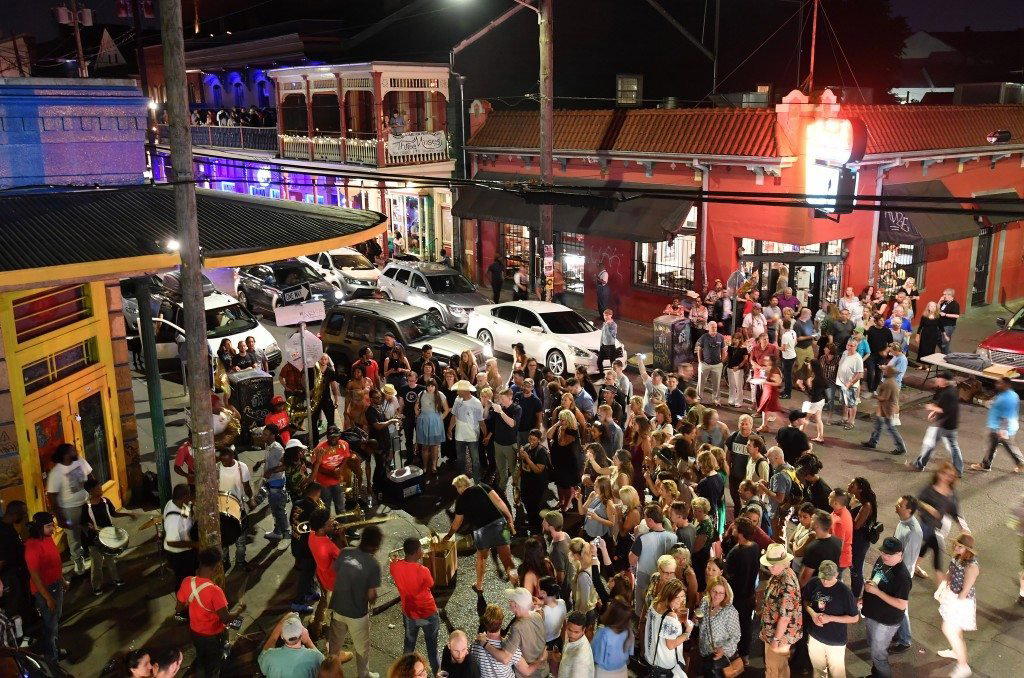
The Street as the Venue
In New Orleans, the distinction between a music venue and a public street collapses most completely on Frenchmen Street. On any given Thursday through Sunday night, the two-block stretch in the Faubourg Marigny runs at a volume and density that few entertainment districts in the United States can match without a festival as an excuse. Brass bands spill onto the sidewalk. Saxophone players work the neutral ground between bars. Inside the clubs, sets run continuous and overlapping, so the experience of listening becomes an act of moving through sound rather than sitting in front of it. The ritual here is ambulatory: you drift, stop, listen, order a drink through a window, drift again.
This is not how most American cities organize their live music. The standard model places performers on an refined stage with a ticketed audience seated or standing at a fixed remove. Frenchmen inverts that. The street itself is the auditorium, and the cover charges — where they exist — are typically low or discretionary, a dollar-in-the-bucket arrangement that keeps the threshold for participation nearly frictionless. What that frictionlessness produces, paradoxically, is a more committed listener. You stay because the music holds you, not because you paid sixty dollars for a wristband.
How a Night Unfolds Here
The pacing of Frenchmen Street resists compression into a single-venue model. Arriving before ten in the evening puts you in the early rotation: a handful of clubs running, street traffic light, the energy still gathering. By eleven the corridor reaches something closer to its natural state. By one in the morning, the scene has peaked and compacted: the sidewalks are dense, sets are deep into improvisation, and the decision-making shifts from where to go to when to leave. Most serious listeners do not rush this. The street rewards the unhurried.
The clubs themselves cluster into a recognizable typology. There are the heritage rooms, the kind that have anchored the block through multiple waves of gentrification pressure, where the house bands draw a crowd that is genuinely mixed between tourists, local musicians who come to listen on their nights off, and Marigny residents who have been walking over for years. Then there are the newer establishments, some with a more cocktail-forward orientation, angled toward visitors who want the experience of Frenchmen without committing to the full percussive immersion. Both types coexist without much friction; the street is wide enough, economically and literally, to hold them.
For visitors oriented toward craft cocktails as much as live music, the Marigny and the adjacent Bywater have developed a small but serious bar program. Jewel of the South operates with a historically-rooted cocktail approach that places it among the more considered programs in the city. Cure, technically in Uptown, established the template for New Orleans' serious cocktail bar category and remains a reference point. Both represent a different register of evening than Frenchmen's open-air improvisation, and a well-structured New Orleans trip finds room for both modes.
The Tradition Behind the Noise
Frenchmen Street's character is inseparable from New Orleans' specific relationship to music as a participatory rather than spectator practice. The brass band tradition, rooted in funeral procession culture and the second-line parade format, produces musicians who are trained to perform for moving crowds, not fixed ones. That training shapes what happens on Frenchmen even when the setting is technically a club with a stage. The music is structured to hold an audience that might be half-paying attention, and then to pull that audience in completely when the moment arrives. It is a demanding performance discipline, and the leading players on the street operate it with a professionalism that the casual, low-barrier setting can obscure.
This tradition places Frenchmen in a different competitive frame than the craft cocktail bar circuits operating in comparable cities. Kumiko in Chicago, ABV in San Francisco, and Allegory in Washington, D.C. are venues where the evening's shape is determined by what is in the glass. On Frenchmen, the glass is incidental. The evening is determined by whoever picks up their horn next.
Drinks, Food, and the Practicalities of the Evening
The drink of Frenchmen Street is whatever comes in a plastic cup through a window. The street's go-cup culture is one of New Orleans' distinctly local allowances: open containers are legal on public streets, and virtually every bar on the corridor will transfer your drink to a cup so you can keep moving. Daiquiri windows and simple cocktail bars serve this ambulatory crowd efficiently. If you want something more considered, tiki programming in the broader New Orleans area is anchored by Beachbum Berry's Latitude 29, which operates in a different register entirely. For a plant-forward stop before or after the main event, 2 Phat Vegans has built a following in the broader Marigny-adjacent area.
Food on the street itself runs toward the casual: late-night options from vendors and small counters that match the pace of the evening. If you are approaching the night from a sit-down dinner first, the Faubourg Marigny and Bywater have developed a restaurant culture worth building time around. The full New Orleans guide covers that context in detail. For out-of-town comparison, the experience of a single street anchoring an entire city's nightlife ritual finds partial echoes in places like Julep in Houston or Superbueno in New York City, both of which carry strong local-identity programming, though neither operates inside anything resembling Frenchmen's ambient density. Bar Leather Apron in Honolulu and The Parlour in Frankfurt each represent the kind of considered, indoor program that stands at the opposite end of the spectrum from Frenchmen's organized chaos.
Planning Your Visit
The Faubourg Marigny sits immediately downriver from the French Quarter, walkable from the lower end of Bourbon Street in under ten minutes. The street runs most productively Thursday through Saturday; Sunday evening has its own quieter regularity. Getting there by rideshare is direct; parking in the Marigny is limited and the area's grid makes walking from the Quarter the more sensible approach. Cover charges at clubs are typically cash, and small bills matter more than any credit card. Arriving with sixty dollars in small denominations covers a full night of gratuities, covers, and go-cups without friction. The street does not close on any schedule you can plan around: it ends when the musicians stop, which is rarely before two in the morning and sometimes considerably later.
Booking and Cost Snapshot
| Venue | Price |
|---|---|
| Frenchmen StThis venue — the venue you are viewing | This venue |
| Jewel of the South | World's 50 Best |
| Beachbum Berry's Latitude 29 | World's 50 Best |
| Cure | World's 50 Best |
Continue exploring
More in New Orleans
Bars in New Orleans
Browse all →
Restaurants in New Orleans
Browse all →
At a Glance
- Lively
- Energetic
- Bohemian
- Well Known
- Late Night
- Group Outing
- Casual Hangout
- Live Music
- Historic Building
- Standing Room
- Seated Bar
- Lounge Seating
- Classic Cocktails
- Craft Cocktails
- Street Scene
Current opening hours
- Monday
- 2 PM–2 AM
- Tuesday
- 2 PM–2 AM
- Wednesday
- 2 PM–2 AM
- Thursday
- 2 PM–2 AM
- Friday
- 2 PM–2 AM
- Saturday
- 2 PM–2 AM
- Sunday
- 2 PM–2 AM
Hours can change for holidays and private events. Last verified .
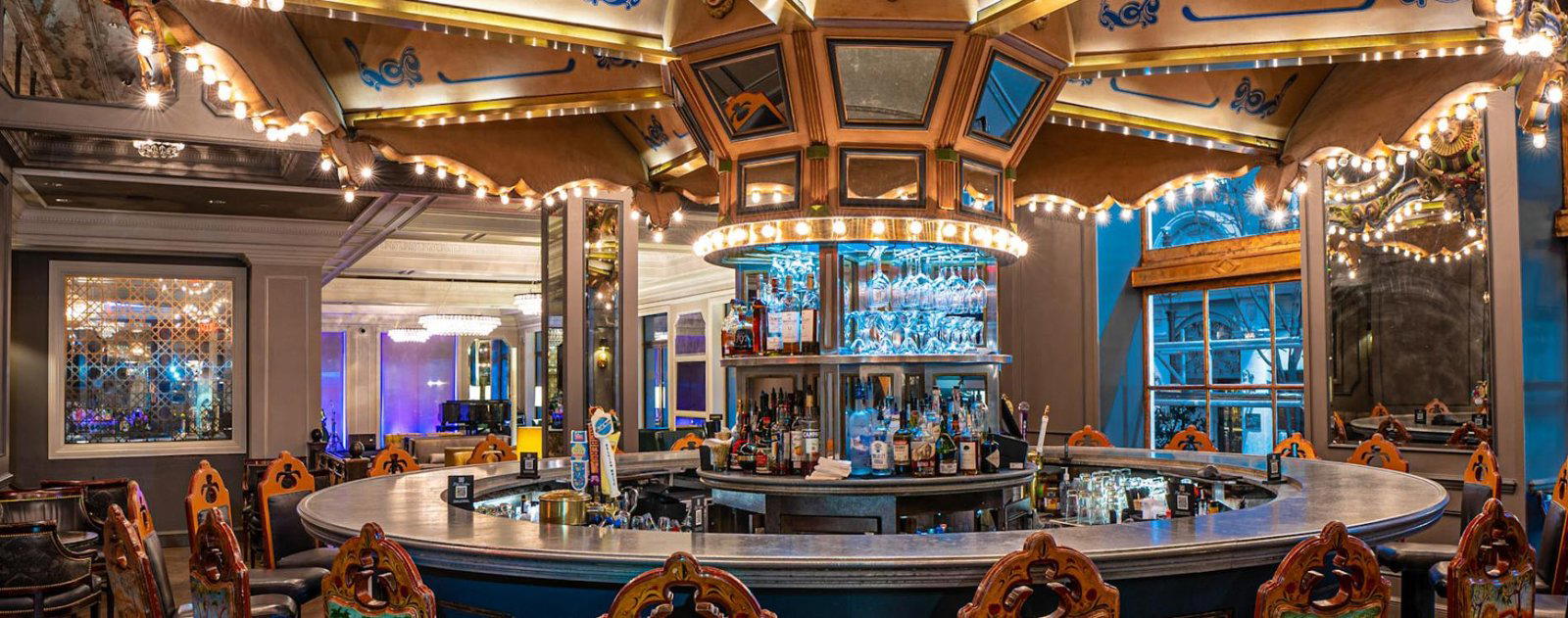
Energetic and busy with live music, rustic relaxed interiors, neon lights, dance floors, and balconies overlooking the lively street party atmosphere.
Know Before You Go
- Getting there
- New Orleans, LA