Caesar's Restaurante on Avenida Revolución holds a specific place in cocktail and culinary history: the Caesar salad was invented here in the 1920s, making it one of the few restaurants anywhere whose influence on a global dish is both documented and still on the menu. The room carries the weight of that history without trading purely on nostalgia, and Tijuana's cross-border dining scene has grown up around it.
Pearl is the En Primeur Club membership app — saves, bookings, and concierge access live there. Same editors, same standards.
- Address
- Av. Revolución 8190, Zona Centro, 22000 Tijuana, B.C., Mexico
- Phone
- +52 664 685 1927
- Website
- tijuanacaesars.com
- Directions
- Get directions
 Saves & bookings on Pearl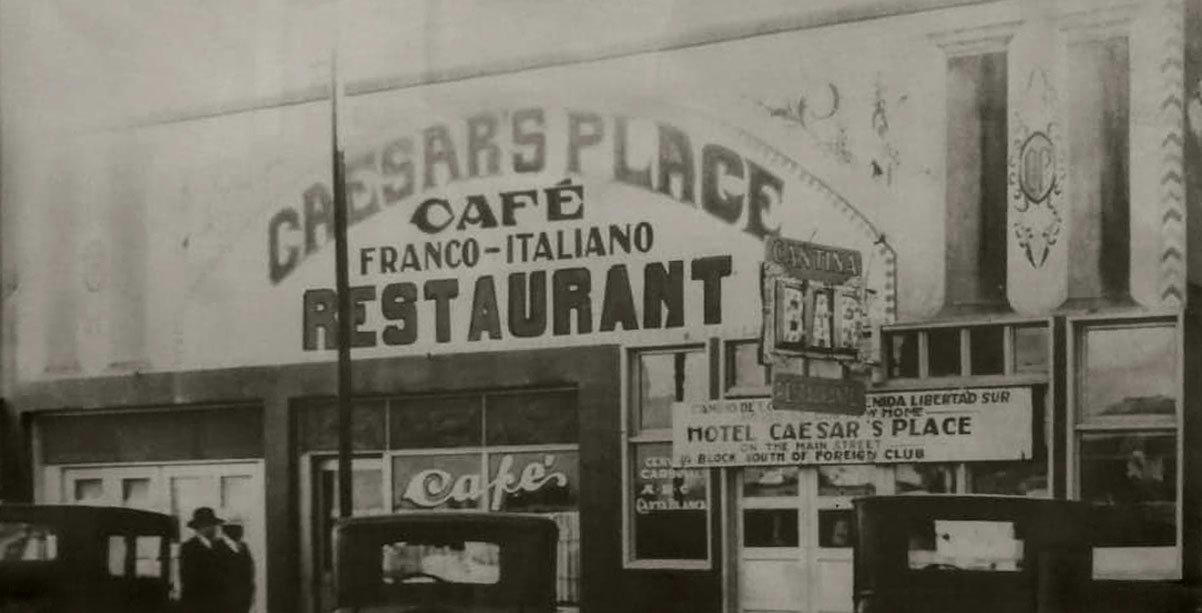
Avenida Revolución and the Weight of What Happened Here
Avenida Revolución has always been Tijuana's main artery for visitors crossing from San Diego, a street that has cycled through tourism booms, border tensions, and full reinvention several times over. At the northern end of the 8100 block, Caesar's Restaurante occupies a position that is less about neighbourhood prestige in the contemporary sense and more about historical gravity. This is the address where, in the 1920s during Prohibition-era California, a tableside salad was assembled from pantry staples and became, over the following century, one of the most replicated dishes in Western cuisine. The Caesar salad did not originate in Rome, or New York, or any of the cities that have since claimed it by association. It came from this corner of Baja California, and that provenance matters to understanding what kind of place Caesar's is today.
Tijuana's dining scene has changed considerably in the past decade. The city now produces serious restaurant and bar talent that competes at a national Mexican level, and spots like Aruba Day Drink represent a newer generation of Tijuana drinking culture that operates on craft-cocktail terms rather than border-town novelty. Caesar's sits in a different register from that wave — it is a historical institution rather than a contemporary movement, and it draws accordingly from both local diners and cross-border visitors who arrive specifically because of what the restaurant represents rather than what it is doing right now.
The Cocktail Programme and How It Connects to the Room
The editorial angle on any visit to Caesar's runs, perhaps counterintuitively, through the drink programme as much as the food. The restaurant's founding era was defined by cocktail culture in a very specific way: Prohibition pushed wealthy Californians south across the border, and Tijuana's hospitality industry built itself around the fact that alcohol was legal here when it was not in the United States. Caesar's was part of that hospitality infrastructure. The drinks served at the bar during those years were not incidental to the restaurant's identity — they were the commercial reason the room filled up in the first place.
That context shapes how a contemporary visitor should read the bar programme. The connection between Baja hospitality, cross-border drinking culture, and tableside preparation is woven into this restaurant's DNA in a way that distinguishes it from venues that simply happened to open near a border. Mexico has developed a serious cocktail culture in cities far from the border: Baltra Bar in Mexico City and Bekeb in San Miguel de Allende represent programmes built on technique and ingredient sourcing. Further south, Arca in Tulum, Sabina Sabe in Oaxaca, and Zapote Bar in Playa del Carmen each operate within regionally grounded frameworks. Caesar's does not compete directly with any of those programmes; its claim is historical rather than contemporary technical ambition, and that is worth stating plainly.
For visitors building a broader picture of Mexican drinking culture, La Capilla in Tequila offers a parallel case study, another venue whose significance lies in what it represents within the category's history, rather than in menu innovation. El Gallo Altanero in Guadalajara, Boulenc in Oaxaca City, and Coco Bongo in Cancun each occupy distinct positions in Mexico's bar geography, and understanding Caesar's requires placing it in that longer map, not as a craft programme, but as a document of a particular moment in cross-border hospitality. Outside Mexico, Bar Leather Apron in Honolulu is an example of how Pacific-facing bar culture has developed its own technical confidence, which gives some useful comparative distance when thinking about what makes Baja California's historical drinking culture specific.
What the Tableside Format Tells You
Tableside preparation was not a theatrical affectation when it originated here, it was a practical and social ritual of a particular dining era, when the assembly of a dish in front of guests signalled hospitality and skill simultaneously. The Caesar salad, prepared tableside with its original components, is still done this way at Caesar's, and that persistence is both its most discussed feature and the thing that most clearly separates it from a simple legacy restaurant. The format is a working demonstration of the dish's origin story, not a performance layered over it.
What this means for the visitor experience is that the room operates on a different tempo from a contemporary tasting-menu counter or a high-throughput Revolución cantina. Patience is part of the proposition. The address is Av. Revolución 8190, in the Zona Centro, which puts it within walking distance of the main border crossing pedestrian flow and accessible without a taxi from most central Tijuana hotels. For the broader Tijuana food and drink picture, our full Tijuana restaurants guide maps the city's current restaurant tier alongside its historical anchors.
Planning Your Visit
Booking details, current hours, and pricing are best confirmed directly through current travel resources, as the venue database does not include live operational data for this listing. What can be said with confidence is that Caesar's position on Avenida Revolución makes it direct to combine with other Zona Centro visits, and the cross-border foot traffic means the restaurant is accustomed to English-speaking visitors arriving without reservations. Weekend afternoons, when the border wait times tend to push visitors into longer Tijuana stays, are historically the busiest window. If you are crossing specifically to eat here, a weekday midday visit tends to offer a calmer version of the tableside experience.
Continue exploring
More in Tijuana
Bars in Tijuana
Browse all →
Restaurants in Tijuana
Browse all →
Hotels in Tijuana
Browse all →

At a Glance
- Classic
- Well Known
- Special Occasion
- Late Night
- Historic Building
- Seated Bar
- Lounge Seating
- Classic Cocktails
Current opening hours
- Monday
- 12–9:30 PM
- Tuesday
- 12–9:30 PM
- Wednesday
- 12–9:30 PM
- Thursday
- 12–9:30 PM
- Friday
- 12–10 PM
- Saturday
- 12–10 PM
- Sunday
- 12–8:30 PM
Hours can change for holidays and private events. Last verified .
Historic Prohibition-era atmosphere with elegant, classic dining room lighting.
Know Before You Go
- Getting there
- Av. Revolución 8190, Zona Centro, 22000 Tijuana, B.C., Mexico