Brass Monkey
Brass Monkey occupies a corner of Little West 12th Street in the Meatpacking District, a neighbourhood whose transformation from industrial slaughterhouse to after-dark destination remains one of New York's more dramatic urban pivots. The bar draws a crowd that tracks where the neighbourhood has landed: post-work, unhurried, and comfortable spending an evening rather than rushing through it.
Pearl is the En Primeur Club membership app — saves, bookings, and concierge access live there. Same editors, same standards.
- Address
- 55 Little W 12th St, New York, NY 10014
- Phone
- +1 212 675 6686
- Website
- brassmonkeynyc.com
- Directions
- Get directions
 Saves & bookings on Pearl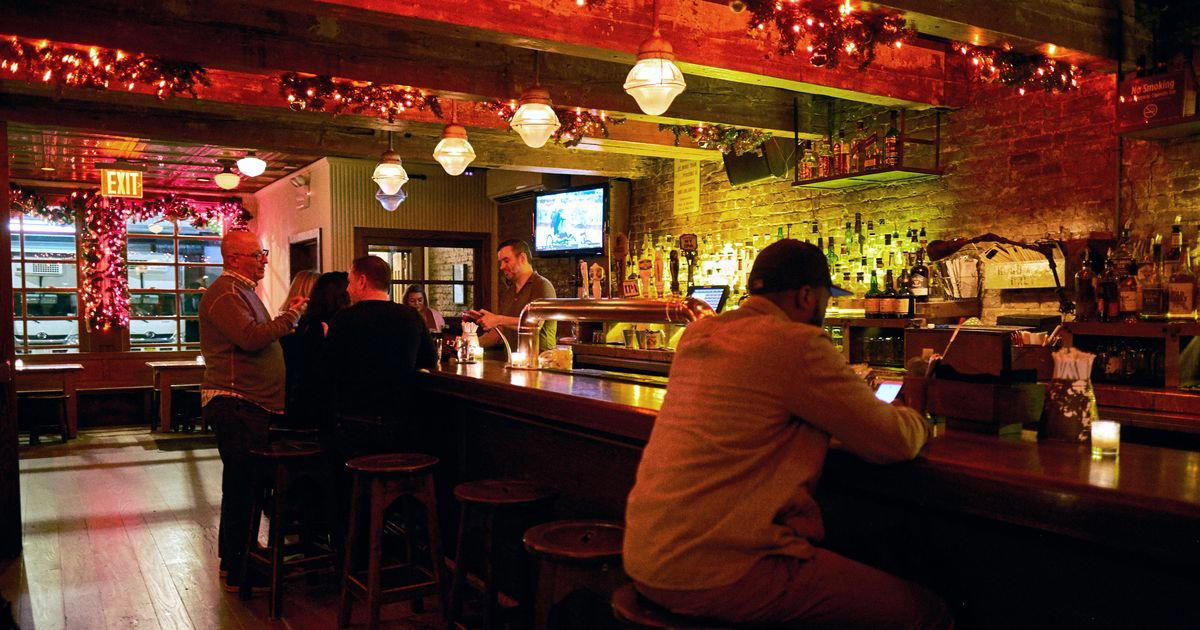
Where the Meatpacking District Settles In
Brass Monkey is a bar in New York City's Meatpacking District at 55 Little West 12th St. Brass Monkey, at number 55, occupies that context without performing it. The building's bones remain visible, exposed brick, open terracing, the kind of square footage that in this neighbourhood has become scarcer and more expensive with each passing year. Arriving on a weekday evening, what you notice first is the ratio of people who appear to have nowhere else to be. That is a specific register for a Meatpacking bar.
The Meatpacking Bar Scene: A Competitive Frame
New York's bar scene has fractured along a clear axis over the past fifteen years. On one side sit the cocktail-forward rooms where technique and sourcing are the story, places like Amor y Amargo in the East Village, built around bitters and amaro literacy, or Attaboy NYC on Eldridge Street, which operates without a fixed menu and relies entirely on bartender dialogue. On the other side sit neighbourhood anchors that prioritise volume, accessibility, and a certain unpretentious sociability. Brass Monkey lands in the latter category, and in the Meatpacking District specifically, that positioning is doing real work. The surrounding blocks trend toward bottle-service venues and hotel lobbies priced for expense accounts. A bar that functions as a genuine gathering place rather than a stage set occupies different ground.
Across the country, bars that hold this middle position in high-turnover neighbourhoods face the same pressure: maintain a local-feeling atmosphere while the neighbourhood's economics push relentlessly toward premium extraction. ABV in San Francisco manages a version of this in the Mission. Kumiko in Chicago does it through a defined program that gives regulars and first-timers the same entry point. In New York, the bars that hold their footing longest in gentrified corridors tend to be the ones with physical space that allows for different tempos, a ground floor that absorbs the after-work crowd, an outdoor or upper level that stretches the evening.
What the Space Does for the Drinker
The multi-level format at the bar is not incidental. In a city where square footage determines social choreography, a bar with distinct zones lets different groups coexist without competing for the same atmosphere. Rooftop access, when the New York calendar allows it, shifts the register entirely, the Meatpacking District's skyline toward the Hudson has a specific geometry, with the High Line threading through mid-level and the Standard Hotel's vertical presence a block away. Outdoor drinking in Manhattan carries a premium that has nothing to do with the drink in your hand and everything to do with the compression of urban life that makes open air feel like a resource.
This is a pattern that plays out in bars across the country that sit in densely built neighbourhoods. Bar Leather Apron in Honolulu operates at street level in a city where outdoor space is abundant; the calculus is different. In New York, any bar with genuine rooftop access is serving something beyond the drink list, and regulars understand that transaction clearly.
How It Compares to Its Manhattan Neighbours
The Meatpacking District is not where New York's most technically ambitious cocktail programs operate. Angel's Share in the East Village, with its long-standing reputation built on Japanese bar craft and a no-standing policy that enforces a certain quiet, represents a different tradition entirely. Superbueno on the Lower East Side channels its energy into a defined cultural identity around Latin spirits and agave. The bar does not compete in those registers, and that is a meaningful distinction rather than a limitation. The bar's value is relational, it sits in a neighbourhood where its competitors are either hotel lobbies or club-adjacent venues, and against that comparable set, it offers a different pace.
Regionally, the comparison holds. Jewel of the South in New Orleans and Julep in Houston both operate in cities with strong cocktail identities and position themselves as anchors within those identities. Allegory in Washington, D.C. builds its program around a narrative framework that rewards close attention. The Parlour in Frankfurt on the Main translates a similar hospitality instinct into a European context. What these bars share is a legibility, a clear sense of who they are for and what an evening there delivers. The bar's version of that legibility is rooted in its neighbourhood position: a bar that the Meatpacking District actually needed, rather than another iteration of what the neighbourhood already had plenty of.
Who Comes Here and When
The Meatpacking District's crowd composition shifts over the week in ways that have become fairly predictable. Thursday through Saturday, the area runs hot, hotel guests, groups organised around a night out, and a younger demographic drawn to the density of options within walking distance. Earlier in the week, and during the shoulder hours before the dinner rush clears, the neighbourhood has a different character. The bar draws across both phases, but the earlier hours on weeknights are when the bar's particular atmosphere is most legible: unhurried, accessible, and genuinely comfortable for a two-hour drink rather than a quick pass-through.
For visitors building a New York itinerary, the Meatpacking District functions as a geographic anchor between the West Village to the south and Chelsea to the north. A bar that operates reliably across different hours and crowd densities is a practical asset in that geography.
Planning a Visit
The bar sits at 55 Little West 12th Street in the Meatpacking District, within walking distance of the 14th Street A/C/E and L train stops. The High Line's southern entrance at Gansevoort Street is a short block away, which makes the bar a natural stop for anyone working that particular pedestrian circuit. Hours, reservations, and pricing are worth checking before you go, especially for rooftop access, which can depend on weather and the season.
Pricing, Compared
Comparable venues nearby, for context on price, style, and recognition.
| Venue | Cuisine | Price | Notes |
|---|---|---|---|
| Brass MonkeyThis venue — the venue you are viewing | Not listed | $$ | Not listed |
| Dickson's Farmstand Meats | Not listed | $$ | Chelsea-Hudson Yards, beer_bar |
| Down the Hatch | Not listed | $$ | West Village, dive_bar |
| Marlton Espresso Bar | Greenwich Village, lounge | $$ | Not listed |
| Angelika Film Center & Cafe - New York | Greenwich Village, lounge | $$ | Not listed |
| Donnybrook | Lower East Side, pub | $$ | Not listed |
Continue exploring
More in New York City
Bars in New York City
Browse all →
Restaurants in New York City
Browse all →
Hotels in New York City
Browse all →




At a Glance
- Lively
- Trendy
- Cozy
- After Work
- Group Outing
- Casual Hangout
- Rooftop
- Lounge Seating
- Outdoor Terrace
- Classic Cocktails
- Craft Beer
- Street Scene
Current opening hours
- Monday
- 12 PM–2 AM
- Tuesday
- 12 PM–2 AM
- Wednesday
- 12 PM–3 AM
- Thursday
- 12 PM–3 AM
- Friday
- 12 PM–4 AM
- Saturday
- 12 PM–4 AM
- Sunday
- 1 PM–2 AM
Hours can change for holidays and private events. Last verified .
Lively and relaxed atmosphere with wooden English pub-style furniture on the rooftop garden.