Brandy Library
In TriBeCa, Brandy Library occupies a different tier from New York's cocktail bars: a dedicated spirits library where the selection runs to hundreds of brandies, Cognacs, Armagnacs, and whiskies, presented in a room that reads more like a private club reading room than a bar. For drinkers who treat spirits with the same seriousness as wine, it operates as a reference point.
Pearl is the En Primeur Club membership app — saves, bookings, and concierge access live there. Same editors, same standards.
- Address
- 25 N Moore St Frnt 1, New York, NY 10013
- Phone
- (212) 226-5545
- Website
- brandylibrary.com
- Directions
- Get directions
 Saves & bookings on Pearl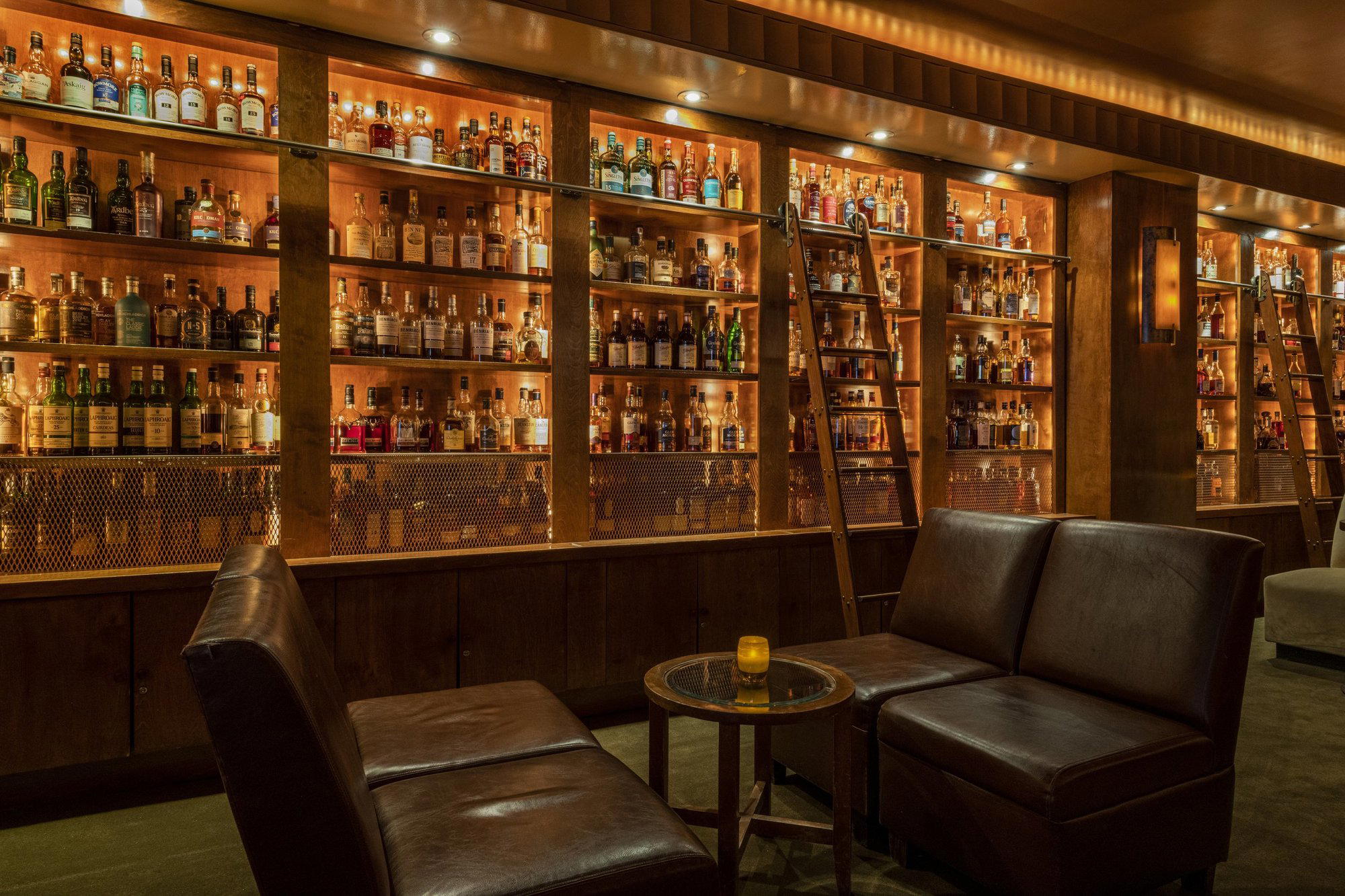
A Room Built Around the Bottle
TriBeCa has a way of absorbing serious drinking establishments without making a fuss about it. The neighbourhood's cast-iron-fronted blocks and wide, quiet streets lend themselves to the kind of venue that operates on reputation rather than foot traffic — and Brandy Library, on North Moore Street, fits that pattern precisely. Walking in, the visual register is immediate: floor-to-ceiling shelving lines the walls, backlit and dense with bottles arranged by category and region. It reads less like a bar and more like an archive, the kind of room where the collection itself sets the terms of the visit.
That physical environment shapes everything that follows. New York has moved through several distinct cocktail phases over the past two decades — the speakeasy revival, the clarified-spirits movement, the low-ABV turn, but Brandy Library belongs to a more specific and older tradition: the spirits library format, where depth of selection and service knowledge matter more than mixological theatre. The bar sits in a small category alongside venues like Kumiko in Chicago and Bar Leather Apron in Honolulu, where the architecture of a serious spirits program takes precedence over the cocktail list.
The Case for Brandy as a Category
The editorial angle here matters. Brandy, used broadly to cover Cognac, Armagnac, Calvados, eau-de-vie, pisco, brandy de Jerez, and domestic American expressions, remains among the least systematically explored spirit categories in the United States. Whisky has its single-malt infrastructure; gin has its botanical-classification culture. Brandy has historically lacked the same curatorial framework in American bar culture, which is precisely what makes a venue built around it legible as a genuine contribution rather than a novelty concept.
Cognac production, to take the most prominent sub-category, involves regulated geographic sourcing from the Charente region of southwest France, varietal constraints (Ugni Blanc dominates), and an aging regime in Limousin or Tronçais oak that creates flavour profiles unavailable through any other production method. Armagnac operates under looser appellational rules and single-vintage bottling practices that give it a traceability closer to wine than to most spirits. These distinctions, origin, grape source, wood type, vintage, are exactly the kind of ingredient-sourcing details that a library format is positioned to teach, rather than obscure. Compared to venues like Amor y Amargo, which organises its program around bittersweet modifiers, or Attaboy NYC, which runs on bartender-led improvisation, Brandy Library presents spirits as objects of study in their own right.
Depth of Selection as a Service Model
The selection at Brandy Library extends across Cognac houses (both négociant and grower), single-estate Armagnacs, American apple and grape brandies, Spanish brandy, South American pisco, and international grape distillates that rarely appear on bar shelves elsewhere in the city. The model asks something of the guest: engagement with provenance, age statement, and production method as decision-making criteria. This is not a venue where you arrive without a point of view and hope the menu guides you to something broadly pleasant. The format rewards prior knowledge and, equally, rewards asking questions of staff who can navigate a multi-hundred-bottle list with the kind of precision that distinguishes a specialist program from a large-but-undifferentiated back bar.
Bars running deep spirits libraries face a consistent operational challenge: how to present a large selection without rendering it inert. The library metaphor Brandy Library commits to structurally, the shelving, the categorisation, the room's deliberate quietness, is one answer to that problem. It signals that the selection is meant to be consulted, not just ordered from. Jewel of the South in New Orleans uses a historically rooted cocktail framework to provide similar editorial structure to its selection; Allegory in Washington, D.C. uses a narrative format. Brandy Library's answer is the room itself and the classification logic built into it.
TriBeCa in Context
The neighbourhood location is relevant to understanding who uses the bar and when. TriBeCa is not a late-night bar-hopping district in the way that the East Village or Lower East Side function. Its dining and drinking scene tends toward the longer, slower visit, the two-hour dinner at Dirty French, the post-theatre Cognac at Brandy Library. The venue's format, which favours seated service and extended exploration of the list, fits the neighbourhood's pacing better than it would fit, say, the compressed bar format of a place like Superbueno or the standing-room compression of Angel's Share in the East Village.
For visitors to New York who treat spirits with the same framework they bring to wine, provenance, production method, vintage, regional variation, the bar functions as a reference point in a city where specialist depth of this kind is not common. The broader New York cocktail scene has many points of entry; see our full New York City guide for the wider picture. Internationally, the spirits-library format appears in venues like The Parlour in Frankfurt on the Main and ABV in San Francisco, each applying a similar discipline to different spirit categories and local drinking cultures. Julep in Houston pursues comparable depth specifically within American whiskey. What these venues share is the conviction that a well-organised, sourcing-conscious spirits program is an editorial act, not just inventory management.
Planning Your Visit
Brandy Library is located at 25 North Moore Street in TriBeCa, Manhattan. The format is conducive to extended visits; arrive with time to consult the list rather than order quickly. The room's character is quiet and considered, closer in atmosphere to a private members' club library than to a conventional New York bar, which should calibrate expectations about pacing and noise level. The bar is well suited to guests prepared to engage with the selection on its own terms: spirits drinkers, curious learners, and anyone who prefers guided exploration of provenance-led distillates over a standard cocktail menu.
Quick reference: 25 North Moore Street, TriBeCa, New York, NY 10013. Spirits-library format with deep Cognac, Armagnac, and brandy selection. Suited to seated, extended visits.
At-a-Glance Comparison
A short peer table to compare basics side-by-side.
| Venue | Awards |
|---|---|
| Brandy LibraryThis venue — the venue you are viewing | Not listed |
| The Long Island Bar | World's 50 Best |
| Superbueno | World's 50 Best |
| Amor y Amargo | World's 50 Best |
| Angel's Share | World's 50 Best |
Continue exploring
More in New York City
Bars in New York City
Browse all →
Restaurants in New York City
Browse all →
Hotels in New York City
Browse all →




At a Glance
- Elegant
- Sophisticated
- Cozy
- Intimate
- Classic
- Date Night
- Special Occasion
- Solo
- Design Destination
- Lounge Seating
- Seated Bar
- Whiskey
- Classic Cocktails
Current opening hours
- Monday
- 4 PM–12 AM
- Tuesday
- 4 PM–12 AM
- Wednesday
- 4 PM–12 AM
- Thursday
- 4 PM–2 AM
- Friday
- 4 PM–2 AM
- Saturday
- 4 PM–2 AM
- Sunday
- Closed
Hours can change for holidays and private events. Last verified .
Dimly lit amber-hued interior resembling a library with quiet jazz or live piano, fostering intimate conversations.
Know Before You Go
- Getting there
- 25 N Moore St Frnt 1, New York, NY 10013