
Star Wine List
On Hindley Street's western fringe, Apoteca is Adelaide's most committed absinthe bar, drawing on the ritual and romance of a pre-Prohibition drinking culture that most Australian cities have forgotten. The cocktail list leans into botanical spirits, anise-forward builds, and an atmosphere that rewards slow evenings over fast rounds. It is the kind of bar that changes how you think about a neighbourhood.

Pearl is the En Primeur Club membership app — saves, bookings, and concierge access live there. Same editors, same standards.
- Address
- 118 Hindley St, Adelaide SA 5000, Australia
- Phone
- +61 8 8212 9099
- Hours
- Mon–Thu 6–10 PMFri–Sat 6 PM–12 AMSun Closed
- Website
- apoteca.com.au
- Directions
- Get directions
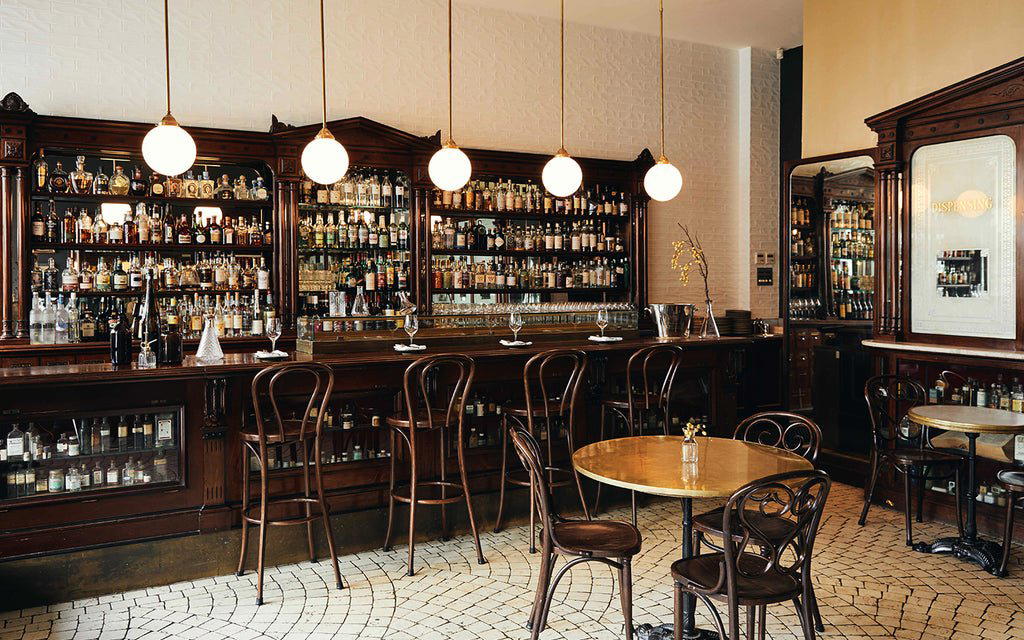
Hindley Street After Dark
Hindley Street has always occupied an ambiguous position in Adelaide's social geography. Neither fully respectable nor entirely disreputable, its western stretch has long attracted the city's more nocturnal operators: late-night kitchens, live music rooms, and bars that function leading once the polished East End crowd has gone home. Apoteca sits in this part of the street at 118 Hindley St, and the address is not incidental. A bar built around absinthe, ritual, and a certain fin-de-siècle theatrics belongs here rather than somewhere cleaner.
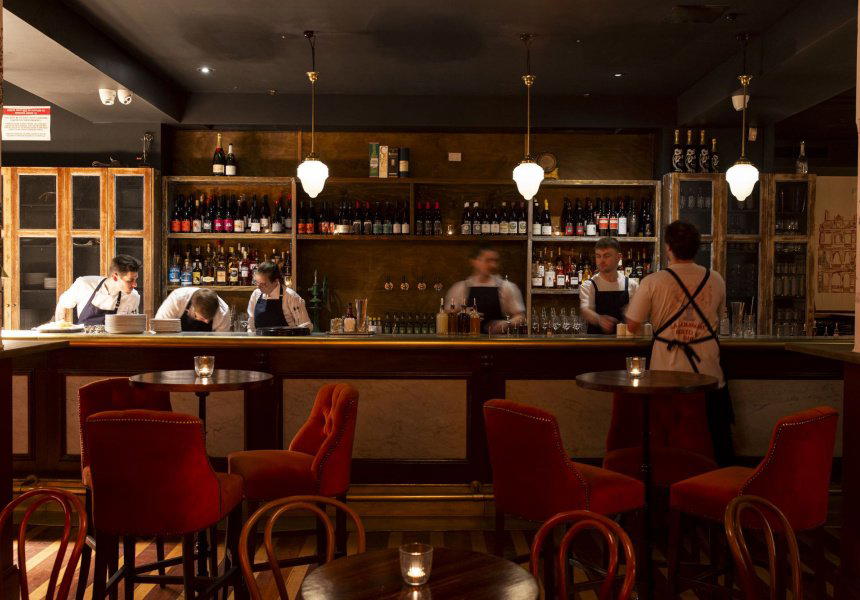
Approaching the venue, the visual cues are deliberate. The kind of bar that takes absinthe seriously tends to announce its intentions through the fit-out before anything is poured: dark timber, apothecary references, the suggestion of a pharmacopoeia repurposed for pleasure. Apoteca leans into those associations without apology. The name itself points to the tradition directly, invoking the apothecary shops where botanical preparations were once dispensed with clinical authority and consumed with rather less restraint.
The Absinthe Tradition and What It Demands of a Bar
Absinthe's rehabilitation as a serious bar category took the better part of two decades. The spirit was banned across much of Europe and the United States for nearly a century, and when it returned, it arrived trailing mythology: the green fairy, Montmartre, Toulouse-Lautrec, the supposed hallucinogenic properties that turned out to be more prohibition-era propaganda than pharmacological fact. What it actually is, stripped of the legend, is a high-proof botanical spirit built on grand wormwood, anise, and fennel, with a complexity that rewards the slow dilution ritual as much as the drink itself.
A bar that commits to absinthe as its primary identity is making a specific choice about its clientele. The louche ritual, where ice-cold water is dripped slowly over a sugar cube balanced on a slotted spoon, releasing the spirit's louche as the water emulsifies with the oils, takes time. It signals to anyone paying attention that this is not a venue optimised for volume. That proposition is relatively rare in Australian cocktail culture, where the dominant template since the mid-2000s has been either the high-throughput craft bar or the ingredient-forward fine-dining adjacent format. Apoteca is neither.
For comparison, the absinthe-focused bar format is more common in European cities with unbroken drinking traditions, particularly in cities like Prague, Lyon, and Barcelona, where the category never fully disappeared from public consciousness. In Australia, most bars that stock absinthe treat it as one spirit among many rather than the organising logic of the entire operation. Apoteca's commitment to the category places it in a small peer group nationally, alongside bars in Melbourne like 1806 in Melbourne, which approaches spirits history with similar seriousness, and venues in Sydney such as Cantina OK! in Sydney, where single-spirit focus generates its own kind of authority.
The Cocktail Programme as Editorial Statement
When a bar organises itself around a single spirit or spirit family, the cocktail list becomes something closer to an argument than a menu. Every drink either reinforces or complicates the central proposition. At venues with this kind of focus, the most instructive entries on a list are usually not the most elaborate ones. A well-executed absinthe drip, prepared without theatre but with technical precision, tells you more about the bar's actual knowledge than a multi-layered cocktail that could obscure mediocre sourcing.
Absinthe cocktails in a serious programme typically reference the classic canon: the Death in the Afternoon (absinthe and champagne, attributed to Hemingway), the Sazerac where absinthe appears as a rinse, the Corpse Reviver No.2 where it plays a similar supporting role, or the Monkey Gland, where it cuts through orange and grenadine. What distinguishes a committed programme from a novelty list is whether the bar stocks multiple producers, understands regional distinctions between Swiss, French, and Spanish expressions, and can speak to the difference between blanche and verte styles with the same fluency a good wine bar applies to appellations.
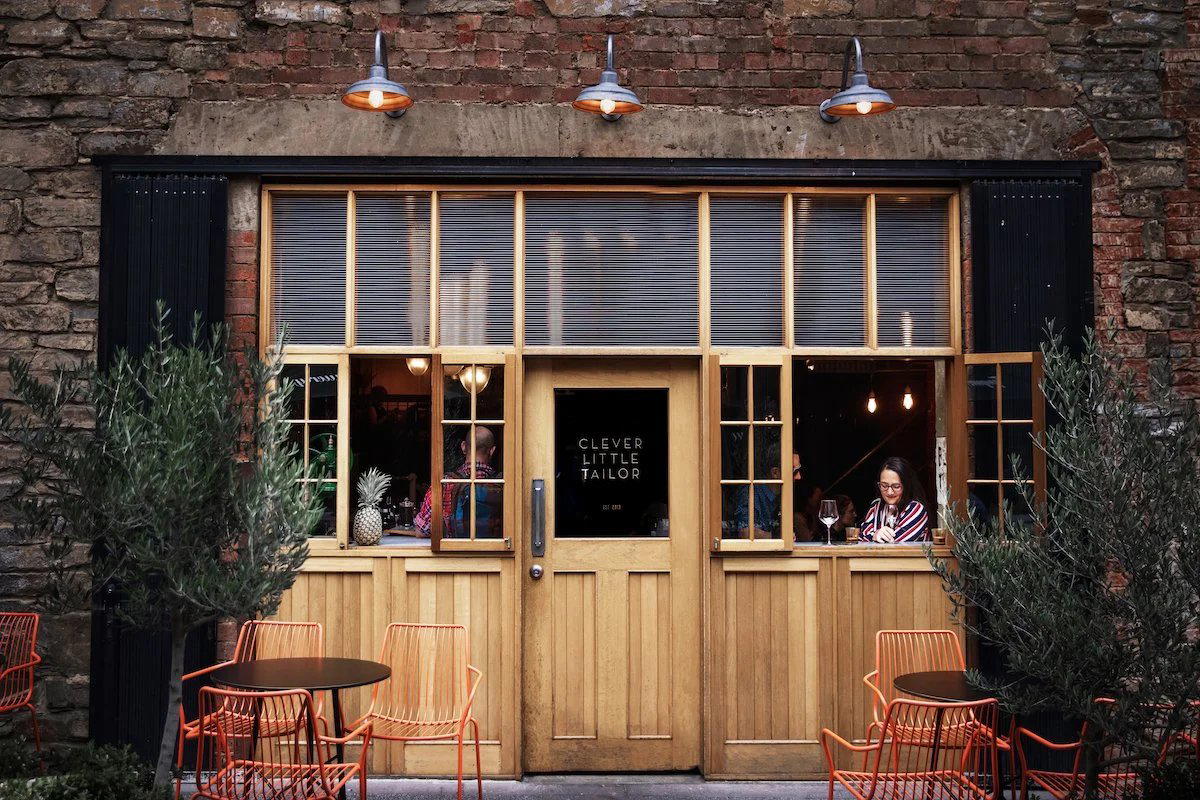
The broader cocktail scene in Adelaide has been developing steadily over the past decade. Bars like Bar Lune and Bar Torino represent the more European-influenced end of the city's drinking culture, while Clever Little Tailor has built recognition through a distinct personality and consistent programme. East End Cellars anchors the wine-forward contingent. Apoteca occupies a different niche within that ecosystem: less concerned with contemporary cocktail trends and more focused on the archaeology of a particular drinking tradition.
Atmosphere as Function
The nostalgia the venue evokes is not accidental sentimentality. Absinthe drinking was a social ritual with specific props, specific postures, and specific settings. The Parisian café of the 1890s, the bohemian gathering place, the late session that extended past propriety into something more interesting: these are the reference points the bar is working with, and the atmosphere functions as the necessary frame for the drinks to land correctly. A green fairy poured under fluorescent lights in a pub loses most of its meaning.
That said, the Hindley Street location means the bar operates within Adelaide's busiest late-night corridor rather than as a destination removed from the city's mainstream. Visitors arriving from the East End or coming directly from dinner elsewhere in the city will find the street itself part of the transition into the bar's register. It is worth treating the walk west along Hindley as a deliberate shift in gear rather than rushing from a previous appointment.
Planning a Visit
Apoteca is located at 118 Hindley Street, Adelaide SA 5000, on the western end of the strip. Given the specialist nature of the programme and the bar's established reputation within Adelaide's late-night circuit, evenings on Thursday through Saturday will be busiest. Contact details were not available at time of publication, so checking current hours directly through the venue or a booking aggregator before visiting is advisable, particularly as late-night venues in this part of the city can adjust trading hours seasonally. The bar's format rewards those who arrive with time available rather than those fitting it in between other commitments.
For a broader picture of Adelaide's drinking and dining scene, including context on how Apoteca sits within the city's bar culture, see our full Adelaide restaurants guide. Elsewhere in Australia, bars with comparable commitment to a specialist spirit or tradition include Bowery Bar in Brisbane, Fratelli Paradiso in Potts Point, La Cache à Vín in Spring Hill, and Blu Bar on 36 in The Rocks. For those travelling beyond the region, Bar Leather Apron in Honolulu offers a comparable seriousness of purpose applied to a different spirit tradition.
At-a-Glance Comparison
Comparable venues nearby, for context on price, style, and recognition.
| Venue | Cuisine | Price | Awards | Notes |
|---|---|---|---|---|
| ApotecaThis venue — the venue you are viewing | wine_bar | Not listed | Star Wine List | Not listed |
| Bar Lune | wine_bar | Not listed | Star Wine List | Beulah Park |
| Bar Torino | cocktail_bar | Not listed | Star Wine List | Hutt Street |
| Bar Canopy | wine_bar | $30–50 | Not listed | Adelaide West End |
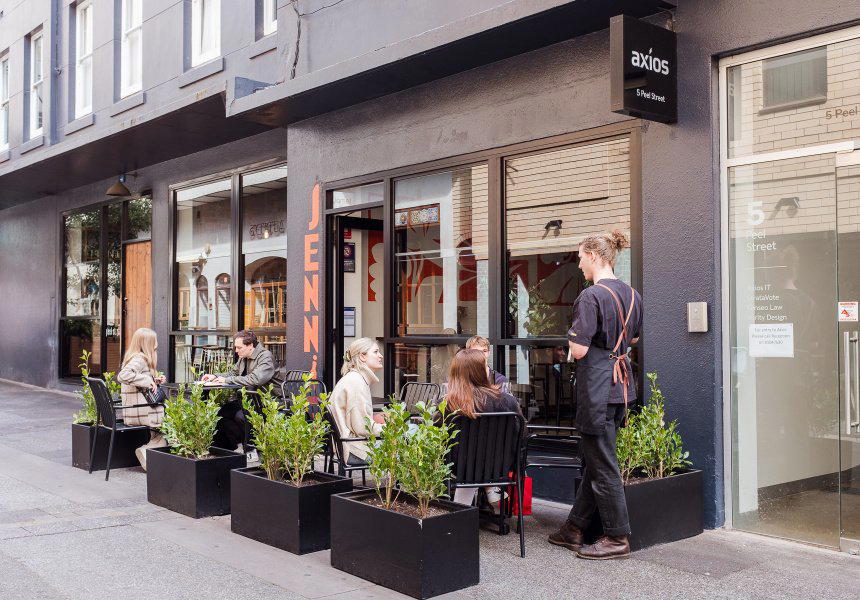
| Jennie Wine Bar | wine_bar | $20–30 | Star Wine List | Peel Street |
| Hellbound Wine Bar | wine_bar | $30–50 | Star Wine List | Bowden |
Recognition history
Dated appearances from independent guides and award organizations, with the underlying list record or original source where available.
Star Wine List
Star Wine List
Continue exploring
More in Adelaide
Bars in Adelaide
Browse all →
Restaurants in Adelaide
Browse all →
Hotels in Adelaide
Browse all →
Details
- Cozy
- Intimate
- Sophisticated
- Historic
- Date Night
- Special Occasion
- Historic Building
- Seated Bar
- Booth Seating
- Conventional Wine
Current opening hours
- Monday
- 6–10 PM
- Tuesday
- 6–10 PM
- Wednesday
- 6–10 PM
- Thursday
- 6–10 PM
- Friday
- 6 PM–12 AM
- Saturday
- 6 PM–12 AM
- Sunday
- Closed
Hours can change for holidays and private events. Last verified .
Atmospheric basement cellar with cozy, rustic lighting and a warm, intimate vibe reminiscent of a New York Parisian brasserie.