Landhauskeller occupies a historic address on Schmiedgasse 9 in central Graz, placing it squarely within the city's most concentrated stretch of evening venues. The bar draws on Graz's tradition of wine-forward drinking culture while maintaining a programme broad enough to anchor a full evening. For those tracing Austria's bar scene beyond Vienna, this is a considered stop.
 Discover on Pearl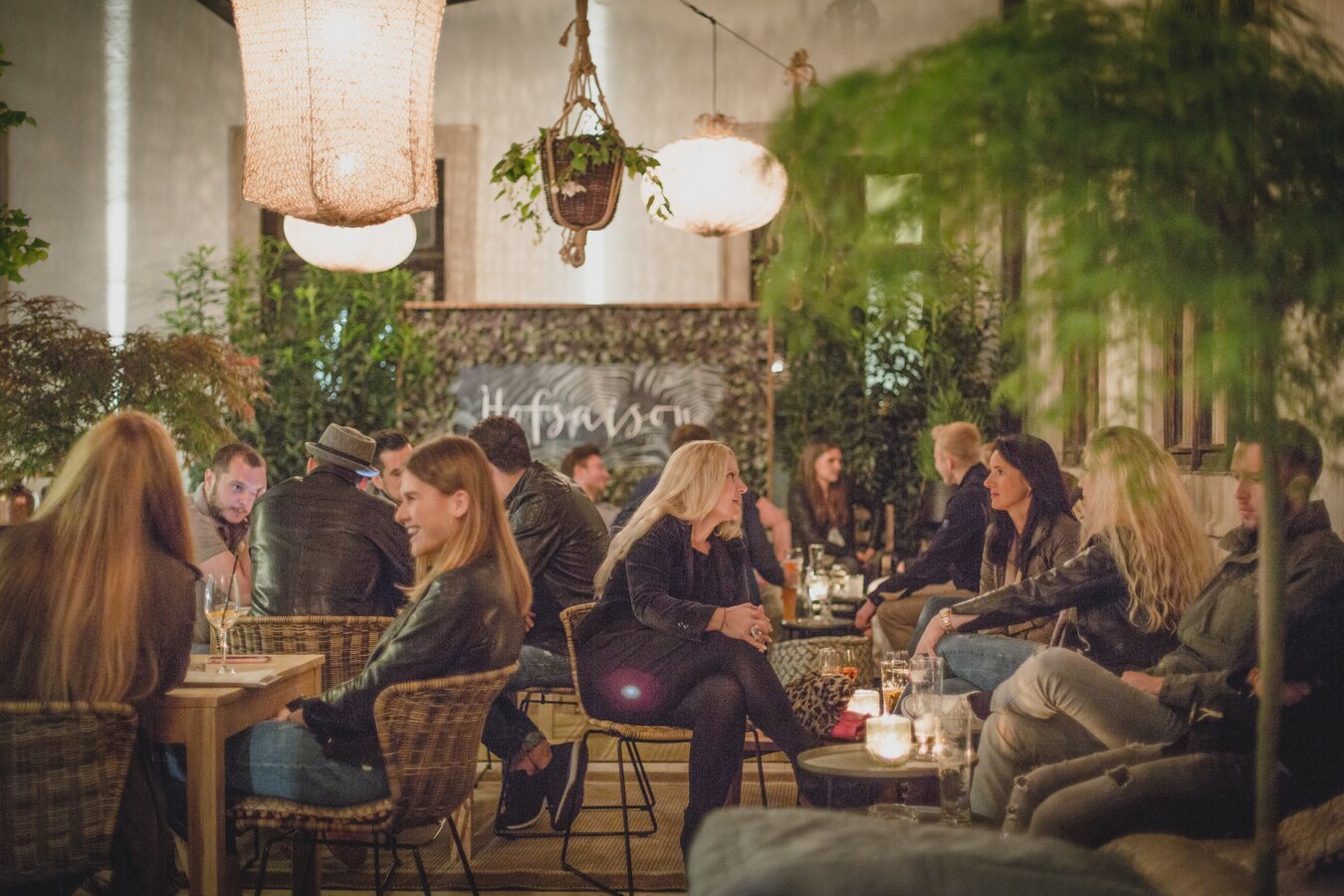
Schmiedgasse and the Shape of Graz After Dark
Graz has never quite resolved into a single drinking identity, and that tension is part of what makes it worth paying attention to. The city operates somewhere between Vienna's self-conscious cocktail formalism and the relaxed wine-bar culture that defines smaller Austrian towns. Schmiedgasse, the street address that places Landhauskeller at number 9, runs through one of the old town's most active evening corridors, where historic stonework and low-lit interiors create a physical register that neither Copenhagen-style minimalism nor Viennese Ringstrasse grandeur can replicate. Walking into this part of Graz at night, you are in a city that still drinks in its own way, on its own terms.
That context matters when assessing any bar on this stretch. The Graz drinking scene has expanded considerably over the past decade, with wine bars like Glou Glou Wein- und Champagnerbar and Weinbar Auenbrugger representing a more modern, wine-specialist approach, while Cafe Mitte holds down the more casual, all-day end of the spectrum. Landhauskeller sits within this ecosystem, drawing from the older tradition of the Hauskeller — the house cellar or ground-floor drinking room that predates modern bar categorisation in Central European cities.
The shortlist, unlocked.
Hard-to-book tables, cellar releases, and concierge-planned trips.
Get Exclusive Access →The Cellar Tradition and What It Means for the Glass
In Austrian bar culture, the distinction between a Weinkeller, a Bierkeller, and a more general Hauskeller has always been porous. The Keller format carries specific associations: a certain depth of offering, a preference for the local and regional, and an interior character defined by architecture rather than interior design. Bars in this format tend to let the building do the atmospheric work. Stone walls, low ceilings, and the particular acoustics of subterranean or semi-subterranean spaces shape the experience before a single drink is poured.
For a bar programme, this context creates both opportunity and constraint. The cellar setting suits long, slow evenings over wine and spirits rather than high-turnover cocktail formats. It encourages a drinks list that rewards lingering — Styrian whites served slightly cool, Austrian spirits, and perhaps a selection of amaro or digestif options that align with the Central European tradition of the after-dinner drink as a full act rather than an afterthought. Austria's Sturm season, the brief autumn window when partially fermented grape juice is available from local producers, tends to animate venues of this type in ways that more format-driven bars in Vienna or Salzburg rarely capture.
Where Landhauskeller Sits in the Austrian Bar Picture
Austria's bar scene is geographically uneven. Vienna commands the majority of critical attention, with venues like Club U in Vienna representing the capital's more architecturally ambitious end of the spectrum. Salzburg maintains its own character, with places like Augustiner Bräu Mülln anchoring a very different, beer-first tradition. Further west, venues such as Hotel Schwarzer Adler Innsbruck and Achen Lake in Eben Am Achensee demonstrate how Tyrolean hospitality inflects the bar experience with a different kind of regionalism. Graz, as Austria's second city, occupies a distinct position: large enough to sustain a varied bar scene, but without Vienna's density of international visitors driving the format toward spectacle.
This makes the Graz scene, and Landhauskeller's place within it, worth understanding on its own terms rather than as a satellite of the capital. The same logic applies along the southern Austrian corridor, where Carinthia Weinbar in Velden am Wörthersee has developed a regional wine identity that speaks more to Styrian and Carinthian producers than to global lists. Landhauskeller's Schmiedgasse address places it at the geographic and cultural centre of this southern-Austrian drinking geography.
For visitors already familiar with format-driven cocktail programming of the kind found at Red Bull Hangar-7 in Himmelreich or the precision-led approach of Bar Leather Apron in Honolulu, the Keller format represents a deliberate counterpoint: less technical theatre, more structural depth from the building and the regional drinks culture it draws on.
Planning Your Visit
Landhauskeller is located at Schmiedgasse 9 in the 8010 postal district of Graz, placing it within walking distance of the old town's main concentration of evening venues and within easy reach of the Hauptplatz. The Schmiedgasse address sits close to the Landhaus complex, the Renaissance courtyard that gives this part of the city its specific architectural character and lends Landhauskeller its name. For visitors arriving by rail, Graz Hauptbahnhof is the primary terminus, with the old town reachable by tram on the central lines. For broader context on what the city offers across food and drink, see our full Graz restaurants guide.
Those planning a longer evening across the Graz bar scene might also consider Das O's in Mondsee as a reference point for how the broader Alpine Austrian bar format has evolved, even if the journey between the two requires overnight planning. Within Graz itself, the pairing of Landhauskeller with either Glou Glou or Weinbar Auenbrugger makes for a coherent evening that moves from old-format drinking rooms toward the more contemporary wine-bar tier, or vice versa depending on preference.
Frequently Asked Questions
- What should I try at Landhauskeller?
- The drinks programme at a venue of this type and address in Graz will almost certainly include Styrian wines, Austrian spirits, and selections that reflect the regional cellar tradition. Given the Keller format and the southern Styrian wine country nearby, white wine and local digestif options are the most contextually coherent starting point. Without confirmed menu data, specific recommendations beyond this regional framing are not possible.
- What is the main draw of Landhauskeller?
- The draw is primarily architectural and contextual: a historic address on one of Graz's central evening streets, within a building type that carries specific cultural weight in the Austrian drinking tradition. The combination of location and format places it in a different register from the city's newer wine bars, and from the capital's more format-driven cocktail venues.
- How hard is it to get in to Landhauskeller?
- No confirmed booking data, capacity figures, or reservation policies are available for Landhauskeller. In general, Graz's central old-town bars experience higher foot traffic on weekend evenings, particularly in summer when the outdoor areas of Schmiedgasse fill quickly. Arriving earlier in the evening is the standard advice for this part of the city.
- Is Landhauskeller better for first-timers or repeat visitors to Graz?
- The Keller format and old-town address make it a logical first stop for visitors wanting to understand Graz's drinking culture before moving toward the more contemporary wine-bar tier. Repeat visitors with existing familiarity with the city may find the architectural and historical context more readable, but the venue is not structured around insider knowledge.
- Is Landhauskeller good value for a bar?
- No price data is confirmed for Landhauskeller. As a reference point, Graz's bar scene generally prices below Vienna's central cocktail venues, and Keller-format bars in the old town tend to sit in the mid-range for Austrian cities of comparable size. Without confirmed pricing, direct value comparisons are not possible.
- What is the connection between Landhauskeller and the Landhaus complex nearby?
- The name directly references the Landhaus, a Renaissance-era administrative complex on Herrengasse that is one of Graz's most significant historic structures. Bars and restaurants in this part of the old town frequently carry the Landhaus name as a locational identifier, signalling proximity to this architectural landmark. For visitors using the building as a navigational anchor, Schmiedgasse 9 is within a short walk of the Landhaus courtyard, making it a natural stop on any evening that starts with a visit to that part of the city.
At-a-Glance Comparison
A fast peer set for context, pulled from similar venues in our database.
| Venue | Cuisine | Price | Awards | Notes |
|---|---|---|---|---|
| Landhauskeller | This venue | |||
| Glou Glou Wein- und Champagnerbar | ||||
| Weinbar Auenbrugger | ||||
| Cafe Mitte |
Need a Table?
Our members enjoy priority alerts and concierge-led booking support for the world's most difficult bars and lounges.
Get Exclusive AccessThe shortlist, unlocked.
Hard-to-book tables, cellar releases, and concierge-planned trips.
Get Exclusive Access →