1226 36th St NW
Located on a residential stretch of 36th Street NW in Georgetown, this address sits within one of Washington's most historically layered neighbourhoods. Georgetown's dining and drinking scene rewards those who look beyond the main commercial corridors, and this block reflects that quieter, residential register that regulars tend to protect. Check our full guide for context on the surrounding area.
 Discover on Pearl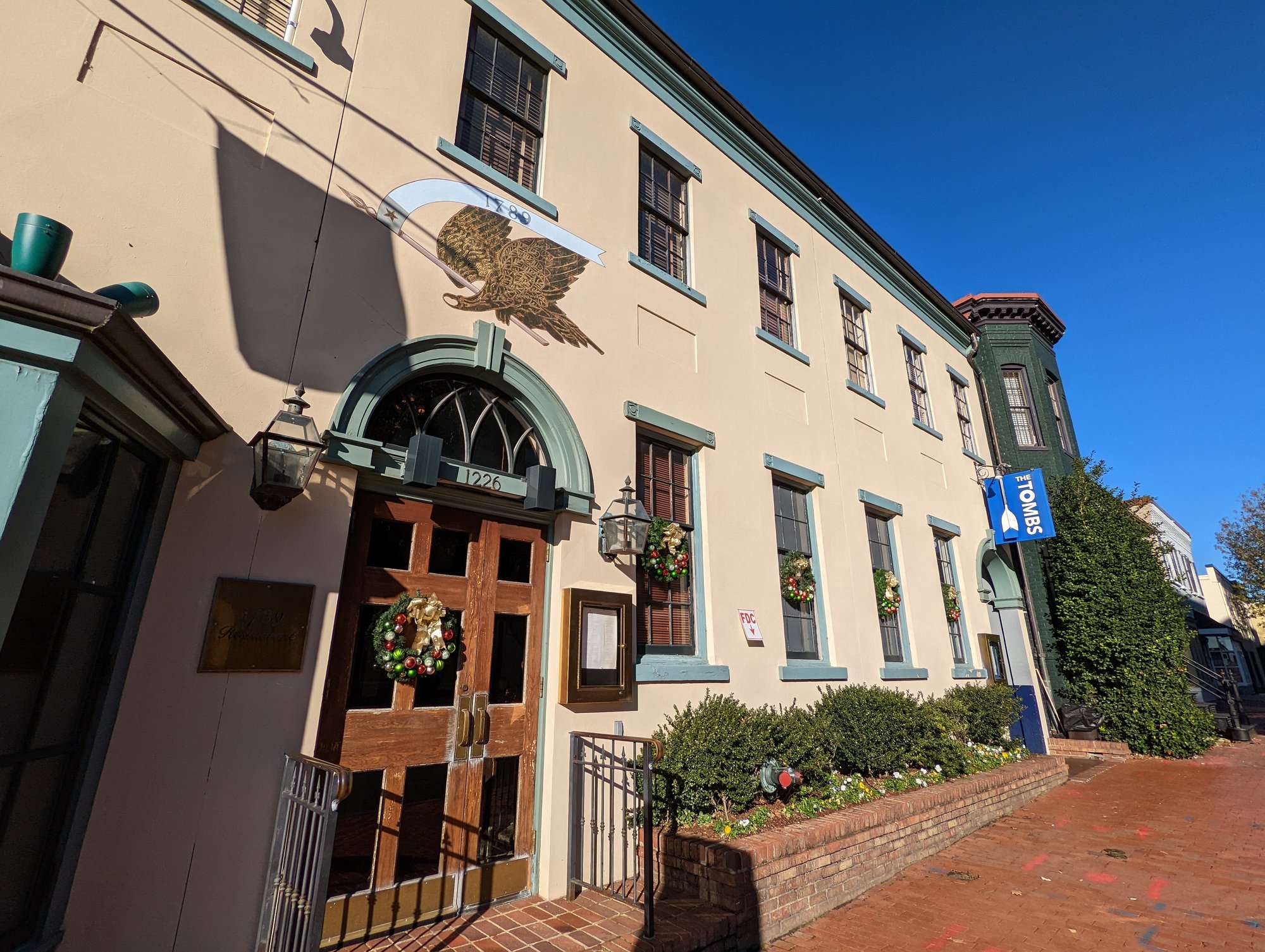
Georgetown's Residential Register
Georgetown operates on two distinct frequencies. The M Street and Wisconsin Avenue corridor handles volume: tourists, students, and the after-work crowd cycling through well-lit storefronts. But move a few blocks in any direction and the neighbourhood shifts register entirely. The rowhouses tighten, the foot traffic drops, and the addresses that matter to regulars come into view. The 3600 block of 36th Street NW sits firmly in that second category, a residential stretch where the built environment is predominantly Federal and Victorian, and where commercial addresses tend to survive on neighbourhood loyalty rather than passing trade.
This matters for how you read an address like 1226 36th St NW. In cities where dining and drinking culture has migrated toward transparency and accessibility, places that persist in quieter residential pockets tend to do so because they have a core constituency that returns without prompting. The appointment is not with spectacle. It is with continuity.
The Regulars' Logic
Washington's drinking and dining culture has, over the past decade, bifurcated sharply. On one side sit the high-visibility programs: the clarified-cocktail bars with sustained press coverage, the tasting-menu rooms with years-long reservation queues. On the other side are the neighbourhood addresses that never appear on those lists but whose regulars would not trade them for anything on the shortlist. Georgetown, with its compressed geography and affluent residential base, produces more of the latter category than almost any other D.C. neighbourhood.
The regulars' perspective on a Georgetown address like this one is shaped by proximity and pattern. You walk past it. You become curious. You return. The rhythm of return visits in neighbourhoods like this tends to be weekly or fortnightly rather than occasion-driven, and the expectations shift accordingly. This is not the register of the Allegory or Silver Lyan, both of which operate as destination programs with international visibility. Nor is it the accessible, neighbourhood-bar thesis of Service Bar, which made its name on community-first pricing and format. An address embedded in Georgetown's residential fabric occupies a different tier: quieter, more assumed, and often more durable for it.
Georgetown in the D.C. Context
Washington's geography sorts its hospitality addresses into fairly predictable clusters. Shaw and 14th Street NW carry the city's most press-active dining and bar programs. Navy Yard has absorbed a wave of stadium-adjacent openings. Penn Quarter and downtown remain event-driven. Georgetown, by contrast, has always operated with a degree of self-sufficiency. Its residents are not particularly interested in travelling to Shaw for dinner when the neighbourhood offers comparable options within walking distance, and that insularity has preserved a certain type of establishment that would not survive in more competitive or trend-exposed corridors.
The bar scene specifically illustrates this. Where 12 Stories positions itself as a rooftop destination with city views as part of the proposition, Georgetown's residential bars tend to position themselves as the opposite: ground-level, interior-focused, and indifferent to spectacle. The regulars who anchor these places are, by and large, people who have already done the destination-bar circuit and arrived at a preference for reliability over novelty.
That preference is not unique to Washington. Across American cities with established residential neighbourhoods, the same pattern holds. In Honolulu, Bar Leather Apron built its reputation on technical precision for a returning clientele rather than tourist throughput. In New Orleans, Jewel of the South operates in a historic neighbourhood context where regulars set the tone. In Houston, Julep made its name on a specific point of view sustained over years of repeat visits. The pattern of neighbourhood loyalty as a business model is well-established, and Georgetown is one of D.C.'s most natural environments for it.
What the Address Tells You
The 36th Street NW corridor in Georgetown is predominantly residential, with a small number of commercial addresses embedded in the fabric. This is the kind of block where the absence of a prominent sign is not an oversight but a calibration: the people who need to find it already know where it is. That is a different operating logic from the high-visibility bars that populate D.C.'s more commercially active corridors, and it implies a different type of visitor experience.
Across the broader American bar scene, the addresses that have aged leading are often those that resisted the pressure to perform novelty and instead built a stable relationship with a specific place and clientele. Kumiko in Chicago built that kind of sustained relationship with its neighbourhood through format discipline. ABV in San Francisco holds a similar position in its area. Superbueno in New York City carved out its niche through a specific identity rather than broad appeal. The Parlour in Frankfurt on the Main demonstrates that the same dynamic operates internationally: specificity and loyalty compound over time in ways that broad appeal does not. And Jewel of the South in New Orleans reinforces that historic neighbourhood settings tend to amplify rather than constrain that kind of identity.
For a Georgetown address like 1226 36th St NW, the neighbourhood context is the strongest available signal. Georgetown's residential core has produced durable addresses precisely because the clientele it draws is not transient. The people who return to a block like this one return because the block is part of their routine, not because it appeared in a list.
Planning Your Visit
Georgetown is leading approached on foot from Dupont Circle or Foggy Bottom (the nearest Metro station is Foggy Bottom-GWU, approximately a 15-minute walk). Rideshare and taxi access is direct. The neighbourhood itself is walkable and compact, with the 36th Street NW area sitting in the quieter western portion, away from the commercial density of Wisconsin Avenue. For a broader map of where this address fits within D.C.'s hospitality geography, see our full Washington, D.C. restaurants guide.
Know Before You Go
- Address: 1226 36th St NW, Washington, DC 20007
- Neighbourhood: Georgetown, western residential corridor
- Nearest Transit: Foggy Bottom-GWU Metro (Blue/Orange/Silver lines), approx. 15-min walk
- Phone: Not available
- Website: Not available
- Hours: Not available — confirm before visiting
- Booking: Contact details not currently listed; walk-in availability unknown
Frequently Asked Questions
Local Peer Set
These are the closest comparables we have in our database for quick context.
| Venue | Cuisine | Price | Notes |
|---|---|---|---|
| 1226 36th St NW | This venue | ||
| Allegory | |||
| Service Bar | |||
| Silver Lyan | |||
| Barmini | |||
| Press Club |
Need a Table?
Our members enjoy priority alerts and concierge-led booking support for the world's most difficult bars and lounges.
Get Exclusive Access