Whistler Rum Distillery

Whistler Rum Distillery sits on Farm Maatschappy 295 in the Free State interior, producing rum from a landscape more associated with grain and grassland than tropical cane. The distillery earned a Pearl 1 Star Prestige in 2025, placing it within a small tier of South African craft spirits producers gaining formal recognition. It operates roughly between Hennenman and Riebeeckstad, off the R70.
 Discover on Pearl
Pearl is the En Primeur Club membership app — saves, bookings, and concierge access live there. Same editors, same standards.
- Address
- Farm Maatschappy 295, Distrik R70 Between Hennenman and, Riebeeckstad, Ventersburg, 9460, South Africa
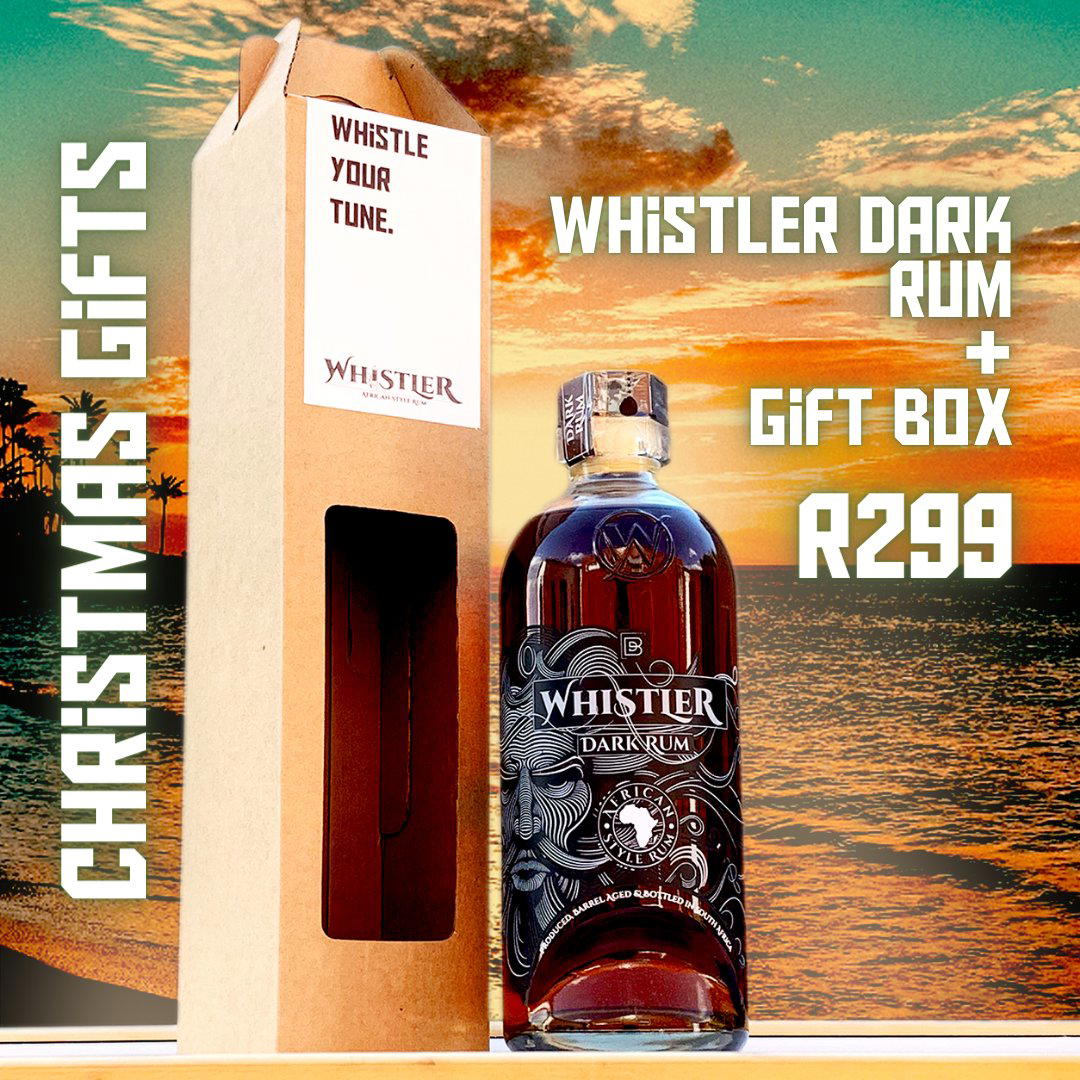
Rum from the Free State Interior
South Africa's craft spirits scene has expanded well beyond the Cape winelands in recent years. While most of the country's distilling heritage is anchored in brandy production along the Berg and Breede rivers, a newer generation of producers has been working in less obvious locations, using regional raw materials and local climate to build spirits with a distinct character. Whistler Rum Distillery, located on Farm Maatschappy 295 between Hennenman and Riebeeckstad in the Free State, is a rum distillery in South Africa. Its 2025 Pearl 1 Star Prestige award places it within a recognised cohort of craft producers, and it is operating in a region where distilling is not yet a default assumption for visitors.
The Free State interior is not where most spirits drinkers would look for rum. That is precisely what makes its presence there editorially interesting. Rum production in South Africa has historically been a minor strand of a country dominated first by brandy and then by wine, but the category has grown alongside broader craft spirits investment. Producers outside the Cape have the advantage of lower operational overhead and, in some cases, access to cane-derived inputs from South Africa's KwaZulu-Natal growing regions. The distance from the Cape's established visitor circuits also means that distilleries in the Free State tend to attract a more purposeful visitor rather than a tourist passing through on a wine route.
Terroir at an Unexpected Latitude
The concept of terroir in spirits is more contested than in wine, but it is not meaningless. The Free State highveld sits at altitude, with wide temperature swings between seasons and between day and night within a single season. Those swings affect barrel maturation: faster expansion and contraction of wood accelerates the exchange between spirit and oak relative to what you would see in a cooler coastal environment. Distilleries working at altitude in South Africa's interior therefore operate under different ageing conditions than their counterparts in the Western Cape, and that difference registers in the final product regardless of the base material or distillation method.
For a rum distillery specifically, the choice to operate in the Free State rather than in KwaZulu-Natal, where sugarcane is actually grown, implies a deliberate separation of production site from raw material origin. That is not uncommon globally. Many of the world's most recognised rum producers source molasses or cane juice from outside their immediate geography and rely on their specific fermentation environment, still configuration, and local water to shape the spirit's profile. At Whistler, the highveld setting becomes part of what the distillery is making, even if the cane inputs originate elsewhere in the country.
For context on how South African distilling heritage shapes what newer producers are building against, Oude Molen Distillery in Grabouw represents the older brandy-led tradition, while Bezalel Wine and Brandy Estate in Upington shows how distilling has taken root in the Northern Cape interior. Boplaas Winery and Distillery in Calitzdorp offers a further point of comparison, combining wine production with spirits in a semi-arid Karoo setting. Whistler's Free State positioning sits in a similar spirit of geographic expansion beyond the established winelands.
The Award Context
The Pearl 1 Star Prestige recognition in 2025 is a meaningful trust signal for a distillery operating outside the main South African spirits circuits. Pearl awards function as a quality benchmark within a structured assessment framework, and a Prestige designation at 1 Star places Whistler in a tier that implies consistent technical quality rather than experimental novelty. For visitors trying to calibrate what to expect, that credential suggests a distillery whose output has been assessed against defined standards and found to meet them.
It is worth placing that recognition in the broader South African craft context. The country's spirits awards landscape has become more structured over the past decade, with multiple evaluation frameworks now operating alongside the better-known wine competitions. A producer earning formal recognition in 2025 from a location as unexpected as the Free State interior signals that the category is developing beyond its Cape origins. For comparison, the wine estates that have built reputations through consistent award performance over years, such as Vergelegen Wine Estate in Somerset West or Sadie Family Wines in Swartland, all used external recognition as an early signal of their positioning within their respective categories. Whistler's 2025 award functions similarly at this stage of the distillery's development.
Getting There and Planning a Visit
Farm Maatschappy 295 sits off the R70 between Hennenman and Riebeeckstad, in the Ventersburg district of the Free State. This is agricultural interior South Africa: the drive in from the N1 or from Welkom passes through open highveld, with grain and sunflower cultivation dominating the surrounding farms. There is no public transport serving this address, and a private vehicle is the only practical means of arrival. The nearest commercial centre of any scale is Welkom, approximately 30 kilometres to the north-west, which has fuel, accommodation, and road connections to Johannesburg (roughly three hours) and Bloemfontein (roughly two hours).
Prospective visitors should confirm hours and access before planning a trip around it. South African farm-based distilleries in this tier typically operate on appointment or by limited open-day schedules rather than daily visitor hours. Planning with a buffer day in the region is sensible. The Free State interior rewards visitors who treat it as a destination rather than a detour: the landscape itself, the agricultural scale, and the absence of the Cape's visitor infrastructure all contribute to the experience of reaching a producer at this distance from the established routes.
For those building a wider South African spirits and wine itinerary, the contrast between Whistler's interior setting and the Cape's more visitor-polished options is itself part of the editorial logic. Estates like Babylonstoren in Franschhoek, Val de Vie Estate in Paarl, or Creation Wines in Hermanus offer polished visitor formats at the opposite end of the accessibility spectrum. Neethlingshof Estate in Stellenbosch, Constantia Glen in Cape Town, and Graham Beck Wines in Robertson represent further points in the Cape's mature wine tourism network. Beaumont Family Wines in Bot River sits slightly closer to Whistler's character in terms of farm-first, lower-infrastructure production, even if the geography differs entirely. For those also considering international distillery comparisons, Aberlour in Aberlour illustrates how heritage distilleries in remote agricultural settings have built sustained visitor relevance over decades.
Side-by-Side Snapshot
Comparable venues nearby, for context on price, style, and recognition.
| Venue | Cuisine | Price | Awards | Notes |
|---|---|---|---|---|
| Whistler Rum DistilleryThis venue — the venue you are viewing | Winery | , | 1 recognition | |
| Drayman’s Brewery & Distillery | malted barley | $$ | 1 recognition | Silverton |
| Blaq Distillery | Winery | , | 1 recognition | Vryburg |
| Ginologist Distillery | Winery | $$$ | 1 recognition | Lourensford Valley, Somerset West |
| Flowstone Distillery (Craft Gin) | Cradle of Humankind | $$ | 1 recognition | |
| Primal Spirits Distillery | Winery | $$ | 1 recognition | Victoria Yards |