
Weingut Wohlmuth sits at Fresing 24 in Kitzeck, deep in the Sausal hills of southern Styria, where steep-slope viticulture produces some of Austria's most distinctive white wines. The estate holds a Pearl 3 Star Prestige award (2025), placing it among the higher-recognition tier of Austrian producers. For those tracing the southern Styrian wine corridor, this is a serious reference point.
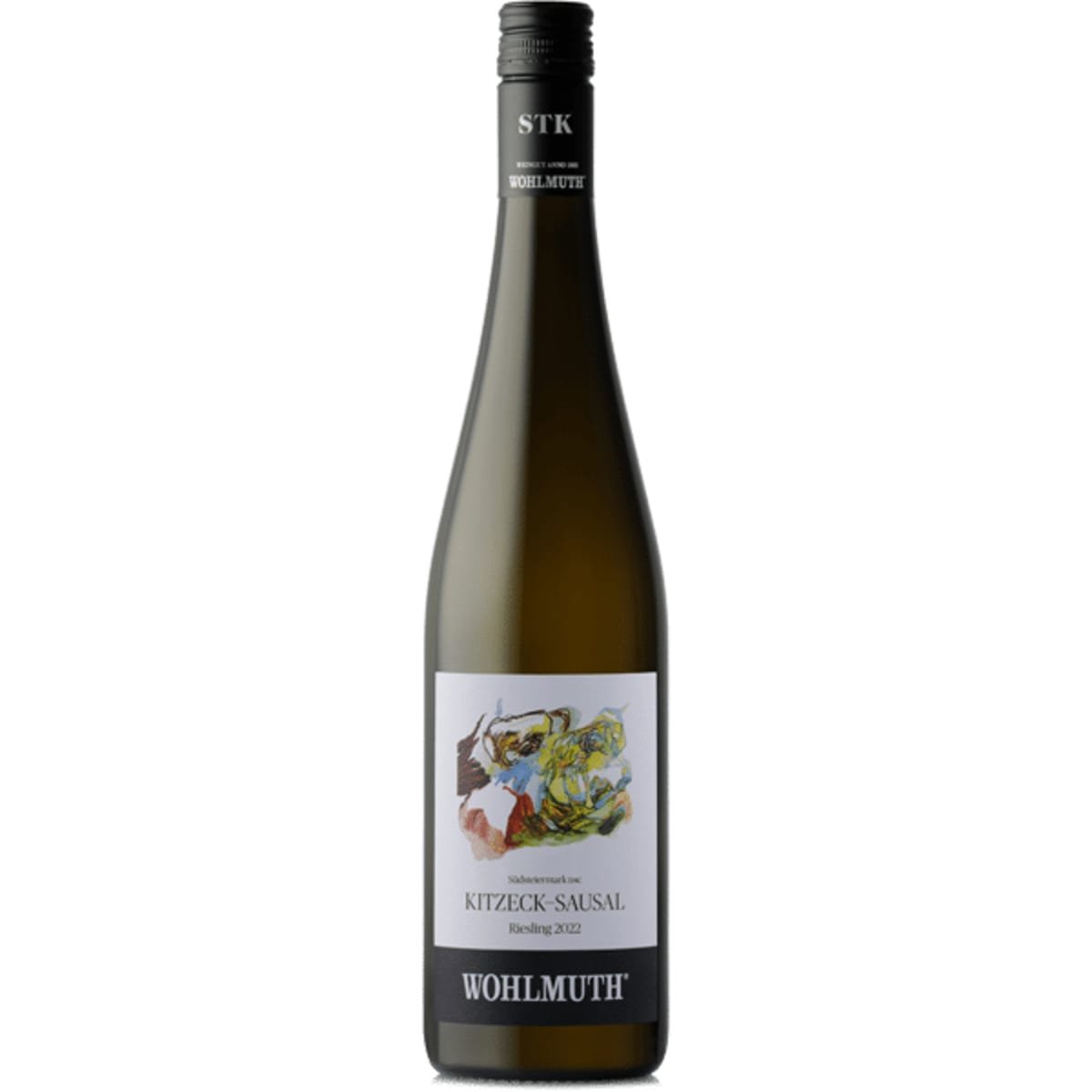
Southern Styria's Hillside Context
The Sausal region around Kitzeck occupies a particular position in Austrian wine geography. At elevations approaching 600 metres, the vineyards here sit higher than the better-publicised Südsteiermark slopes that draw most of the international attention. The altitude brings sharp diurnal temperature shifts: warm enough through the growing season to ripen Sauvignon Blanc and Pinot Blanc fully, cool enough at night to preserve the acidity that defines the regional character. The result, across producers who work these hills seriously, is a style of wine that reads as both ripe and tense — fruity without being soft, and structured without the green edge that cooler Austrian sites can produce in difficult years.
Kitzeck itself is small, rural, and oriented almost entirely around its vineyard culture. There is no urban hospitality circuit here, no restaurant row or hotel strip. The draw is the land, the cellars, and the producers willing to translate those steep-slope parcels into bottles. That context matters when you arrive at Fresing 24, because Weingut Wohlmuth belongs to a category of estate where the address is the argument. Our full Kitzeck wineries guide covers the broader producer landscape in the region if you are mapping the area before a visit.
What the Pearl 3 Star Prestige Award Signals
In 2025, Weingut Wohlmuth received Pearl 3 Star Prestige recognition, which places it in the upper tier of evaluated Austrian producers. Within the Austrian premium wine circuit, that level of award designation aligns the estate with houses drawing allocation-style demand and press attention from serious wine media. It is the kind of credential that, in comparable international wine regions, would move a producer from the "worth trying" category into the "should be on your tasting shortlist" tier.
For comparison, the Austrian estates receiving recognition at this level tend to share certain common traits: long vineyard tenure, a focus on specific indigenous or regionally significant varieties, and a production philosophy that prioritises site expression over easy commercial palatability. Whether those attributes apply here is a matter for your own palate to assess, but the award signal points in a consistent direction. Peer producers working at this recognition level in Austria include estates such as Weingut Emmerich Knoll in Dürnstein and Schloss Gobelsburg in Langenlois, both of which operate in different Austrian sub-regions but with comparable seriousness of intent.
Terroir at Elevation: What the Sausal Slopes Produce
The specific terroir argument for Kitzeck-area vineyards rests on several compounding factors. The soils across the Sausal hills are predominantly gneiss and schist, ancient metamorphic rock that drains efficiently and forces vine roots to dig deep. Deep-rooted vines under dry-farming conditions tend to pull trace minerals into the fruit in ways that shallow, irrigated vineyards do not. This is the geological foundation behind the minerality that appears consistently in tasting notes from southern Styrian producers who work the Sausal seriously.
The slope angles add another layer of complexity. Steep-slope viticulture is expensive and slow: no machinery can operate on the most precipitous parcels, which means hand-harvesting, selective picking passes, and a much higher labour input per bottle produced. Estates willing to maintain those vineyard sites rather than consolidating onto flatter, more workable land are making a deliberate argument about quality and site fidelity. In a region like Sausal, where easier, flatter land is available nearby, the choice to persist with steep parcels is worth taking seriously.
Sauvignon Blanc from this elevation in southern Styria tends to diverge from both the New Zealand and Loire models. It is neither as herbaceous as cool-climate European Sauvignon nor as tropical as Marlborough. The Styrian version, at its leading, reads as textural and stone-fruited with a saline mineral finish. It ages better than most consumers expect from the variety. Weingut Wohlmuth's address in the Sausal places it inside the sub-region most associated with that particular expression of the grape.
Positioning Within the Austrian Wine Map
Austria's wine geography concentrates critical attention on a few key corridors: the Wachau and Kamptal in the north for Grüner Veltliner and Riesling, Burgenland in the east for late-harvest Grüner and Blaufränkisch, and the Steiermark in the south for Sauvignon Blanc and Welschriesling. Within Steiermark, most international press coverage defaults to Südsteiermark proper, which has the tourist infrastructure, the wine roads, and the brand recognition. The Sausal sits slightly off that circuit, which means serious producers working there operate with less mainstream visibility and, often, a more committed buyer base.
This positioning has practical implications for the visitor. Arriving at an estate like Weingut Wohlmuth in Kitzeck is not the same experience as visiting a well-signposted Südsteiermark destination with a full tourism setup. The area rewards visitors who come with some prior research and a specific interest in what the Sausal sub-region produces, rather than those moving through on a general wine tourism circuit. The Kitzeck experiences guide can help with planning the broader visit, and for accommodation options in the area, the Kitzeck hotels guide is worth checking before you travel.
For those comparing Austrian producers across regions, it is useful to understand how the Sausal fits relative to estates like Weingut Kracher in Illmitz, which operates in the entirely different context of Burgenland's sweet wine tradition, or Weingut Pittnauer in Gols, whose work centres on natural-leaning red wine production. The Austrian premium wine scene is genuinely pluralistic in style and terroir, and the Sausal represents one of its more singular expressions. Austrian producers outside the country's primary corridors are also finding international peer reference points: producers like Abadía Retuerta in Sardón de Duero demonstrate how estate-based, terroir-committed production operates across different European wine cultures.
Planning a Visit
Weingut Wohlmuth is located at Fresing 24, 8441 Fresing, in the hills above Kitzeck. The estate sits in wine country that is leading reached by car; the road network in the Sausal is rural and a private vehicle is the practical choice for most visitors. Given that no booking or hours data is publicly confirmed, contacting the estate directly before travelling is the prudent approach — this is standard practice for serious Austrian wine estates, which often operate cellar door visits by appointment rather than walk-in. The Kitzeck restaurants guide and Kitzeck bars guide can assist with the wider dining and drinking picture around a stay in the area. Those extending their Austrian winery circuit might also consider Weingut Heinrich Hartl in Oberwaltersdorf or, for distillery-side interest, Weingut Scheiblhofer Distillery in Andau. Further afield, 1310 Spirit of the Country Distillery in Sierning and 1404 Manufacturing Distillery in Sankt Peter-Freienstein represent the Austrian craft spirits scene for those broadening beyond wine.
Frequently Asked Questions
- How would you describe the overall feel of Weingut Wohlmuth?
- Weingut Wohlmuth sits in the Sausal hills above Kitzeck , a quiet, agricultural wine area in southern Styria with no urban amenities nearby. The feel is estate-focused and rural, oriented around vineyard and cellar rather than hospitality infrastructure. Its Pearl 3 Star Prestige recognition (2025) positions it as a serious producer in a genuinely off-the-beaten-circuit sub-region, which shapes the visitor experience accordingly.
- What wines is Weingut Wohlmuth known for?
- The Sausal region where Wohlmuth operates is primarily associated with white wine production on gneiss and schist soils at elevation, with Sauvignon Blanc and Pinot Blanc among the regionally significant varieties. The Pearl 3 Star Prestige award (2025) points to production at a recognised quality level, though specific current labels and vintages should be confirmed directly with the estate, as no wine list data is publicly confirmed in our database.
- Why do people go to Weingut Wohlmuth?
- Visitors come primarily for access to a Pearl 3 Star Prestige-recognised estate in one of Austria's more specialist wine sub-regions. The Sausal hills above Kitzeck represent a distinct terroir argument , high-elevation, steep-slope viticulture on ancient metamorphic soils , that serious Austrian wine drinkers seek out specifically. The location is not incidental to a broader tourist itinerary; it is, for most visitors, the destination itself.
- Can I walk in to Weingut Wohlmuth?
- No confirmed walk-in policy is available in our database for Weingut Wohlmuth. Austrian wine estates at this recognition level (Pearl 3 Star Prestige, 2025) typically operate cellar door visits by appointment rather than open-door access. Contacting the estate at Fresing 24, 8441 Fresing before travelling is strongly advisable. No phone number or website is currently confirmed in our records.
- Is Weingut Wohlmuth a good base for exploring the broader Sausal wine region?
- Kitzeck and the Sausal hills form a coherent wine sub-region that rewards a dedicated visit rather than a quick stop. An estate with Pearl 3 Star Prestige recognition (2025) like Wohlmuth makes a logical anchor for a Sausal itinerary, and the surrounding area has other producers worth seeking out. Our full Kitzeck wineries guide maps the broader producer picture for those planning a multi-estate visit.
Where It Fits
A quick peer check to anchor this venue’s price and recognition.
| Venue | Classification | Awards | First Vintage | Notes |
|---|---|---|---|---|
| Weingut Wohlmuth | 1 awards | This venue | ||
| Schloss Gobelsburg (Weingut) | World's 50 Best | |||
| Weingut Bründlmayer | 1 awards | |||
| Weingut Emmerich Knoll | 1 awards | |||
| Weingut Heinrich Hartl | 1 awards | |||
| Weingut Jurtschitsch | 1 awards |
Access the Cellar?
Our members enjoy exclusive access to private tastings and priority allocations from the world's most sought-after producers.
Access the Concierge