
Weingut Pittnauer operates from the village of Gols in Burgenland's Neusiedlersee wine country, where the flat, wind-exposed terrain and shallow soils have long suited low-intervention viticulture. The estate holds a Pearl 3 Star Prestige rating for 2025, placing it among the region's most closely watched producers. Visitors approaching the cellar door at Neubaugasse 90 encounter a working winery shaped by the rhythms of organic farming rather than tourism logistics.
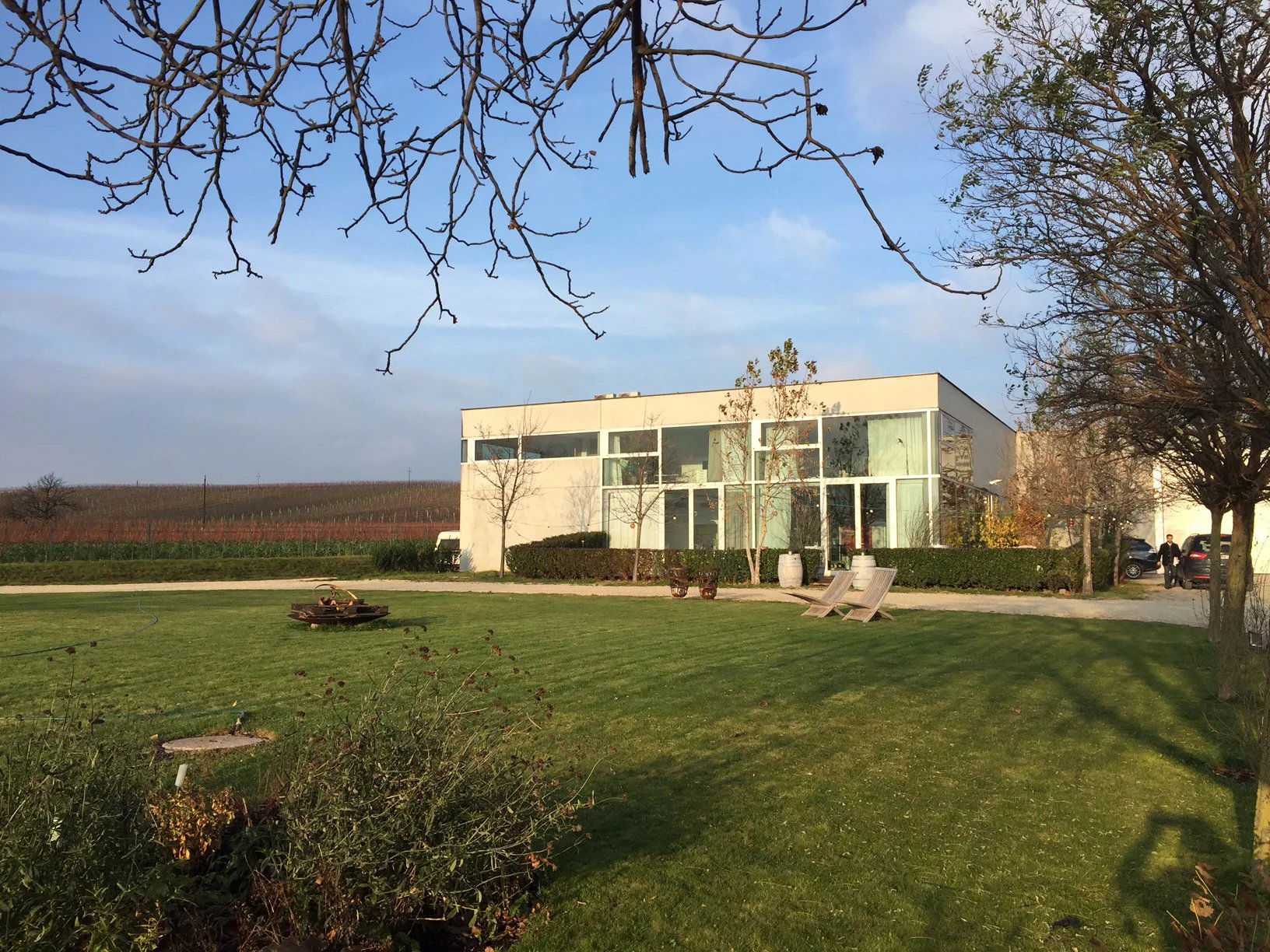
Burgenland's Flat Terrain and the Case for Restraint
The Pannonian plain around Gols does not look like wine country in any classical sense. There are no steep vineyard terraces, no photogenic river bends, no amphitheatre hillsides catching the afternoon light. What the area around the Neusiedlersee offers instead is something more subtle: shallow, mineral-rich soils, a continental climate with long dry autumns, and enough wind off the lake to moderate disease pressure without chemical intervention. These are conditions that reward producers willing to let the site speak, and they have made the villages clustered around the lake's northwest shore — Gols most prominent among them — a reference point for Austria's organic and biodynamic winemaking movement.
Weingut Pittnauer at Neubaugasse 90 sits inside that movement, not at its margins. The estate holds a Pearl 3 Star Prestige rating for 2025, a trust signal that places it within a small cohort of producers whose farming and cellar discipline have drawn sustained critical attention. In a region where several serious estates are operating at high levels , among them Weingut Gernot und Heike Heinrich and Weingut Paul Achs , that kind of recognition reflects specific choices about viticulture and winemaking philosophy rather than marketing investment.
What Organic Viticulture Actually Means in This Corner of Austria
Burgenland's push toward organic farming has been more than a label exercise. The combination of hot summers, cool nights, and reliable autumn weather means producers who invest in soil health and vine balance tend to see measurable results in fruit quality and yield stability over time. The absence of systemic herbicides and synthetic inputs changes the relationship between the vine and the ground beneath it, encouraging deeper root systems and, over years, greater site expression in the finished wine.
For a producer like Pittnauer, farming organically in Gols means working with the Neusiedlersee's particular microclimate rather than correcting for it. The lake acts as a thermal buffer, extending the growing season into autumn and allowing slower, more even ripening. That extended hang time is part of what gives the region's reds , Blaufränkisch and Zweigelt above all , their combination of dark fruit character and firm acidity, a balance that has attracted attention from critics tracking European low-intervention wine. Comparable approaches elsewhere in Austria, such as those pursued at Schloss Gobelsburg in Langenlois or Weingut Emmerich Knoll in Dürnstein, demonstrate how distinctly regional each Austrian wine identity becomes when farming and cellar intervention are kept to a minimum.
Gols and Its Peer Estates
Gols has developed a density of serious producers unusual for a village of its size. The concentration matters because visiting one cellar door here rarely means visiting in isolation; the village functions as a circuit. Weingut Anita und Hans Nittnaus and Weingut Juris (Stiegelmar) are among the producers in the immediate vicinity, while Private Distillery Weisz offers a different register entirely for those interested in the broader local craft production picture. The result is a village where two or three hours of serious tasting can cover a meaningful cross-section of what Burgenland's Neusiedlersee DAC system currently produces at a high level.
Pittnauer's position within this peer group is defined by its commitment to low-intervention farming, which aligns it with Heinrich and Achs on the organic end of the Gols spectrum. Where estates differ is in their stylistic emphasis , some leaning into the region's capacity for concentration and age-worthiness, others prioritising freshness and earlier accessibility. Without detailed current data on Pittnauer's full range, the estate's award profile suggests it occupies the more serious, cellar-worthy end of that spectrum.
The Cellar Door Experience and How to Plan a Visit
Approaching the winery on Neubaugasse, the setting is agricultural in character rather than hospitality-designed. This is a working farm building in a working village, and the experience reflects that. Gols sits roughly an hour southeast of Vienna by car, making it accessible as a day trip from the capital or as part of a longer itinerary through Burgenland's northern wine zone. The region's flat terrain and largely rural road network mean driving is the most practical option; public transport connections to Gols from Vienna exist via Neusiedl am See but require additional local transport to reach individual cellar doors.
Visits to Austrian winery cellar doors of this type typically require advance contact, particularly for producers with small outputs and limited walk-in capacity. Given that no confirmed phone number or website is listed in current records for Pittnauer, visitors are advised to research current contact details before travelling specifically for a tasting. The broader Gols visitor infrastructure , covered more fully in our full Gols wineries guide , includes producers with more established visitor programmes who can serve as alternative entry points if direct contact with Pittnauer proves difficult to arrange in advance.
For those building a full Burgenland itinerary, our full Gols restaurants guide, our full Gols hotels guide, our full Gols bars guide, and our full Gols experiences guide cover the broader hospitality picture in and around the village.
Austria's Organic Wine Moment and Where Pittnauer Fits
Austrian wine's international reputation has been built largely on Grüner Veltliner and Riesling from the Wachau, Kremstal, and Kamptal. Burgenland has taken longer to register in international markets, partly because its red varieties , Blaufränkisch most prominently , require more familiarity from buyers accustomed to French or Italian reference points. The past decade has shifted that, as critics tracking low-intervention European wine found in the Neusiedlersee region a combination of serious terroir, technically capable producers, and an underpublicised status that kept prices below equivalent quality levels elsewhere. Producers at places like Weingut Heinrich Hartl in Oberwaltersdorf reflect a similar trajectory in Lower Austria's organic sector.
Pittnauer's 2025 Pearl 3 Star Prestige recognition places it in the cohort of Burgenland estates that have moved past regional interest into broader critical acknowledgement. The distinction matters for the visitor deciding how to allocate time across Gols's several serious producers: this is not a cellar door pitched at casual tasting tourism, but a farm and winery where the work in the vineyard and the wine itself are the primary point of engagement. That orientation is increasingly common among the estates shaping the global conversation around low-intervention viticulture, from Burgenland to Abadía Retuerta in Sardón de Duero and beyond, though the methods and cultural context differ markedly by region.
Planning Your Visit
Weingut Pittnauer is located at Neubaugasse 90, 7122 Gols, Austria. The estate holds a Pearl 3 Star Prestige rating for 2025. Current phone and website details are not confirmed in available records; verifying contact information before visiting is advised, particularly for visitors travelling from Vienna or further afield. Gols is leading reached by car; the drive from Vienna takes approximately one hour, making it viable as a standalone destination or as part of a broader Neusiedlersee circuit that combines multiple cellar doors and the area's lake-side landscape in a single day. Autumn, when the harvest is underway and the light across the plain is at its most striking, is the season most producers in the region regard as the natural time to visit.
Frequently Asked Questions
What wines is Weingut Pittnauer known for?
Pittnauer operates in the Neusiedlersee wine region of Burgenland, where the dominant red varieties are Blaufränkisch and Zweigelt, and white production centres on Grüner Veltliner and Welschriesling. The estate's Pearl 3 Star Prestige recognition for 2025 reflects serious critical regard in this regional context. Specific current bottlings and pricing details are not confirmed in available records and should be verified directly with the winery.
What makes Weingut Pittnauer worth visiting?
The estate's 2025 Pearl 3 Star Prestige rating places it among a small group of Gols producers whose low-intervention farming and cellar work have drawn sustained recognition. For visitors with an interest in organic viticulture and Burgenland's red varieties, it represents one of the more serious reference points in a village that already has a high concentration of noteworthy estates. The village of Gols itself, roughly an hour from Vienna, makes the visit accessible without requiring a multi-day commitment.
Can I walk in to Weingut Pittnauer?
Cellar doors at organically farmed estates of this scale in Austria typically require advance arrangement rather than accepting unannounced visitors, particularly during harvest periods. Confirmed phone and website details for Pittnauer are not available in current records; researching up-to-date contact information before planning a visit is the practical approach. The broader Gols wineries guide lists producers with more established visitor logistics as alternatives or complements within the same itinerary.
Cost Snapshot
A short peer set to help you calibrate price, style, and recognition.
| Venue | Classification | Awards | First Vintage | Notes |
|---|---|---|---|---|
| Weingut Pittnauer | 1 awards | This venue | ||
| Weingut Anita und Hans Nittnaus | 1 awards | |||
| Weingut Gernot und Heike Heinrich | 1 awards | |||
| Weingut Juris (Stiegelmar) | 1 awards | |||
| Weingut Paul Achs | 1 awards | |||
| Private Distillery Weisz | 1 awards |
Access the Cellar?
Our members enjoy exclusive access to private tastings and priority allocations from the world's most sought-after producers.
Access the Concierge