
Weingut Emmerich Knoll sits at Unterloiben 132 along the Danube in Dürnstein, one of the Wachau's most closely watched addresses for Riesling and Grüner Veltliner. Awarded a Pearl 3 Star Prestige in 2025, the estate operates within a small circle of producers that define Austria's upper tier. Visiting means engaging directly with one of the valley's most deliberate winemaking traditions.
Where the Wachau Announces Itself
The road through Unterloiben rarely announces itself loudly. Vineyards press close to the Danube on one side; terraced slopes rise sharply on the other. This is the western edge of the Wachau, a UNESCO-protected valley where the interplay of continental and Pannonian climate produces conditions that Austria's leading growers have spent generations learning to interpret. Weingut Emmerich Knoll sits at address 132 in Unterloiben, within this corridor, and the physical setting does most of the editorial work before you reach the cellar door. The valley's character — granite and gneiss soils, diurnal temperature swings, the river moderating warmth — is not background detail here. It is the argument the wines are making.
A Peer Set That Defines the Category
To understand where Emmerich Knoll sits, it helps to map the Wachau's hierarchy. The valley operates with its own internal classification: Steinfeder (lightest), Federspiel (medium), and Smaragd (the richest, fully ripe tier), a system managed by the Vinea Wachau growers' association rather than any external body. Within Smaragd Riesling and Grüner Veltliner, a handful of estates command sustained international attention. Knoll is among them, alongside Weingut Alzinger, Weingut F. X. Pichler, and the cooperative powerhouse Domäne Wachau. Each occupies a slightly different position in terms of volume, style, and allocation pattern, but all operate in what critics consistently frame as the valley's prestige bracket. In 2025, Knoll received the Pearl 3 Star Prestige award, a trust signal that places it explicitly in the top tier of EP Club's rated producers.
That competitive context matters because the Wachau is a small region with outsized reputation. Austria's wine identity is anchored significantly to what this valley produces, and estates in Knoll's peer group are regularly measured against Alsatian Grand Cru Rieslings and white Burgundy in international critical circles. The comparison is not flattering hyperbole , it reflects where auction markets, sommelier programs, and fine dining lists have placed the valley's premium output over the past two decades.
The Tasting Experience: Format and Expectation
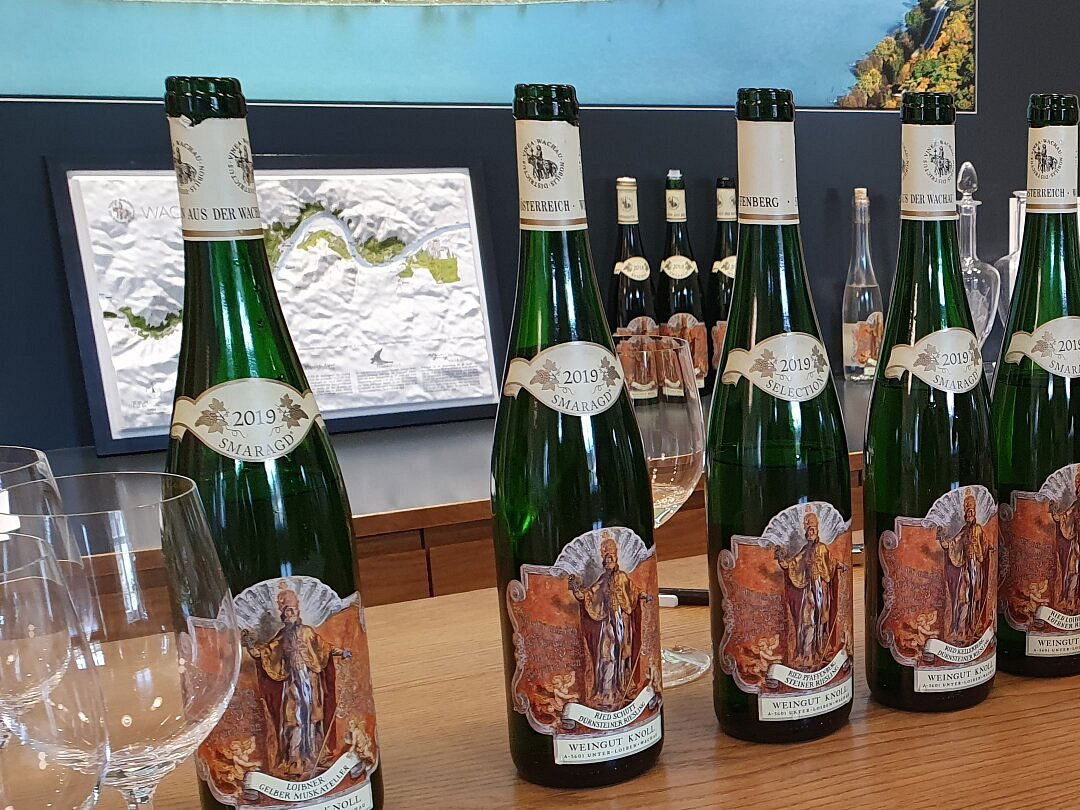
Estate visits in the Wachau tend to follow a format that prioritises wine over theatre. There are no theatrical experiences here in the sense of immersive storytelling or multi-room spectacle. What serious estates like Knoll offer instead is direct access to wines that are otherwise acquired through allocation lists, specialist importers, or secondary market. For a visitor, that directness is the value. You sit with bottles that rarely appear on restaurant wine lists outside Austria's major cities, and the conversation, where it happens, is about vineyard sites and vintage character rather than brand narrative.
The address at Unterloiben 132 places the estate in the lower Wachau, close to Dürnstein proper, which means a visit can be paired logically with the broader valley itinerary. Dürnstein's restaurant and accommodation options are covered in our full Dürnstein restaurants guide and our full Dürnstein hotels guide. The village itself is compact and historically dense, with the baroque church tower and castle ruins providing the visual context that makes this stretch of the Danube one of central Europe's most photographed river valleys. Travelling the valley is covered further in our full Dürnstein experiences guide.
Because specific booking formats and current tasting hours are not confirmed in our database for this estate, the practical advice is to contact the winery directly before visiting. Austrian wine estates, particularly those with limited production and allocation-heavy release models, do not always maintain walk-in tasting hours during harvest periods. Visiting outside the September-to-October harvest window, or in the quieter months of January through March, typically allows for more considered engagement with the cellar team.
What the 2025 Award Implies About the Wines
A Pearl 3 Star Prestige rating from EP Club is not awarded on volume or marketing. It reflects a sustained quality signal across assessed bottles, positioning Knoll among a small group of Austrian producers that consistently perform at that level. In comparative terms, the Wachau's Smaragd Rieslings from top-performing estates age on a trajectory that surprises visitors accustomed to thinking of Austrian wine as a current-drinking category. Bottles from quality vintages in this valley show meaningful development at eight to fifteen years, with the primary fruit integrating into mineral and petrol registers that have made the style a reference point for aged white wine.
The Wachau's Grüner Veltliner at Smaragd level is a different proposition from the easy, pepper-driven entry-level versions that most consumers encounter first. At this tier, the wine carries weight, texture, and an aging curve that places it in genuine competition with other serious dry whites on the international stage. For visitors to the estate, tasting through the Smaragd range against younger and older vintages, where available, is the format that most directly communicates why this address carries its reputation.
The Wachau Within Austria's Broader Wine Map
Austria's wine regions are more varied than the Wachau's international dominance implies. To the east, the Burgenland produces a different register entirely: the sweet wines of Weingut Kracher in Illmitz represent one endpoint, while red-focused estates like Weingut Pittnauer in Gols work Blaufränkisch and field blends in a warmer, more Pannonian context. The Kamptal, immediately north of the Wachau, produces Riesling and Grüner Veltliner on a slightly different terroir profile; Schloss Gobelsburg in Langenlois is the most internationally recognised address there. Further afield, Weingut Heinrich Hartl in Oberwaltersdorf and Weingut Scheiblhofer Distillery in Andau represent the continuing diversification of the Austrian premium category.
For international context, the question of how Wachau Riesling sits against other European fine wine regions is increasingly answered by price and allocation dynamics rather than critical debate. Estates like Knoll now operate with demand that outstrips release volumes, a supply pattern that aligns them more closely with prestige Spanish producers or established Scotch distilleries like Aberlour than with open-market commodity wine. The scarcity is structural, rooted in the finite terroir of a narrow river valley where the most regarded vineyard sites cannot be expanded.
Planning a Visit to the Wachau's Upper Tier
Dürnstein sits roughly 85 kilometres west of Vienna by road or rail, making it a viable day trip from the capital, though the region rewards overnight stays that allow morning light on the river terraces. The Wachau Valley Wine Trail connects key producers along the Danube, and a focused itinerary can cover Knoll alongside Alzinger and F. X. Pichler within a single afternoon, provided appointments are confirmed in advance. Our full Dürnstein wineries guide maps the valley's producer concentration and suggests logical routing. For an evening in the village, the bar and drinks scene is compact; see our full Dürnstein bars guide for current options.
The harvest period brings the valley to life in a visible way , tractors on narrow roads, bins of Riesling at cellar doors , but it is also when estates are least available for visits. The window between late November and early spring, when wines from the previous vintage are being assessed and prepared for release, is often more productive for serious tasting conversations. Come with vintage questions rather than purchase orders if you want engagement rather than transaction.
Frequently Asked Questions
What is the atmosphere like at Weingut Emmerich Knoll?
Weingut Emmerich Knoll is a working estate in Unterloiben, not a designed visitor experience. The atmosphere is that of a serious agricultural operation where the wines are the focus. Given the estate's Pearl 3 Star Prestige (2025) and its position among the Wachau's most closely followed producers, visits tend to attract knowledgeable wine buyers and collectors rather than casual tourists. If you are coming from outside Austria, contacting the estate ahead of your trip to confirm availability and format will significantly improve the experience. The setting in Unterloiben provides the Danube valley context, but the cellar conversation is what most visitors are there for.
What is the wine to seek out at Weingut Emmerich Knoll?
The Wachau's upper tier is built on Smaragd-classified Riesling and Grüner Veltliner, and both grape varieties are central to what estates like Knoll are assessed on. Smaragd Riesling from specific Wachau sites , particularly those on the primary rock slopes above the river , is what drives the estate's international critical standing and EP Club's 3 Star Prestige assessment. If you are visiting to taste rather than simply to purchase, asking to work through the Smaragd whites against different vintages, where the cellar allows, is the format that most directly connects to why the estate holds this reputation. Specific current releases and vineyard designations should be confirmed directly with the estate.
Credentials Lens
A small set of peers for context, based on recorded venue fields.
| Venue | Classification | Awards | First Vintage | Notes |
|---|---|---|---|---|
| Weingut Emmerich Knoll | 1 awards | This venue | ||
| Weingut Alzinger | 1 awards | |||
| Weingut F. X. Pichler | 1 awards | |||
| Domäne Wachau | World's 50 Best |
Access the Cellar?
Our members enjoy exclusive access to private tastings and priority allocations from the world's most sought-after producers.
Access the Concierge