
Weingut Kracher in Illmitz sits at the heart of Austria's Burgenland wine country, where the Neusiedlersee's humid microclimate has long shaped some of Europe's most celebrated sweet wines. Recognised with a Pearl 3 Star Prestige award in 2025, the estate operates at the upper tier of Pannonian wine production. Plan a visit around harvest season, when the region's botrytis-prone conditions are at their most active.
Where the Lake Makes the Wine
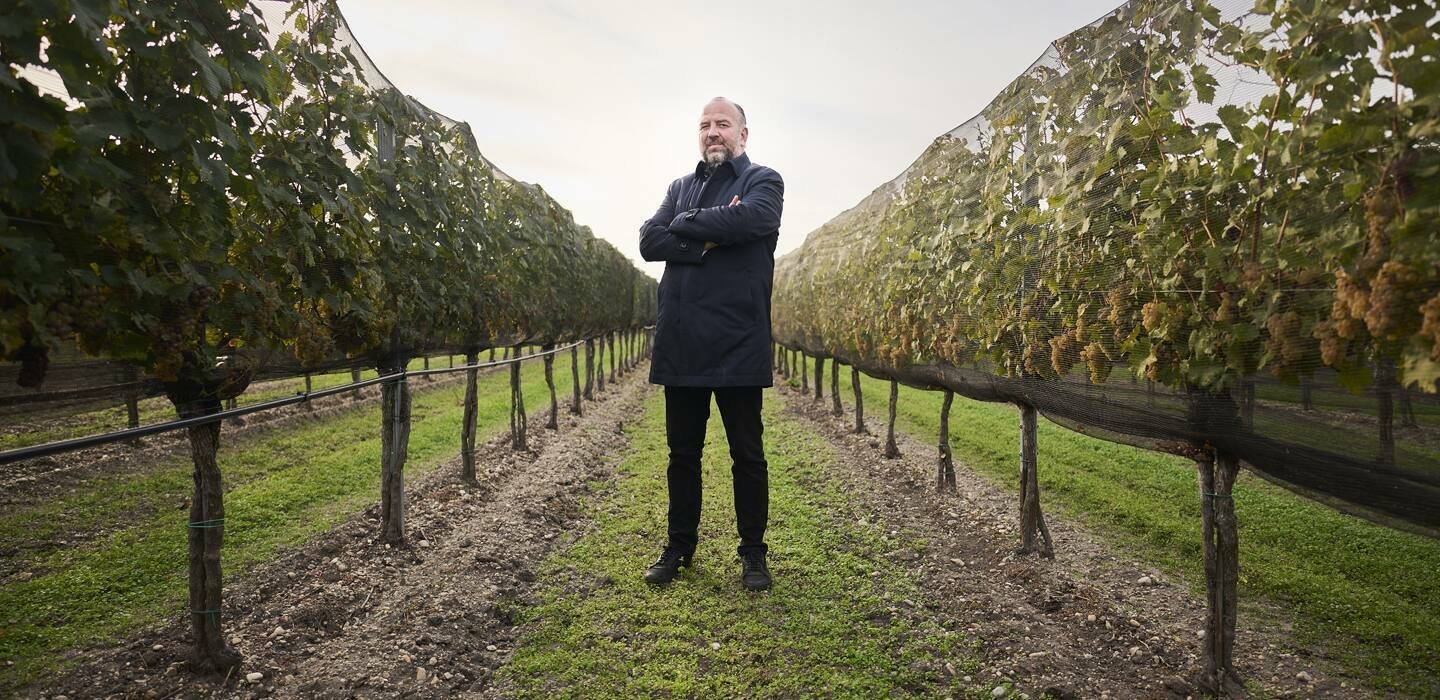
The road into Illmitz flattens out well before you arrive. The Pannonian plain stretches in every direction, reed beds fringing the shallow western shore of the Neusiedlersee, and the sky sits low and wide over fields that seem to absorb rather than deflect the light. This is one of the few wine regions in Europe where the physical environment is so dominant that it effectively co-authors every bottle produced here. The lake moderates temperature, raises humidity, and, in the right autumns, encourages the spread of Botrytis cinerea across susceptible grape skins with a reliability that Sauternes producers have spent centuries trying to engineer elsewhere. At Weingut Kracher, located at Apetlonerstraße 37 in the centre of Illmitz, this geography is not backdrop — it is method.
The estate holds a Pearl 3 Star Prestige recognition for 2025, placing it in the highest tier of EP Club-assessed producers in the region. That credential matters not just as a ranking but as a position marker: within Austria's Burgenland wine scene, a small number of producers work at this level of sustained quality and international attention, and Kracher is consistently counted among them.
The Burgenland Sweet Wine Tradition and Where Kracher Sits Within It
Austria's sweet wine tradition is concentrated almost entirely around the Neusiedlersee, and Illmitz sits at the southern end of its western shore, the spit of land most exposed to the lake's influence. The conditions here — warm days, humid nights, still air , are among the most reliably botrytis-friendly in central Europe. Producers across this zone have built international reputations on Trockenbeerenauslesen and Beerenauslesen of considerable concentration, but the field is not large. A handful of estates, including [Weingut Hans Tschida](/wineries/weingut-hans-tschida-illmitz-winery) in the same village, represent the upper bracket of this production style.
Kracher's position within that bracket comes partly from decades of consistent output at the leading Prädikat levels, and partly from the estate's role in drawing international critical attention to Burgenland before that attention was assumed. The late Alois Kracher, who built much of the estate's global recognition in the 1990s and 2000s, is a documented figure in Austrian wine history, credited by multiple major publications with establishing the region's credibility on the international auction and fine wine market. That foundational work now functions as institutional credibility for the estate rather than personal biography , the wines carry forward a standard that was set during a specific, historically verifiable period of Austrian wine development.
For visitors approaching the estate for the first time, the relevant context is this: you are arriving at a producer whose reference point is not the domestic Austrian market but the international fine wine tier, where it prices and positions against comparable sweet wine estates in France and Germany rather than against local village producers. That distinction shapes everything from the wines offered to the manner in which they are presented.
The Approach to Production and What It Produces
Austria's Prädikat system follows the same logic as Germany's in broad terms , grape must weight determines classification level, from Spätlese at the entry tier through to Trockenbeerenauslese at the apex , but Burgenland producers have often pushed for fuller body and more layered extract than their German counterparts, reflecting the warmer Pannonian climate. At the TBA level, wines from this region can carry 10 to 15 years of useful cellar life, and the great vintages extend beyond that.
Kracher has historically divided production between two stylistic families: wines made with new oak (labeled Zwischen den Seen, or Between the Lakes) and those made without oak in stainless steel (Nouvelle Vague). This is not common practice among Burgenland sweet wine producers, and it offers a useful internal comparison for visitors tasting across the range. The oak-influenced wines tend toward structure and complexity over time; the stainless steel wines foreground fresh acidity and primary fruit concentration. Grape varieties across the range have included Welschriesling, Chardonnay, Traminer, and Scheurebe, the latter capable of notable aromatic intensity at high Prädikat levels.
For broader context on how Burgenland producers compare with their Austrian counterparts further north, [Schloss Gobelsburg (Weingut) in Langenlois](/wineries/schloss-gobelsburg-weingut-langenlois-winery) and [Weingut Emmerich Knoll in Dürnstein](/wineries/weingut-emmerich-knoll-drnstein-winery) represent the Kamptal and Wachau styles respectively , dry Grüner Veltliner and Riesling country, where the preoccupation is with mineral precision rather than botrytis concentration. The two traditions sit at different ends of Austrian wine's ambition spectrum.
The Illmitz Context: Visiting This Corner of Burgenland
Illmitz is a small village of around 2,500 people inside the Neusiedler See-Seewinkel National Park, a UNESCO World Heritage Site covering the lake and surrounding wetlands. Wine estates here tend not to operate the kind of formal hospitality infrastructure associated with, say, Napa Valley's tasting room model. Visits to producers in this part of Burgenland typically work on an appointment or advance inquiry basis, and the atmosphere at working estates reflects the agricultural rhythm of the region rather than visitor-oriented programming. Arriving without prior contact is not advisable. Visitors planning a day around this area should factor in the driving time from Vienna, which sits approximately 80 kilometres to the northwest, making Illmitz a feasible day trip but a more rewarding overnight stop.
For accommodation and dining in the area, [our full Illmitz hotels guide](/cities/illmitz) and [our full Illmitz restaurants guide](/cities/illmitz) cover the options in detail. The town's dining scene skews toward regional Austrian cooking with Burgenland influences, including the freshwater fish that the Neusiedlersee has supplied to local kitchens for generations. For drinking beyond wine, [our full Illmitz bars guide](/cities/illmitz) and [our full Illmitz experiences guide](/cities/illmitz) fill in the rest of the picture.
The autumn harvest window, running roughly from late September through November depending on botrytis conditions and the timing of the first frosts, is when the region is at its most active. Sweet wine production in this area is weather-dependent in ways that table wine production is not; a wet autumn without the right temperature differential can suppress botrytis development, while an ideal year produces grapes of exceptional concentration. Visiting during this window gives a clearer sense of what the estates are working toward across the rest of the year.
Placing Kracher in Austria's Wider Wine Estate Map
Austria's premium wine estate scene has expanded considerably since the early 2000s, when international interest in the country's wines was still largely focused on a handful of Wachau and Burgenland producers. The field now includes producers across Kamptal, Kremstal, Thermenregion, and the Vulkanland Steiermark, each region developing a distinct identity. Within this expanded map, [Weingut Pittnauer in Gols](/wineries/weingut-pittnauer-gols-winery) and [Weingut Scheiblhofer Distillery in Andau](/wineries/weingut-scheiblhofer-distillery-andau-winery) represent different approaches within Burgenland itself, while [Weingut Wohlmuth in Kitzeck](/wineries/weingut-wohlmuth-kitzeck-winery) and [Weingut Heinrich Hartl in Oberwaltersdorf](/wineries/weingut-heinrich-hartl-oberwaltersdorf-winery) show how seriously Styria and the Thermenregion are developing their own premium tiers. For [our full Illmitz wineries guide](/cities/illmitz), covering the full range of Illmitz-based producers across styles and price points, the picture is more granular still.
For those building a broader itinerary around fine wine production and comparing European sweet wine regions, [Abadía Retuerta in Sardón de Duero](/wineries/abada-retuerta-sardn-de-duero-winery) and [Aberlour in Aberlour](/wineries/aberlour-aberlour-winery) offer reference points in Spain and Scotland respectively, while [1310 Spirit of the Country Distillery in Sierning](/wineries/1310-spirit-of-the-country-distillery-sierning-winery) rounds out Austria's broader artisan drinks production story.
Planning Your Visit
Weingut Kracher is located at Apetlonerstraße 37, 7142 Illmitz, Austria. No phone or booking system details are held in our current database, so advance contact via the estate's own channels is advisable before planning a visit. Given the estate's international standing and Pearl 3 Star Prestige recognition for 2025, demand for tastings and allocations is not casual , particularly in strong vintage years. Visiting in autumn aligns most closely with the estate's production cycle, though library wines and older vintages may be available at other times of year depending on appointment availability.
Frequently Asked Questions
What should I expect atmosphere-wise at Weingut Kracher?
Illmitz is a working agricultural village inside a national park, and the estates here reflect that character. Expect a producer-first environment rather than a polished hospitality operation. Weingut Kracher carries a Pearl 3 Star Prestige award for 2025, which places it at the leading of EP Club's assessed tier for the region, but the setting remains rooted in the Pannonian plain's quiet, flat farmland aesthetic. Prior contact before visiting is strongly recommended.
What do visitors recommend trying at Weingut Kracher?
Kracher's reputation rests on Trockenbeerenauslesen and Beerenauslesen produced from the lake-facing vineyards of Illmitz, with the Neusiedlersee's botrytis-prone microclimate driving the style. The two production lines , oak-influenced Zwischen den Seen and the stainless steel-aged Nouvelle Vague , offer internally contrasting expressions of what the same high-Prädikat fruit can produce under different cellar conditions. Both have received sustained recognition from international critics and auction houses. The estate holds a 2025 Pearl 3 Star Prestige award from EP Club.
What's the standout thing about Weingut Kracher?
In a region where the Neusiedlersee's microclimate gives most producers access to similar botrytis conditions, what separates Kracher is the consistency of output at the Trockenbeerenauslese level across multiple decades and its documented role in establishing Burgenland's credibility on the international fine wine market. The Pearl 3 Star Prestige recognition for 2025 confirms that the estate continues to operate at that standard. It sits in a small peer group within Illmitz, alongside producers like [Weingut Hans Tschida](/wineries/weingut-hans-tschida-illmitz-winery), where the reference point is international rather than regional.
Cuisine Lens
A quick peer reference to anchor this venue in its category.
| Venue | Classification | Awards | First Vintage | Notes |
|---|---|---|---|---|
| Weingut Kracher | 1 awards | This venue | ||
| Schloss Gobelsburg (Weingut) | World's 50 Best | |||
| Weingut Bründlmayer | 1 awards | |||
| Weingut Emmerich Knoll | 1 awards | |||
| Weingut Heinrich Hartl | 1 awards | |||
| Weingut Jurtschitsch | 1 awards |
Access the Cellar?
Our members enjoy exclusive access to private tastings and priority allocations from the world's most sought-after producers.
Access the Concierge