Weingut Jurtschitsch

Weingut Jurtschitsch is a Langenlois estate operating at the intersection of organic viticulture and Kamptal precision, holding a Pearl 3 Star Prestige award for 2025. Situated on Rudolfstraße in the heart of one of Lower Austria's most respected wine towns, the estate positions itself within a small cohort of Kamptal producers whose farming philosophy shapes the wine as much as the cellar does.
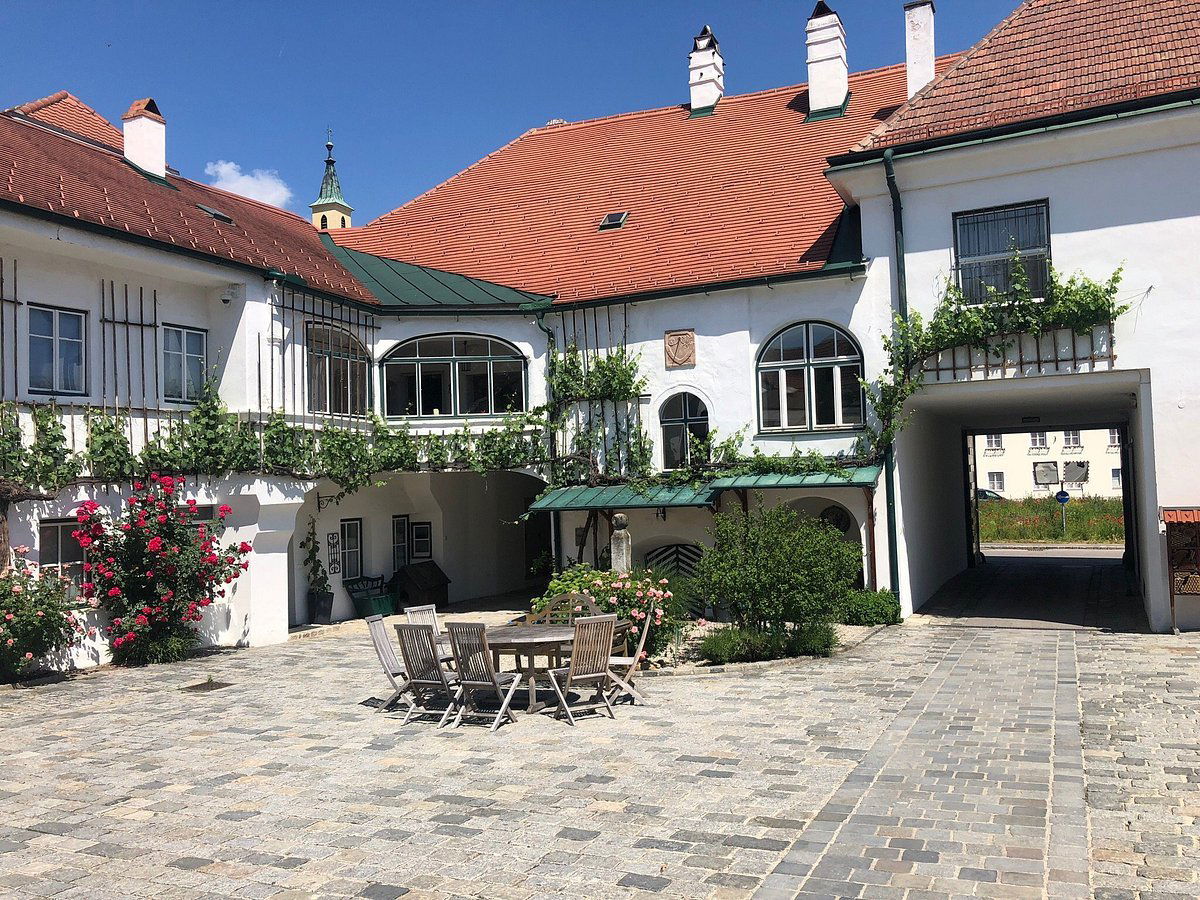
Kamptal From the Ground Up
The Kamptal Valley sits roughly 70 kilometres northwest of Vienna, where the Kamp River cuts through loess terraces and gneiss slopes that have produced white wine of genuine structural interest for centuries. Langenlois is its administrative and cultural centre, a town whose Rudolfstraße address tells you something immediately: this is a working wine street, not a tourist corridor dressed up in vineyard aesthetics. Weingut Jurtschitsch occupies that address and, more importantly, occupies a specific position within the town's established hierarchy of producers — a tier defined less by volume than by how seriously the estate treats the soil beneath its vines.
That framing matters because Langenlois is not a town where reputation is easily manufactured. Its producers, including Weingut Bründlmayer, Weingut Fred Loimer, Schloss Gobelsburg, and Weingut Hiedler, have spent decades building credibility around specific vineyard sites and varietal precision. Within that context, Jurtschitsch's Pearl 3 Star Prestige recognition for 2025 is not an outlier — it is a confirmation of where the estate sits in that established peer group.
Organic Farming as Method, Not Marketing
In Austrian wine at the premium level, the shift toward organic and biodynamic viticulture has been one of the defining structural changes of the past two decades. The Kamptal has been part of that shift, and Jurtschitsch is among the producers who have moved in that direction not as a branding exercise but as a practical commitment to what the region's soils can express when they are farmed with restraint.
The argument for organic viticulture in Kamptal is geologically specific. The valley's soils range from deep loess deposits on the lower slopes to ancient gneiss on the refined Heiligenstein and neighbouring sites. Each demands a different approach to canopy management, yield control, and harvest timing. Farming these sites without synthetic inputs requires a level of observation and intervention that the chemistry-assisted approach tends to short-circuit. Producers who have made this commitment , and sustained it across difficult vintages , tend to produce wines with a clarity of place that their conventionally farmed counterparts often struggle to match. Jurtschitsch's position in this cohort is part of what the 2025 Prestige recognition reflects.
For broader context on this farming philosophy applied across different Austrian regions, it is worth noting how producers like Weingut Pittnauer in Gols have pursued similar commitments in Burgenland's red wine heartland, or how Weingut Emmerich Knoll in Dürnstein represents the Wachau's own interpretation of site-driven, minimal-intervention precision. These are not identical approaches, but they share a premise: that the wine's quality ceiling is determined by what happens in the vineyard far more than what happens in the cellar.
The Kamptal Grüner Veltliner and Riesling Framework
Any serious engagement with Langenlois requires understanding the dual-varietal identity that defines the appellation. Grüner Veltliner and Riesling are the region's twin pillars, each expressing Kamptal's climate and geology in distinct ways. Grüner Veltliner on loess tends toward weight, texture, and the white pepper characteristic that distinguishes Austrian examples from almost any other white variety grown anywhere. Riesling on gneiss , particularly from sites like Heiligenstein, one of Austria's most discussed single vineyards , produces wines with a mineral austerity and aging capacity that invite comparisons to the Mosel and Alsace while remaining categorically Austrian.
Jurtschitsch farms within this framework, and the estate's alignment with organic practices means its single-vineyard expressions are positioned to reflect the actual character of those sites rather than a homogenised cellar style. This is what separates the estate's tier from volume producers in the same appellation: the bet is on specificity, on the idea that a wine from one slope should taste different from a wine grown two kilometres away because the geology and microclimate are genuinely different, and because the farming has not blurred those distinctions.
For comparison, Weingut Kracher in Illmitz represents the opposite end of the Austrian wine spectrum , the Burgenland TBA and Auslese tradition , which underlines how diverse Austrian fine wine has become. The Kamptal model is built on dry table wines of structural precision, a fundamentally different value proposition from the botrytis-influenced sweet wines of the Neusiedlersee.
Visiting Langenlois: Context and Logistics
Langenlois is reachable from Vienna by a combination of train to Krems and then a short regional connection, or by car along the A22 motorway northwest through the Wachau. The journey takes roughly 90 minutes from the city centre by road. The town is compact enough to visit multiple estates in a single day, which is how most serious visitors approach it: Jurtschitsch as one stop within a structured tasting route that might include Weingut Hiedler for comparison on Kamptal Grüner Veltliner, or Weingut Fred Loimer for a different take on organic and biodynamic approaches in the same appellation.
The estate's address at Rudolfstraße 39 places it within walking distance of the town centre, which has its own modest infrastructure of restaurants, accommodation, and the Loisium wine spa complex. For those planning a full stay, our full Langenlois hotels guide covers the accommodation options across the town's price range, while our full Langenlois restaurants guide maps the dining options that pair logically with an afternoon of tasting. The bars and experiences guides cover the remainder of what the town offers beyond the cellar door.
Because the venue database does not include current opening hours, booking methods, or tasting formats for Jurtschitsch, visitors should check the estate's contact details directly before planning a visit. This is standard practice for Austrian estate wineries, where cellar door visits often require advance arrangement, particularly during harvest in September and October when the team's attention is necessarily focused on the vintage.
Where Jurtschitsch Sits in the Wider Austrian Picture
Austria's fine wine identity has shifted considerably since the 1985 glycol scandal forced a near-complete rebuild of the industry's credibility. What emerged from that period was a culture of quality-first production that has produced, in the intervening four decades, a group of producers capable of competing credibly at the international premium level. The DAC (Districtus Austriae Controllatus) system, which gives regional appellations like Kamptal a formal framework for varietal identity, has supported that trajectory.
Jurtschitsch's 2025 Pearl 3 Star Prestige award places it within the upper tier of that rebuilt reputation. For context on how the same premium commitment plays out in entirely different categories and geographies, consider Abadía Retuerta in Sardón de Duero, where a comparable seriousness about site and viticulture has produced a different but equally deliberate kind of estate wine. The comparison is not about style , a Kamptal Grüner Veltliner and a Ribera del Duero red occupy entirely different sensory registers , but about the approach that earns a place in the premium tier of any region's hierarchy.
Langenlois produces some of the most compelling dry white wines in Central Europe, and our full Langenlois wineries guide maps the full range of estates that make that claim credible. Within that group, the producers committed to organic or biodynamic farming represent a smaller cohort whose collective output has done more than any other single factor to raise the appellation's international profile over the past fifteen years. Jurtschitsch is part of that cohort, and the 2025 recognition is the kind of external validation that confirms rather than creates a reputation already built in the vineyard.
Frequently Asked Questions
- What wines should I focus on at Weingut Jurtschitsch?
- The estate operates within the Kamptal DAC framework, which centres on Grüner Veltliner and Riesling. Given the estate's organic farming approach and its position among Langenlois's prestige-tier producers , confirmed by its Pearl 3 Star Prestige award for 2025 , the single-vineyard expressions from refined gneiss sites are the logical starting point for any serious tasting. Kamptal Riesling from sites like Heiligenstein represents the region's most distinctive output internationally. Peer estates including Weingut Bründlmayer and Schloss Gobelsburg work the same varietal territory and offer useful reference points for comparison.
- What should I know about Weingut Jurtschitsch before I go?
- The estate is located at Rudolfstraße 39 in Langenlois, approximately 70 kilometres northwest of Vienna in the Kamptal appellation of Lower Austria. It holds a Pearl 3 Star Prestige award for 2025, placing it in the upper tier of the town's established producer hierarchy. Current pricing, opening hours, and tasting formats are not confirmed in available records, so contacting the estate directly before visiting is advisable. Langenlois rewards a multi-estate approach , pairing a visit here with stops at Weingut Fred Loimer or Weingut Hiedler gives useful comparative context for the region's organic viticulture cohort. For accommodation and dining, see our Langenlois hotels guide.
Awards and Standing
A quick peer snapshot; use it as orientation, not a full ranking.
| Venue | Classification | Awards | First Vintage | Notes |
|---|---|---|---|---|
| Weingut Jurtschitsch | 1 awards | This venue | ||
| Schloss Gobelsburg (Weingut) | World's 50 Best | |||
| Weingut Bründlmayer | 1 awards | |||
| Weingut Fred Loimer | 1 awards | |||
| Weingut Hiedler | 1 awards |
Access the Cellar?
Our members enjoy exclusive access to private tastings and priority allocations from the world's most sought-after producers.
Access the Concierge