
Viña San Pedro operates along the Panamericana Sur in Molina, within the Maule wine corridor that anchors Chile's volume and prestige production alike. Awarded Pearl 2 Star Prestige in 2025, the estate sits in the mid-to-upper tier of Curicó's winery circuit, drawing visitors for structured tastings and a portfolio that reflects the valley's characteristic Cabernet and Carménère character.
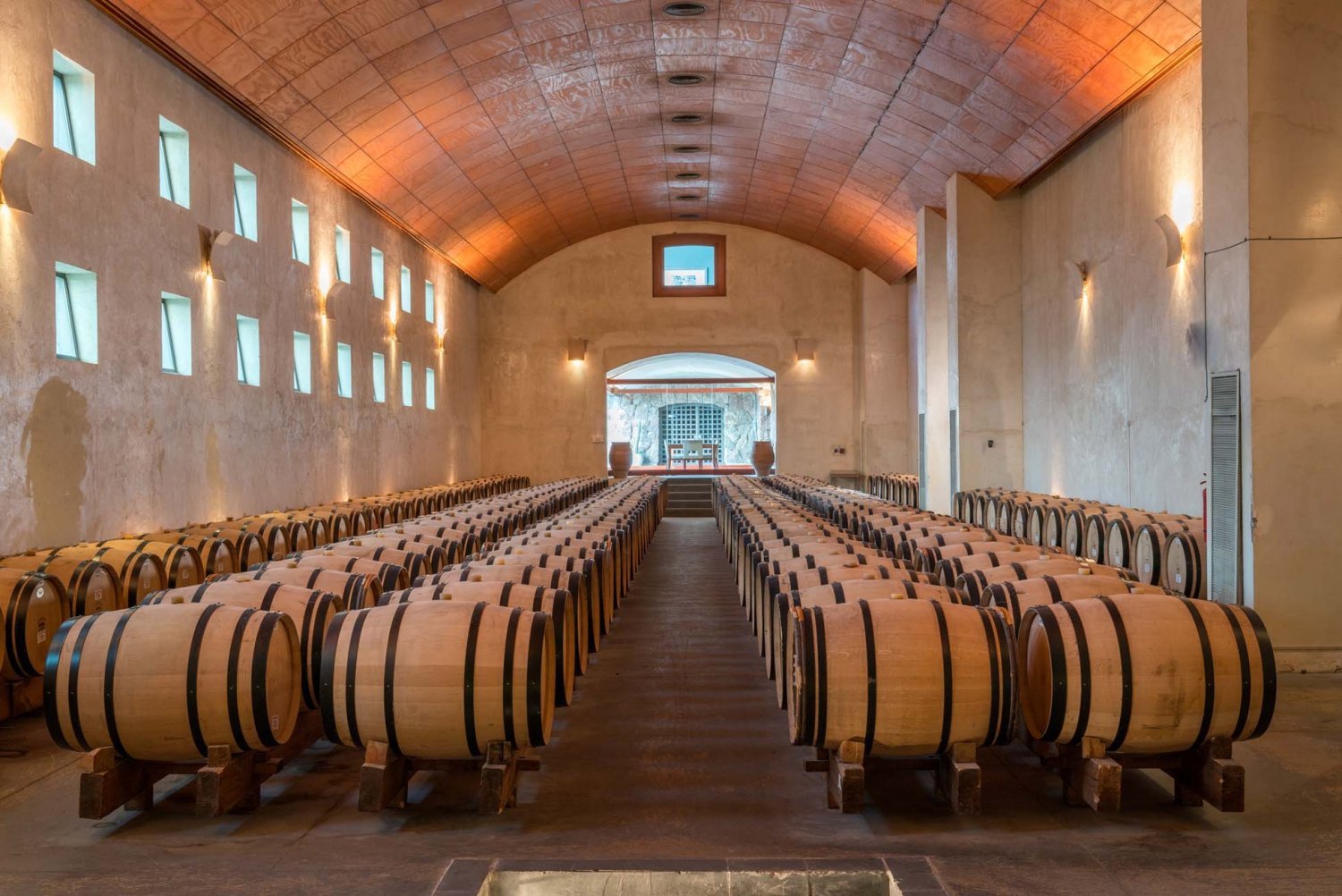
The Maule Corridor and Where San Pedro Sits Within It
Drive south from Curicó on the Panamericana Sur and the valley opens into a broad agricultural plain edged by the Andes to the east and the coastal range to the west. This is the Maule region: Chile's largest wine-producing zone by volume, and one that has spent the better part of two decades shaking off a bulk-production reputation in favour of estate-driven, terroir-focused output. The road through Molina takes you past some of the most productive vineyard land in the Southern Hemisphere, where dry-farmed old vines and modern sorting lines coexist within the same property boundaries. Viña San Pedro, located at Ruta Panamericana Sur 205, sits squarely in this corridor, and its 2025 Pearl 2 Star Prestige award places it in the upper tier of a competitive regional peer set.
That award matters as a calibration point. The Pearl 2 Star Prestige designation is not handed to estates on the basis of scale alone — it signals a level of quality consistency and hospitality format that separates structured wine tourism from roadside cellar-door visits. In Curicó and the broader Maule, where the gap between large-volume producers and serious tasting-room operations can be wide, that distinction shapes how a visit should be planned and what a visitor should expect on arrival.
The Physical Experience: Approaching and Entering
Estates along the Panamericana Sur tend to announce themselves with scale before detail — long vineyard rows visible from the road, gated entrances set back from the highway, working facilities that signal production before pleasure. San Pedro's Molina address places it within this tradition of large-estate wine culture, where the approach through working viticulture is itself part of the context. The visual language of the Maule in late summer, when vines are heavy and the light off the Andes has a particular clarity, sets a different register than, say, the boutique design lodges of Colchagua or the cellar tourism of Casablanca.
What that means for the tasting experience is that the setting is utilitarian in the leading sense: the estate's scale gives the visit a grounding in how Chilean wine actually gets made at production level, rather than presenting a curated lifestyle abstraction. Visitors who have come through the smaller, design-led operations at Viña MontGras in Palmilla or the Mediterranean-influenced architecture of Abadía Retuerta in Sardón de Duero will find a different register here , one where the wine itself and the land behind it carry more of the narrative weight.
Tasting Format and What the Visit Delivers
The editorial angle on Maule tastings at this prestige tier is that the format tends to be structured rather than casual , guided rather than self-led, with staff who can contextualise the estate's range across multiple price points and styles. This matters in a portfolio as broad as San Pedro's, where the distance between entry-level and prestige labels reflects genuine differences in site selection, aging protocol, and grape sourcing. A well-run tasting at this level should do the work of translating that complexity without requiring the visitor to arrive already fluent in Chilean appellation politics.
The Maule's signature varieties , Cabernet Sauvignon with altitude influence from the Andean foothills, Carménère from older valley-floor plantings, and Syrah that has gained considerable critical attention over the past decade , are the natural backbone of any San Pedro tasting session. Carménère, in particular, has become the lens through which serious Chilean producers in this corridor differentiate themselves: where it was once blended out as a Merlot impersonator, it now appears as a headline variety with its own aging and site logic. Estates that handle it well, which the 2025 Pearl recognition implies San Pedro does at a prestige level, tend to show it with more structural backbone and less of the green-pepper excess that characterised earlier interpretations.
For comparison within the Curicó circuit, Viña Requingua and El Gobernador (Miguel Torres Chile) represent different points on the regional spectrum , the latter bringing a Spanish wine heritage and significant international recognition to the same valley floor. San Pedro's positioning, with its own prestige-tier recognition, places it in a peer conversation with estates that take the format of wine tourism seriously rather than treating the tasting room as an afterthought to production volume.
The Broader Curicó Winery Circuit
Curicó as a wine destination has a different visitor profile than Casablanca or Colchagua. It draws fewer international tourists seeking polished wine-and-food itineraries and more serious wine travellers who understand that Maule's old-vine heritage and high-altitude potential represent the frontier of Chilean quality. The region lacks the coastal cool of Casablanca's Sauvignon Blanc country and the boutique-resort infrastructure of Santa Cruz in Colchagua, but it compensates with genuine agricultural depth and a set of producers working at scale without sacrificing site specificity.
For those building a multi-day itinerary around the valley, the Curicó winery circuit offers enough range to justify a full day or more. Beyond San Pedro, the broader Maule and central valley corridor extends north and south to estates including Viña Casa Silva in San Fernando and Viña De Martino in Isla de Maipo, each representing a distinct approach to the same broad Chilean valley-wine tradition. Further afield, Viña Falernia in Vicuña and Pisco Alto del Carmen Distillery in Huasco point toward Chile's northern production zones, where altitude and aridity create an entirely different sensory context. The full Curicó wineries guide maps the local circuit in more detail.
Accommodation and dining in Curicó itself are covered in the Curicó hotels guide and the Curicó restaurants guide, where the town's relatively modest tourism infrastructure is set against a local food culture that leans heavily on the valley's agricultural produce. The Curicó bars guide and Curicó experiences guide round out the picture for visitors planning more than a single estate visit.
Planning the Visit
Viña San Pedro's address on the Ruta Panamericana Sur in Molina makes it accessible by road from Curicó, which sits approximately 15 kilometres to the north, and from Talca to the south. The Panamericana is the main artery through the Maule, and most estates along it are set up for visitors arriving by private vehicle rather than public transport , a consideration worth building into any itinerary. Wine tourism in this corridor tends to be most atmospheric between February and April, when harvest activity brings the working side of a large estate to life and the Andean backdrop has its clearest late-summer visibility.
Specific tasting hours, booking requirements, and pricing are not confirmed in our current data. Given the 2025 Pearl 2 Star Prestige standing, a visit structured around advance contact , via the estate's own channels , is the sensible approach rather than an unplanned roadside stop. Comparable prestige-tier estates in Chile's central valley typically operate guided tastings by appointment, and the format tends to reward visitors who arrive with some baseline knowledge of the estate's range. Pairing a San Pedro visit with Viña Santa Rita in Buin or international reference estates in advance gives a useful comparative frame for understanding where Maule's prestige tier sits in a global context.
Frequently Asked Questions
What's the leading wine to try at Viña San Pedro?
Without confirmed tasting notes from our verified sources, naming specific bottles would go beyond what the data supports. What the Maule region and the estate's Pearl 2 Star Prestige recognition together imply is that the prestige-tier labels , likely built around Cabernet Sauvignon, Carménère, or Syrah from older or higher-altitude sites , represent the strongest expression of what the estate does at its most serious level. Ask the tasting room staff to anchor the session around whatever they consider the most site-specific expression in the current portfolio.
What's the main draw of Viña San Pedro?
Scale combined with prestige-tier recognition is the combination that distinguishes San Pedro within Curicó's winery circuit. The estate operates at a volume that gives visitors genuine insight into how large-scale Chilean wine production works, while the 2025 Pearl 2 Star Prestige award signals that quality output is not sacrificed to that scale. For wine tourists who want to understand the Maule's role in Chilean wine at both a practical and qualitative level, it provides a more grounded experience than smaller boutique operations and a more rigorous one than direct factory tours.
Do they take walk-ins at Viña San Pedro?
Confirmed walk-in policy is not available in our current data. Given the estate's prestige-tier recognition and its position along a main highway, it likely operates some form of visitor programme, but whether that runs on a walk-in or appointment basis is not confirmed. Contact the estate directly before visiting , especially outside of peak harvest season, when staffing for guided tastings may be scheduled rather than continuous.
The Minimal Set
Comparable options at a glance, pulled from our tracked venues.
| Venue | Classification | Awards | First Vintage | Notes |
|---|---|---|---|---|
| Viña San Pedro | 1 awards | This venue | ||
| El Gobernador (Miguel Torres Chile) | 1 awards | |||
| Miguel Torres Chile | 1 awards | |||
| Viña Requingua | 1 awards |
Access the Cellar?
Our members enjoy exclusive access to private tastings and priority allocations from the world's most sought-after producers.
Access the Concierge