Tobermory Distillery

On the waterfront of Tobermory's painted harbour, Scotland's only island distillery producing both peated and unpeated single malt occupies a position that few Scottish producers can match. Holding a Pearl 3 Star Prestige award for 2025, Tobermory Distillery draws serious whisky drinkers to the Isle of Mull for a combination of maritime character and production range that the mainland cannot replicate.
 Discover on Pearl
Pearl is the En Primeur Club membership app — saves, bookings, and concierge access live there. Same editors, same standards.
- Address
- Tobermory, Isle of Mull PA75 6NR, UK
- Phone
- +44 1688 302647
- Website
- tobermorydistillery.com
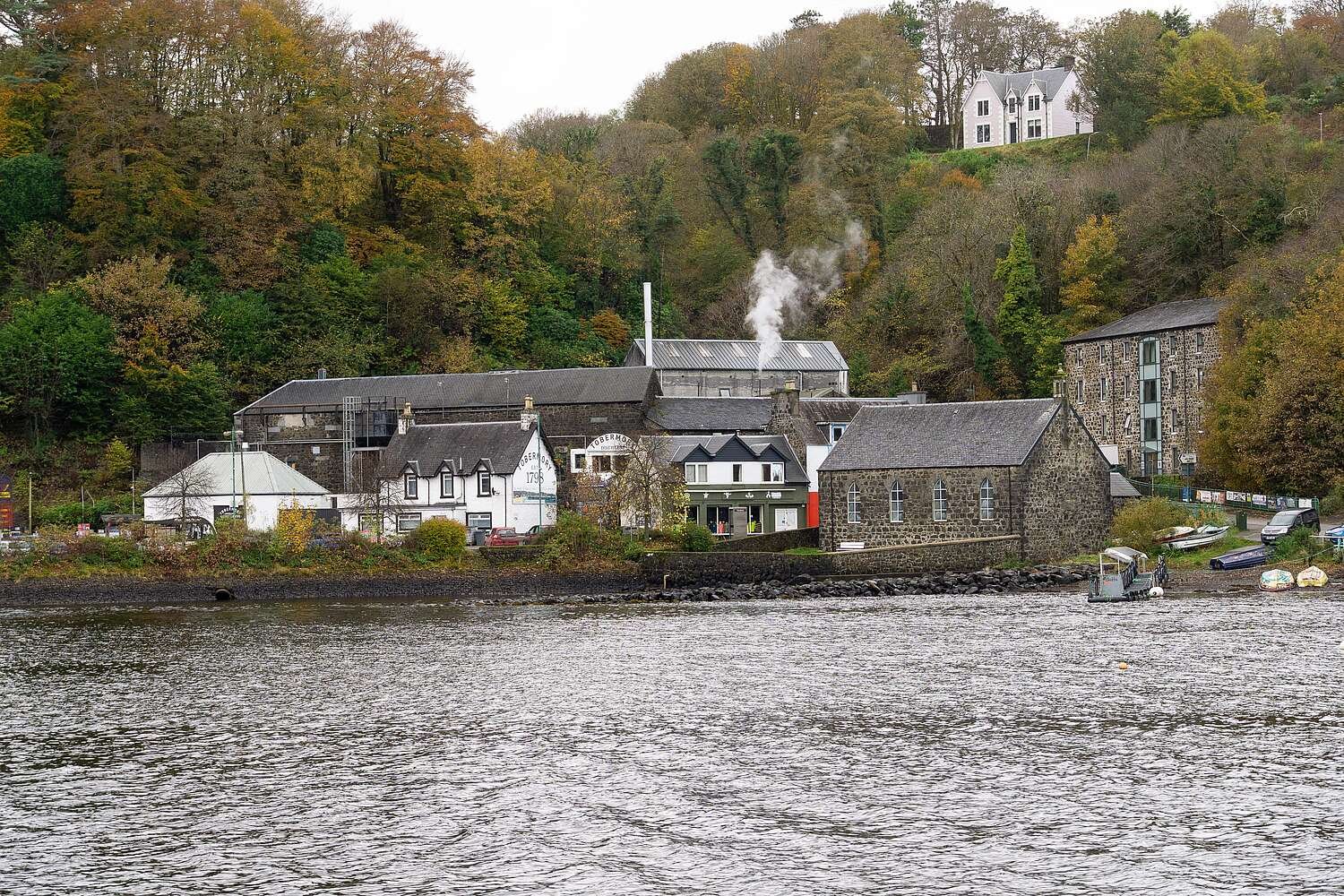
Where the Harbour Meets the Still
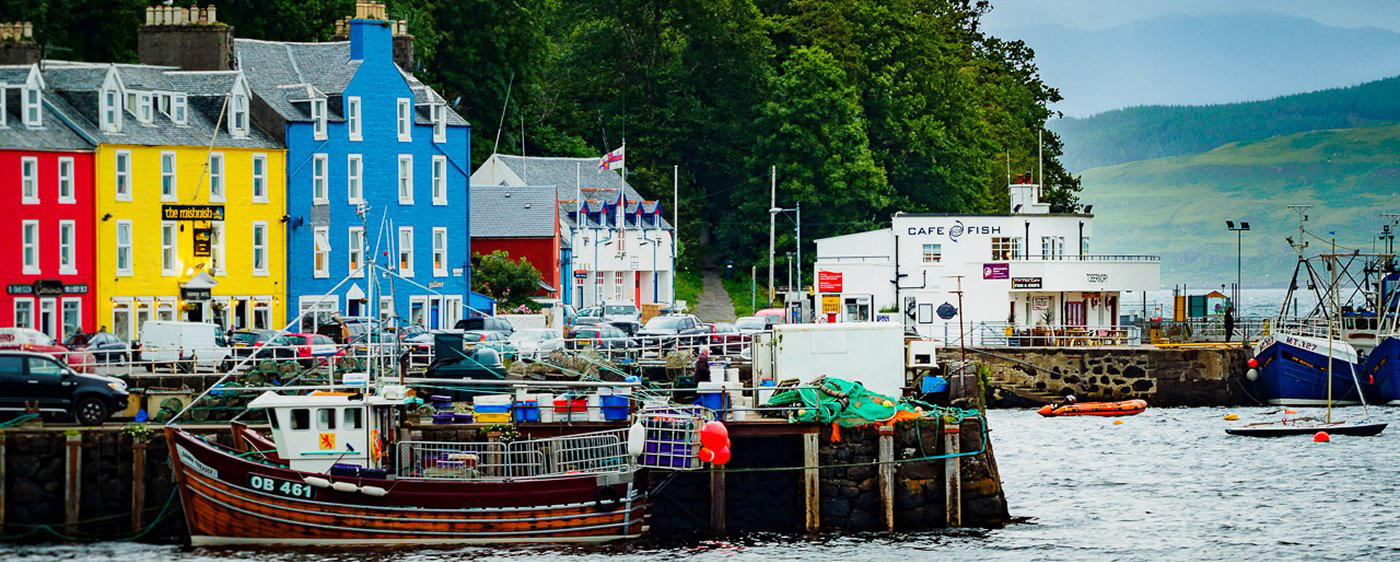
Approach Tobermory by ferry and the distillery announces itself before you reach the pier. The coloured Georgian facades of the harbour front frame a working production site that has operated on this bay since 1798, its warehouses sitting close enough to the water that the air arriving off the Sound of Mull does not merely surround the ageing casks, it becomes part of them. The salinity and humidity of an Atlantic island seaport are not incidental details here; they are material inputs to what ends up in the bottle.
Island distilleries occupy a distinct category in Scottish whisky. They are fewer in number, harder to reach, and shaped by environments that lowland and Speyside producers simply do not have access to. The Isle of Mull's position on Scotland's west coast means its distillery faces different atmospheric conditions than, say, Balblair Distillery in Edderton on the Easter Ross coast, or Clynelish Distillery in Brora further north. Each of those locations imprints something different. On Mull, the combination of Atlantic rainfall, sea air, and the logistical isolation of island production creates a whisky culture that rewards the effort of getting there.
Terroir in a Maritime Climate
The concept of terroir translates imperfectly from viticulture to distilling, but in island whisky it carries more weight than the sceptics usually allow. The physical environment shapes what Tobermory produces in ways that go beyond marketing. Water drawn from the Mishnish Lochs carries the character of Mull's peat-stained uplands. The warehouses, exposed to sea-level air circulation, influence the rate and nature of evaporation during maturation. These are not abstract claims; they are the same environmental arguments that give island whiskies their collective identity and that set Tobermory apart from mainland producers working with more controlled or moderated conditions.
What makes Tobermory's position in this category particularly worth examining is the dual production format. The distillery produces both an unpeated single malt under the Tobermory name and a heavily peated expression under the Ledaig label, two distinct spirits from the same stills. This is not common practice. Most Islay distilleries commit fully to one direction or the other; producers like Ardnahoe in Port Askaig and Glen Scotia in Campbeltown define themselves more singularly. The ability to present two contrasting faces from one site gives visitors and collectors a comparatively rare lens through which to understand how peating level, rather than geography alone, shapes the sensory result.
The unpeated Tobermory expressions tend to show the maritime and fruity character that its coastal maturation environment promotes, while the Ledaig releases bring the smoke-forward intensity associated with the heaviest Islay styles, yet inflected by Mull's specific climate rather than an Islay warehouse. For serious whisky drinkers interested in how environment and production choices interact, this is a more instructive comparison than most single distillery visits can provide.
2025 Recognition and Where It Sits Among Scottish Producers
Tobermory Distillery holds a Pearl 3 Star Prestige award for 2025. Context matters here: Scotland's distillery sector ranges from high-volume blending operations to small, allocation-driven independents, and the prestige award tier places Tobermory in company that demands more than volume or heritage alone. Peers at various points along the spectrum include Dornoch Distillery, which has attracted attention for its historically-informed production methods, and Dunphail Distillery, among newer entrants building reputations in the prestige tier.
In Speyside, producers such as Aberlour and Cardhu in Knockando operate with the advantages of a densely productive region and established tourism infrastructure. Tobermory's recognition comes without those structural advantages, which makes the 2025 Pearl 3 Star Prestige a signal worth taking seriously. Getting to Mull requires planning; maintaining consistent quality under island logistics requires care and consistency.
For those building a picture of Scottish distilling beyond the Highland and Speyside mainstream, comparison with western and lowland producers adds useful calibration. Auchentoshan in Clydebank represents the Lowland triple-distilled tradition; Bladnoch in Bladnoch occupies the southernmost point of Scottish production. Deanston offers a different Highland character shaped by its converted mill setting. Each sits in a distinct geographical and stylistic register. Tobermory's island position remains the most logistically demanding of these alternatives, and that barrier to access is part of what gives a visit its weight.
Planning the Visit
Reaching Tobermory requires the Caledonian MacBrayne ferry from Oban, with crossing times typically around 45 minutes to Craignure on the island's eastern coast, followed by a drive of roughly 35 minutes to Tobermory on the northern tip. Tobermory itself is a small working town with accommodation options that range from harbourfront guesthouses to more rural properties on the island, and the distillery's location in the centre of town means it is walkable from most in-town accommodation.
Distillery visits on the island are seasonal in their popularity, with summer months bringing higher visitor volumes and ferry pressure. Travelling in spring or autumn moderates both.
For those using a Mull visit as part of a broader Scottish whisky itinerary, the island pairs well with Islay to the south, accessible via Port Askaig, and the northern Highland distilleries. Glen Garioch in Oldmeldrum anchors the eastern Highland route, while the west coast trail from Campbeltown northward provides a coherent geographic narrative for those building a multi-destination programme.
Beyond Scotland: The Wider EP Club Prestige Context
For those tracking production estates where terroir and environment are central to the argument, comparisons reach internationally. Accendo Cellars in St. Helena makes the case from Napa Valley's volcanic hillside soils, while Achaia Clauss in Patras represents a Greek tradition where maritime and Mediterranean climate interaction shapes production in ways that echo the island logic at work on Mull. The argument connecting land, air, water, and the liquid in the glass runs across categories and continents. Tobermory is a geographically specific version of that argument available to visitors in the British Isles.
Comparable Venues
Comparable venues nearby, for context on price, style, and recognition.
| Venue | Cuisine | Price | Awards | Notes |
|---|---|---|---|---|
| Tobermory DistilleryThis venue — the venue you are viewing | Isle of Mull | $$ | 1 recognition | |
| Sonoma Brothers Distilling | Winery | , | 1 recognition | Windsor |
| Auchentoshan Distillery | Lowland | $$ | 1 recognition | Clydebank |
| Bunnahabhain | Islay | $$$ | 1 recognition | Port Askaig |
| Caol Ila | Islay | $$ | 1 recognition | Port Askaig |
| Whipper Snapper Distillery | Winery | , | 1 recognition | Perth |
Continue exploring
More in Tobermory
Restaurants in Tobermory
Browse all →
Hotels in Tobermory
Browse all →
At a Glance
- Rustic
- Historic
- Cozy
- Scenic
- Solo Exploration
- Wine Education
- Historic Building
- Barrel Room
- Waterfront
Cozy tasting room with a relaxed, historic atmosphere and knowledgeable guides providing warm island hospitality.