Owen Roe Winery
The winery draws serious attention from those following Washington's evolution as a fine wine region with genuine continental character.
Pearl is the En Primeur Club membership app — saves, bookings, and concierge access live there. Same editors, same standards.
- Address
- 309 Gangl Rd, Wapato, WA 98951
- Phone
- +1 971-412-0094
- Website
- owenroe.com
- Directions
- Get directions
 Saves & bookings on Pearl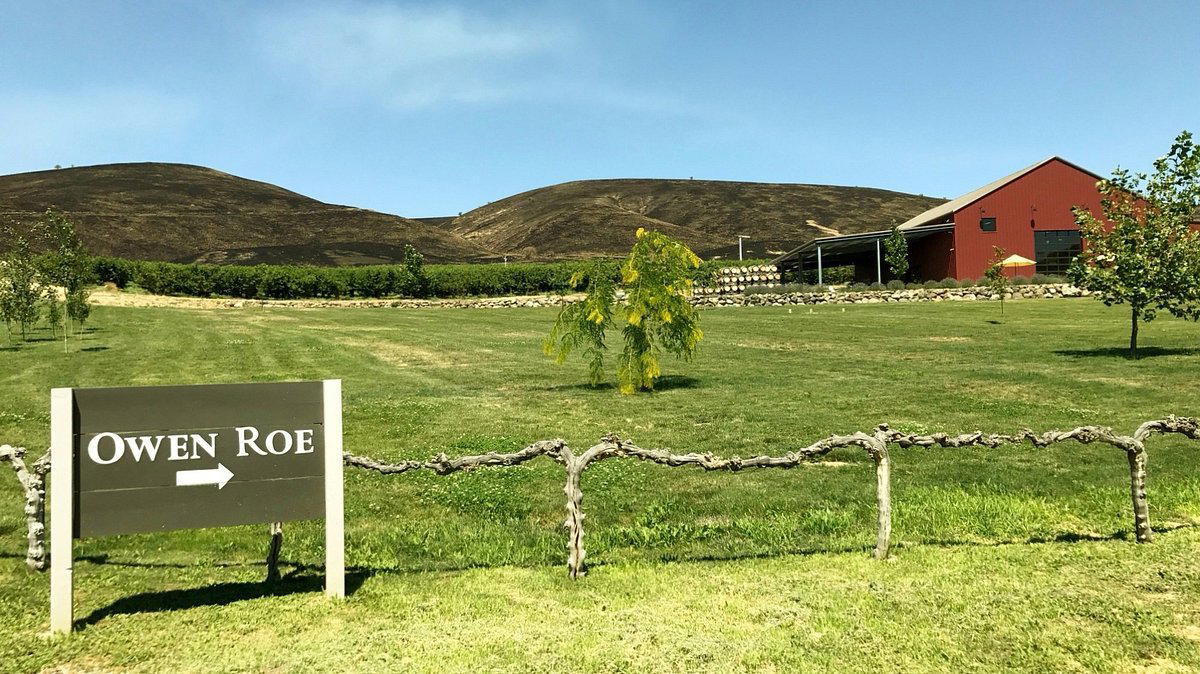
Where the High Desert Meets the Vine
The drive into Wapato along the Yakima Valley floor gives you the clearest possible read on what makes Washington wine different from California. The air is drier, the elevation shifts are sharper, and the light has that particular high-desert intensity that forces vines to work for every degree of ripeness. Owen Roe Winery sits at 309 Gangl Rd in this landscape, and the physical setting is not incidental to what ends up in the bottle. The Yakima Valley's diurnal temperature swings, sometimes exceeding 40 degrees Fahrenheit between day and night during growing season, are among the more dramatic of any American Viticultural Area, and they impose a discipline on fruit development that California's more moderate coastal zones rarely demand. Acid retention, structural tension, slow phenolic development: these are the signatures of the climate, and they define the profile of serious Yakima Valley wine across producers.
The Yakima Valley's Case for Terroir
Washington's wine identity has spent decades in Napa's shadow, which has been simultaneously its disadvantage and its advantage. Without the gravitational pull of a single dominant variety or a globally established benchmark style, producers in the Yakima Valley and across the Columbia Basin have been able to build reputations on terroir arguments rather than inherited prestige. The volcanic basalt soils underlying much of the Yakima Valley, overlaid with wind-deposited loess, drain efficiently and force vine roots deep in search of moisture. That root depth, combined with the high desert's low rainfall (Yakima itself averages around eight inches annually), produces grapes with concentrated flavors and naturally moderate yields, conditions that premium producers work with, not against.
In the Pacific Northwest, where the critical infrastructure around wine is less dense than in Napa or Sonoma, third-party prestige recognitions provide the clearest external signal of where a producer sits relative to its peers. The 2025 designation places Owen Roe alongside a cohort of Washington producers whose work merits serious attention from buyers who track the region's development. Compared to producers at the Napa end of the American fine wine spectrum, such as Accendo Cellars in St. Helena or Alpha Omega Winery in Rutherford, the Yakima Valley represents a different price-to-quality argument, one that increasingly sophisticated wine buyers are beginning to make in its favor.
Washington Reds and the Continental Model
The Pacific Northwest's grape growing conditions are frequently compared to continental European models rather than Mediterranean California ones, and that comparison is more than atmospheric. Washington's latitude (roughly 46 to 47 degrees north across the Yakima Valley) is closer to Bordeaux than to Napa, and the growing season's long summer days, up to 17 hours of sunlight, compensate for a climate that would otherwise be too cold for reliable ripening. The result is a model where Cabernet Sauvignon, Merlot, Syrah, and Grenache can all find serious expression, often with the kind of savory, structured profile that European drinkers associate with cooler-climate production.
Syrah, in particular, has become a reference point for what the Yakima Valley can do at its most compelling. The same variety that defines the northern Rhône, with its iron-mineral character, taut acidity, and slow-building aromatics, finds an unexpectedly sympathetic home in Washington's high-desert sites. Producers across the region have demonstrated that this is not an accident of a single vintage but a repeatable condition of the terroir. For comparison, consider what Alban Vineyards in Arroyo Grande has shown about Syrah's California range, or what Andrew Murray Vineyards in Los Olivos has built around Rhône varieties further south, the Washington expression sits in a different register, cooler-toned and more structurally angular.
Oregon's Willamette Valley, positioned as the Pacific Northwest's other serious fine wine district, draws its own comparisons: Adelsheim Vineyard in Newberg has been central to that region's Pinot Noir argument for decades. Washington and Oregon occupy different stylistic poles within the same broad geography, and understanding that split is essential to placing any Yakima Valley producer in its proper context.
Peer Producers and the Premium Washington Tier
The premium tier of American fine wine has historically been defined by California's coastal appellations, and the reference points remain useful for calibration. At the Napa end, Aubert Wines in Calistoga and Artesa Vineyards and Winery in Napa operate within a prestige infrastructure built over half a century. Paso Robles has its own established voices, including Adelaida Vineyards, whose limestone-driven Cabernets make a distinct regional argument. Central Coast producers like Au Bon Climat in Santa Barbara and Babcock Winery in Lompoc have built followings around cool-climate Pinot and Chardonnay. Sonoma's Alexander Valley Vineyards in Geyserville and B.R. Cohn Winery in Glen Ellen represent the warmer-valley end of that state's diversity.
Washington's premium producers, Owen Roe among them, compete in a different register, lower baseline recognition internationally, but with a terroir argument that holds up under scrutiny and a price structure that often undercuts California equivalents. It is worth noting that international context matters here too: producers at entirely different ends of the wine world, from Aberlour to Achaia Clauss in Patras, remind us that prestige designations carry weight precisely because they apply consistent criteria across geographies.
Planning a Visit to Owen Roe
Wapato sits within the Yakima Valley AVA, roughly 15 miles south of Yakima city along Route 97, a drive that takes you through orchard country and a landscape that shifts visibly from irrigated farmland to drier benchland as elevation increases. The Yakima Valley wine trail covers a concentrated geography, which makes it practical to combine an Owen Roe visit with other producers in a single day's circuit. The leading visiting window for understanding what the region produces is late summer through harvest (August to October), when the contrast between the season's heat and the cooling nights is most legible in both the landscape and in conversations with winery staff.
How It Stacks Up
Comparable venues nearby, for context on price, style, and recognition.
| Venue | Cuisine | Price | Notes |
|---|---|---|---|
| Owen Roe WineryThis venue — the venue you are viewing | Cabernet Sauvignon, Syrah | $$ | Not listed |
| Hedges Family Estate | Bordeaux varieties | $$ | Red Mountain |
| Wildhorse (Barnard Griffin) | Cabernet Sauvignon, Merlot | $$ | Richland |
| Symington – Graham’s (Canvasback) | Winery | Not listed | Walla Walla |
| Seven Hills Winery | Cabernet Sauvignon, Merlot | $$ | Downtown Walla Walla |
| Horsepower Vineyards | Syrah, Grenache | $$$ | Walla Walla Valley |
Continue exploring
More in Wapato
Restaurants in Wapato
Browse all →
At a Glance
- Rustic
- Scenic
- Intimate
- Wine Education
- Group Outing
- Estate Grounds
- Vineyard Tour
- Terrace
- Panoramic View
- Sustainable
- Mountain
- Vineyard
- Yakima Valley AVA
- Cabernet Sauvignon
- Syrah
- Merlot
- Cabernet Franc
- Pinot Noir
- Chardonnay
- Still Red
- Still White
- Seated Tasting
- Flight
- Private Tasting
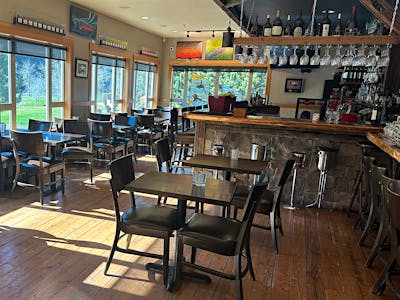
Relaxed winery atmosphere with spacious lawn seating, indoor cooled spaces, and vineyard views.