Il Poggione

Il Poggione is a 2 Star Prestige Pearl-rated winery in Sant'Angelo in Colle, one of the highest-altitude hamlets within the Montalcino denomination. The estate sits at the southern edge of the appellation, where the terrain and elevation shape a consistently expressive style of Brunello. It holds a firm position among Montalcino's serious producers and warrants a dedicated visit for anyone travelling through the Sienese hills.
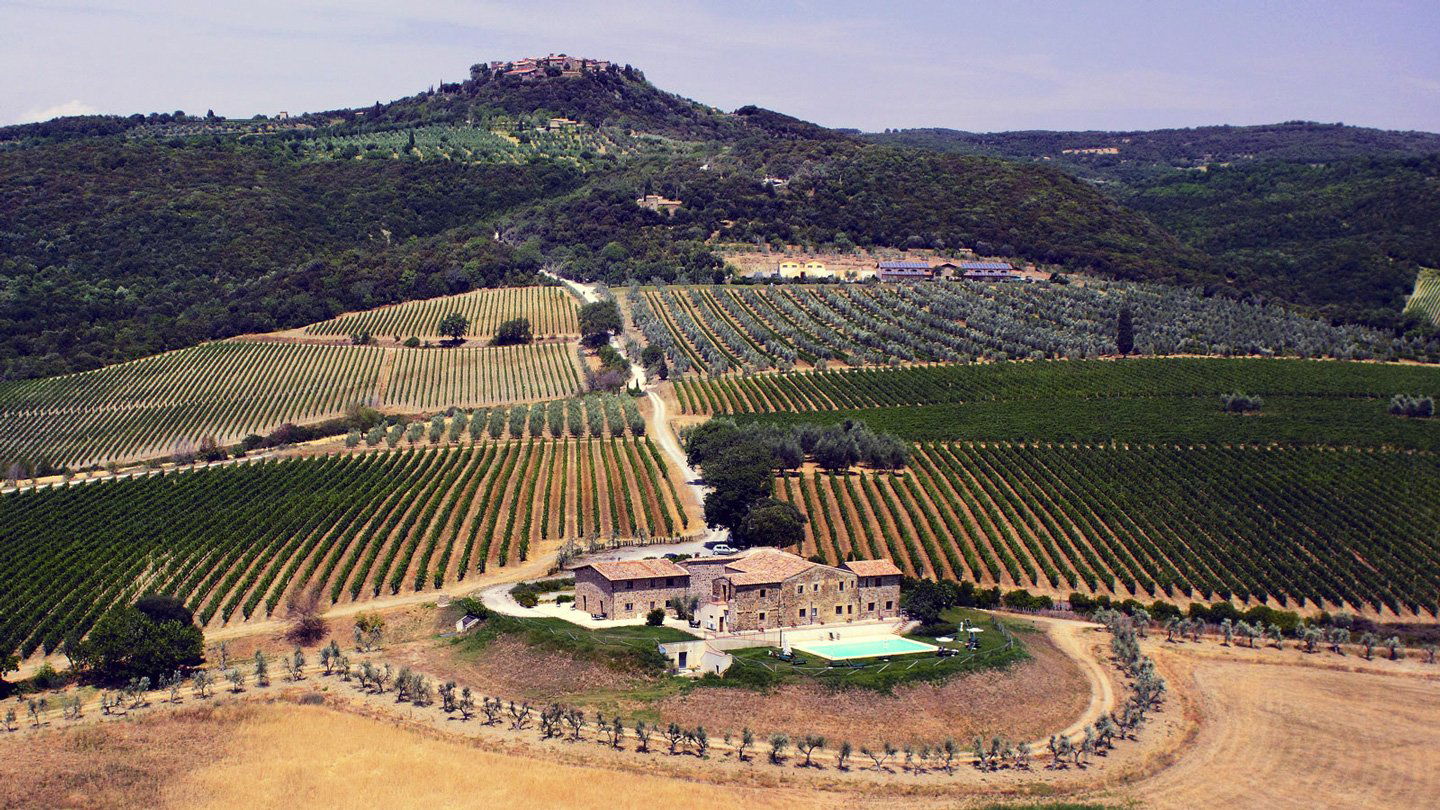
Southern Montalcino and the Question of Altitude
The hill town of Sant'Angelo in Colle occupies the southern flank of Montalcino's productive zone, roughly 500 metres above sea level, where the Orcia valley opens wide to the south and the Mediterranean influence on temperature is most direct. Wines produced here tend toward generosity and early structural access relative to the cooler, more austere northern quadrant around Montosoli, where producers like Altesino and Azienda Agricola Casanova di Neri draw on different soil and thermal profiles. Il Poggione's position in this southern corridor is not incidental. It shapes the tannin architecture, the colour depth, and the timing of approachability in every vintage the estate produces.
Montalcino is a small denomination by global standards, with fewer than 3,500 hectares under vine and an appellation boundary that enforces strict rules on Sangiovese Grosso — locally called Brunello — as the only permitted variety for both Brunello di Montalcino DOCG and Rosso di Montalcino DOC. Within that constrained canvas, producer differentiation is largely a matter of site, elevation, aspect, and the winemaking decisions that translate those variables into bottle. Il Poggione's 2 Star Prestige Pearl rating for 2025 places it in the serious upper tier of the appellation without requiring any further qualification. In Montalcino terms, that kind of recognition is earned over many vintages, not in a single strong year.
What the Appellation Demands , and What Southern Estates Deliver
Brunello di Montalcino DOCG has one of the most demanding release schedules in Italian wine. Standard Brunello requires a minimum of five years' ageing from harvest, at least two of which must be spent in oak. Riserva production extends that to six years. The discipline this imposes on estates is real: cash flow is held hostage to time, and every bottle that reaches the market carries years of accumulating cost before it generates revenue. Only producers with both the land and the operational resilience to sustain that timeline can maintain consistent quality across market cycles.
At the southern exposures around Sant'Angelo in Colle, the vintage-to-vintage consistency benefits from better heat accumulation, which is particularly valuable in cooler growing seasons when northern-facing or higher-elevation sites in the denomination can struggle to achieve full phenolic maturity. The trade-off is that exceptional hot years, which Montalcino has seen with increasing regularity since 2012, require careful management to preserve acid freshness and prevent overextraction. The estates that handle this tension well produce wines that reward both early opening and extended cellaring , a balancing act that defines the southern Montalcino style at its leading.
For context on how Montalcino's leading producers cluster by style and geography, Biondi-Santi Tenuta Greppo anchors the tradition-first camp from its position near the town itself, while Valdicava Az Agr demonstrates what northern-slope terroir can produce at altitude. Il Poggione's southern base gives it a different frame of reference entirely.
The Hospitality Framework at Montalcino Estates
Across Tuscany's serious wine estates, the hospitality format has evolved substantially in the past decade. The simple cantina visit, where a cellarhand walks a group through steel tanks and offers a glass at a wooden table, has been largely replaced at top-tier producers by structured tasting programmes with food pairing, vertical flights anchored by older vintages, and appointments that require advance booking rather than walk-in access. This shift mirrors what is happening at the premium end in other Italian denominazioni: Antinori nel Chianti Classico in Tuscany built an entire architectural statement around the visitor experience, while in Piedmont, estates like Aldo Conterno in Monforte d'Alba and Bruno Giacosa in Neive operate on controlled access with serious collectors in mind.
Il Poggione's address places the visitor in Sant'Angelo in Colle rather than at Montalcino's main hilltop, which means the approach road itself sets a particular tone. The hamlet is small, the infrastructure around it is agricultural rather than touristic, and the context is one of working estate rather than showpiece destination. For visitors whose primary interest is the wine rather than the surrounding infrastructure of luxury, this is a point in its favour. The experience is grounded in what the estate actually does rather than in any curated visitor theatre.
Food pairing in this context typically draws on the Tuscan kitchen's natural alignment with the Sangiovese Grosso grape: cinghiale, pappardelle, aged Pecorino di Pienza, bistecca from Chianina cattle. These are not decorative choices. The high acidity and firm tannin structure of mature Brunello act as palate counterpoints to fat and umami-heavy preparations in ways that are genuinely functional, not stylistic. When an estate of Il Poggione's standing organises a pairing experience, the food component earns its place at the table rather than serving as background decoration to the wine.
Placing Il Poggione in Its Competitive Set
Montalcino's 2 Star Prestige tier, where Il Poggione sits following its 2025 Pearl recognition, represents estates whose production combines volume, consistency, and critical standing in ways that single-vineyard boutique producers often cannot replicate. This is a different proposition from a micro-estate like Cerbaiona, which operates at tiny production levels with a dedicated international collector following, or from large export-oriented houses where the commercial range is wide and the prestige tier is a smaller fraction of overall output. Il Poggione has the scale to sustain export relationships and the critical track record to anchor those relationships in reputation rather than price discounting.
For the serious wine traveller building a Montalcino itinerary, the estate sits naturally alongside visits to L'Enoteca Banfi, which operates from its castello south of Montalcino and offers its own hospitality format at a different scale. The comparison is instructive: Banfi represents the large estate with integrated restaurant and hotel infrastructure; Il Poggione represents the serious working producer whose hospitality is built around the wine rather than around a broader resort proposition. Both are legitimate choices depending on what the visitor is after.
For planning a wider stay in the area, our full Montalcino hotels guide covers accommodation from farm estates to hilltop townhouse properties, and our full Montalcino restaurants guide maps the dining options that pair sensibly with a day of cellar visits. The town's bar scene, covered in our full Montalcino bars guide, includes several enotece where older vintages of local producers are available by the glass, which is a practical way to sample before committing to case purchases at a winery. For a broader overview of estate visits across the denomination, our full Montalcino wineries guide and our full Montalcino experiences guide provide the comparative context that a single-estate visit cannot.
Beyond Tuscany, travellers interested in how European wine estates handle the tension between prestige production and visitor hospitality can draw comparisons from Abadía Retuerta in Sardón de Duero, which integrates a hotel within the estate, or from single-spirit producers like Aberlour in Aberlour, where distillery visits operate on a similarly appointment-driven model built around product quality rather than infrastructure scale.
Planning a Visit
Il Poggione is located at Sant'Angelo in Colle, in the Province of Siena, postcode 53024 , approximately twelve kilometres by road from Montalcino's hilltop centre, following provincial roads south through the Val d'Orcia. The route passes working vineyards for most of its length, which is as useful as any tasting note for understanding why this part of Tuscany produces wine at the level it does. Contact and booking details are leading confirmed through direct channels with the estate, as operating hours and appointment availability for cellar visits vary by season and production schedule. Given the estate's 2025 Pearl 2 Star Prestige recognition, demand for appointments in the peak spring and autumn travel windows is leading treated as competitive; early contact is advisable. For additional orientation across Montalcino's wider producer community, our full Montalcino wineries guide provides the category-level context for building an itinerary that goes beyond a single visit.
Frequently Asked Questions
What is the leading wine to try at Il Poggione?
Brunello di Montalcino DOCG is the denomination's signature expression and the wine for which Il Poggione has received its 2025 Pearl 2 Star Prestige recognition. Given the estate's location in the southern sector around Sant'Angelo in Colle, the Brunello typically reflects the warmer exposure of that quadrant: fuller colour, accessible tannin relative to some northern-sector peers, and the structural depth that the mandatory five-year minimum ageing requirement enforces across the appellation. Rosso di Montalcino DOC, released earlier and priced below the Brunello, is worth comparing directly if the visit format allows for a flight rather than a single pour.
What should I know about Il Poggione before I go?
Il Poggione is in Sant'Angelo in Colle, a small agricultural hamlet south of Montalcino town, not in the hilltop centre itself. It holds a Pearl 2 Star Prestige rating for 2025, which places it among the appellation's more credentialled producers. Specific pricing for visits, tastings, or purchases is leading confirmed directly with the estate. The setting is a working winery rather than a developed agritourismo, so visitor expectations should be calibrated accordingly. An advance appointment is the reliable route in rather than an unscheduled arrival.
How hard is it to get in to Il Poggione?
Booking details, including online reservation options or direct contact numbers, are not publicly listed through EP Club's current data. The practical advice is to reach out directly as early as possible, particularly if travelling during the April-to-June or September-to-November windows when estate visits across Montalcino tend to run at full capacity. The estate's recognition level, with a 2025 Pearl 2 Star Prestige, means it is on the itinerary of knowledgeable wine travellers, not only casual tourists, which tightens appointment availability during high season.
The Short List
A quick comparison pulled from similar venues we track in the same category.
| Venue | Classification | Awards | First Vintage | Notes |
|---|---|---|---|---|
| Il Poggione | 1 awards | This venue | ||
| Biondi-Santi Tenuta Greppo | 2 awards | 1888 | ||
| L'Enoteca Banfi | 1 awards | 1978 | ||
| Valdicava Az Agr | 2 awards | 1987 | ||
| Argiano | 1 awards | 1888 | ||
| Cerbaiona | 1 awards | 1981 |
Access the Cellar?
Our members enjoy exclusive access to private tastings and priority allocations from the world's most sought-after producers.
Access the Concierge