Aldo Conterno

Perched above the Bussia hillside in Monforte d'Alba, Aldo Conterno is one of Langhe's defining Barolo addresses, holding EP Club's Pearl 3 Star Prestige rating for 2025. The estate sits within a cru that many consider the gravitational centre of serious Nebbiolo, where altitude, calcareous soil, and vine age converge to produce wines of structural precision and longevity. Visiting here means engaging with Barolo at the level where geology and craft are inseparable.
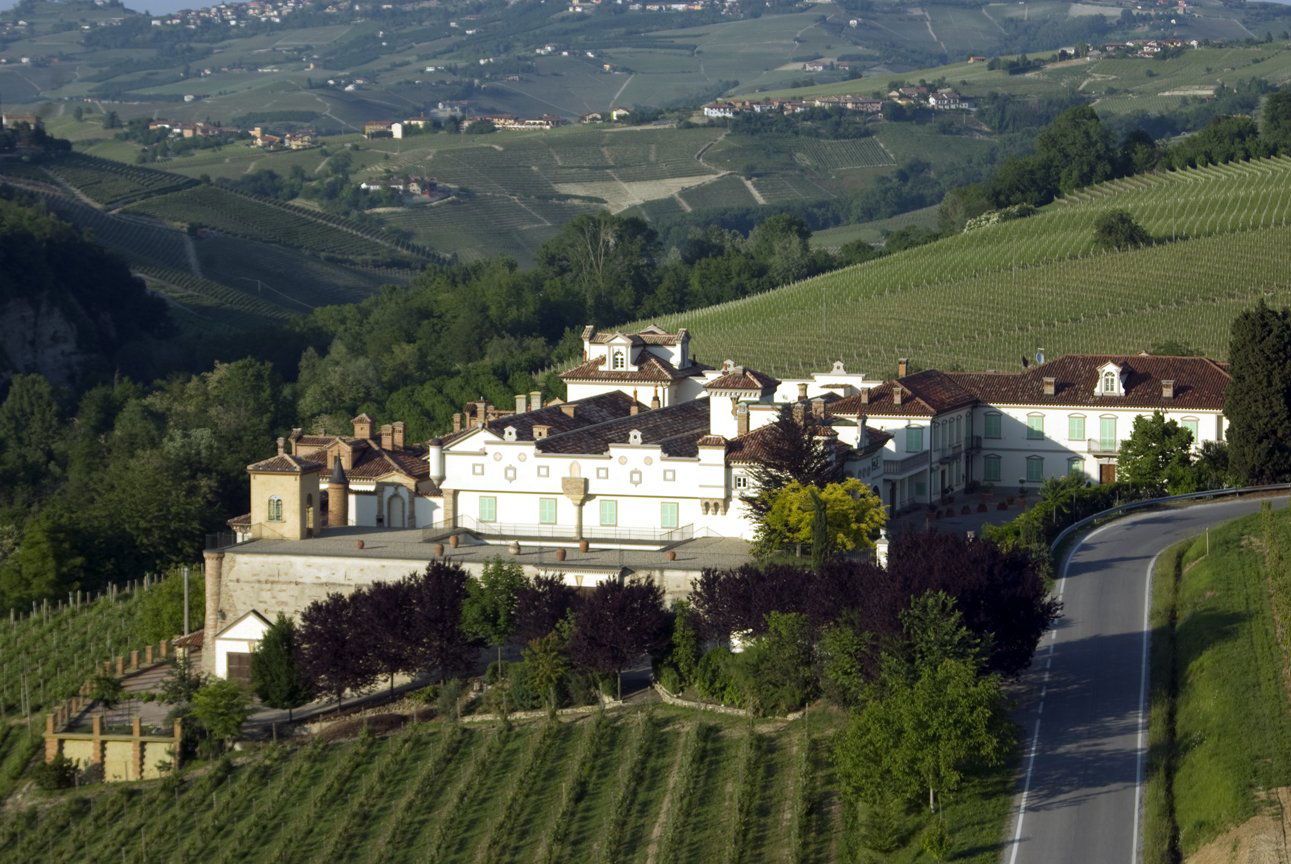
The Hillside That Shapes the Wine
Drive the road into Bussia on a late-autumn morning and the Langhe communicates itself through topography before you ever open a bottle. The mist sits low in the valley below Monforte d'Alba, the hazelnuts have already given up their leaves, and the Nebbiolo vines on the upper slopes stand in tight rows against chalky, crumbling soil. This is the physical argument behind Aldo Conterno's wines: a plot of land where elevation, aspect, and subsoil composition accumulate into something measurable in the glass. At Località Bussia 48, you are not at the edge of something important — you are inside the kernel of it.
Bussia has long been discussed as one of the most consequential crus in the Barolo denomination. The hillside spans multiple sub-zones and faces a southwesterly arc that gives extended afternoon sun while the altitude keeps growing-season temperatures in check. The result, in Nebbiolo particularly, is tannin that builds slowly over long hang times and an acidity that remains structurally present even in warm years. Estates that hold parcels here make wine whose character is substantially determined before the winemaker makes a single decision — the site is that expressive.
Bussia in the Context of Barolo's Inner Hierarchy
Barolo is not a single terroir , it is a denomination with meaningful internal gradation. The eleven communes within the appellation range from the heavier, more clay-dominant soils of Serralunga and Castiglione Falletto to the more sandy, Helvetian-era profiles around La Morra and Barolo village. Monforte sits in a middle register, where Helvetian and Tortonian geological strata overlap in ways that produce wines with both aromatic complexity and structural backbone. Bussia, as a named cru within Monforte, concentrates that character further.
The estates that define the upper tier of this geography form a small and competitive group. Giacomo Conterno, one of the most referenced names in traditional Barolo production, sits within the same denominational tradition. Bruno Giacosa in Neive occupies similar altitude in the collective critical imagination. These are the reference points against which serious Langhe producers are positioned, and Aldo Conterno's receipt of EP Club's Pearl 3 Star Prestige rating in 2025 places the estate within that upper bracket explicitly.
For comparison, the wider Italian conversation around prestige production includes estates like Biondi-Santi Tenuta Greppo in Montalcino, which occupies an equivalent position within Brunello di Montalcino, and Antinori nel Chianti Classico in Tuscany, where multi-generational ownership meets long-held prestige. The shared characteristic is not just critical acclaim but a legibility of origin , wines where you can trace the claim back to land, not marketing. Aldo Conterno operates in this register.
What Nebbiolo Does on This Hillside
Nebbiolo is among the most site-sensitive varieties in Italy. On flat ground, it loses its structural tension. In cooler, more northerly exposures, it can tip toward herbaceous austerity. In Bussia, with its southwest aspect and moderate altitude, the variety produces wines that combine tartrate acidity with tannin density , a pairing that demands extended aging in barrel and bottle before the elements begin to knit. This is not wine built for early consumption. The architecture of a serious Bussia Barolo often requires a decade before the tannins resolve sufficiently to reveal what lies beneath.
This is the broader reality of Langhe wine culture that any visitor must understand. Unlike the Burgundy model, where premier and grand cru expressions often open earlier due to lighter extraction and shorter élevage, the traditional Barolo approach that defines estates like Aldo Conterno produces wines that are essentially not ready at release. Collectors who cellar for five to fifteen years receive a different bottle than those who open immediately. Planning a visit with this in mind, and asking to taste across vintages if the opportunity arises, will give a more complete picture of what the site can express.
Visiting the Estate
Monforte d'Alba sits in the southern part of the Langhe zone, roughly accessible from Alba by car in under twenty minutes. The road into Bussia climbs from the valley floor through a series of switchbacks, and the physical experience of ascending the hillside reinforces what the wines communicate: this is refined, exposed terrain, not a flat production floor. Visitors to wineries in Monforte d'Alba who are planning a serious tasting itinerary should factor in the dispersed geography of the Langhe crus , estates are not clustered in a single village but spread across a mosaic of hillside communes, and driving between them takes longer than maps suggest when roads are steep and unmarked.
For those building a longer stay, hotels in Monforte d'Alba range from converted farmhouses to smaller agriturismi embedded in the wine country itself. The town centre sits at an altitude that gives views across multiple cru hillsides and operates at a quieter register than the more tourist-trafficked village of Barolo. Restaurants in Monforte d'Alba tend toward the traditional Piemontese format: tajarin, brasato al Barolo, and seasonal truffle in autumn, which runs roughly from October through December and represents the time of year when the Langhe is most fully itself. Bars in Monforte d'Alba follow the aperitivo cadence, with afternoon Barolo and Barbera available at the village enoteca before dinner. For a broader cultural picture of the zone, experiences in Monforte d'Alba include guided vineyard walks and harvest participation in the autumn months.
Across the wider Italian wine circuit, estates making similar arguments about terroir transparency include Ceretto in Alba, which has mapped its single-vineyard expressions across multiple Barolo crus, and Castello di Volpaia in Radda in Chianti, where elevation and soil composition drive a comparable conversation in Sangiovese. Further afield, Ca' del Bosco in Erbusco represents the Franciacorta model for estate-level prestige, while Abadía Retuerta in Sardón de Duero shows how the single-estate concept translates into Spanish viticulture. The common thread is that land-led production at the prestige level shares more across borders than it differs , site selection, vine age, and minimal intervention in the winery are the recurring variables. Aldo Conterno's position in Bussia makes the same argument in a specific and well-documented dialect.
Planning Realistically
Contact details and hours for the estate are not listed in our current database, so reaching out directly through the estate's own channels before arrival is advisable. Prestige Langhe producers at this tier typically host visits by appointment rather than open-door, and the tasting format, duration, and any associated costs should be confirmed in advance. Arriving without a booking at estates in this category is rarely productive and often not possible.
The broader Monforte d'Alba wineries guide covers additional producers in the commune and provides itinerary structure for those planning multi-estate visits across the Langhe. If the Barolo zone is part of a wider Italy wine trip, the guide context for Campari in Milan and Aberlour in Aberlour reflects how different production categories and regions each operate within their own tasting and visiting conventions , understanding these distinctions before travel saves time and sets more accurate expectations.
Frequently Asked Questions
- Is Aldo Conterno more formal or casual?
- Aldo Conterno operates at the prestige tier of Barolo production, holding EP Club's Pearl 3 Star Prestige rating for 2025. Visits to estates at this level in Monforte d'Alba tend toward the appointment-based and relatively structured format, rather than drop-in or casual walk-through experiences. The Langhe's leading producers generally receive guests with a level of formality that reflects the wines' positioning , this is not an enoteca environment but a working estate where tastings are curated occasions.
- What is the signature bottle at Aldo Conterno?
- Aldo Conterno's Bussia-based Barolo expressions, made from Nebbiolo grown in one of the Langhe's most documented crus, are the wines that define the estate's reputation. Specific current labels and vintages available for tasting are not detailed in our database; confirming the tasting format directly with the estate before visiting is advisable. The 2025 Pearl 3 Star Prestige award reflects the estate's position among Barolo's most critically regarded producers.
- What makes Aldo Conterno worth visiting?
- The visit is justified primarily by geography: the Bussia hillside in Monforte d'Alba is among the Langhe's most thoroughly studied crus, and tasting wine at the source, on the land that produced it, provides a level of comprehension that retail or restaurant encounters cannot replicate. The EP Club Pearl 3 Star Prestige rating for 2025 confirms the estate's standing in the prestige tier. For those building a Barolo itinerary, pairing a visit here with the broader Monforte d'Alba wineries guide gives the fullest picture of what the commune produces across its multiple crus.
Access the Cellar?
Our members enjoy exclusive access to private tastings and priority allocations from the world's most sought-after producers.
Access the Concierge