
Falstaff Winery - Listed
El Porvenir de Cafayate sits at Córdoba 32 in the heart of Cafayate, a high-altitude wine town in Salta province where Torrontés and Malbec grow under intense Andean sun. It merits attention from anyone spending serious time in the region's wine circuit.

Pearl is the En Primeur Club membership app — saves, bookings, and concierge access live there. Same editors, same standards.
- Address
- Córdoba 32, A4427 Cafayate, Salta
- Phone
- +54 387 473-2557
- Website
- es.elporvenirwines.com
- Directions
- Get directions
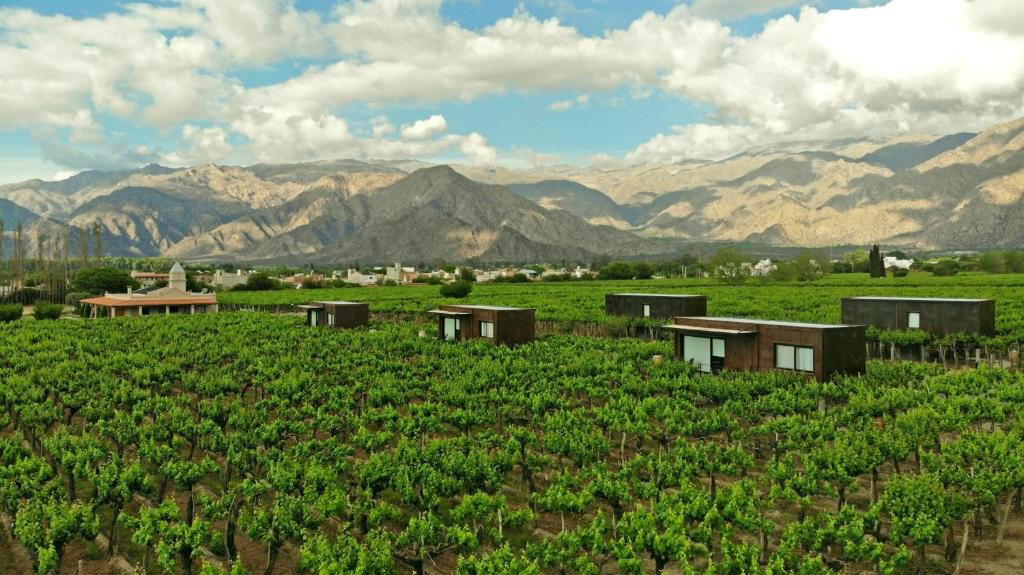
Sun, Adobe, and the Altitude Effect
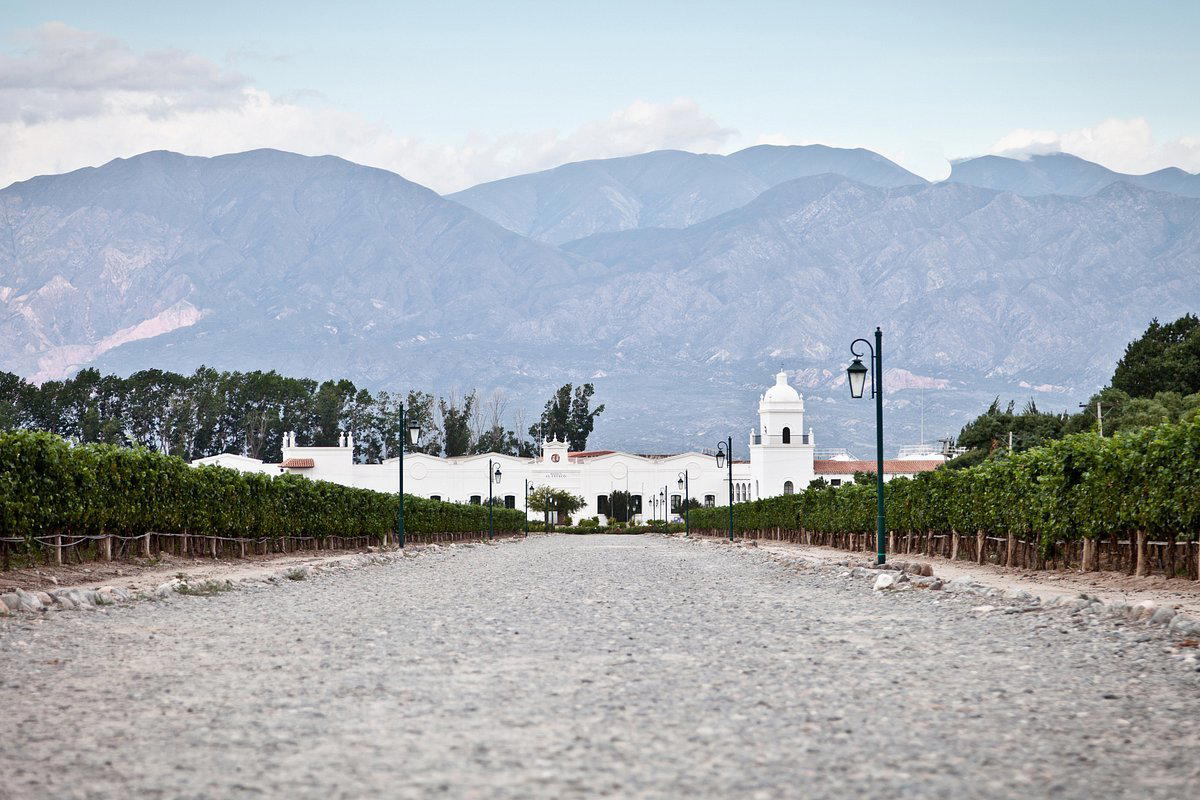
Approaching any bodega in Cafayate means reckoning first with the environment itself. At roughly 1,700 metres above sea level, the Calchaquí Valleys produce conditions that have no direct parallel in Argentina's better-known wine zones further south: days of near-constant ultraviolet intensity, nights that drop sharply enough to lock acidity into the grape, and a dryness that suppresses the fungal pressure that drives chemical intervention at lower altitudes. The architecture responds accordingly. Adobe walls, heavy shade, and interior courtyards are functional adaptations before they are aesthetic choices, and El Porvenir de Cafayate, at Córdoba 32, fits within that tradition of building that reads the climate rather than resists it.
This matters for anyone arriving with a sustainability lens, because altitude viticulture in Cafayate is structurally low-intervention in ways that producers in wetter, warmer zones have to work deliberately to achieve. The pest and disease pressure is minimal by comparison with Mendoza's valley floor or coastal South American wine regions, which means that organic and near-organic farming is less a philosophical choice here than a direct extension of what the environment permits. The question worth asking of any serious Cafayate bodega is not whether they spray less, but what they do with that latitude.
In a town where bodegas range from tourist-facing co-operatives bottling Torrontés for airport retail to small estate operations working limited parcels with close attention, a prestige-level rating signals alignment with the latter category. The award functions as a peer-set indicator: this is a property that belongs in the same conversation as other credentialled Cafayate bodegas rather than in the broader, more anonymous regional pool.
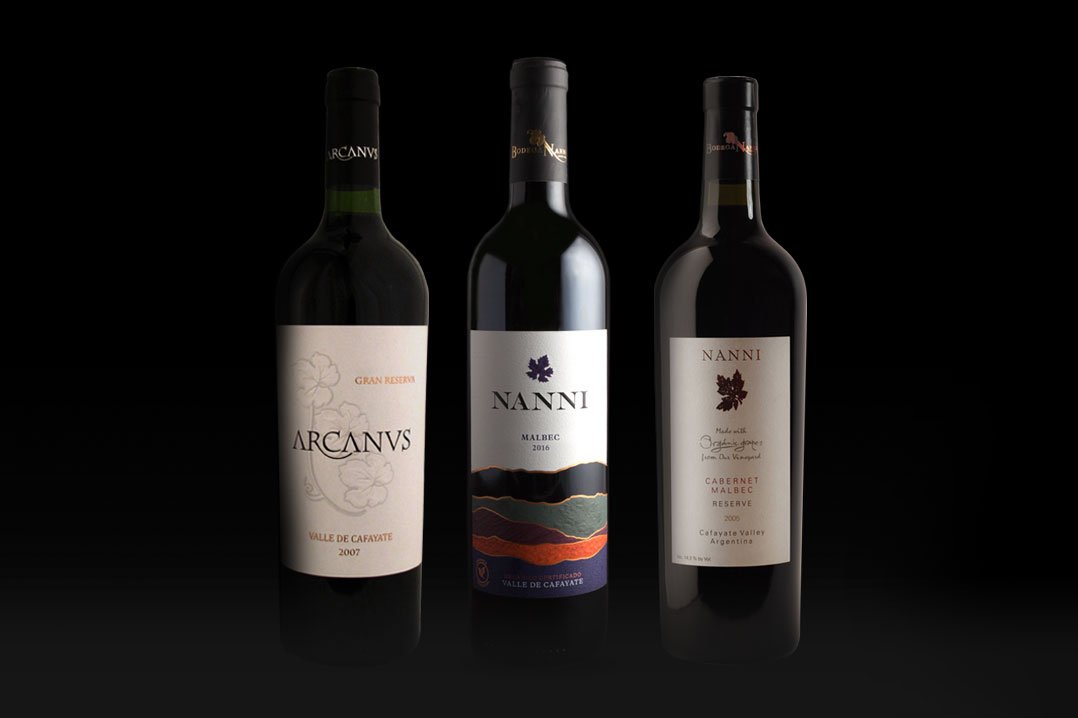
For comparison, Bodega El Esteco and Bodega Amalaya represent Cafayate's more commercially scaled presences, while Bodega Nanni and Domingo Hermanos operate with the kind of family-scale focus that tends to produce wines with stronger site specificity. El Porvenir's 2025 credential positions it within that more focused cohort, where scores and awards carry weight because the operation is small enough for quality to be a deliberate output rather than an averaging effect across large volumes.
Torrontés as the Lens for Understanding the Valley
No serious engagement with Cafayate's wine scene is complete without understanding Torrontés, and no understanding of Torrontés is complete without the altitude context. The grape is Argentina's white wine calling card, and the Calchaquí Valleys, particularly the Cafayate sub-zone, produce the version with the most structural coherence: the aromatic intensity is present, as it is in lower-altitude expressions, but the acidity is sufficient to give the wine shape rather than leaving it flabby on the finish. The extreme diurnal temperature variation is the mechanism; nights that can be fifteen degrees cooler than midday preserve the phenolic and acid development that warmer zones drive off.
Malbec at this altitude behaves differently too. Compared with the benchmark expressions from Bodega Norton in Luján de Cuyo or Escorihuela Gascón in Godoy Cruz, high-altitude Cafayate Malbec tends toward darker fruit, finer tannin structure, and a mineral quality that reflects the sandy, alluvial soils of the valley floor. Understanding that difference is part of what a visit to a property like El Porvenir allows: the wine makes more sense when you are standing in the vineyard context that produced it.
Viticulture and the Sustainability Frame
The broader Argentine wine industry has moved significantly toward sustainability certification over the past decade, with programmes from Wines of Argentina and independent third-party certifiers gaining traction among export-focused producers. Within that movement, high-altitude Salta producers occupy an interesting position: the natural conditions that reduce intervention requirements also make the certification process less operationally disruptive, since practices that require deliberate effort elsewhere are often default practice at altitude.
This does not mean every Cafayate bodega is farming with equivalent care. There is a meaningful distinction between producers who have capitalised on low disease pressure to reduce inputs while maintaining attention to soil health, vine stress management, and water efficiency, and those who simply spray less because they have to. Cafayate's aridity creates a separate challenge around irrigation: the vineyards depend almost entirely on snowmelt from the Andes, channelled through ancient acequia systems, and responsible water management is arguably the most pressing sustainability question in the valley. Producers working at the quality end of the market tend to be those paying closest attention to water use, canopy management, and vine density, because these variables have direct effects on wine quality in a semi-arid climate.
For a broader view of how high-altitude, environmentally constrained viticulture works in Argentina, the work at Bodega Colomé in Molinos, at even greater altitude in the Calchaquí Valleys, provides useful context, as does the approach at Familia Schroeder in San Patricio del Chañar, which operates in Patagonia's cooler-climate wine zone with a different set of environmental constraints.
Cafayate's Position in the Argentine Wine Map
Cafayate is not Mendoza. That distinction is worth stating plainly, because visitors who arrive expecting the scale, infrastructure, and international recognition of Argentina's dominant wine region will need to recalibrate. What Cafayate offers instead is a wine town where the bodega circuit is walkable, the landscape is dramatically present at all times — red Andean rock, vineyard blocks, and dust-coloured streets — and the wine identity is specific enough to be interesting rather than broadly appealing. Torrontés as a category does not travel as easily as Malbec in export markets, which means Cafayate has developed somewhat independently of the international wine circuit's main currents.
That relative distance from export pressure is one reason the valley's smaller producers have maintained a character that feels genuinely tied to place. Comparing the Cafayate scene with wine regions from producers like Bodega DiamAndes in Tunuyán or Rutini Wines in Tupungato clarifies how Mendoza's Valle de Uco has developed around a different quality narrative, one anchored in international grape varieties and export recognition. Cafayate's version of quality is quieter and more internally defined, which suits the kind of traveller who would rather understand a place than collect it.
Domingo Molina represents another credentialled presence in the valley worth mapping alongside El Porvenir when planning a visit; the contrast between producers in the same appellation is instructive precisely because the conditions are shared and the choices are therefore more visible.
Planning a Visit
El Porvenir de Cafayate is at Córdoba 32 in Cafayate town, which makes it accessible without vehicle transport, unlike bodegas positioned further along the valley roads. Cafayate itself is reached by a spectacular but time-consuming road journey from Salta city, roughly three hours through the Quebrada de las Conchas, a gorge of eroded red sandstone that is among the more dramatic approaches to any wine town in South America. The leading visiting months fall in the March-to-May window, after harvest, when the vineyards are still active and the high-season tourist pressure of summer has eased. For a full view of where El Porvenir sits within the town's wider food and wine offering, the EP Club Cafayate guide covers the circuit with the necessary neighbourhood-level detail.
Reputation First
Comparable venues nearby, for context on price, style, and recognition.
| Venue | Cuisine | Price | Awards | Notes |
|---|---|---|---|---|
| El Porvenir de CafayateThis venue — the venue you are viewing | Torrontes, Malbec | $20–30 | Falstaff Winery - Listed | Not listed |
| Domingo Hermanos | Malbec, Torrontés | Not listed | Not listed | Cafayate |
| Domingo Molina | Torrontes, Malbec | Not listed | Not listed | Yacochuya Norte |
| Finca Quara | Torrontés, Malbec | Not listed | Not listed | Cafayate |
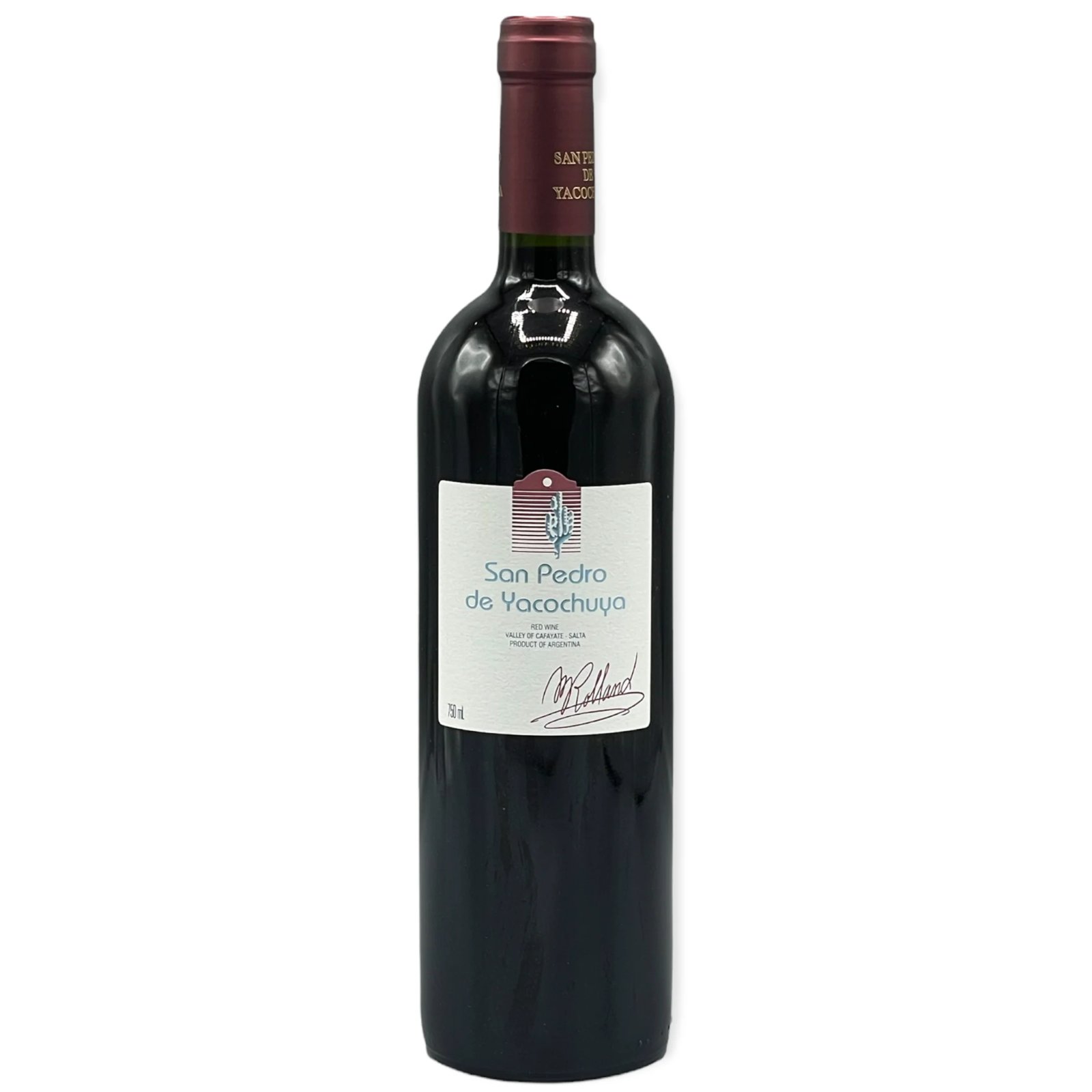
| San Pedro de Yacochuya | Malbec, Cabernet Sauvignon | Not listed | Not listed | Cafayate |
| Bodega Etchart | Torrontés, Malbec | Not listed | Not listed | Cafayate |
Recognition history
Dated appearances from independent guides and award organizations, with the underlying list record or original source where available.
Falstaff Winery - Listed
Falstaff
Continue exploring
More in Cafayate
Wineries in Cafayate
Browse all →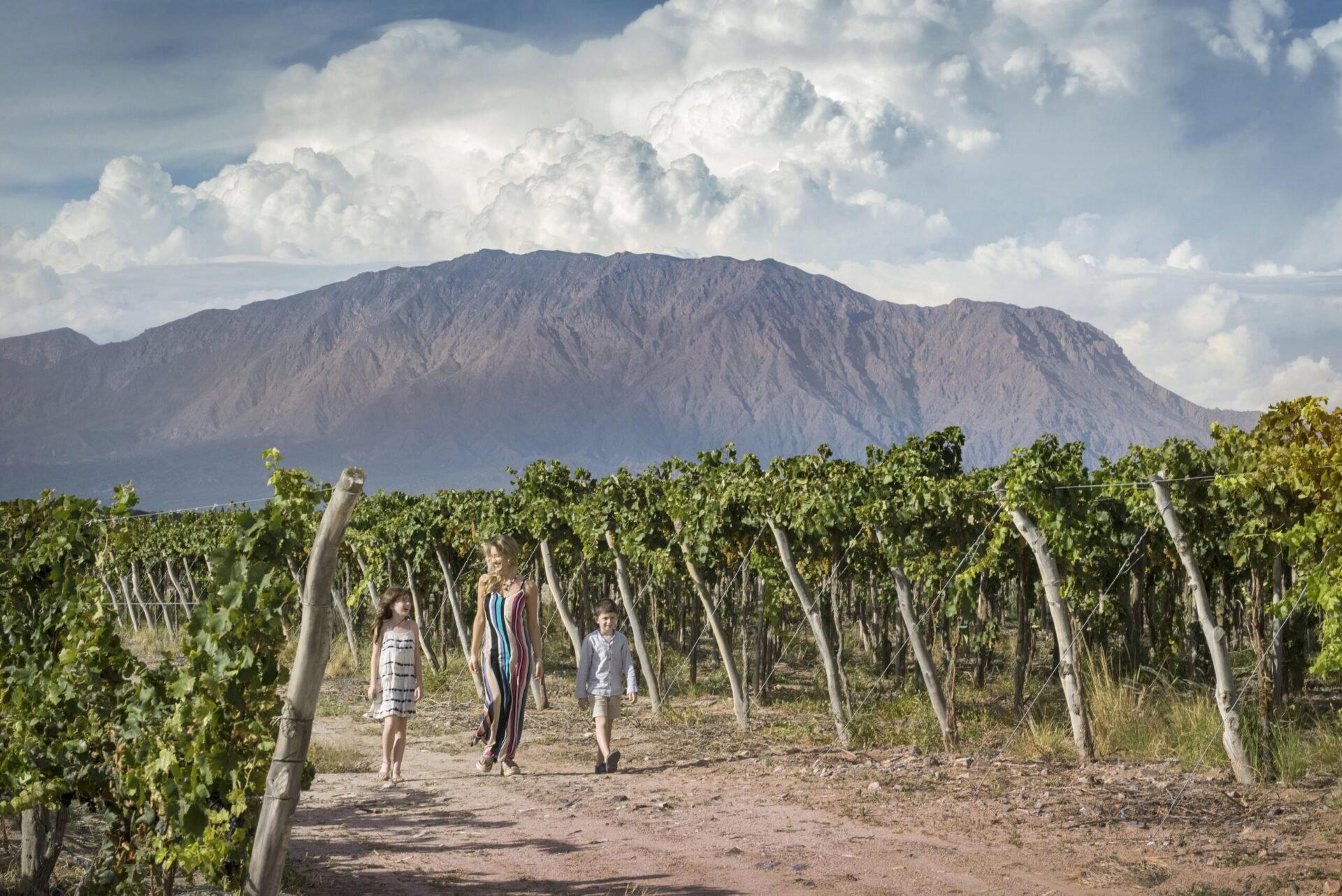
Bars in Cafayate
Browse all →
Hotels in Cafayate
Browse all →
Details
- Rustic
- Scenic
- Intimate
- Wine Education
- Solo Exploration
- Group Outing
- Vineyard Tour
- Estate Grounds
- Terrace
- Sustainable
- Organic
- Vineyard
- Mountain
- Torrontes
- Malbec
- Tannat
- Cabernet Sauvignon
- Syrah
- Still White
- Still Red
- Skin Contact
- Estate Tasting
- Single Vineyard
- Private Tasting
- Spanish
- English
Relaxed and welcoming family atmosphere in a historic adobe structure amidst dramatic high-altitude valley scenery.