
El Legado sits along Ramal Ruta 97 in Carmelo, Uruguay's Departamento de Colonia, where the country's wine country meets the Río de la Plata estuary. Awarded Pearl 2 Star Prestige in 2025, it occupies the upper tier of Carmelo's winery scene alongside properties like Narbona Wine Lodge and Campotinto. For visitors building a serious itinerary through Uruguay's southwest wine corridor, El Legado is a reference point.
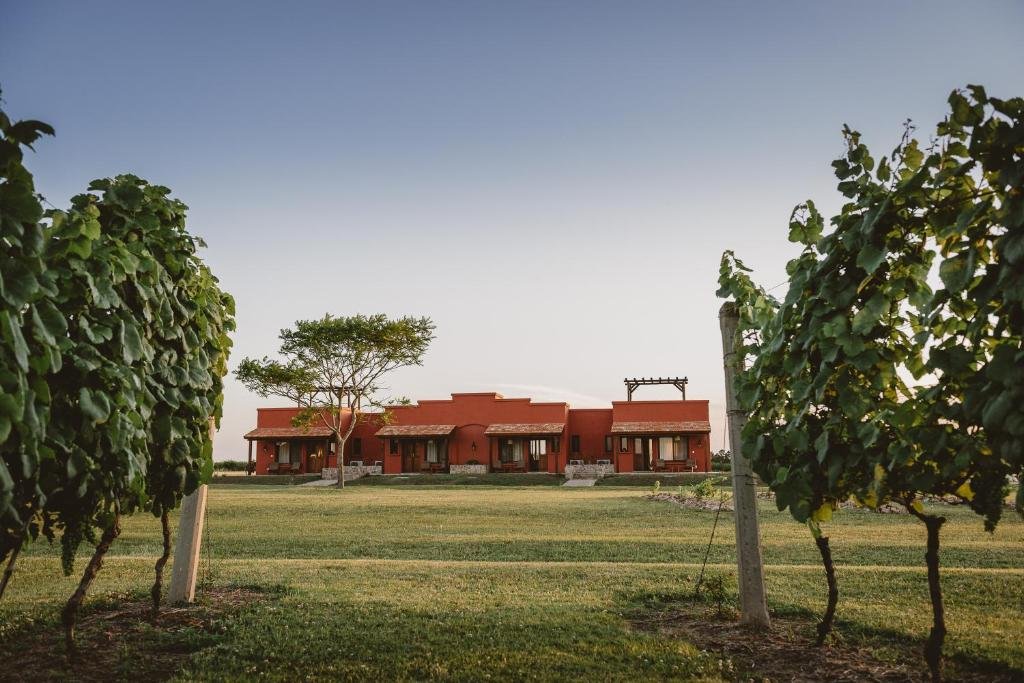
Carmelo's Wine Country and Where El Legado Sits Within It
The road along Ramal Ruta 97 in the Departamento de Colonia runs through a landscape that most wine travellers haven't factored into their South American itineraries. Carmelo, a small river town where the Río de la Plata narrows toward the Paraná delta, has accumulated a concentration of wine producers that makes it the functional capital of Uruguayan wine tourism. The region's producers work with Tannat as their anchor variety, as do most serious Uruguayan wineries, but the cooler riverside climate introduces a textural subtlety that separates Colonia's output from the heavier expressions further inland. El Legado, on Ramal Ruta 97, belongs to this geography and to the serious tier of Carmelo's winery offering.
In 2025, El Legado received a Pearl 2 Star Prestige award, placing it in the upper bracket of a regional peer set that includes Narbona Wine Lodge, Campotinto, and Familia Irurtia. That designation signals a property operating above the entry-level cellar-door tier, where format, quality of experience, and production standards are evaluated together rather than separately. In a region where the gap between a casual vineyard stop and a considered hospitality experience is wide, the award functions as a directional indicator for visitors allocating limited time in Colonia.
The Colonia Wine Corridor: Context Before the Visit
Uruguay's wine identity is still settling into its international position. The country produces a fraction of what Argentina or Chile exports, and much of what it makes is consumed domestically. That insularity has consequences for travellers: some of the most interesting producers in Colonia operate with minimal English-language documentation, limited web presence, and booking arrangements that rely on local knowledge or direct contact. El Legado's address on Ramal Ruta 97 places it in the cluster of properties south of Carmelo's town centre, accessible by car and most practically visited as part of a multi-winery day.
The regional context matters because Carmelo's wine scene does not function like a European wine route with standardised opening hours and walk-in tasting rooms. Producers here range from family operations running a few thousand cases annually to more developed estates with accommodation and structured visits. El Legado sits within this spectrum at a level where the experience is deliberate rather than improvised. Visitors coming from Colonia del Sacramento, about 70 kilometres to the south, can reach Carmelo in under an hour by road. Those crossing from Buenos Aires by ferry to Colonia del Sacramento and driving north treat Carmelo as the anchor point of a two or three-day circuit. For a broader overview of what to do once you arrive, our full Carmelo experiences guide maps the options across formats.
El Legado in Relation to Its Peers
Carmelo's serious wine properties occupy a narrower competitive band than their number suggests. Narbona Wine Lodge, with its combination of accommodation, restaurant, and cellar-door operation, represents one model: vertically integrated, designed for multi-day stays, and priced accordingly. Campotinto takes a different approach, with smaller production and a tighter focus on the tasting experience itself. Familia Irurtia, one of the older names in the region, carries the weight of historical continuity alongside more recent investment in visitor infrastructure. El Legado's Pearl 2 Star Prestige positioning in 2025 places it in a conversation with these properties, though the specifics of its production model, capacity, and hospitality format are leading confirmed directly before visiting.
For travellers building a Uruguayan wine itinerary that extends beyond Colonia, the comparison set widens. Bodega Bouza in Montevideo operates with a strong urban-winery identity and structured tours. Varela Zarranz in Canelones and Bodega Carrau in Las Piedras represent the Canelones region, where the majority of Uruguay's wine production is concentrated. Further south, Bodega Cerro del Toro in Piriápolis and Bodega Los Cerros de San Juan in Colonia del Sacramento extend the Colonia corridor further into its coastal dimensions. El Legado's position in Carmelo specifically, rather than the broader Colonia department, gives it a geographic coherence with the riverside terroir that defines the subregion's character.
The Winemaking Context: What Carmelo's Terroir Asks of Its Producers
The editorial angle that distinguishes Carmelo producers from their Canelones counterparts is almost always terroir-driven. The Río de la Plata's moderating influence on temperature, combined with the clay and limestone soils common to the Colonia department, creates conditions that reward patience in the winery. Tannat, which in warmer inland zones can produce dense, extracted wines requiring extended ageing to resolve, expresses differently in this climate: the tannins are present but the weight is lower, and acid retention is more reliable. Producers who work with this rather than against it tend to make wines with more immediate accessibility without sacrificing the structural depth the variety is known for.
How a specific winery responds to these conditions is ultimately what separates properties at the Pearl 2 Star Prestige level from those operating without formal recognition. The award suggests that El Legado's approach to these variables produces results that a structured evaluation found consistent and worthy of distinction. For context on how this places within international winery standards, comparison with differently positioned awarded properties, such as Abadía Retuerta in Sardón de Duero, gives a sense of the range across which the Pearl system operates. Aberlour in Aberlour represents another point of reference in a completely different production tradition, illustrating how the award framework operates across categories.
Planning a Visit: What to Know Before You Go
Carmelo does not have the visitor infrastructure of Mendoza or the Douro Valley. That is partly what makes it worthwhile for travellers who prefer a less mediated encounter with a wine region. El Legado's address on Ramal Ruta 97 is confirmed; beyond that, current booking arrangements, opening hours, and pricing should be verified directly before planning a visit, as this category of producer in Uruguay often adjusts availability seasonally or by appointment. The summer months from December through February bring the highest visitor concentration, while autumn, when the harvest activity is visible in the vineyards, tends to attract more wine-focused travellers.
For accommodation in Carmelo, our full Carmelo hotels guide covers the range from boutique riverside properties to vineyard stays. Dining options before or after a winery circuit are mapped in our full Carmelo restaurants guide, and if the evening calls for something more casual, our full Carmelo bars guide covers that end of the day. For a complete view of wine producers across the region, our full Carmelo wineries guide is the starting point.
Frequently Asked Questions
- What is El Legado known for?
- El Legado is a winery in Carmelo, Uruguay, operating in the Departamento de Colonia within the country's southwest wine corridor. It received a Pearl 2 Star Prestige award in 2025, placing it among the recognised upper tier of Carmelo's wine producers. The region is associated with Tannat-led wines shaped by the moderating influence of the Río de la Plata.
- What do visitors recommend trying at El Legado?
- Given El Legado's Pearl 2 Star Prestige recognition in 2025 and its position within Carmelo's established winery community, visitors typically focus on the estate's core wine programme, which in this region centres on Tannat and its blends. Carmelo's riverside terroir gives these wines a profile distinct from Uruguay's inland production zones. Properties at this award level in the region generally offer structured tasting formats rather than informal cellar-door pours, though current format details should be confirmed with the venue directly alongside neighbouring references like Narbona Wine Lodge.
- Is El Legado reservation-only?
- Specific booking requirements for El Legado are not publicly documented at this time. In Carmelo more broadly, winery visits at the Pearl 2 Star Prestige level tend to operate on an appointment or advance-booking basis rather than open walk-in access. Visitors are advised to contact El Legado directly via its Ramal Ruta 97 address before arriving, and to cross-reference current availability through our full Carmelo wineries guide.
- How does El Legado compare to other award-recognised wineries in the Carmelo area?
- El Legado's Pearl 2 Star Prestige (2025) positions it within a small group of formally recognised producers in Carmelo, a region where serious winery experiences are concentrated along the Ruta 97 corridor and its surroundings. Its recognition places it in a similar bracket to properties like Campotinto and Familia Irurtia, though each operates with a distinct production model and hospitality format. For travellers assessing which Carmelo properties to prioritise, the Pearl 2 Star designation at El Legado is a reliable indicator of consistent quality across both wine and experience.
Where It Fits
A quick context table based on similar venues in our dataset.
| Venue | Classification | Awards | First Vintage | Notes |
|---|---|---|---|---|
| El Legado | 1 awards | This venue | ||
| Campotinto | 1 awards | |||
| Familia Irurtia | 1 awards | |||
| Narbona Wine Lodge | 1 awards |
Access the Cellar?
Our members enjoy exclusive access to private tastings and priority allocations from the world's most sought-after producers.
Access the Concierge