Château Héritage

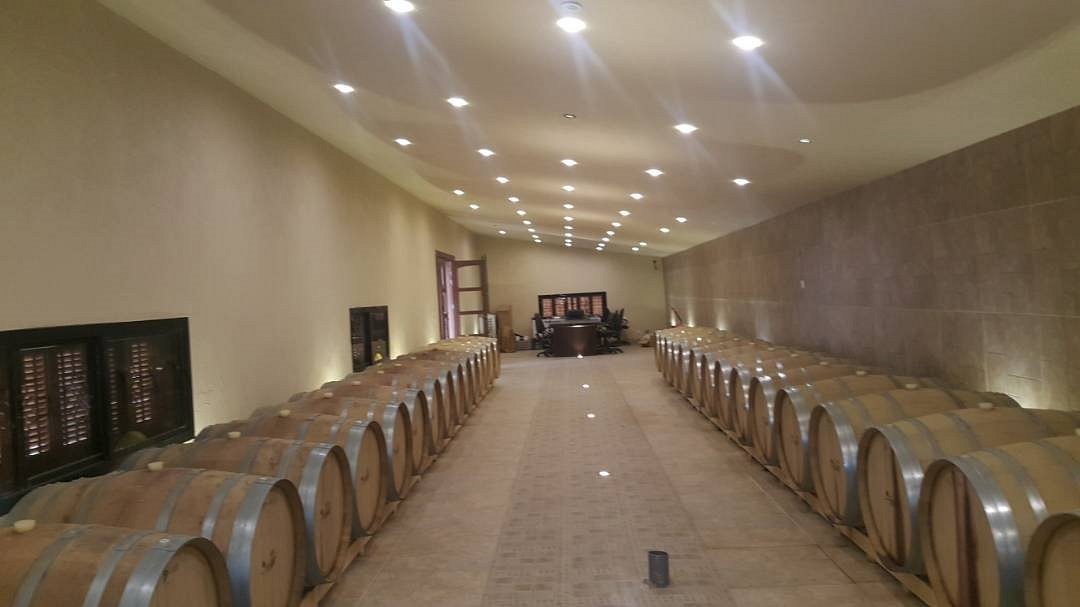
Château Héritage sits in Qob Elias, in Lebanon's Bekaa Valley, a wine region with documented cultivation stretching back to Phoenician and Roman antiquity. The estate holds a Pearl 2 Star Prestige rating (2025), placing it in the upper tier of Bekaa producers. For visitors tracing the relationship between ancient terroir and contemporary Lebanese winemaking, Château Héritage is a serious reference point.
Wine Country That Predates the Appellation System by Two Millennia
The Bekaa Valley does not need a marketing narrative to establish its winemaking credentials. A few kilometres from the valley floor stands the Temple of Bacchus at Baalbek, one of the best-preserved Roman temples in the world and a monument to the deity the ancient world associated specifically with wine. Nowhere else in the Middle East is the continuity between ancient cultivation and modern viticulture so physically present. The vines grown here today are not a recent European transplant; they sit in soil that has been worked for wine production across Phoenician, Roman, Arab, and Ottoman periods, each era reshaping the practice without erasing what came before.
That historical weight gives Bekaa Valley wine a context that newer New World regions cannot claim, and it makes the question of terroir expression here more layered than elsewhere. The valley sits at an altitude ranging from roughly 900 to 1,100 metres above sea level, which moderates summer heat and produces a diurnal temperature range that preserves acidity in the grapes. The climate is semi-arid continental, with cold winters and hot, dry summers, a profile that concentrates sugars while the altitude keeps freshness intact. Lebanese winemakers working in this valley are, in a real sense, working with conditions that Roman agronomists documented and that Phoenician traders exported to Mediterranean markets centuries earlier.
Château Héritage and the Qob Elias Sub-Zone
Within the Bekaa, the village of Qob Elias — administratively part of the Kab Elias district — represents one of the valley's productive sub-zones for viticulture. Château Héritage is based here, in the Elias Touma Building in Qob Elias, and its 2025 Pearl 2 Star Prestige rating positions it among the valley's credentialed producers. The Pearl rating system operates as a quality benchmark across the region, and the 2 Star Prestige designation places Château Héritage in an upper-mid tier that signals consistency and production quality rather than boutique rarity.
The broader Bekaa producer field includes long-established names with international distribution. Château Kefraya in Kafraya and Château Oumsiyat are among the valley's reference-point estates, with Kefraya in particular operating at a scale that makes it one of Lebanon's most visible wine exports. Château Héritage operates in a different register: the Qob Elias address and the Prestige classification together suggest a more focused production model, though specific details on winemaking approach, varietal composition, and output volume are not published in available sources.
For context on how the Bekaa compares with other storied wine regions that similarly combine ancient provenance with modern technical ambition, it is instructive to look at peers in completely different geographies. Abadía Retuerta in Sardón de Duero occupies a 12th-century monastery estate in Spain's Duero corridor, where historical depth and contemporary winemaking coexist in the same physical structure. The parallel with Bekaa is imperfect but the underlying dynamic , ancient land, modern technique, a wine identity shaped by both , is recognisable across both contexts.
Terroir as the Primary Argument
Any serious engagement with Bekaa Valley wine eventually returns to the question of what the land itself contributes. The valley is geologically young by wine-region standards, formed by the collision of the African and Arabian tectonic plates, and the resulting soil profile varies considerably across its length. Clay-limestone compositions are common in the central valley, and these retain enough moisture through the dry summer months to sustain viticulture without extensive irrigation. The combination of limestone drainage and clay retention produces the kind of stress conditions that many winemakers, particularly those trained in the French tradition, associate with concentration and structural complexity in the finished wine.
Lebanon's indigenous grape varieties add another dimension to the terroir argument. Merwah and Obaideh, two white varieties with potential ancient lineage, grow almost exclusively in Lebanon and represent a direct genetic connection to the region's pre-modern viticulture. While international varieties including Cabernet Sauvignon, Syrah, Cinsault, and Chardonnay now dominate commercial production in the Bekaa, the presence of these indigenous grapes keeps alive the possibility of wines that express something specific to Lebanese soil rather than a Lebanese interpretation of a French or Mediterranean style.
Among the newer generation of Lebanese producers working in Southern Lebanon, Karam Wines represents one strand of that exploration, operating outside the Bekaa altogether and demonstrating that Lebanon's wine geography extends well beyond the valley's dominant narrative. Château Cana is another reference point in this widening map. Taken together, these producers indicate that Lebanese winemaking is no longer synonymous with a single valley, even if the Bekaa remains the industry's centre of gravity.
What the Pearl 2 Star Rating Tells Visitors
The Pearl 2 Star Prestige designation, awarded to Château Héritage in 2025, functions as a practical signal for visitors assessing the Bekaa's producer hierarchy. In a region where quality ranges from international-standard export wineries to small family operations with limited distribution, a rated designation provides a baseline of reliability. It does not guarantee a specific style or sensory profile, but it does indicate that the producer has met an external quality threshold, which matters particularly for visitors who lack local connections or prior knowledge of the estate.
For those building a Bekaa itinerary around wine, the rating system is one navigational tool among several. Knowing where a producer sits within the Pearl framework helps calibrate expectations alongside other variables: location within the valley, accessibility, and whether the estate offers visitor facilities. On those latter points, publicly available information for Château Héritage is limited. No website or phone contact appears in current records, which makes advance planning through third-party booking channels or direct enquiry the most practical approach. This is not unusual for smaller Bekaa producers, where the hospitality infrastructure is less formalised than in, say, Napa Valley or Bordeaux, and where relationships and local knowledge often matter more than digital booking systems.
Planning a Visit to the Bekaa
The Bekaa Valley is most accessible in the late spring and early autumn periods, when temperatures are moderate and vineyard activity is at its most visible. The harvest window, typically September into October depending on varietal and vintage conditions, is when the valley's wine identity is most legible on the ground: grapes coming in from the vineyards, fermentation beginning in cellars, and the landscape reflecting the season that the wine will eventually express in bottle.
Visitors positioning Château Héritage as part of a broader Bekaa itinerary will find it sits in a region with significant depth across food, drink, and cultural experience categories. EP Club's full Bekaa Valley wineries guide maps the producer field in detail. Broader planning resources include the full Bekaa Valley restaurants guide, the full Bekaa Valley hotels guide, the full Bekaa Valley bars guide, and the full Bekaa Valley experiences guide, which together cover the valley's hospitality offer across price points and interests.
For those whose wine interest extends beyond Lebanon entirely, EP Club's coverage of producers in other storied regions offers points of comparison. Accendo Cellars in St. Helena, Adelaida Vineyards in Paso Robles, Achaia Clauss in Patras, and Aberlour in Aberlour each represent different expressions of place and tradition, and each raises the same underlying question that the Bekaa poses with particular force: how much of what is in the glass is the land, and how much is the decisions made above it?
Frequently Asked Questions
- What kind of setting is Château Héritage?
- Château Héritage is a winery located in Qob Elias, in the Bekaa Valley, Lebanon, one of the Middle East's oldest wine-producing regions. It holds a Pearl 2 Star Prestige rating (2025), placing it in the upper-mid tier of Bekaa Valley producers. Specific price range and visitor facility details are not available in current public records, so direct enquiry is recommended before visiting.
- What wines is Château Héritage known for?
- Specific varietal and wine programme details for Château Héritage are not published in available sources. The Bekaa Valley as a region produces both international varieties (Cabernet Sauvignon, Syrah, Chardonnay) and, in some estates, Lebanon's indigenous grapes such as Obaideh and Merwah. The Pearl 2 Star Prestige award signals production quality, though the specific range and style of Château Héritage's wines is leading confirmed directly with the estate.
- What's the main draw of Château Héritage?
- The estate's position in the Bekaa Valley, one of the world's historically documented wine regions, is itself a significant draw. The Pearl 2 Star Prestige rating (2025) confirms a quality baseline among Bekaa producers. Visitors interested in tracing the connection between ancient Middle Eastern viticulture and contemporary Lebanese winemaking will find the valley's broader context, centred on sites including the Roman Temple of Bacchus at Baalbek, as compelling as the wine itself.
- Do they take walk-ins at Château Héritage?
- No website or phone number is currently listed for Château Héritage, which makes advance planning difficult through standard digital channels. If you are visiting the Bekaa Valley, local accommodation staff or regional wine tourism contacts may be able to facilitate an introduction. As a Pearl 2 Star Prestige producer, the estate is likely to have some visitor provision, but whether walk-ins are accommodated is not confirmed in available information. Advance contact is the safest approach.
Side-by-Side Snapshot
These are the closest comparables we have in our database for quick context.
| Venue | Cuisine | Price | Awards | Notes |
|---|---|---|---|---|
| Château Héritage | Pearl 2 Star Prestige (2025); Nowhere is the Middle East’s ancient winemaking history more palpable than amid the ruins of the Temple of Bacchus – the Roman god of wine – in the Bekaa Valley; Nowhere is the Middle East’s ancient winemaking history more palpable than amid the ruins of the Temple of Bacchus – the Roman god of wine – in the Bekaa Valley; Nowhere is the Middle East’s ancient winemaking history more palpable than amid the ruins of the Temple of Bacchus – the Roman god of wine – in the Bekaa Valley | This venue | ||
| Château Kefraya | ||||
| Château Oumsiyat | ||||
| Château Heritage | ||||
| Karam Wines | ||||
| Château Cana |
Access the Cellar?
Our members enjoy exclusive access to private tastings and priority allocations from the world's most sought-after producers.
Access the Concierge