
Capel Pisco Plant in Vicuña sits at the heart of Chile's Elqui Valley pisco tradition, earning a Pearl 2 Star Prestige rating in 2025. The facility operates as both a working distillery and visitor destination, placing it among the Elqui Valley's most credentialed pisco experiences. It is located on Puente Peralillo s/n in Vicuña, Coquimbo.
The Elqui Valley's Pisco Geography, Read Through Capel
The Elqui Valley earns its designation as one of Chile's two legally protected pisco-producing zones through a combination of latitude, altitude, and aridity that has no direct parallel in the country's wine-producing south. At roughly 30 degrees south, with the Andes compressing rainfall to near-zero levels and the Pacific Humboldt Current moderating overnight temperatures, the valley produces Muscat-family grapes of concentrated sugar and aromatic intensity. Those conditions are not incidental to pisco production — they are the argument for why Chilean pisco tastes the way it does: floral, high-proof-ready, and with a sweetness that comes from the fruit rather than from process. The Capel Pisco Plant in Vicuña sits at the centre of that argument, earning a Pearl 2 Star Prestige rating in 2025 and operating as one of the most visited and credentialed distillery destinations in the Coquimbo region.
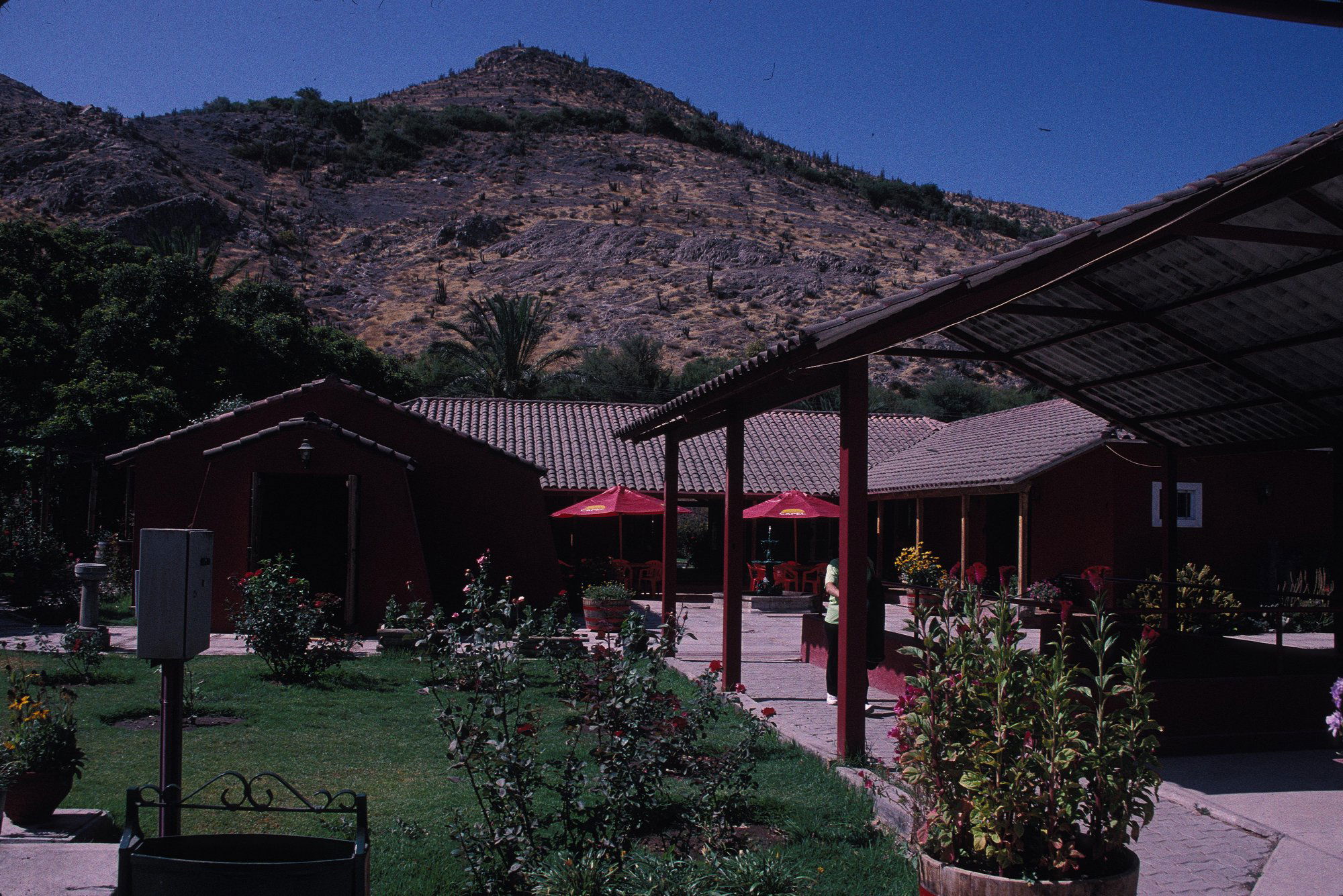
Vicuña itself is a small administrative town of around 25,000 people, positioned about 60 kilometres inland from La Serena along the Elqui River. The drive in from the coast gains elevation steadily, and the valley narrows as the Andes close in. By the time you reach Vicuña, the surrounding hills have shifted from coastal scrub to sun-bleached granite terraces planted with the tight vine rows of Muscat de Alejandría and Pedro Jiménez. The Capel plant on Puente Peralillo sits close to the river, and approaching it, the scale of the cooperative's infrastructure becomes apparent: this is a large-volume facility that also functions as a heritage site for Chilean pisco production.
The Cooperative Model and What It Means for What's in the Glass
Capel operates as a growers' cooperative, which positions it differently from smaller artisan distilleries like Pisquera ABA or single-estate operations such as Pisco Mal Paso in the same valley. Cooperative structures in spirit production tend to prioritise consistency and volume over terroir-specific expression, but in Capel's case the breadth of its member growers across multiple sub-valleys of the Elqui actually provides a blending resource that single-estate producers cannot replicate. The distillery sources Muscat grapes from dozens of smallholders across the valley floor and into higher-altitude plots approaching 2,000 metres, and the final spirit reflects an aggregated Elqui character rather than one parcel's microclimate.
That distinction matters when positioning Capel against the broader Vicuña pisco scene. Where Doña Josefa de Elqui (Pisco) represents a smaller-scale, family-rooted operation and Viña Falernia bridges table wine and pisco production under a single estate philosophy, Capel's cooperative scale gives it a different kind of authority: the ability to maintain a house style over decades and across enormous production volumes. For visitors, that translates into a tasting experience grounded in the canonical version of Elqui Muscat pisco rather than an idiosyncratic interpretation.
Terroir Signals in a High-Altitude Desert Spirit
The terroir argument for Elqui Valley pisco is less commonly articulated than it is for Andean wine regions, but it is no less real. Extreme diurnal temperature shifts — warm days driven by solar intensity at altitude, cold nights pushed down from the Andes , slow ripening and preserve aromatic precursors in the Muscat grape. The almost total absence of rain during the growing season means irrigation is managed carefully, and vine stress is a constant variable that experienced growers in the cooperative read season by season. The resulting grapes arrive at the Capel facility with high natural sugar, deep aromatic profile, and low disease pressure, allowing distillation to proceed with minimal intervention in the base wine.
Chilean pisco regulation distinguishes between four quality categories based on minimum alcohol content and production method, with the highest tier reserved for spirits distilled to a lower alcohol percentage and aged in oak. Capel's portfolio spans that range, and the plant visit allows visitors to trace those distinctions directly against the production process. For context on how terroir-driven distillery tourism works elsewhere in the world, the model has parallels at facilities like Aberlour in Aberlour, where visitors engage with the production environment as a lens onto spirit character, though the climate and raw material here are entirely different.
The Plant as Visitor Destination
Distillery tourism in Chile's pisco zone has expanded steadily over the past decade, with Vicuña establishing itself as the primary hub. The town's proximity to La Serena, its clear skies (the Elqui Valley hosts several international observatories), and its cluster of pisco producers within a short driving radius have made it a day-trip or overnight destination for travellers based on the coast. The Capel plant is among the most structured visitor operations in the valley, with tour and tasting infrastructure that reflects the cooperative's scale. For visitors without a vehicle, Vicuña is accessible by frequent bus from La Serena, making the Capel plant a practical stop even without private transport.
The valley's visitor circuit connects naturally to wine producers as well. Viña Mayu works the same high-altitude Elqui terroir for table wine and pisco, and the comparison between wine and spirit production from the same Muscat base is instructive for visitors interested in how distillation concentrates and transforms the varietal's aromatic register. Further down the Chilean production map, operations like Pisco Alto del Carmen Distillery in Huasco offer a comparison with production methods in the Atacama Valley, the other legally protected Chilean pisco zone, where the climate is even more extreme and the grape varieties somewhat different in character.
For those building a broader Chilean producer itinerary, the valley sits within a country whose wine and spirit geography rewards sequential visits. The structured estate experience at Viña Casa Silva in San Fernando or the century-spanning wine history at El Gobernador (Miguel Torres Chile) in Curicó sit in Chile's central valley wine heartland and provide a contrast in both climate and production philosophy. And for visitors drawn to the intersection of winemaking tradition and destination hospitality, Abadía Retuerta in Sardón de Duero offers a European benchmark for how a large estate operation can function simultaneously as a production facility and a high-end visitor experience.
Planning Your Visit to Vicuña
The Capel Pisco Plant is located at Puente Peralillo s/n in Vicuña, Coquimbo. No phone or website information is available in current records, so visitors should confirm current tour schedules and admission details on arrival in Vicuña or through local tourism offices in La Serena. The town's pisco and wine circuit works well as a self-guided day, with the Capel plant serving as a logical anchor given its scale and the depth of its production infrastructure. Accommodation in Vicuña itself is limited; for a wider range of options, our full Vicuña hotels guide covers the available choices across the valley. For dining before or after a distillery visit, our full Vicuña restaurants guide maps the town's options. Visitors interested in continuing the evening in Vicuña should consult our full Vicuña bars guide for pisco-centric drinking after the distillery circuit. The complete picture of the valley's producer network is in our full Vicuña wineries guide, and for activity planning beyond distillery visits, our full Vicuña experiences guide covers stargazing, hiking, and cultural itineraries in the region.
Frequently Asked Questions
- What should I taste at Capel Pisco Plant?
- The Elqui Valley's Muscat-dominant production gives Capel's range its defining aromatic character: stone fruit, orange blossom, and the kind of clean sweetness that comes from high-altitude grape concentration rather than post-distillation additives. The valley's position as one of Chile's two legally protected pisco zones , alongside the Atacama Valley , means tastings here function as a reference point for the Elqui style. Capel's 2025 Pearl 2 Star Prestige recognition places it among the more credentialed visitor experiences in the region. For comparative context, Doña Josefa de Elqui (Pisco) and Pisquera ABA represent smaller-scale alternatives on the same circuit.
- What should I know about Capel Pisco Plant before I go?
- The plant is located in Vicuña, Coquimbo, approximately 60 kilometres inland from La Serena via the Elqui Valley road. No advance booking phone or website is available in current records, so confirming tour availability locally or through La Serena's regional tourism office before travelling is advisable. The facility earned a Pearl 2 Star Prestige rating in 2025. Admission and tour pricing details are not currently available in the EP Club database, so budget estimates should be confirmed on the ground.
- Can I walk in to Capel Pisco Plant?
- The Capel Pisco Plant's central location in Vicuña makes it accessible on foot from the town centre, and its scale as a cooperative production facility suggests walk-in visits are likely accommodated during regular opening hours. That said, no confirmed hours or booking policy are currently held in the EP Club database, and contacting local tourism information in Vicuña before arriving is the safest approach. The plant's 2025 Pearl 2 Star Prestige rating indicates an established visitor programme rather than a purely industrial site.
- How does the Capel cooperative model differ from smaller Elqui Valley pisco producers?
- Capel operates as a growers' cooperative drawing fruit from member vineyards across the Elqui Valley, which gives it a blending range and production consistency that single-estate producers cannot match by definition. Smaller operations like Pisco Mal Paso and Viña Falernia work from more controlled, estate-specific sources, producing spirits that reflect individual parcel decisions more directly. For visitors, this means Capel offers a reference point for the valley's aggregate terroir character, while smaller producers offer a more site-specific lens. Capel's Pearl 2 Star Prestige award (2025) confirms the quality level achievable within the cooperative structure.
The Minimal Set
A quick peer reference to anchor this venue in its category.
| Venue | Classification | Awards | First Vintage | Notes |
|---|---|---|---|---|
| Capel Pisco Plant | 1 awards | This venue | ||
| Viña Falernia | 1 awards | |||
| Doña Josefa de Elqui (Pisco) | 1 awards | |||
| Pisquera ABA | 1 awards | |||
| Viña Mayu | 1 awards | |||
| Pisco Mal Paso | 1 awards |
Access the Cellar?
Our members enjoy exclusive access to private tastings and priority allocations from the world's most sought-after producers.
Access the Concierge