
Viña Mayu sits on San Martín 89 in Vicuña, deep in Chile's Elqui Valley, where extreme altitude, intense UV radiation, and near-zero annual rainfall create growing conditions found nowhere else in South America. Recognised with a Pearl 2 Star Prestige award in 2025, the winery operates within a regional tradition that prizes elemental viticulture over intervention. For serious wine travellers heading into the Atacama foothills, it belongs on the itinerary.
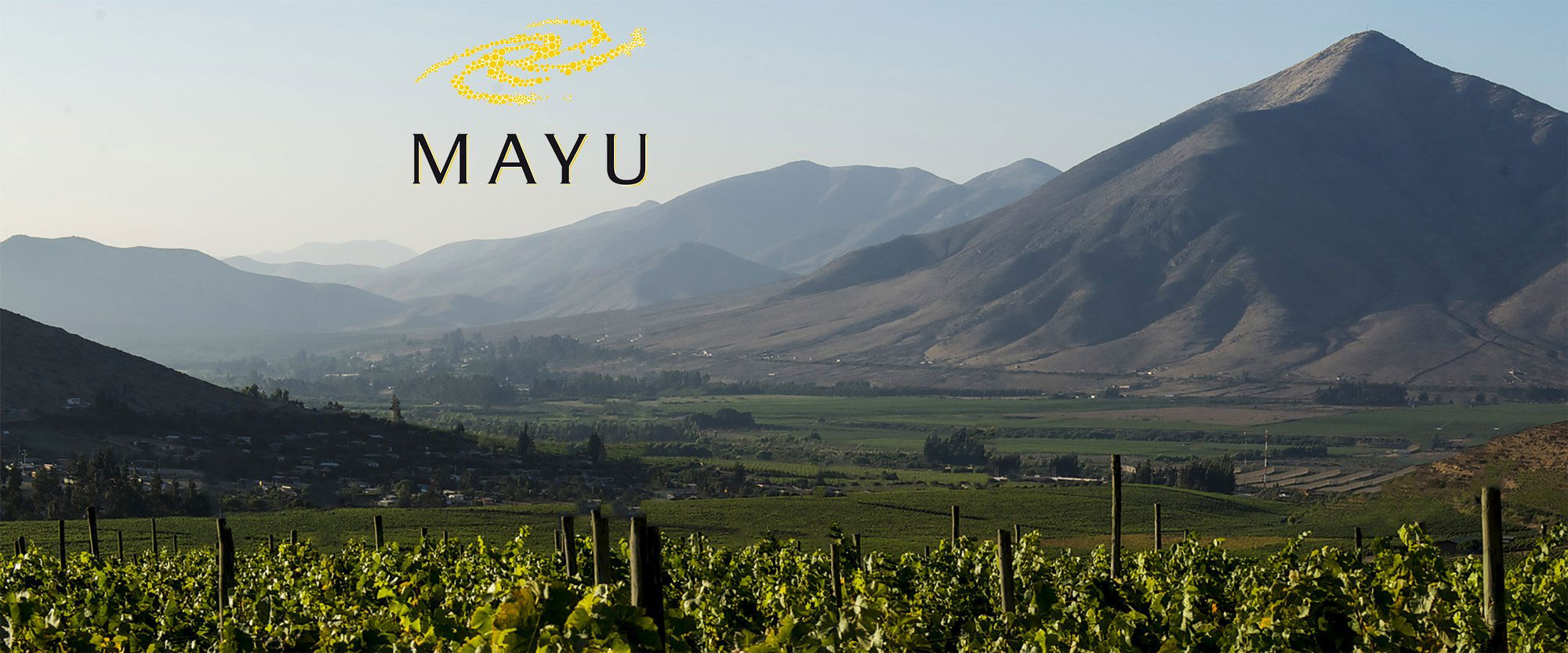
Where the Desert Shapes the Vine
Drive east from La Serena along Route 41 and the Elqui Valley tightens around you. The Pacific humidity drops away, the air thins, and the sky above Vicuña becomes the kind of deep, uninterrupted blue that makes this region the astronomical capital of the Southern Hemisphere. The Atacama Desert does not stop at the valley's edge — it presses in from every side, and viticulture here is conducted not in spite of that pressure but because of it. At these latitudes and elevations, the vine is forced to work in conditions that Central Valley producers rarely encounter: brutal diurnal temperature swings, ultraviolet radiation among the highest recorded for any wine-growing region, and an annual rainfall that barely registers.
Viña Mayu occupies this territory from its address on San Martín 89, in the heart of Vicuña — a small Coquimbo Region town that serves as the administrative and cultural centre of the upper Elqui. Its Pearl 2 Star Prestige recognition in 2025 places it at the upper tier of the region's winery set, and that recognition carries more weight here than it might elsewhere, because the Elqui Valley's wine scene is genuinely small. Most visitors arrive for the pisco distilleries, which is where the valley's beverage identity is loudest, but a compact group of wine producers has been quietly demonstrating that the desert can yield serious table wine, not just distillation base.
Viticulture at the Limit
The editorial case for Elqui Valley viticulture rests on geography rather than on winemaker biography. No other wine region in Chile operates at this altitude-latitude combination. The valley floor around Vicuña sits between 1,000 and 1,200 metres above sea level, with some vineyard plots extending considerably higher into the Andean foothills. That elevation produces cold nights even after scorching afternoons, and the temperature differential between the two , sometimes exceeding 20°C within a single day , preserves acidity in ways that flatland viticulture simply cannot replicate through cellar management alone.
The sustainability question in this environment is not a marketing posture; it is a practical one. In a region with almost no rainfall, every irrigated litre is drawn from Andean snowmelt channelled through the Elqui River system. Producers who understand their long-term position in this ecosystem manage water with a precision that would be optional elsewhere. Low-intervention and organic approaches are not merely ethical choices here , they reflect the logic of a fragile, arid system. Excess chemical input in thin desert soils would degrade the growing medium quickly, which is why the Elqui's more thoughtful producers treat viticulture as an act of measured conservation rather than volume extraction.
This places Viña Mayu in a peer set that includes Viña Falernia, the valley's most internationally recognised winery, which has spent more than two decades demonstrating that Elqui Syrah, Carménère, and aromatic whites can compete against Chile's more established wine corridors. The two operate in different registers, but both sit within the same argument: that extreme-climate viticulture in northern Chile produces a wine profile distinct from Maipo, Colchagua, or even Casablanca.
The Pisco Context and Why It Matters
Understanding Viña Mayu requires understanding what surrounds it. The Elqui Valley's commercial identity is primarily pisco-driven. Visitors who come through Vicuña typically do so to tour operations like the Capel Pisco Plant, one of the largest cooperative distilleries in the country, or to visit craft producers such as Doña Josefa de Elqui, Pisquera ABA, and Pisco Mal Paso, each representing a different production philosophy within the Muscat-heavy distillation tradition that defines Chilean pisco.
Wine tourism in the valley exists as a secondary layer to all of this, which creates an interesting positioning dynamic. Wineries here are not competing primarily against other wine regions for the same type of visitor; they are offering an alternative reason to linger longer in a destination that most people pass through. A visitor who arrives for the pisco trail and leaves having also tasted a properly structured Elqui Syrah has experienced the valley's full range. Viña Mayu sits at that intersection, benefiting from the valley's broader beverage tourism draw while representing the wine side of the equation at the prestige level.
Placing the 2025 Recognition
The Pearl 2 Star Prestige awarded to Viña Mayu in 2025 is the kind of external signal that shifts how a winery gets read in its regional context. At the national level, Chile's wine recognition landscape is dominated by Central and Southern Valley producers: Viña Casa Silva in San Fernando, El Gobernador (Miguel Torres Chile) in Curicó , these are names that occupy the upper end of a better-documented tier. For a Coquimbo Region producer operating in a valley better known for pisco than pinot, earning prestige-level recognition requires outperforming expectations set by geography.
That the award arrived in 2025 is worth noting temporally. Chilean wine's critical rehabilitation over the past decade has moved steadily northward, from the Central Valley into the coastal zones and, more recently, into the high-altitude interior. The Elqui sits at the far end of that movement, but it is now clearly included in the conversation. Viña Mayu's recognition is one signal that the conversation has arrived at meaningful depth. For comparison, looking outward from Chile entirely, the pattern of high-altitude arid viticulture earning recognition mirrors similar shifts that have occurred in Priorat in Spain and in certain high-elevation Rioja projects. Prestige wine production does not require temperate maritime conditions , it requires the right terroir worked with appropriate restraint.
Planning a Visit to Vicuña
Vicuña sits approximately 60 kilometres east of La Serena along Route 41, a drive of under an hour that takes visitors from the Pacific coast into the valley interior. La Serena is served by domestic flights from Santiago, with journey times under two hours, making the Elqui a feasible addition to a broader Chilean itinerary rather than a standalone destination requiring significant rerouting. The town itself is small , a few thousand residents, a plaza, a cluster of services , which means logistics are uncomplicated but options are limited. Booking ahead is advisable during the summer season (November to March) and during the Elqui's increasingly popular stargazing periods, when accommodation across Vicuña fills from La Serena overflow.
Viña Mayu is located on San Martín 89, a central address that does not require navigating far outside the town's compact core. Given the absence of confirmed booking contact details in our current record, visitors planning around a winery visit should confirm directly and in advance , this is standard practice for smaller producers across the Elqui and Limarí valleys. Dress code expectations in this environment are casual; the valley runs warm during the day and cool at altitude after dark, so layering is practical rather than fashionable. For a fuller picture of what the region offers beyond wine, see our full Vicuña wineries guide, our full Vicuña restaurants guide, our full Vicuña hotels guide, our full Vicuña bars guide, and our full Vicuña experiences guide.
For those building a comparative tasting itinerary across very different terroirs, the contrast between the Elqui's desert-altitude wines and producers like Abadía Retuerta in Sardón de Duero or the entirely different production logic of Aberlour in Aberlour illustrates just how far climate-specific production philosophy can diverge while still arriving at prestige-level results.
Frequently Asked Questions
- Is Viña Mayu more formal or casual?
- Given its location in Vicuña , a small Elqui Valley town with an unpretentious, outdoor-oriented character , and the absence of any formal dress code in our records, Viña Mayu operates in a casual register. The 2025 Pearl 2 Star Prestige recognition speaks to the quality of the wine program, not to ceremonial formality. Visitors should expect a producer-led, terroir-focused experience rather than the white-tablecloth framing of a prestige estate in, say, Mendoza or Napa.
- What wines is Viña Mayu known for?
- Specific current releases are not confirmed in our record. However, the Elqui Valley's high-altitude, arid viticulture is leading suited to aromatic whites (particularly Muscat-family varieties with pisco heritage), and to structured reds such as Syrah and Carménère that benefit from the valley's intense UV exposure and cold nights. The 2025 Pearl 2 Star Prestige award signals that whatever the current portfolio contains, it meets a high benchmark within Chile's prestige producer tier. We recommend confirming the current release list directly before visiting.
- What's the standout thing about Viña Mayu?
- The combination of location and recognition is difficult to replicate elsewhere in Chilean wine. Vicuña sits in one of the most extreme wine-growing environments in South America , high altitude, minimal rainfall, intense solar radiation , and Viña Mayu's 2025 Pearl 2 Star Prestige award confirms that the winery is working those conditions at a level that earns external validation. In a valley where most visitors come for pisco, finding a wine producer at prestige level is a genuine point of difference for serious wine travellers.
- What's the leading way to book Viña Mayu?
- Phone and website details are not confirmed in our current record. The address , San Martín 89, Vicuña , places the winery centrally within the town, and direct contact in advance is advisable, particularly for visits during peak summer months or the stargazing season. We recommend checking for updated contact details through Chile's wine tourism networks or through local Vicuña tourism offices before your trip.
At-a-Glance Comparison
A compact comparison to help you place this venue among nearby peers.
| Venue | Classification | Awards | First Vintage | Notes |
|---|---|---|---|---|
| Viña Mayu | 1 awards | This venue | ||
| Viña Falernia | 1 awards | |||
| Capel Pisco Plant | 1 awards | |||
| Doña Josefa de Elqui (Pisco) | 1 awards | |||
| Pisquera ABA | 1 awards | |||
| Pisco Mal Paso | 1 awards |
Access the Cellar?
Our members enjoy exclusive access to private tastings and priority allocations from the world's most sought-after producers.
Access the Concierge