
Bodega Monteviejo sits in Campo de los Andes, Tunuyán, at the high-altitude southern end of Mendoza's Valle de Uco, where cooler temperatures and volcanic soils shape wines with a structural precision that distinguishes the sub-region from warmer Luján de Cuyo. Recognised with a Pearl 2 Star Prestige award in 2025, the estate operates within a cluster of French-influenced wineries that have defined the area's premium identity over the past two decades.
 Discover on Pearl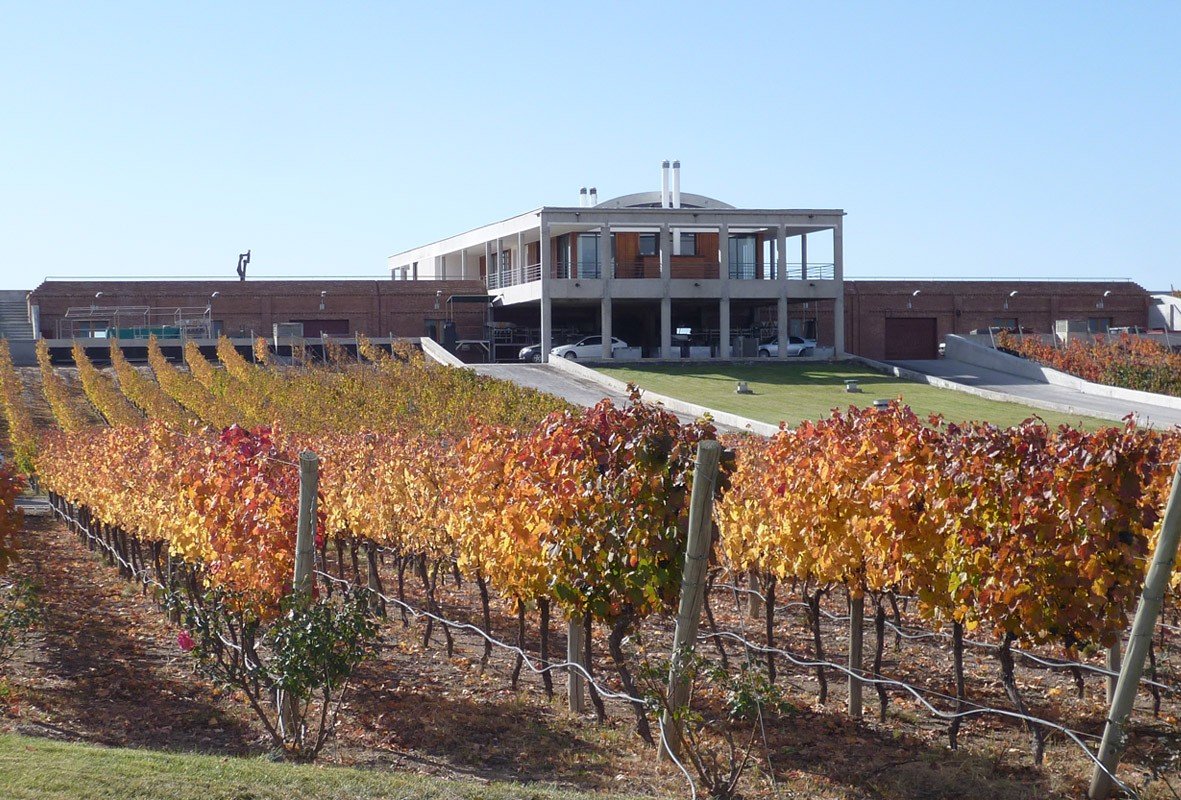
High Altitude, Cold Nights, and the Slow Logic of Campo de los Andes
Approach Bodega Monteviejo from the main road through Tunuyán and the scale of the Andes becomes a presence rather than a backdrop. At this elevation in the Valle de Uco, the air is thinner, the light sharper, and the temperature drops fast once the sun falls behind the cordillera. These are not incidental details. The diurnal temperature swings that define Campo de los Andes — sometimes exceeding 20°C between midday and midnight during the growing season — are the single most consequential fact about the wines produced here, slowing ripening and preserving the acidity that separates high-altitude Malbec from the softer, lower-elevation versions that built Mendoza's international reputation in the 1990s.
Monteviejo sits within this cold-country wine tradition, and the estate's recognition with a Pearl 2 Star Prestige award in 2025 places it formally in the upper tier of Tunuyán producers. That peer group is unusually dense with French capital and winemaking reference points: Bodega Cuvelier Los Andes and Bodega DiamAndes share the same sub-regional address, as does the larger, more visitor-oriented Bodegas Salentein. The concentration of European investment in this corridor is not accidental , it reflects a deliberate search, beginning in the early 2000s, for terroir capable of producing wines that could be argued against Bordeaux and Burgundy on structural terms rather than simply on value.
Viticulture in the Volcanic South
The soils at Campo de los Andes carry a significant proportion of volcanic origin material, the legacy of Andean geological activity that distinguishes this southern sector of the Valle de Uco from the alluvial fans further north. Volcanic soils tend toward lower fertility and better drainage, both of which stress the vine in ways that concentrate flavour and limit yields. Combined with the altitude , most vineyards in this corridor sit between 1,000 and 1,200 metres above sea level , the growing conditions push naturally toward restrained viticulture even before any deliberate intervention.
The broader movement in the Valle de Uco over the past decade has been toward organic and increasingly biodynamic approaches, a shift driven partly by the market premium attached to certified sustainable viticulture and partly by a recognition that soils this distinctive are worth protecting from chemical dependency. Estates in the Tunuyán corridor, including Monteviejo's immediate neighbours, have progressively reduced synthetic inputs. Zuccardi Valle de Uco, which operates at a different scale but in the same sub-regional conversation, has become one of the southern hemisphere's most referenced cases for soil-focused viticulture, and its presence in the area has raised the floor of what serious producers here are expected to articulate about their land. Antucura similarly occupies the premium end of this cluster, and its approach to parcel-level farming reflects the same broader shift.
For Monteviejo, the estate's position in this environment means that sustainability is less a marketing certification and more a baseline expectation imposed by geography. Vines in volcanic, well-drained soils at elevation already require less water than lower-altitude plantings; the Andes snowmelt that supplies irrigation in Mendoza arrives with a natural rhythm that encourages growers to align with it rather than override it. The practical outcome is a viticulture calendar that tends toward minimal intervention by structural necessity.
The Estate in Its Competitive Set
The French-originated wineries of Campo de los Andes have historically occupied a slightly different market position from the large-volume Mendoza producers. Where estates like those in Luján de Cuyo built reputations on consistent, widely distributed Malbec at accessible price points , Bodega Lagarde in Luján de Cuyo being a useful reference point for that tradition , the Campo de los Andes cluster has pushed toward lower volumes, longer cellar times, and pricing that competes against European imports rather than against Argentine commodity wine. The Pearl 2 Star Prestige designation Monteviejo received in 2025 is consistent with this positioning.
Comparing across Argentina's premium wine geography, it is worth noting that the high-altitude ambition Monteviejo represents in Mendoza has parallels in other northern Argentine regions. Bodega Colomé in Molinos and Bodega El Esteco in Cafayate both operate at higher elevations and with a similar logic of cold-climate precision, though in a Torrontés and high-altitude Malbec context rather than the Bordeaux-influenced blends that dominate Campo de los Andes. The pattern across all these properties is the same: European investment or training, altitude as quality argument, and a market narrative that separates the wine from the volume end of the Argentine export story.
Visiting Monteviejo: What to Expect and When to Go
Getting to Campo de los Andes requires commitment. Tunuyán sits roughly two hours south of Mendoza city by road, and the Campo de los Andes address on Clodomiro Silva places Monteviejo in the agricultural southern reaches of the Valle de Uco, accessible by car rather than by any reliable public connection. The majority of serious visitors to this corridor combine several estates in a single day, and the cluster of properties here , Monteviejo, Cuvelier Los Andes, DiamAndes , makes that kind of multi-stop itinerary rational. Given the distances involved, arranging a driver or a guided wine tour from Mendoza city is the practical default for anyone not renting a vehicle.
The optimal visiting window in the Valle de Uco follows two distinct logics. Harvest season, from late February through April depending on variety, brings the energy of activity and the chance to see the winery in operational mode. Late autumn, from May onward, offers cleaner air, lower tourist density, and the stillness of a post-harvest estate against the first snowfall on the Andes. Summers at altitude are warm by day but the UV intensity and afternoon winds can make outdoor tastings uncomfortable; spring and early autumn hit the better middle ground for visits that include any outdoor component.
For those planning a broader stay in the region, our full Tunuyán hotels guide covers accommodation options at various price points, and our full Tunuyán restaurants guide maps the area's food options. Given the rural character of Campo de los Andes, staying in or near Tunuyán town or booking vineyard accommodation at one of the larger estates is the standard approach. Our full Tunuyán bars guide, our full Tunuyán experiences guide, and our full Tunuyán wineries guide provide further orientation for planning a trip anchored in this sub-region. For those with a broader interest in estate wineries operating at a comparable level in different geographies, Abadía Retuerta in Sardón de Duero offers a useful European point of comparison in terms of scale and premium estate viticulture.
Frequently Asked Questions
- What wine should I prioritise at Bodega Monteviejo?
- Monteviejo's location in Campo de los Andes, a sector defined by volcanic soils and elevation above 1,000 metres, places its Malbec in a structural category distinct from lower-valley versions , tighter, more acidic, with longer ageing potential. Any bottling from the estate's upper tier that emphasises its Campo de los Andes terroir is the natural starting point. The Pearl 2 Star Prestige recognition in 2025 signals that the estate is operating at a level where its premium offerings are the primary argument.
- What makes Bodega Monteviejo worth the trip from Mendoza city?
- The Valle de Uco corridor south of Tunuyán is one of Argentina's most concentrated zones for premium estate viticulture, and Campo de los Andes sits at its cooler, more demanding southern end. Monteviejo's 2025 Pearl 2 Star Prestige award places it in the top tier of that peer group. Visitors who make the two-hour drive from Mendoza are typically combining several estates in the corridor , the clustering of serious producers here means the journey justifies multiple visits in a single day, with Monteviejo representing the high-altitude, French-influenced end of that argument.
Peer Set Snapshot
These are the closest comparables we have in our database for quick context.
| Venue | Awards | Notes |
|---|---|---|
| Bodega Monteviejo | Pearl 2 Star Prestige | This venue |
| Bodegas Salentein | 50 Best Vineyards #12 (2025); Pearl 3 Star Prestige | |
| Bodega DiamAndes | 50 Best Vineyards #93 (2025); Pearl 3 Star Prestige | |
| Zuccardi Valle de Uco | 50 Best Vineyards #1 (2021); Pearl 4 Star Prestige | |
| Antucura | Pearl 2 Star Prestige | |
| Bodega Cuvelier Los Andes | Pearl 2 Star Prestige: 0pts |
Access the Cellar?
Our members enjoy exclusive access to private tastings and priority allocations from the world's most sought-after producers.
Get Exclusive Access