Tabelog 100 #40
Our verdict
Akasaka’s sweets culture rewards precision, restraint, and advance planning rather than café theatrics. Zuckerbäckerei Kayanuma sits in that disciplined Tokyo tier: a takeout-only Western-style sweets shop selected for Tabelog Sweets TOKYO 100 in 2023, with repeat selections dating back to 2017 and a format built around buying, carrying, and serving at home rather than lingering at a table.

Pearl is the En Primeur Club membership app, where members save venues, book tables and use the concierge.
The menu
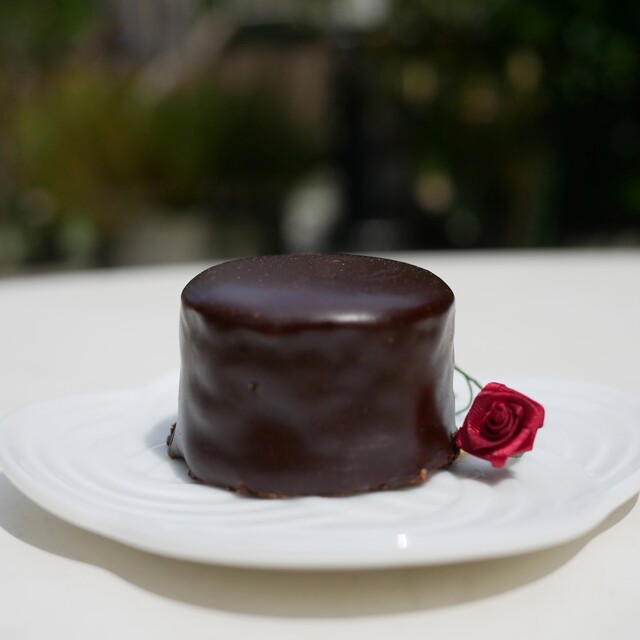
What to order
- Teebäckerei cookie tin
- Seasonal Stollen
- Kirishu Schüttelrüdel (seasonal cake)
- Apfelstrudel (seasonal)
Approaching a serious Tokyo sweets counter is unlike entering a dessert salon. There may be little need for a long lunch rhythm or table-as-theatre. The encounter can feel compressed: choose with intent, respect the room, carry the box carefully, and let the sweets belong to a later moment. In Tokyo, where hotels, offices, formal meals, and corporate dining rooms set the tempo, that precision feels native.
Zuckerbäckerei Kayanuma sits on the quieter side of Tokyo’s dessert hierarchy. The city has elaborate plated-dessert counters and patisserie cafés, but its confectionery culture often treats sweets as something purchased ceremonially and served elsewhere. The sweets-shop format matters: it changes the etiquette. This is not only about lingering over a room; it is a practiced errand, brief, exacting, and weighted with expectation.
Tokyo sweets culture, without the café performance
Tokyo is not a single pastry mood. Some areas lean toward polished department-store dessert floors, while others favor design-forward pâtisserie scenes or compact specialist counters. That broader context suits a Western-style sweets shop where the purchase may be part of a social code. Dessert in Tokyo is frequently a gift, host gesture, or controlled finish to a meal at home, and the format here fits with unusual clarity.
The Tabelog Hyakumeiten recognition in 2023 places Zuckerbäckerei Kayanuma within a selective Tokyo sweets conversation rather than a casual bakery circuit. The stronger signal is consistency of reputation in a city where dessert recognition rewards precision, not novelty alone. A 3.80 Tabelog score is serious in a category where small shops and narrow formats can be judged harshly by users expecting convenience.
The name may suggest a European confectionery lineage, but the more useful frame is Tokyo’s adaptation of Western-style sweets into a precise urban custom. Japanese sweets culture has long absorbed outside techniques, then filtered them through local ideas of packaging, gifting, portion control, and seasonality. At this level, the question is less whether a shop resembles any one overseas model than whether it understands Tokyo’s expectation that a sweet should travel, present cleanly, and hold its place at a table after purchase.
That separates it from other Tokyo dining choices with heavier meal architecture. Lawry's The Prime Rib, Akasaka Akasaka ten, RUTH’S CHRIS STEAK HOUSE, L'ARGENT, and Asada Ya all sit elsewhere on the city’s dining spectrum, with different expectations around the meal itself. Zuckerbäckerei Kayanuma plays a narrower role: not dinner, extended café time, or a casual snack stop, but a focused sweets purchase within Tokyo’s formal food economy.
The discipline is in the purchase, not the plate
Tokyo dining rituals are often discussed through sushi counters and kaiseki rooms, yet pastry has its own etiquette. A sweets shop asks the guest to think ahead: timing, transport, presentation, and recipient become part of the decision. The experience is often less spontaneous than a café order and more intentional than station-concourse dessert. The point is the transaction as much as the immediate plate.
That sense of restraint reinforces the point. In a city where food queues often become social-media staging areas, a serious sweets errand can return attention to ordering and service, preserving old-fashioned privacy around the exchange. The ritual is not simply documenting a counter; it is leaving with the right box.
Because the venue is categorized as cake and Western-style sweets, expectations should stay there rather than wagashi or dessert omakase. The appeal is for travelers who understand that Tokyo sweet shops can be as destination-worthy as restaurants, without needing a full seated meal. This is a specialist purchase, useful before a hotel-room gathering, after a formal lunch elsewhere in the city, or as a refined edible gift in a city where presentation carries social weight.
The city also matters logistically in the broader editorial sense, even when practical planning carries the exact details. Tokyo’s central dining map lets a sweets stop sit between meals rather than replace one (Our full Tokyo experiences guide).
Where it fits in a Tokyo itinerary
The right audience is not necessarily seeking a long café pause. It is the traveler who treats sweets as part of Tokyo’s social grammar: purchased carefully, carried correctly, and opened at the right moment. A seated dessert counter gives real-time drama; a confectionery purchase asks for restraint and planning. For a premium Tokyo itinerary, that can be sharper.
It also counters the city’s highly visible dining formats. A day might move through casual meals, formal restaurants, hotel dining rooms, and specialist counters, all with different rhythms and expectations. Zuckerbäckerei Kayanuma occupies a different register: compact, formal, and purchase-led.
Travelers building a Japan-wide sweets and casual-dining map can read it alongside other unnamed dining rooms and confectionery stops across the country. For broader comparisons, Japanese-influenced formats abroad show how tightly defined food rituals can change once they leave Japan. Back in Tokyo, other casual dining addresses offer further points on the city’s dining spectrum.
The critical read is simple: Zuckerbäckerei Kayanuma is not trying to solve dessert for everyone. Its value lies in a specific Tokyo habit, the serious sweets errand, backed by Tabelog Hyakumeiten recognition in 2023 and a format focused on the purchase itself. In a city where many venues compete for time at the table, this one argues for what happens after the counter.
Frequently asked questions
What should I budget for a meal at Zuckerbäckerei Kayanuma?
Pricing at Zuckerbäckerei Kayanuma is listed as JPY 3,000 - JPY 3,999 JPY 4,000 - JPY 4,999 View spending breakdown. The listed dinner budget is JPY 3,000 - JPY 3,999; lunch is not listed.
What's Zuckerbäckerei Kayanuma's location?
Tokyo.
How hard is it to get a table at Zuckerbäckerei Kayanuma?
The available venue details do not provide a table-booking difficulty rating. For current ordering or visiting practicalities, contact the shop directly at +81-3-3582-5689.
What is Zuckerbäckerei Kayanuma known for?
It was recognized in the Tabelog Hyakumeiten selection in 2023, which is the clearest trust signal here. The shop is categorized as cake and Western-style sweets in Tokyo.
Can Zuckerbäckerei Kayanuma adjust for dietary needs?
The venue details provided do not describe bespoke dietary adjustments, so the safe assumption is to check directly before ordering. What is clear from the listing is the category: cake and Western-style sweets.
Would Zuckerbäckerei Kayanuma be comfortable with kids?
The available venue details do not provide a specific children or family-comfort policy. For a visit with children, check directly with the shop before going.
The Quick Read
Side-by-side context: comparable cuisine and price.
| Venue | Cuisine | Price | Awards | Notes |
|---|---|---|---|---|
| Zuckerbäckerei KayanumaThis venue (the venue you are viewing) | Traditional Austrian pastry and cookie shop (takeout only) | $20–30 | Tabelog 100 #40 | Not listed |
| Lawry's The Prime Rib, Akasaka Akasaka ten | American Steakhouse | Not listed | Tabelog 100 #79 | JPY 10,000 - JPY 14,999 JPY 6,000 - JPY 7,999 |
| Asada Ya | Traditional Japanese wagashi & daifuku shop | $1–10 | Tabelog 100 #75 | JPY 999 |
| The Okura | Luxury Japanese Fine Dining Collection | $200–300 | Not listed | Not listed |
| RUTH’S CHRIS STEAK HOUSE | American Steakhouse & Fine Dining | $150–200 | Tabelog 100 #14 | JPY 15,000 - JPY 19,999 JPY 5,000 - JPY 5,999 |
| L'ARGENT | Modern French with Japanese Influences | $300–500 | 1 Michelin Star · Tabelog 100 #26 | French |
Recognition history
Dated appearances from independent guides and award organizations, with the underlying list record or original source where available.
Tabelog 100 #40 · No. 40
Tabelog · Tabelog 100 - Sweets - TOKYO - 2023