
Our verdict
On the 28th floor of a Central building, Zest by Konishi occupies the precise overlap between French technique and Japanese pacing that defines a small but serious niche in Hong Kong's fine-dining circuit. Lunch and dinner run Tuesday through Saturday; the restaurant is closed on Sundays.
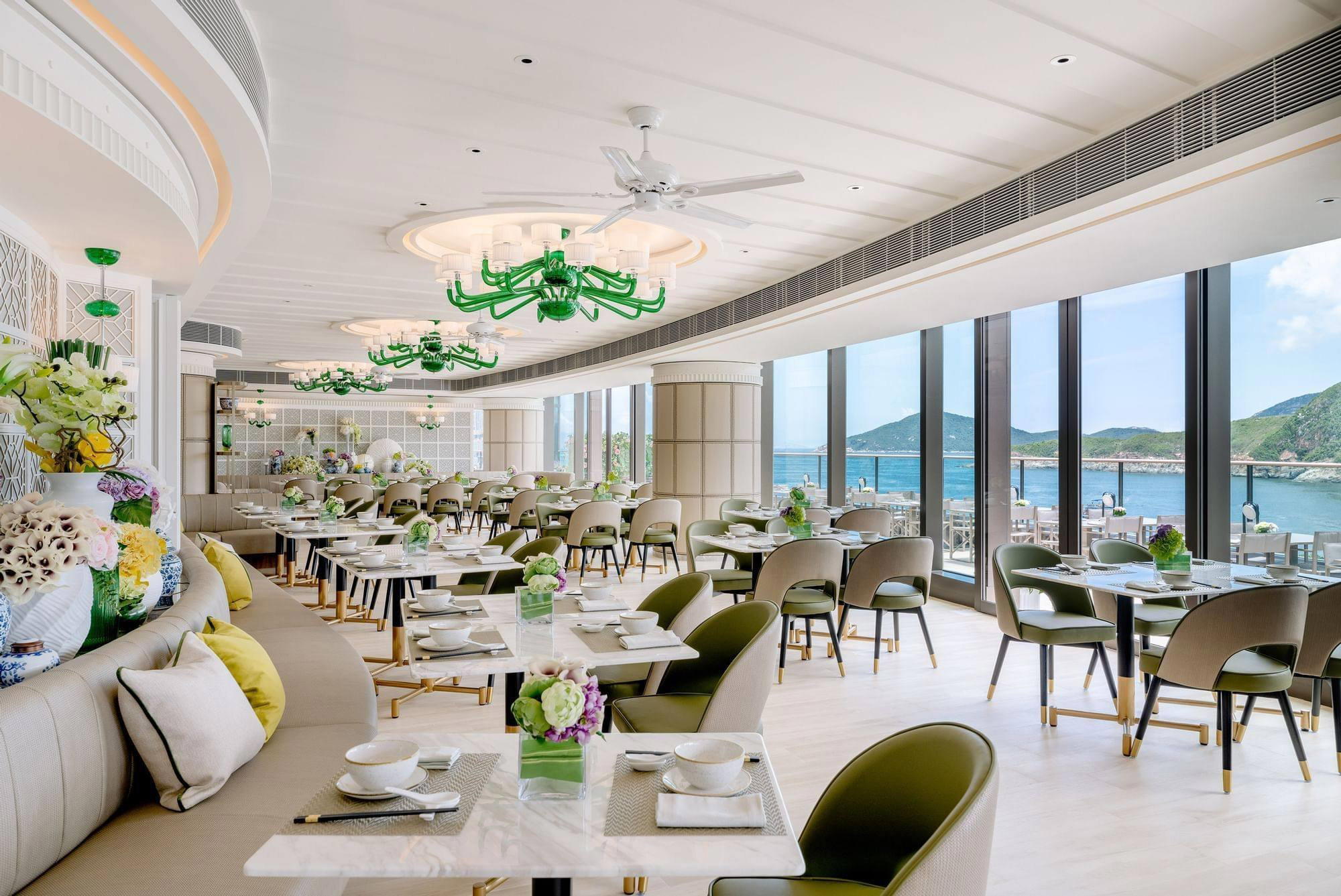
Twenty-Eight Floors Above Central
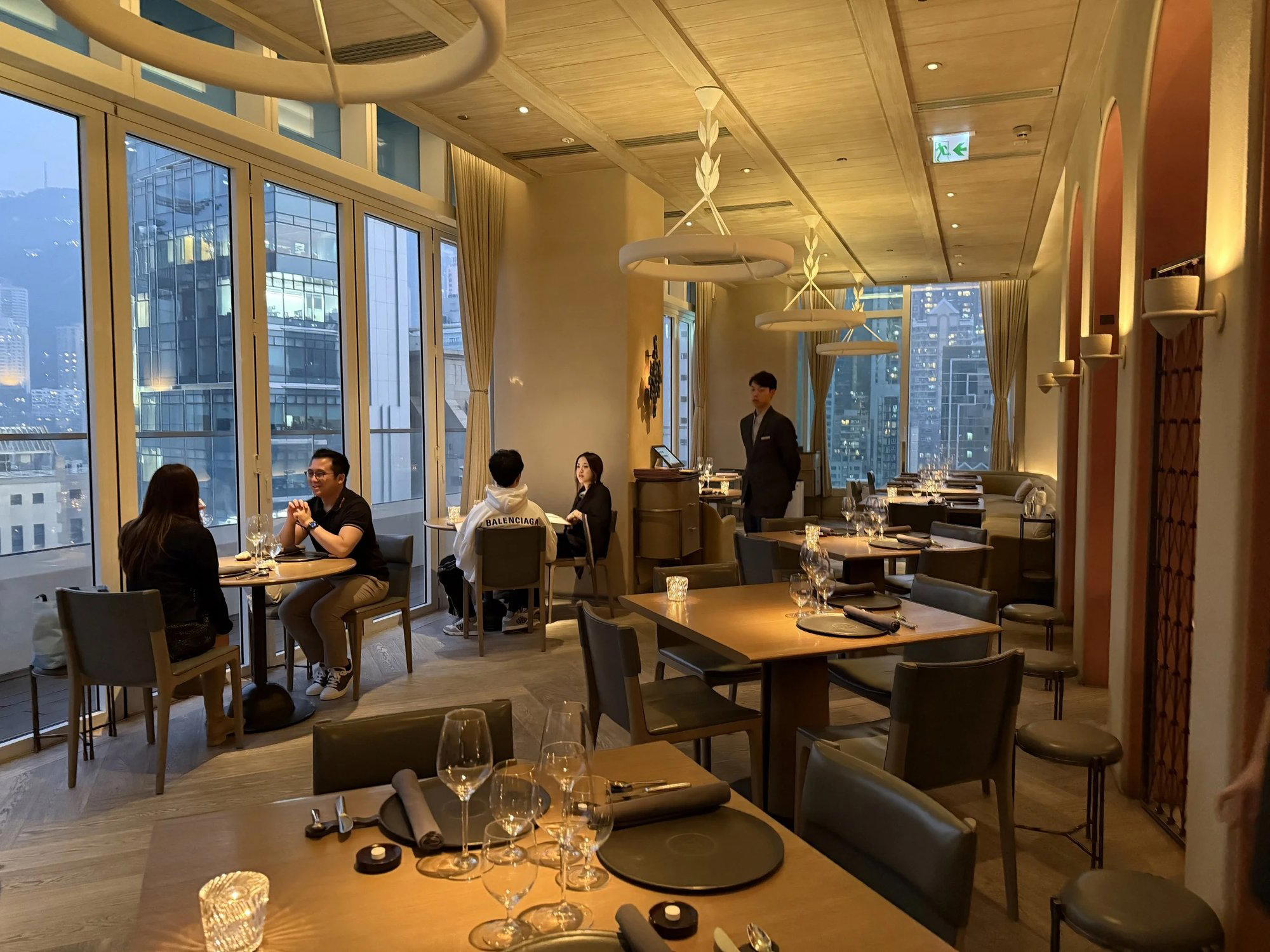
Hong Kong's fine-dining rooms have long used elevation as editorial statement. The higher the floor, the more the city recedes into abstraction, glass towers softened by harbour haze, the urban noise replaced by a particular kind of cultivated quiet. At 28/F on On Lan Street in Central, Zest by Konishi works with exactly that dynamic. The approach matters here: On Lan is a short, steep street running off the bottom of Lan Kwai Fong, and arriving via its narrow pavement before ascending to the dining room creates a compression-then-release effect that sets the register before a single dish appears.
That physical context is worth establishing because the cooking at Zest by Konishi operates on similar principles, compression, then release; restraint before revelation. The French-Japanese category in Hong Kong is now well-populated enough to have its own internal hierarchy, and the venues that hold their position tend to be those that understand the meal as a sequence with deliberate pacing, not merely a collection of technically accomplished plates.
The French-Japanese Tradition in Hong Kong
The synthesis of French classical structure and Japanese ingredient sensibility has deep roots in the city. Hong Kong absorbed both traditions through separate channels, French fine dining arriving through hotel dining rooms in the 1980s and 1990s, Japanese influence filtering through both proximity and the city's long-standing appetite for kaiseki precision, and the restaurants that now work across both lineages are navigating a genuine culinary conversation rather than a marketing category.
Ta Vie, with its Japanese-French-Innovative designation and $$$$-tier pricing, represents one version of this synthesis: technique-forward, ingredient-led, and firmly in the upper bracket of the city's dining circuit. Caprice and Amber approach from the French contemporary side, each carrying the kind of institutional weight that comes with hotel addresses and sustained critical recognition. Zest by Konishi sits in this conversation as a more independent expression, where the Japanese element is carried through Chef Mitsuru Konishi's own culinary background rather than through the apparatus of a large hotel kitchen.
Internationally, the French-Japanese form has produced some of the most discussed cooking of the past two decades. The precision-driven approach seen at restaurants like Le Bernardin in New York City, where classical French structure is applied to ingredient-first thinking, shares conceptual territory with what the leading Japanese-French kitchens are doing, even when the flavour profiles diverge. Closer in form to Zest by Konishi's sensibility are operations like Miro Kaimuki in Honolulu and 1920 in Megève, both of which carry the French-Japanese designation and face the same structural question: how much of each tradition do you foreground, and at what point in the meal?
The Ritual of the Meal
Japanese dining culture places considerable emphasis on ma, the productive pause, the space between things. Applied to a multi-course French format, this sensibility produces meals that breathe differently from their purely European counterparts. The courses arrive with a different logic: not simply to build flavour intensity toward a climax, but to create a rhythm that the diner inhabits rather than just observes.
The leading French-Japanese kitchens understand that this is a structural question as much as a culinary one. The length of service, the intervals between courses, the temperature and weight of each plate in sequence, these are compositional decisions. At Zest by Konishi, the operating hours reflect this seriousness about pacing: lunch runs from noon to 2:30pm, and dinner from 6:30pm to midnight, giving the kitchen sufficient runway to execute a full sequence without compression at either end.
That midnight close is itself a data point. It positions the restaurant inside a tier of Hong Kong dining that treats the evening as a long-form event rather than a turnover exercise. The parallel in tightly curated tasting-menu formats elsewhere, Lazy Bear in San Francisco, or the more ceremonially paced dinners at Atomix in New York City, is the same understanding that some meals are worth protecting from the clock.
Opinionated About Dining is one of the most data-driven of the major international restaurant ranking systems, aggregating critic and expert votes rather than relying on a single inspection body. Its Asia list is a useful map of where serious food professionals direct attention. In 2023, Zest by Konishi earned a Highly Recommended citation; in 2024, it moved to a ranked position at #191 on the Leading Restaurants in Asia list. That upward trajectory within the same ranking system is a more meaningful signal than a single static position, it suggests a kitchen gaining recognition rather than plateauing.
Within Hong Kong, the OAD list places Zest by Konishi in company that includes heavily awarded rooms like 8 1/2 Otto e Mezzo Bombana and long-established Cantonese institutions like Forum. The city's dining circuit is competitive enough that sustained OAD recognition, across two consecutive years, carries genuine weight. It implies consistency rather than a single exceptional performance.
Chef Konishi's name on the door signals direct accountability of the kind that larger institutional kitchens, where the executive chef is a managing presence rather than a cooking one, don't always provide. This is a structural feature of independently operated fine-dining rooms across formats and geographies: from Alain Ducasse at Louis XV in Monte Carlo to Alléno Paris au Pavillon Ledoyen, the named-chef model concentrates creative and culinary decision-making in ways that show up in the consistency of the output.
Practical Details
Zest by Konishi is located at 18 On Lan Street, 28/F, Central, Hong Kong. The restaurant operates Tuesday through Saturday for both lunch (noon to 2:30pm) and dinner (6:30pm to midnight). It is closed on Sundays and Mondays. On Lan Street is walkable from the Central MTR station and within the Lan Kwai Fong area. For a broader view of the city's dining options across categories and price tiers, see our full Hong Kong restaurants guide, as well as our Hong Kong hotels guide, Hong Kong bars guide, Hong Kong wineries guide, and Hong Kong experiences guide.
Quick reference: 28/F, 18 On Lan Street, Central | Tue–Sat, lunch and dinner | Closed Sun–Mon | OAD Asia #191 (2024)
Frequently asked questions
Is Zest by Konishi formal or casual?
Formal. The combination of a 28th-floor room in Central, a French-Japanese kitchen under Chef Mitsuru Konishi, and back-to-back OAD recognition in 2023 and 2024 signals the kind of restaurant where considered dress is appropriate. Treat it as you would any comparable fine-dining address in Hong Kong's upper tier.
What awards or recognition does Zest by Konishi have?
Zest by Konishi has received recognition including: Opinionated About Dining Top Restaurants in Asia Ranked #191 (2024); Opinionated About Dining Top Restaurants in Asia Highly Recommended (2023).
What should I eat at Zest by Konishi?
The kitchen works within a French-Japanese framework, meaning French classical structure applied to Japanese ingredient logic and pacing. At a restaurant ranked #191 in OAD's Top Restaurants in Asia for 2024, the multi-course format is the reason to visit, ordering à la carte where available would undercut the experience the kitchen is designed to deliver.
What days is Zest by Konishi closed?
Hours at Zest by Konishi: Hours: Monday 12–2:30 pm, 6:30 pm–12 am Tuesday 12–2:30 pm, 6:30 pm–12 am Wednesday 12–2:30 pm, 6:30 pm–12 am Thursday 12–2:30 pm, 6:30 pm–12 am Friday 12–2:30 pm, 6:30 pm–12 am Saturday 12–2:30 pm, 6:30 pm–12 am Sunday Closed.
Where exactly is Zest by Konishi?
Zest by Konishi is located at 18 On Lan Street 28/F, Hong Kong, Hong Kong, China, Hong Kong.
Recognition Snapshot
A quick peer list to put this venue’s basics in context.
| Venue | Cuisine | Price | Awards | Notes |
|---|---|---|---|---|
| Zest by KonishiThis venue (the venue you are viewing) | Modern French-Japanese Fusion | Not listed | Not listed | Not listed |
| 8 1/2 Otto e Mezzo Bombana (Hong Kong) | 3 Michelin-Star Italian Fine Dining | $200–300 | 3 Michelin Stars · World's 50 Best #94 | Italian |
| Ta Vie | Modern French-Japanese Fine Dining | $300–500 | 3 Michelin Stars · World's 50 Best #68 | Japanese - French, Innovative |
| Caprice | Contemporary French Fine Dining | $200–300 | 3 Michelin Stars · World's 50 Best #35 | French, French Contemporary |
| Feuille | Modern Vegetable-Forward French | $200–300 | 1 Michelin Star · World's 50 Best #93 | French Contemporary |
| Neighborhood | Modern French with Asian Influences | $50–100 | 1 Michelin Star · World's 50 Best #24 | International, European Contemporary |
Recognition history
Dated appearances from independent guides and award organizations, with the underlying list record or original source where available.
Opinionated About Dining Top Restaurants in Asia Ranked #191
Opinionated About Dining
Full recognition history (2 entries)
Opinionated About Dining Top Restaurants in Asia Highly Recommended
Opinionated About Dining
Continue exploring
More in Hong Kong
Restaurants in Hong Kong
All restaurants in Hong Kong →
Bars in Hong Kong
All bars in Hong Kong →
Hotels in Hong Kong
All hotels in Hong Kong →
Wineries in Hong Kong
All wineries in Hong Kong →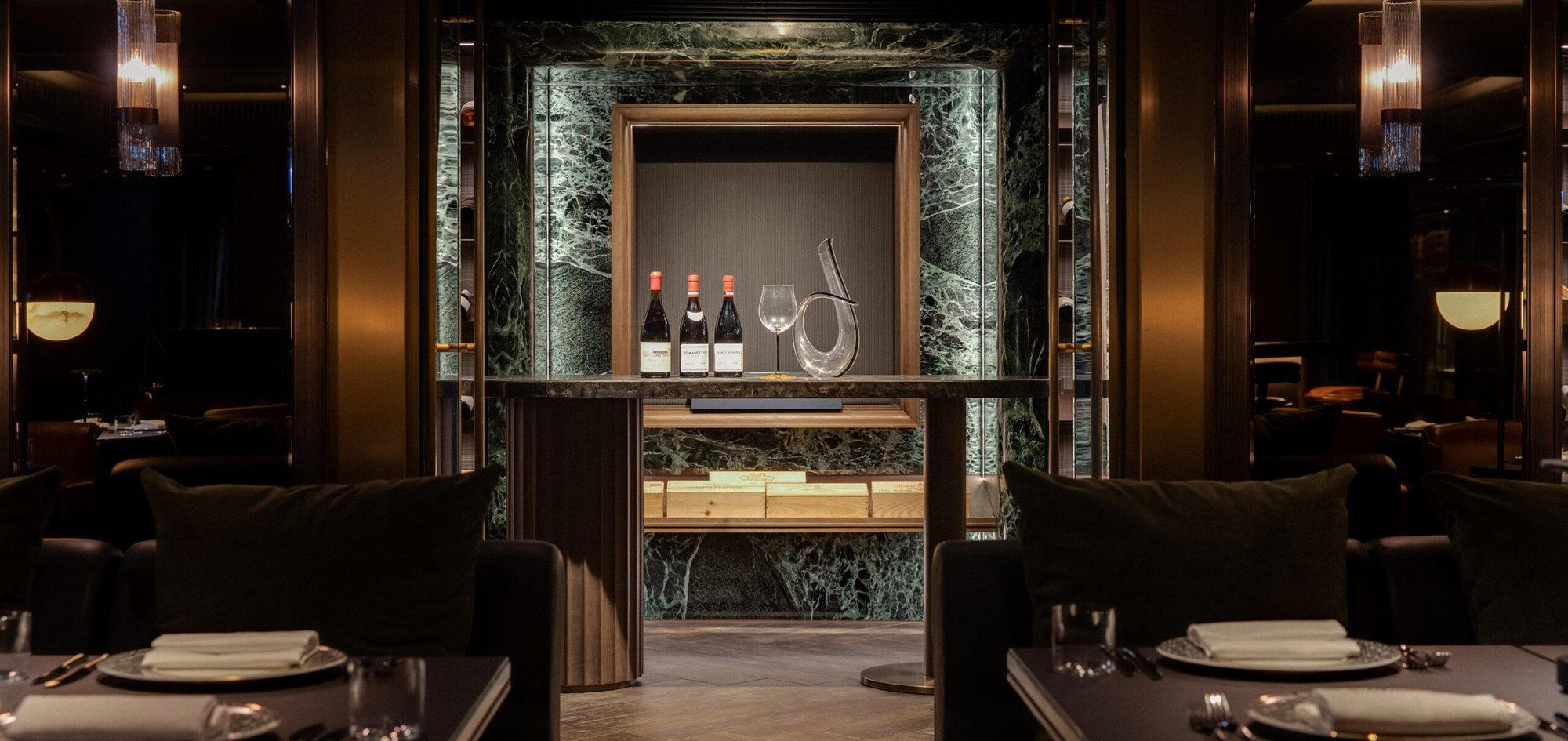
Details
- Sophisticated
- Elegant
- Intimate
- Modern
- Date Night
- Business Dinner
- Celebration
- Special Occasion
- Design Destination
- Standalone
- Craft Cocktails
- Sake Program
- A La Carte
- Cocktails
- Sake
Sophisticated and intimate, with a refined fine-dining feel and a stylish lounge atmosphere.