
Tabelog 100 #58
Our verdict
Yousafzai Halal brings Pakistani, South Asian, and curry cooking into Fukuoka’s broader conversation about regional Asian dining. Its Tabelog 100 Asian cuisine / Ethnic cuisine WEST selections in 2023 and 2024, modest JPY 1,000–1,999 pricing, vegetarian options, English menu support, and family-friendly setup make it a useful counterpoint to the city’s ramen-and-seafood shorthand.

Pearl is the En Primeur Club membership app, where members save venues, book tables and use the concierge.
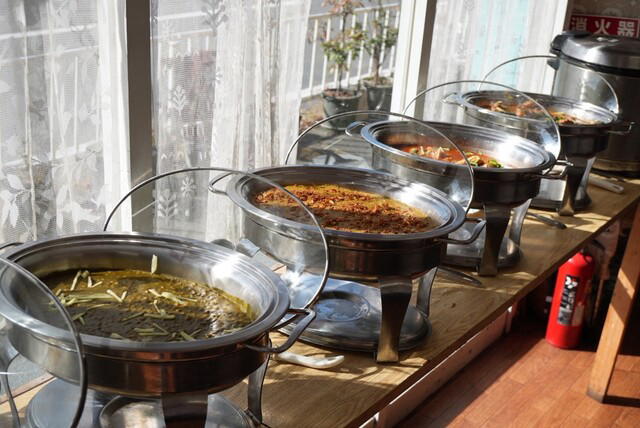
The menu
What to order
- Chicken Biryani
- Mutton Korma Curry
- Mixed Vegetable Curry
- Lentil Curry
- Kabuli Pulao
Fukuoka’s dining reputation often narrows to Hakata ramen, market seafood, and yatai culture, but the city’s more revealing meals are also found in practical settings where everyday pricing and local demand shape the room. In that context, Yousafzai Halal belongs to a smaller but important category: South Asian cooking that is not staged as luxury, yet has earned enough local attention to enter award conversation.
The category label says plenty before the first order is placed: Pakistani, South Asian, curry. In Japan, “curry” can point in several directions, from yoshoku-style plates to spice-led cooking, and Fukuoka has room for both. The sharper editorial distinction here is halal Pakistani food within a Japanese city where Muslim-friendly dining can be harder to navigate than the most familiar local staples. That makes the restaurant useful not only for visitors observing halal requirements, but also for diners trying to read Fukuoka beyond its dominant Kyushu identity.
Pakistani cooking inside Fukuoka's wider Asian dining map
The 2024 Tabelog Hyakumeiten recognition places this restaurant in a wider Japanese dining frame rather than a narrow neighbourhood one. That recognition is meaningful because the field for South Asian, Southeast Asian, Chinese regional, and other non-Japanese Asian formats is broad, especially in cities with established local food cultures. A Tabelog score of 3.56 also signals a steady following in a category where national media coverage often trails behind word-of-mouth demand.
Price is part of the story. At JPY 1,000–1,999, the restaurant sits in an everyday bracket, making it easier to fold into a Fukuoka itinerary than a dinner-led occasion restaurant. Comparisons with HALLAL FOOD MARHABA, pain stock, restaurant mamagoto, or Yakiniku Horumon Jinsei Daichan are less about a single hierarchy than about use case. This is the kind of table that can work for a weekday lunch, a family meal, or a spice-focused detour during a Fukuoka trip without turning into a formal evening plan.
Dietary clarity adds another layer. South Asian restaurants in Japan often become practical choices for diners trying to avoid uncertainty around meat, seasonings, or cooking styles, and a halal restaurant answers that need more directly than many general-purpose rooms. Here, the public positioning around Pakistani, South Asian, and curry categories helps explain why the restaurant travels beyond a purely local audience. It answers a practical gap in Fukuoka dining: accessible spice, halal clarity, and a menu identity that can work for mixed groups.
A casual format, practical ordering, and a direct meal rhythm
The format should be understood as casual rather than ceremonial. Fukuoka has plenty of restaurants where the drama is in the reservation, the chef’s sequence, or the precision of a narrow tasting format. This is not that genre. The appeal is closer to routine confidence, a straightforward stop built for direct eating rather than ceremony.
That practicality matters in this category. It reduces the pressure to treat the meal as a special-occasion booking, and it makes the restaurant more usable for travelers dealing with dietary questions, spice categories, and unfamiliar dish names. The low price range also broadens the format, which matters in a city where hotel dining rooms and train-station food halls can become default fallback choices for visitors staying outside the immediate area.
For broader Fukuoka planning, this stop pairs better with a food-focused route than a sightseeing checklist. Readers comparing city options should use Our full Fukuoka restaurants guide for the wider dining map, then sort by mood: other South Asian cooking in Fukuoka, spice-led contemporary interest, local Japanese comfort, casual fish meals, and cutlet culture. For the rest of a trip, Our full Fukuoka hotels guide, Our full Fukuoka bars guide, Our full Fukuoka wineries guide, and Our full Fukuoka experiences guide give the city’s non-restaurant context.
Why this Fukuoka restaurant changes the reader's expectations
Fukuoka rewards diners who look beyond the most obvious dining lanes. Central areas supply convenience, density, and late-night options, but the city’s wider map shows how Fukuoka absorbs outside food traditions into everyday eating. Yousafzai Halal is not selling a polished hotel version of South Asian cuisine; its place in the conversation comes from specificity, affordability, and recognition inside a competitive ethnic-dining field.
The better comparison is not with luxury tasting menus, but with restaurants that solve a real dining problem while carrying cultural weight. SACHiA Beef stroganoff works in a different comfort-food register; HALLAL FOOD MARHABA shares halal relevance; restaurant mamagoto and Yakiniku Horumon Jinsei Daichan answer different occasions entirely. This restaurant belongs to the category where the decision is about access, dietary confidence, and spice rather than ceremony.
That also makes it part of a broader Japanese dining pattern. Across the country, specialist casual restaurants increasingly shape how travelers understand cities beyond the usual prestige markers. Fukuoka has its own version of that lesson: focused, accessible food formats can matter as much as formal dining, especially when they answer a practical need that mainstream restaurant lists often underplay. The same logic applies when comparing Yousafzai Halal with other dining in Fukuoka rather than only with prestige-led rooms.
The verdict is practical rather than romantic: choose this for a low-cost, culturally specific Fukuoka meal with halal clarity and enough third-party recognition to justify the detour. It is especially strong for travelers who want the city’s food story to include migration, religion, and everyday dining, not only noodles, seafood, and station convenience.
Frequently asked questions
Is Yousafzai Halal suitable for children?
Yousafzai Halal is best understood as a casual, everyday restaurant in Fukuoka. For families, the main appeal is its straightforward price range and clear Pakistani, South Asian, and curry positioning.
Is Yousafzai Halal better for a quiet night or a lively one?
It reads more as a casual, practical meal than a high-energy night out. The restaurant is better framed as an affordable Fukuoka stop for Pakistani, South Asian, and curry cooking than as a formal evening destination.
What's the price range at Yousafzai Halal?
Pricing at Yousafzai Halal is listed as JPY 1,000 - JPY 1,999.
What part of town is Yousafzai Halal in?
Yousafzai Halal is located in Fukuoka.
Can I walk in to Yousafzai Halal?
Plan it as a casual Fukuoka meal, but check directly with the restaurant if timing is important. The listed phone number is +81-92-292-6636.
Cost Snapshot
Comparable venues by cuisine and price in the same metro.
| Venue | Cuisine | Price | Awards | Notes |
|---|---|---|---|---|
| Yousafzai HalalThis venue (the venue you are viewing) | Halal Pakistani & North Indian Curry House | $10–20 | Tabelog 100 #58 | Not listed |
| Hakata Gomasaba Ya | Fukuoka seafood shokudo & gomasaba specialist | $10–20 | Tabelog 100 #93 | Chūō, Fukuoka seafood shokudo & gomasaba specialist |
| French Kashi 16 Ku | Traditional French patisserie and cakes | $10–20 | Tabelog 100 #17 | Chūō, Traditional French patisserie and cakes |
| Fukuchan Ramen Taguma honten | Traditional Hakata-style tonkotsu ramen shop | $10–20 | Tabelog 100 #40 | Sawara, Traditional Hakata-style tonkotsu ramen shop |
| Yayoi (やよい軒 筑紫口店) | Japanese Teishoku | $1–10 | Not listed | Hakata, Japanese Teishoku |
| Yamachan Nakasu ten | Nagahama ramen izakaya | $10–20 | Tabelog 100 #50 | Hakata, Nagahama ramen izakaya |
Recognition history
Dated appearances from independent guides and award organizations, with the underlying list record or original source where available.
Tabelog 100 #58 · No. 58
Tabelog · Tabelog 100 - Asian cuisine / Ethnic cuisine - WEST - 2024
Continue exploring
More in Fukuoka
Restaurants in Fukuoka
All restaurants in Fukuoka →
Details
- Cozy
- Lively
- Family
- Group Dining
- Casual Hangout
- Solo
- Standalone
- A La Carte
- Buffet
- Halal
- Vegetarian Friendly