
Tabelog 100 #31
Our verdict
Yoshinoya places Shibamata’s old-school wagashi culture in sharp relief: kusa dango, red bean paste, low pricing, and a shop format closer to neighbourhood habit than destination dining theatre. Its Tabelog 100 selection for Tokyo Japanese sweets in 2023 gives it useful critical context, especially for travellers comparing Tokyo’s sub-¥1,000 sweet shops with higher-spend restaurant itineraries.

Pearl is the En Primeur Club membership app, where members save venues, book tables and use the concierge.
The menu
What to order
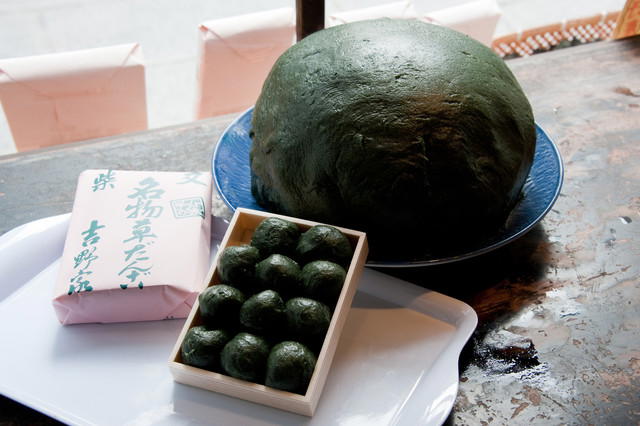
- Kusa dango (grass dumplings) with red bean paste
Tokyo changes tempo quickly outside its most familiar dining circuits. The approach can feel lower-rise, older, and less polished than the capital’s central restaurant districts, with wagashi shops belonging to the rhythm of everyday errands rather than to the reservation economy. In that setting, Yoshinoya is useful not because it performs luxury, but because it clarifies a different Tokyo value equation: a short-form Japanese traditional sweets stop, where the spend sits in the under-JPY 1,000 bracket and the point is craft at everyday scale.
Tokyo's wagashi economy rewards brevity, habit, and price discipline
Tokyo dining coverage often leans toward counters, tasting menus, and hotel restaurants, but the city’s sweets culture works on a separate logic. Wagashi shops are judged less by duration than by repetition: a few items, local memory, seasonal sensitivity, and enough consistency to become part of everyday errands and visits. Yoshinoya sits within that everyday Tokyo sweets culture, so the reward is not a grand room or an elaborate menu arc. The reward is seeing how the city’s food culture prices small pleasures without turning them into ceremony.
Yoshinoya’s Tabelog Hyakumeiten selection for Japanese traditional sweets, sweets, and cafes featuring Japanese sweets in 2023 matters in that context. Tabelog’s Hyakumeiten lists are not Michelin-style fine-dining signals; they are more useful as category maps, especially in genres where local regularity and narrow specialization carry weight. Here, the recognition places Yoshinoya inside a citywide sweets conversation rather than treating it as a nostalgic footnote.
The comparison set is revealing. Ishii and Takagiya Roho also sit in Tokyo’s accessible wagashi conversation, while TORAYA BAKERY belongs to the same broader sweets-oriented planning frame. Eiraku and Tori Sami show how varied Tokyo’s recognised dining map can be, but Yoshinoya remains a low-cost sweets stop rather than a full-meal substitute. Against full restaurant meals, the value proposition is blunt: this is not a replacement for dinner, but it is a precise way to add a Tokyo sweets tradition to the day without letting the itinerary or bill swell.
Japanese sweets give the shop its point of view
The relevant order category is Japanese traditional sweets, with Yoshinoya listed in Tabelog’s sweets and Japanese-sweets-cafe categories. That distinction matters because wagashi often turns on balance rather than abundance. Too much sweetness can flatten the format; too little can make it austere. In this case, the draw is the Tokyo pleasure of a compact sweets stop built around texture, restraint, and a clear sense of category rather than a broad restaurant menu.
There is also a useful signal in the way the recognition reads. Yoshinoya’s 2023 Tabelog Hyakumeiten listing is a credential that works differently from chef pedigree in fine dining. In wagashi, continuity and repeat appeal matter as much as spectacle; the format depends on a recipe, a customer base, and a city context staying connected. The listing helps identify the shop as part of that Tokyo sweets landscape without needing to inflate it into a luxury experience.
For travellers planning Tokyo through meals, the category distinction is important. A wagashi stop like this works between larger bookings, especially when the rest of the day is built around heavier cooking. It also explains why Tokyo’s restaurant map should not be read only through luxury spend. A day can include a sweets counter, a grill-focused meal, a casual specialist, and a bar later in the evening without every stop needing to carry the same weight. For broader city planning, use Our full Tokyo restaurants guide, then cross-check the wider trip through Our full Tokyo hotels guide, Our full Tokyo bars guide, Our full Tokyo wineries guide, and Our full Tokyo experiences guide.
How to place it in a Tokyo itinerary
The strongest use case is a compact Tokyo sweets stop rather than a destination dinner plan. The shop’s format suits travellers who want Tokyo’s older sweets culture in a low-spend form, particularly families or groups who do not want every meal to require a long seating. The trade-off is equally clear: this is a narrow Japanese-sweets experience, not a broad cafe meal, and the appeal depends on interest in wagashi rather than menu range.
That makes it a useful counterweight to more conventional Tokyo restaurant planning. If the same trip includes grill-focused meals, casual counters, or other higher-commitment restaurant stops, Yoshinoya operates at the other end of the spectrum: short, inexpensive, specific. It also pairs naturally with Tokyo’s casual-specialist side, where small formats can make the day feel more varied without forcing another major booking.
Outside Yoshinoya’s specific use case, the same planning principle applies across Tokyo: small-format food stops can sharpen a trip more effectively than adding another long meal. Other unnamed sweets shops, casual counters, and specialist cafes can play a similar structural role, but the point here is to treat Yoshinoya as a focused Tokyo stop rather than to overstate it as an all-purpose restaurant. For readers mapping Japanese food culture more broadly, focused formats often travel differently from full restaurant meals, and that is exactly why a concise sweets stop can be so useful in an itinerary.
The editorial case is simple: Yoshinoya belongs on a Tokyo itinerary when the aim is value, specificity, and city context rather than spectacle. Its 2023 Tabelog Hyakumeiten recognition gives the sweets stop a credible citywide marker; the under-JPY 1,000 spend keeps the decision low-risk; and the Tokyo setting makes the experience feel connected to place rather than treated as a generic snack.
Frequently asked questions
Does Yoshinoya work for a family meal?
Yes, if the plan is a low-key stop in Tokyo. Yoshinoya’s price range sits at JPY 999 or below, which keeps it practical for an easy family snack rather than a formal outing.
What is the atmosphere like at Yoshinoya?
It reads as a Japanese traditional sweets stop rather than a polished destination restaurant, and the Tabelog Hyakumeiten selection for Tokyo in 2023 underlines that standing. The setting is best understood through Tokyo’s everyday sweets culture, with the format focused and compact.
Is Yoshinoya expensive?
Pricing at Yoshinoya is listed as - JPY 999 - JPY 999 View spending breakdown.
Where exactly is Yoshinoya?
Tokyo.
Standing Among Peers
Comparable options at the same price tier.
| Venue | Cuisine | Price | Awards | Notes |
|---|---|---|---|---|
| YoshinoyaThis venue (the venue you are viewing) | Traditional Japanese sweets (kusa dango) shop | $1–10 | Tabelog 100 #31 | Not listed |
| Pelican | Traditional Tokyo shokupan bakery | $1–10 | Tabelog 100 #60 | Taitō |
| Ramen Kai | Clam-focused Japanese ramen | $10–20 | Tabelog 100 #64 | Taitō |
| 玄冶店 濱田家 | Traditional Japanese Kaiseki Ryotei | $200–300 | Not listed | Chūō |
| Kamu Nabi | Classic Ramen Shop | $10–20 | Tabelog 100 #69 | Bunkyō |
| Cuit Bonne | Japanese European-style curry & dining bar | $10–20 | Tabelog 100 #7 | Chūō |
Recognition history
Dated appearances from independent guides and award organizations, with the underlying list record or original source where available.
Tabelog 100 #31 · No. 31
Tabelog · Tabelog 100 - Japanese traditional sweets / Japanese sweets cafe - TOKYO - 2023
Continue exploring
More in Tokyo
Restaurants in Tokyo
All restaurants in Tokyo →




Bars in Tokyo
All bars in Tokyo →







Details
- Classic
- Cozy
- Casual Hangout
- Solo
- Family
- After Work
- Historic Building
- Standalone
- Local Sourcing
- Street Scene
- A La Carte
- Counter Dining
- Small Plates
A traditional downtown wagashi shop along the Taishakuten approach, with a simple, classic sweets-parlor feel; most guests stop in briefly or buy takeaway, creating a relaxed but constantly flowing atmosphere rather than a lingering café vibe.