
Tabelog 100 #83
Our verdict
Yondaime Mendokoro Yuji sits in Sapporo’s northern Shin-Kotoni area, where ramen culture is judged less by polish than by repeatable craft, counter rhythm, and local allegiance. Selected for Tabelog Ramen HOKKAIDO 100 in 2024 and 2025, it belongs to the city’s serious noodle circuit rather than the tourist-facing ramen parade downtown.

Pearl is the En Primeur Club membership app, where members save venues, book tables and use the concierge.
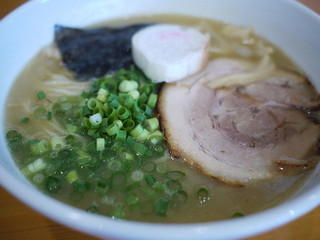
Sapporo shifts the pace before the bowl arrives. Away from the most staged visitor routes, the city can feel lived-in rather than polished for display: practical streets, local errands, and casual meals for regulars who know what they came for. In that setting, Yondaime Mendokoro Yuji fits a Sapporo tradition where the appeal rests less on theatre than on a kitchen judged by repeatable execution.
Sapporo’s ramen reputation is often reduced to a single style, but its stronger noodle culture is broader. Serious shops compete through broth discipline, noodle texture, portion logic, and whether a bowl can bring locals back outside the main visitor corridors. Tabelog’s Ramen HOKKAIDO 100 selection for 2025 places this Sapporo venue in that demanding regional conversation, a useful credential in a category where recognition works differently from formal fine-dining awards.
Sapporo ramen belongs to the regulars, not the postcard circuit
Sapporo rewards a different kind of eating than a purely hotel-led itinerary. A ramen stop here is rarely about stacking courses or lingering over drinks. It is the compact transaction: decide, eat, leave space for the next party. That does not make the cooking casual in ambition. In Hokkaido, where ramen is a staple rather than a novelty, small differences in broth concentration and noodle handling carry the weight that wine pairings or tableside service might carry elsewhere.
Yondaime Mendokoro Yuji operates in the ramen and tsukemen category, giving the kitchen two ways to show discipline: soup noodles for immediacy and dipping noodles for concentration. Tsukemen has a different rhythm from standard ramen, with noodle and broth separated, making texture the main test. That matters in Sapporo, where cold weather has shaped expectations around heat, fat, and density, while better ramen rooms avoid turning richness into blunt force.
The format stays close to ramen’s concise dining tradition. The experience reads as a focused noodle stop rather than a designed, lingering dining room, and the tempo depends on diners understanding the category. For travellers used to Japan’s efficient ramen culture, this is part of the same grammar: practical, direct, and focused on the bowl rather than on decorative service.
Recognition matters differently in a ramen city
Ramen awards need a different reading from Michelin stars or hotel keys. They do not promise luxury, ceremony, or a long tasting arc; they point to consistency in a crowded field. A Tabelog score of 3.58 and inclusion in the 2025 Hokkaido ramen selection make sense against the scale of the region’s noodle culture: many shops can serve a satisfying bowl, but fewer maintain enough local attention to stay visible beyond their immediate area.
Price is part of the critical picture, not just a practical detail. A meal in the JPY 1,000 to JPY 1,999 band sits in ramen’s democratic zone, where value is judged bowl by bowl. Sapporo’s comparison set shows the spread: Tokou An Shinkotoni, Hokuzan Ryu, Menya hide, and Kokumin Shokudo all offer useful ramen-adjacent reference points, while Sumibi Yakiniku Horumon Nikushiki represents a different, fuller dinner category. Yuji sits within an accessible noodle-shop band, positioning it for diners willing to travel beyond the most obvious routes for a deliberate ramen choice without turning lunch into a splurge.
The wine-list angle in ramen is not bottles, but curation under constraint. Fine dining can signal taste through cellars, glassware, and pairing logic; a ramen shop has fewer tools and less time. Here, the editorial question is whether the kitchen’s choices feel edited rather than crowded. The presence of both ramen and tsukemen suggests a frame narrow enough to maintain identity, while the format reinforces a meal built around direct execution rather than menu sprawl.
For readers mapping Sapporo through food rather than landmarks, this is a reminder to look beyond the most obvious ramen routes. The city’s dining culture stretches across many specialist subcultures, from casual noodle rooms to curry counters, grilled-meat dinners, sweets, and other focused kitchens. Seen that way, Sapporo looks less like a single-dish city than a cold-climate capital where distinctive, tightly edited formats can matter as much as grand dining rooms.
Who should make the trip north
This is for travellers who know Japanese ramen culture often peaks away from the easiest hotel radius. The Sapporo setting asks for intent, rewarded less by spectacle than by belonging to a local pattern: a short meal, price point that keeps repeat visits plausible, and recognition from a ramen-specific authority rather than luxury dining apparatus.
It is not the frame for a long social dinner, drinks-led evening, or broad menu crawl. It suits solo diners, small groups, and visitors comfortable with a no-frills noodle format. Treat the meal as one precise stop in a Sapporo day, not the whole itinerary, and let the appeal rest on the bowl, the category focus, and the way the shop fits into the city’s wider ramen culture.
For wider planning, use our full Sapporo restaurants guide to place it among the city’s broader dining options, then cross-reference our full Sapporo hotels guide, our full Sapporo bars guide, our full Sapporo wineries guide, and our full Sapporo experiences guide if the trip extends beyond a single meal. Travellers comparing casual Japanese dining across regions can also look generically at how noodle shops, grilled-meat rooms, rice-focused counters, cafés, and small specialist kitchens change from city to city. For international context, the same casual vocabulary travels differently abroad, where Japanese-adjacent formats are often reshaped by local habits and expectations.
Frequently asked questions
What price level is Yondaime Mendokoro Yuji?
Pricing at Yondaime Mendokoro Yuji is listed as JPY 1,000 - JPY 1,999.
Where do I go for Yondaime Mendokoro Yuji?
Sapporo.
What's the best way to book Yondaime Mendokoro Yuji?
Use the venue’s current official or listing information before visiting. The Tabelog 100 Ramen HOKKAIDO 2025 selection points to a ramen-focused stop in Sapporo rather than a long, formal dining format.
What is Yondaime Mendokoro Yuji known for?
Yondaime Mendokoro Yuji is known as a Sapporo ramen and tsukemen venue with a Tabelog score of 3.58 and recognition in the 2025 Hokkaido ramen selection.
Cuisine and Recognition
Comparable venues by cuisine and price in the same metro.
| Venue | Cuisine | Price | Awards | Notes |
|---|---|---|---|---|
| Yondaime Mendokoro YujiThis venue (the venue you are viewing) | Ramen & Tsukemen | $1–10 | Tabelog 100 #83 | Not listed |
| Curry Tamashii Destroyer | Japanese Soup Curry | $10–20 | Tabelog 100 #73 | Kita |
| Teuchi Soba no Taguto | Japanese Soba Noodle Shop | Not listed | Tabelog 100 #35 | Nishi |
| Ramen Gojogen Honten | Sapporo ramen shop famous for tonshio | $10–20 | Tabelog 100 #80 | Chūō |
| Coffee House | Japanese curry restaurant | Not listed | Tabelog 100 #52 | Chūō |
| Garyu Menbu Hien | Sapporo chicken & seafood ramen | $10–20 | Tabelog 100 #48 | Toyohira |
Recognition history
Dated appearances from independent guides and award organizations, with the underlying list record or original source where available.
Tabelog 100 #83 · No. 83
Tabelog · Tabelog 100 - Ramen - HOKKAIDO - 2025
Continue exploring
More in Sapporo
Restaurants in Sapporo
All restaurants in Sapporo →
Bars in Sapporo
All bars in Sapporo →

Details
- Cozy
- Solo
- Casual Hangout
- After Work
- Standalone
- A La Carte
- Counter Dining
Casual, no-frills local ramen-ya with a simple interior focused on the counter and soup, more functional than decorative and geared to solo or everyday diners.