Yakiniku Shodai 初代
Yakiniku Shodai 初代 brings the Japanese tradition of tabletop charcoal grilling to San Francisco's Market Street, positioning itself within a small but growing tier of yakiniku specialists in the American West. The format centers on quality cuts grilled by the diner, a participatory structure that separates it from the city's tasting-menu circuit. For those tracking Japanese grill culture beyond the coasts' sushi-focused venues, it warrants attention.
Pearl is the En Primeur Club membership app — saves, bookings, and concierge access live there. Same editors, same standards.
- Address
- 1420 Market St, San Francisco, CA 94102
- Phone
- (415) 757-0201
- Website
- shodaisf.com
- Directions
- Get directions
 Saves & bookings on Pearl
Japanese Grill Culture in a City Built on Tasting Menus
San Francisco's fine-dining conversation has long been anchored by the tasting-menu format. The city's most-discussed restaurants, from Lazy Bear to Atelier Crenn and Benu, share a common grammar: a fixed sequence, a kitchen in full control, a single price point. Yakiniku Shodai 初代 is an Authentic Japanese Yakiniku restaurant at 1420 Market St, San Francisco, with a price of about $225 per person. Yakiniku Shodai 初代, positioned on Market Street at 1420, operates on different terms entirely. Here the diner holds the tongs. The cook is the guest. That structural inversion is, in itself, an editorial statement about how Japanese grill culture reads against the Bay Area's dominant dining mode.
Yakiniku as a format arrived in Japan in the postwar period, drawing on Korean barbecue traditions and evolving into a distinct dining institution with its own hierarchy of cuts, grades, and service conventions. At its upper registers in Tokyo and Osaka, yakiniku restaurants are serious operations: carefully sourced wagyu, tableside charcoal braziers, and a sequencing logic as considered as any omakase counter. That seriousness has been slow to translate to American cities, where yakiniku often gets flattened into the broader Korean BBQ category or reduced to a casual all-you-can-eat format. The more precise, cut-focused iteration of the tradition is rarer on American soil, and rarer still in San Francisco, which has historically prioritized its Japanese dining identity around sushi and izakaya.
The Physical Logic of the Space
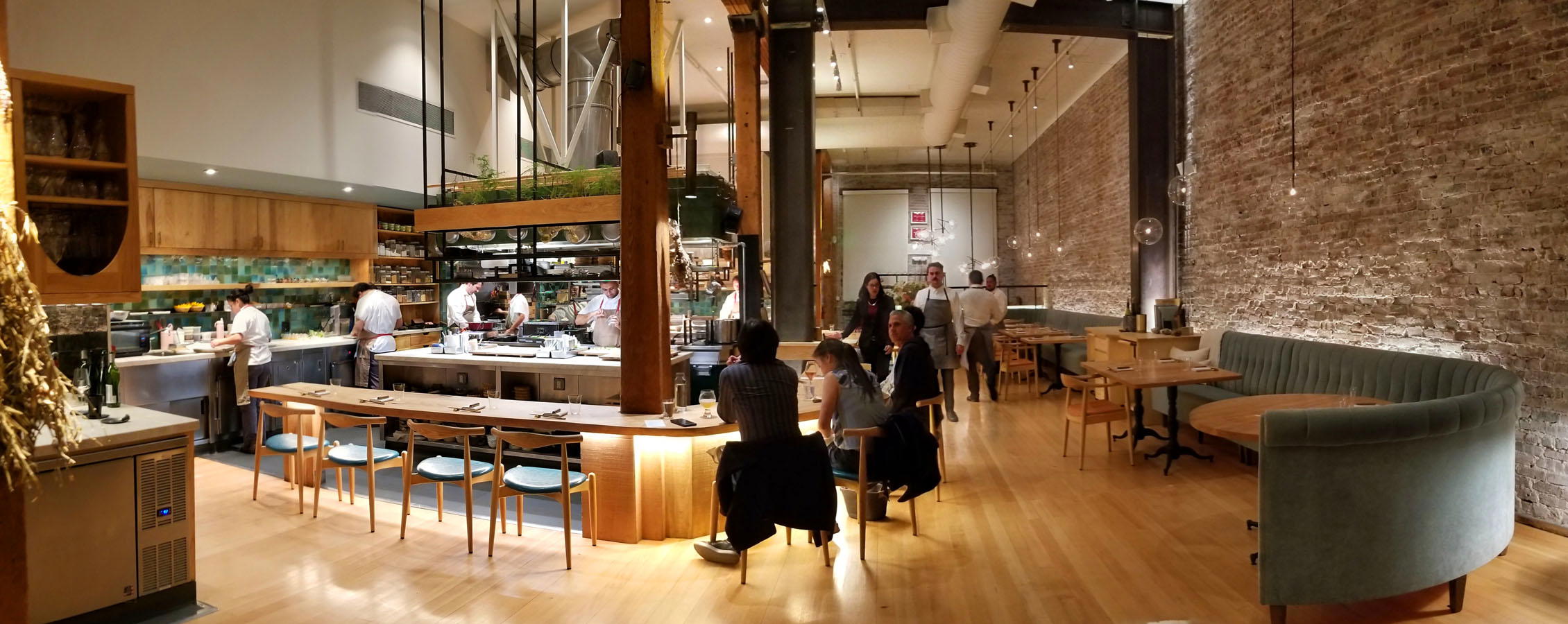
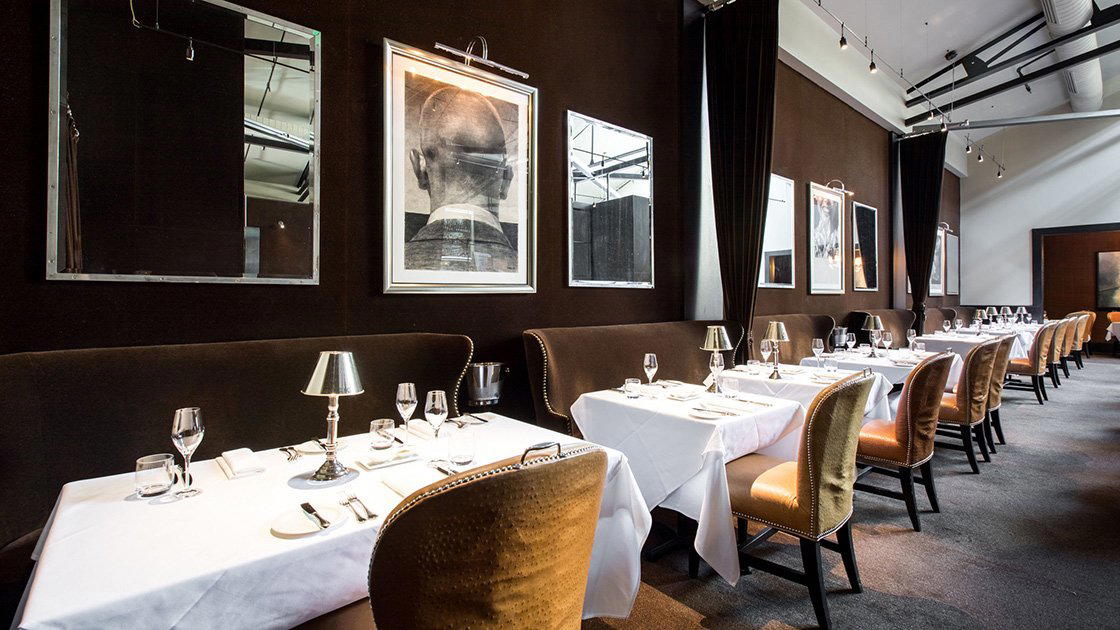
The yakiniku format demands a specific spatial arrangement, and the design of any serious yakiniku room should be read as a functional document. Individual grill units set into or above each table are the load-bearing element: ventilation hoods positioned overhead, a sightline between diner and grill, and enough table depth to hold raw cuts, dipping sauces, and side dishes simultaneously. In Japan's established yakiniku houses, booth seating is the default, providing acoustic separation between parties and allowing the smoke and intimacy of the grill to stay contained within each group's experience. The separation matters: yakiniku is not a communal-hall format; it is a private transaction between a small group and their fire.
What the Market Street address establishes is a footprint in a corridor that has seen consistent turnover, meaning the physical build-out is one of the more consequential decisions the operation has made. A properly ventilated, thoughtfully segmented room signals that the kitchen takes the format seriously. A room that treats the grill as a prop rather than a structural feature tells you something different about the ambitions behind the menu.
This attention to the physical container is what separates yakiniku from its surface-level imitators. The leading versions of the format in Asia manage airflow so that the dining room carries the scent of charcoal without overwhelming it; the hood pulls smoke upward, leaving the table-level air relatively clear. Getting that balance right in a San Francisco building on Market Street, with the code requirements and ceiling heights that entails, is a non-trivial engineering problem. It is also the first test of whether a yakiniku room is worth the visit.
Where Yakiniku Shodai 初代 Sits in the San Francisco Dining Map
San Francisco supports a tier of high-investment Japanese dining that is narrower than Tokyo, Los Angeles, or New York, but more developed than most American cities of comparable size. The city's most-cited Japanese-influenced dining sits at the high end, with venues drawing on technique-driven frameworks similar to those found at Atomix in New York or the French-Japanese hybrids common in major Asian dining capitals. Yakiniku, by contrast, is not a technique showcase in the conventional sense. It is a sourcing showcase. The kitchen's job is selection and preparation of the raw product; the diner's job is to cook it correctly. The skill transferred to the table is different in kind from what happens at Quince or Saison, and that distinction matters when calibrating expectations.
For context on how this positions the venue: San Francisco's high-end Japanese grill category is thin. The city is not Seoul or Tokyo, where yakiniku and Korean BBQ at serious levels are a standard part of the dining infrastructure. Venues at the more considered end of the yakiniku spectrum in America have found audiences in New York and Los Angeles; whether San Francisco absorbs a similar offer is an ongoing question that the Market Street address is effectively answering in real time.
For readers tracking premium American dining more broadly, the peer references shift depending on what draws you to yakiniku specifically. Those interested in how Japanese dining traditions are being reimagined in American cities might also look at Single Thread Farm in Healdsburg or consider how the kaiseki-influenced tasting format at The French Laundry in Napa handles Japanese sourcing and precision. For a wider map of American fine dining with clear Japanese influences, Providence in Los Angeles and Addison in San Diego offer useful reference points. Internationally, the high-end grill tradition in Asia is well-represented by venues such as 8 1/2 Otto e Mezzo Bombana in Hong Kong, which shows how European fine-dining codes and Asian hospitality conventions can coexist at serious price tiers.
Beyond the Japanese-leaning frame, the broader San Francisco dining scene rewards context. See our full San Francisco restaurants guide for how yakiniku sits alongside the city's other dominant dining formats. Other high-investment American venues worth tracking include Le Bernardin in New York City, Alinea in Chicago, Blue Hill at Stone Barns in Tarrytown, The Inn at Little Washington, Bacchanalia in Atlanta, and Emeril's in New Orleans.
Planning Your Visit
Yakiniku Shodai 初代 is located at 1420 Market St, San Francisco, CA 94102, a central address with reasonable transit access from multiple BART and Muni lines. Hours are Monday closed and Tuesday through Sunday 5:00 to 9:30 PM; reservations are recommended. Given the format, groups of two to four tend to take full advantage of the grill-per-table setup; larger parties should confirm whether the space accommodates them without splitting across multiple grill units in a way that disrupts the shared-meal logic.
Reputation First
Comparable venues nearby, for context on price, style, and recognition.
| Venue | Cuisine | Price | Notes |
|---|---|---|---|
| Yakiniku Shodai 初代This venue — the venue you are viewing | Authentic Japanese Yakiniku | $$$$ | Not listed |
| Hinata | Sushi Omakase | $$$$ | Tenderloin |
| Elephant Sushi | Craft Japanese Sushi | $$$ | Western Addition |
| Yoshi's | Modern Japanese Jazz Club Cuisine | $$$ | Fillmore District |
| Dining Yamamoto | Japanese Cocktail Tasting | $$$$ | South of Market |
| Akiko’s Restaurant & Sushi Bar | Modern Japanese Omakase | $$$ | Nob Hill |
Continue exploring
More in San Francisco
Restaurants in San Francisco
Browse all →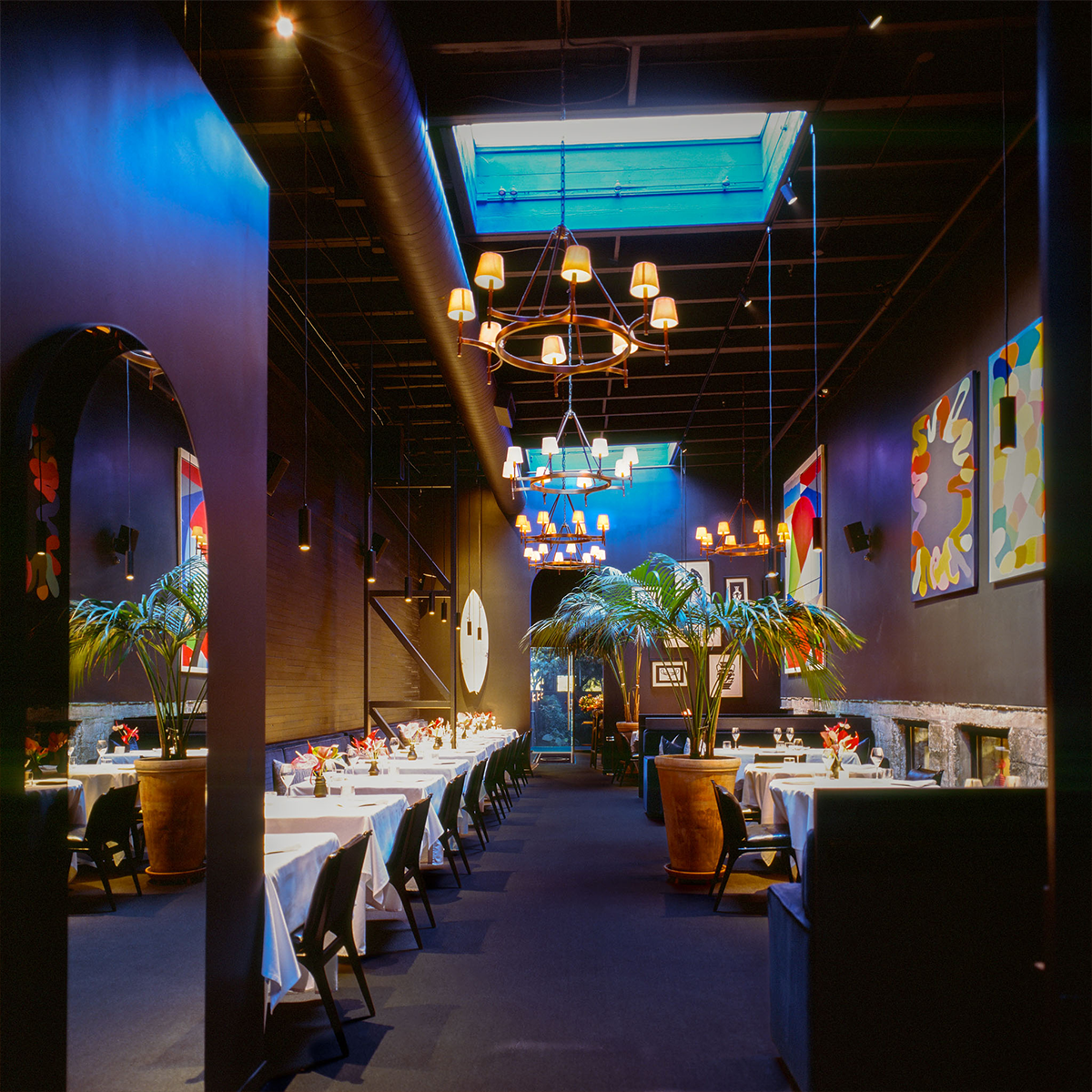
Bars in San Francisco
Browse all →
Hotels in San Francisco
Browse all →
At a Glance
- Sophisticated
- Modern
- Date Night
- Special Occasion
- Open Kitchen
- Sake Program
Current opening hours
- Monday
- Closed
- Tuesday
- 5–9:30 PM
- Wednesday
- 5–9:30 PM
- Thursday
- 5–9:30 PM
- Friday
- 5–9:30 PM
- Saturday
- 5–9:30 PM
- Sunday
- 5–9:30 PM
Hours can change for holidays and private events. Last verified .