Tabelog 100 #78
Our verdict
A counter-only yakiniku address in Sakai, Yakiniku Katsuragi belongs to Osaka’s older grill culture rather than the city’s polished tasting-menu circuit. Its Tabelog 100 Yakiniku WEST 2025 selection, small-format seating, tripe focus, sake and shochu list, and long local run make it a serious choice for diners who read yakiniku as craft, not casual barbecue.

Pearl is the En Primeur Club membership app, where members save venues, book tables and use the concierge.
The menu
What to order
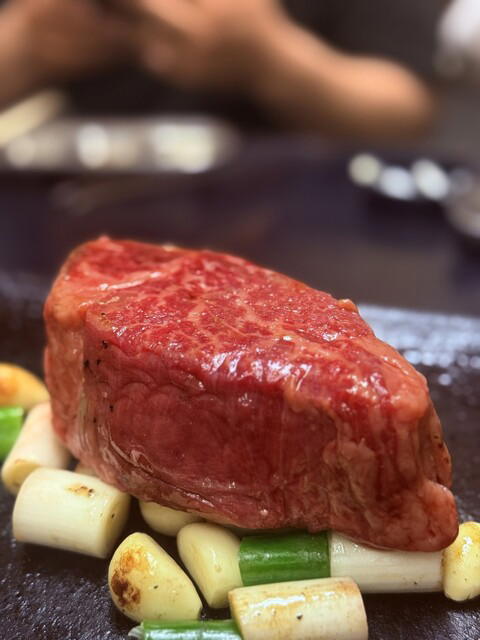
- Chateaubriand
- Osaka wagyu yakiniku platters
- Sweet house yakiniku sauce with rice
- Tripe (horumon) selections
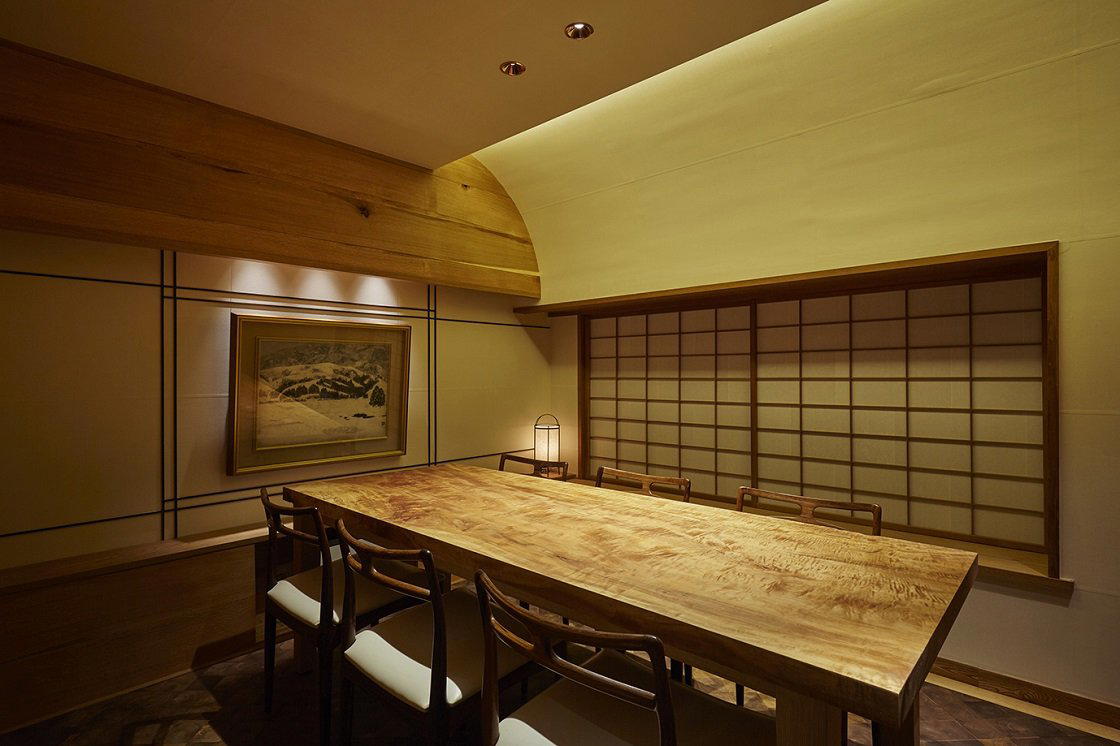
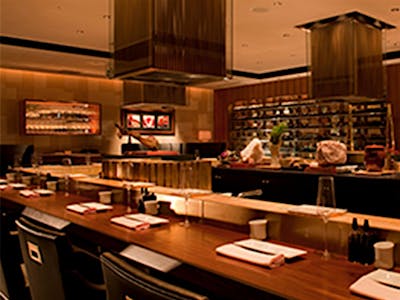
Approaching a yakiniku room in Osaka changes the tempo of a dinner. The city can feel built around speed, queues, and abundance; here the grammar narrows to smoke, heat, short grill time, and a close focus on the grill rather than a sprawling meal built around many distractions. Yakiniku Katsuragi sits within an Osaka tradition where grilling is less spectacle than sequence, timing, and the shared discipline of close-range cooking.
Yakiniku in western Japan has always had a sharper urban edge than tourist shorthand suggests. It draws from Korean-Japanese cooking history, postwar meat culture, offal cookery, and the practical pleasure of eating quickly with alcohol after work. Osaka’s directness suits the form. The grill is social but exacting: diners manage heat, pace, and restraint. A compact yakiniku meal can therefore feel more demanding than a conventional table, because the cooking is partly handed to the guest and the room leaves little space for distraction.
Focused yakiniku as Osaka craft, not group barbecue
The Osaka setting matters. The city’s international dining conversation often centres on high-traffic food streets and obvious eating districts, yet it also has a deep culture of neighbourhood restaurants, specialist rooms, and places where regularity carries as much weight as design. Yakiniku Katsuragi belongs to that lineage of local dining rooms built for repeat use rather than destination theatrics.
The format signals a specific meal. A close grill compresses the restaurant into a narrow field of attention, and yakiniku intensifies when the cooking is not separated from the diner by distance or ceremony. The category here includes Japanese BBQ and tripe, which is not incidental. Offal is central to serious yakiniku: cuts that reward knowledge of texture, quick heat, and sauce rather than prestige alone. In Osaka, that appetite connects to the city’s fondness for inexpensive cuts handled with skill, from horumon-style cooking to everyday drinking rooms where technique is measured in economy.
Recognition from Tabelog’s Yakiniku WEST 2025 list gives the restaurant a useful external marker in a genre where local loyalty can be hard for visitors to decode. Tabelog’s regional yakiniku selections tend to reward places that perform within their category rather than restaurants chasing Western fine-dining cues. A 3.75 Tabelog score reinforces the point: this is Osaka dining defined not by luxury signalling, but by specialist confidence in a highly competitive local field.
The sauce-and-smoke tradition behind the room
The cultural centre of yakiniku is not simply meat; it is the way meat, sauce, smoke, and drink create a meal that feels communal even in a tight room. Sauce belongs to the wider tradition. In yakiniku, tare is not garnish. It is seasoning, memory, and house style condensed into one element, shaping how fat, char, and offal read on the palate without elaborate plating or long explanations.
This is where Osaka’s dining temperament becomes clear. The city has serious high-end restaurants, but its strongest food culture often values immediacy and repetition over solemnity. The same traveller might place an Osaka grill dinner beside other casual stops, specialist counters, coffee breaks, or contemporary meals across the city. These meals do not resemble one another; Osaka rewards diners who move between formats rather than treating the city as a checklist of famous dishes.
Price places the restaurant in an interesting Osaka bracket. Yakiniku Katsuragi is listed at JPY 5,000 - JPY 5,999, putting it in a mid-priced range rather than a luxury bracket. It can sit naturally in an itinerary that also includes specialists such as Kuku Hanare, Sakai Udon Chihaya, Gelateria Rikarika, and Menza Gin. Against 99 Pizza Napoletana Gourmet, another Osaka specialist with a defined format, the contrast is useful: both show how the city’s focused restaurants can be highly specific without borrowing fine-dining language.
How to read it within an Osaka itinerary
Yakiniku Katsuragi makes most sense for travellers who understand that Osaka’s food identity extends beyond shorthand. It belongs to the city’s grill-and-drink axis, fitting more naturally as a focused meal than as a formal progression. The compact structure and direct rhythm favour diners who arrive prepared, eat with attention, and do not treat the grill as a leisurely banquet. This is not the place to test dietary flexibility; it is a specialist room built around yakiniku.
For itinerary planning, pair it with a wider look at the city rather than forcing it into one evening of food tourism. Our full Osaka restaurants guide is the natural starting point, while our full Osaka hotels guide, our full Osaka bars guide, our full Osaka wineries guide, and our full Osaka experiences guide help frame the meal within a broader stay. Travellers comparing grilled-meat traditions outside Osaka can look more generally at related dining elsewhere in Japan, while broader dining references across the country show how specific formats change by city. For Japanese food culture abroad, similarly focused casual formats show how local specialities travel differently once removed from their original setting.
The critical appeal is precision of category. Yakiniku Katsuragi is not trying to translate Osaka for outsiders. It preserves a compact, meat-led style that asks diners to meet the tradition on its own terms. For a city often flattened into snacks and nightlife, that is a useful corrective: Osaka’s serious eating can be informal, smoky, time-limited, and deeply rooted at once.
Frequently asked questions
Where exactly is Yakiniku Katsuragi?
Osaka.
Is Yakiniku Katsuragi more mid-range or high-end?
Pricing at Yakiniku Katsuragi is listed as JPY 5,000 - JPY 5,999.
How far ahead should I plan for Yakiniku Katsuragi?
Plan ahead as you would for a specialist Osaka yakiniku restaurant with Tabelog recognition, especially if you are building a tight dining itinerary.
What's the defining dish or idea at Yakiniku Katsuragi?
The defining idea is yakiniku, with tripe listed alongside Japanese BBQ. Its Tabelog Yakiniku WEST 100 selection in 2025 is the clearest external marker.
Is Yakiniku Katsuragi good for vegetarians?
No, this is a yakiniku restaurant focused on grilled meat and tripe in Osaka. Vegetarians would have little reason to choose it unless the priority is dining with meat-eating companions.
Cuisine and Recognition
Comparable venues to place this listing in its category.
| Venue | Cuisine | Price | Awards | Notes |
|---|---|---|---|---|
| Yakiniku KatsuragiThis venue (the venue you are viewing) | Traditional Osaka Yakiniku Counter | $50–100 | Tabelog 100 #78 | Not listed |
| Sushi shizuku Nishitenma | Edo-mae Sushi Omakase | $150–200 | Tabelog 100 #65 | Kita |
| Tori Yasu | Yakitori & Chicken Cuisine Counter | $50–100 | Tabelog 100 #11 | Kita |
| Binbiya | Michelin-starred seafood izakaya | $50–100 | Tabelog 100 #51 | Kita |
| Hari Ju Doutonbori honten | Traditional Wagyu Sukiyaki & Shabu-shabu | $50–100 | Tabelog 100 #9 | Chūō |
| Yakiniku Futoro | Casual Wagyu Yakiniku Counter | $100–150 | Tabelog 100 #98 | Kita |
Recognition history
Dated appearances from independent guides and award organizations, with the underlying list record or original source where available.
Tabelog 100 #78 · No. 78
Tabelog · Tabelog 100 - Yakiniku - WEST - 2025