Ya Hala
Ya Hala sits on SE Stark Street in the Montavilla neighborhood, representing Portland's long-standing engagement with Lebanese and broader Levantine cooking. The restaurant draws from a culinary tradition that prizes shared plates, preserved pantry flavors, and technique built over generations rather than trends. For a city that cycles through openings at speed, Ya Hala's East Portland address signals a local institution operating outside the usual press circuit.
Pearl is the En Primeur Club membership app — saves, bookings, and concierge access live there. Same editors, same standards.
- Address
- 8005 SE Stark St, Portland, OR 97215
- Phone
- +15032564484
- Website
- yahalarestaurant.com
- Directions
- Get directions
 Saves & bookings on Pearl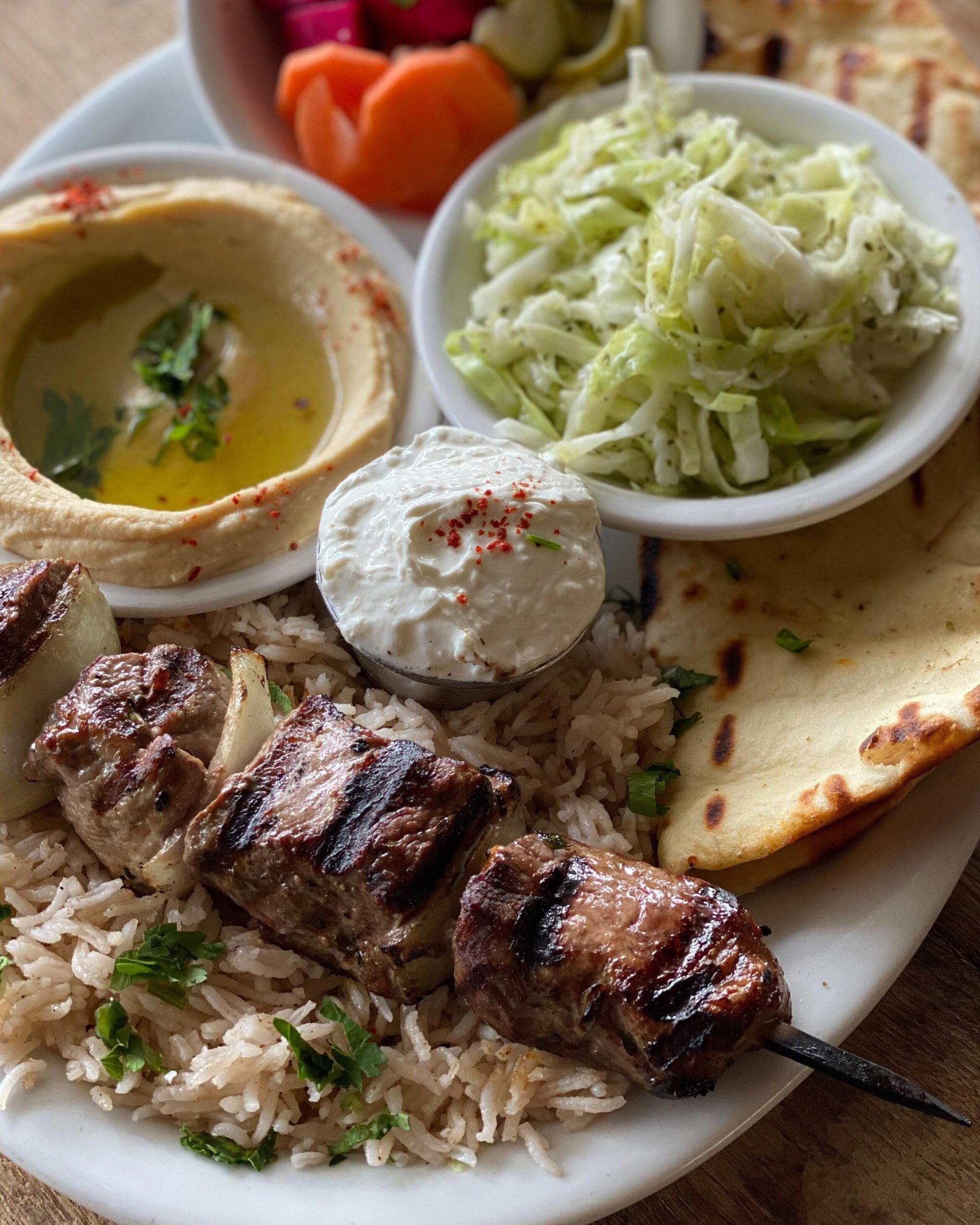
SE Stark and the Quiet Weight of Levantine Portland
Portland's dining attention concentrates predictably: inner Northeast, the Central Eastside, pockets of Southeast close to Division or Hawthorne. The stretch of SE Stark Street that runs through Montavilla operates at a remove from that circuit, and for a particular kind of restaurant, that distance is clarifying rather than limiting. It occupies a position in Portland's culinary geography that mirrors the position Lebanese cooking tends to occupy in American cities generally: practiced for decades by communities who arrived before the food media caught up, rarely reviewed with the same urgency as whatever tasting-menu format opened last month, and persistently full because the neighborhood knows what it has.
Lebanese cuisine in the United States has spent the better part of thirty years existing in the space between "Mediterranean" catch-all branding and serious critical attention. The cooking itself, which draws from a tradition of meze culture, preserved lemons, sumac, pomegranate molasses, labneh, and slow-braised proteins, is complex enough to occupy a multi-hour meal without repetition. What it rarely gets is the architectural framing that a space like Langbaan or Berlu brings to Thai and Vietnamese cooking respectively in Portland, where format and interior signal seriousness before a dish arrives. Ya Hala operates outside that register, and that is partly what makes it useful as a reference point for how the city actually eats.
What the Room Tells You
The physical environment on SE Stark is not minimalist gallery nor designed-within-an-inch-of-its-life industrial. That absence of conspicuous interior branding is itself a signal. In a city where restaurants at the level of Kann announce their ambitions through spatial language as much as menu language, Ya Hala holds to a different architectural register: one that communicates through warmth, accumulation, and familiarity rather than through carefully chosen materiality. Levantine hospitality traditions are rooted in a specific kind of spatial generosity, where the table rather than the room is the focal object, and where the arrival of dishes in sequence or simultaneously creates the environment rather than the decor.
This matters because the seating arrangement at a Lebanese restaurant shapes how the food works. Meze culture requires a table that can hold multiple plates without hierarchy, where the communal spread is the structure of the meal. A long, shared table or a round format that invites reach and rotation serves this tradition better than the European cover-based approach where each diner faces an individual arc of courses. Whether Ya Hala's room fully solves for this, the tradition it operates within answers the question of why the physical container matters at all.
Portland's newer destinations, including places like Nostrana and Ken's Artisan Pizza, have built loyal followings in part through spaces that feel considered and durable rather than temporary. The restaurant's East Portland address situates it in a neighborhood that has absorbed multiple waves of change while retaining a residential, community-anchored character. That context matters when reading a room: what a space communicates in Montavilla differs from what the same interior would signal in the Pearl.
The Culinary Tradition Behind the Address
Lebanese cooking in its full scope runs from raw kibbeh to slow-roasted whole lamb, from the cold brightness of tabbouleh (built on parsley, not bulgur, as the Lebanese tradition insists) to the dense, preserved depth of aged cheeses and cured meats. The meze table functions as a kind of argument for a certain way of eating: multiple flavor registers present simultaneously, no single protein dominating, the meal structured by conversation and pace rather than by a predetermined sequence of courses.
This is a different discipline from the tasting-menu format that drives critical attention at restaurants like Le Bernardin in New York City or Alinea in Chicago, where the chef controls sequence and revelation. At a Lebanese table, the cook controls intensity and balance across simultaneous dishes. The technical demands are distributed differently, and the measure of quality lies in pantry depth, sourcing of ingredients like good olive oil and za'atar, and the calibration of dishes that have been made for generations.
For Portland specifically, the restaurant represents a neighborhood institution. That category deserves its own evaluative framework, separate from the one applied to Lazy Bear in San Francisco or The French Laundry in Napa, where the entire model is built around the destination visit. The question to ask of the restaurant is whether it holds its place in a neighborhood with the conviction and consistency that makes a restaurant last.
Planning Your Visit
The restaurant sits in Montavilla, a neighborhood that is easiest to reach by car or rideshare from central Portland. The SE Stark Street corridor is leading approached as a destination in itself rather than a stop on a broader evening itinerary.
| Venue | Cuisine | Neighborhood | Format |
|---|---|---|---|
| The restaurant | Lebanese / Levantine | Montavilla (SE Stark) | Neighborhood restaurant, meze tradition |
| Langbaan | Thai | Inner SE | Ticketed tasting menu, limited seats |
| Berlu | Vietnamese | Central Eastside | Chef-driven, set format |
| Kann | Haitian | Inner Portland | Full-service, destination profile |
For global reference points in the premium dining tier, Atomix in New York City, Providence in Los Angeles, 8 1/2 Otto e Mezzo Bombana in Hong Kong, Emeril's in New Orleans, Single Thread Farm in Healdsburg, and The Inn at Little Washington represent the category of destination restaurant that operates with a different mandate than a neighborhood institution like Ya Hala, but the comparison clarifies what each type of restaurant is actually trying to do.
At a Glance
Comparable venues nearby, for context on price, style, and recognition.
| Venue | Cuisine | Price | Notes |
|---|---|---|---|
| Ya HalaThis venue — the venue you are viewing | Montavilla, Authentic Lebanese | $$ | Not listed |
| Darsalam Downtown | Not listed | $$ | Downtown, Authentic Iraqi & Middle Eastern |
| Berlu Bakery | Not listed | $$ | Buckman, Vietnamese-Inspired Modern Bakery & Café |
| Mother's Bistro & Bar | Downtown, American Comfort Food | $$ | Not listed |
| Swagat | Nob Hill, Traditional Indian Cuisine | $$ | Not listed |
| Fillmore Trattoria | Not listed | $$ | Northwest District, Italian-American Trattoria |
Continue exploring
More in Portland
Restaurants in Portland
Browse all →
Bars in Portland
Browse all →

Hotels in Portland
Browse all →
At a Glance
- Cozy
- Classic
- Family
- Group Dining
- Casual Hangout
- Open Kitchen
- Local Sourcing
Current opening hours
- Monday
- 11:30 AM–9 PM
- Tuesday
- 11:30 AM–9 PM
- Wednesday
- 11:30 AM–9 PM
- Thursday
- 11:30 AM–9 PM
- Friday
- 11:30 AM–9 PM
- Saturday
- 11:30 AM–9 PM
- Sunday
- 11:30 AM–9 PM
Hours can change for holidays and private events. Last verified .
Warm and inviting atmosphere reflecting Lebanese culinary traditions, described as cavernous yet welcoming by diners.