
Whitegrass holds a Michelin star for its French-technique tasting menus built almost entirely on Japanese ingredients, Hokkaido scallops, Miyazaki Wagyu, served inside a beautifully converted colonial convent at CHIJMES. Chef Takuya Yamashita's kitchen-view dining room makes the cooking itself part of the occasion. Open Tuesday through Saturday for lunch and dinner; closed Sunday and Monday.
Pearl is the En Primeur Club membership app — saves, bookings, and concierge access live there. Same editors, same standards.
- Address
- 30 Victoria St, #01-26/27 CHIJMES, Singapore 187996
- Phone
- +65 6837 0402
- Website
- whitegrass.com.sg
- Directions
- Get directions
 Saves & bookings on Pearl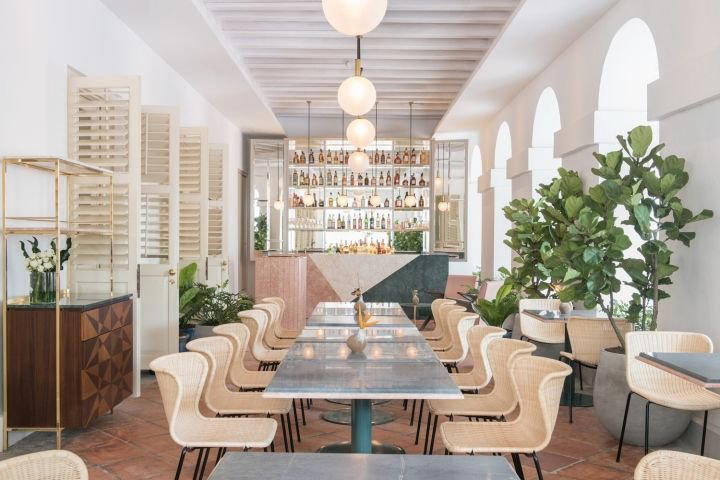
A Colonial Convent, a French Kitchen, and a Predominantly Japanese Larder
CHIJMES is one of Singapore's more quietly compelling dining addresses. The former Convent of the Holy Infant Jesus, its Gothic chapel and cloistered courtyards converted into restaurant and bar tenancies, sits at the edge of the Civic District in a way that resists easy categorisation: neither hotel precinct nor hawker corridor, it operates as a standalone dining destination with an architectural identity few purpose-built developments can match. Whitegrass occupies a ground-floor position within that complex, spread across two rooms, one of which opens onto a view into the kitchen. The setting establishes a particular register before the meal begins, formal enough to mark an occasion, calm enough to sustain a long tasting menu.
That combination of heritage shell and contemporary kitchen belongs to a broader pattern in Singapore's fine-dining scene. The city has spent the last decade building a tier of tasting-menu restaurants that sit between the three-star European formalism of Odette and the more casual contemporary formats below it. Whitegrass occupies that one-star bracket with a specific and legible identity: French technique applied almost entirely to Japanese produce, under the direction of the kitchen team.
The Logic of the Tasting Menu Here
French Contemporary as a category covers an enormous amount of ground across Asia. In Hong Kong, the format tends toward either classical luxury, see L'Envol or Amber, or ingredient-led modernism. In Bangkok, Chef's Table sits in a similarly hybrid space. What defines Whitegrass within this field is the discipline of its sourcing premise: the tasting menu is not merely French-influenced, nor does it treat Japanese ingredients as occasional highlights. The structure is French; the larder is Japanese; and the dishes documented by Michelin, Hokkaido scallop with Mont D'Or, Miyazaki Wagyu with cognac sauce, illustrate how that pairing plays out in practice.
This is a meaningful editorial distinction. Mont D'Or, the washed-rind Jura cheese with a season that runs roughly October through March, is a French classical reference with strong pairing logic around high-fat, sweet shellfish. Applying it to Hokkaido scallop, sourced from waters that produce particularly consistently sweet bivalves in the world, is not a novelty move. It reflects an understanding of where French and Japanese ingredient cultures share sensory ground. Similarly, Miyazaki Wagyu with cognac sauce places one of Japan's most extensively graded beef prefectures inside a French sauce tradition built on reduction and aged spirit. The dishes are, as Michelin describes them, delicate and attractive, but the more instructive observation is that the cross-cultural logic is worked through rather than gestured at.
For a diner choosing between Singapore's $$$-tier tasting menus, the decision between Whitegrass, Jag, Béni, or Roia is partly about this kind of identity. Each has a different answer to the question of what French Contemporary means in Singapore, different ingredient orientations, different culinary heritages, different room characters. Whitegrass answers it with unusual clarity: the kitchen's identity is defined by the tension between French structure and Japanese produce, and that tension is the point.
The Room and What It Does for the Experience
Multi-course tasting menus are, among other things, exercises in time and attention management. A restaurant that handles two to three hours of service well does so through spatial design as much as through kitchen output. The division of Whitegrass into two rooms, one with kitchen visibility, one without, gives diners a genuine choice of register. The kitchen-view room draws diners who want the cooking process as part of their evening; the second room offers a more self-contained, conversation-forward experience within the same convent architecture.
The CHIJMES setting contributes more than aesthetics. Dining inside a 19th-century colonial structure in the middle of Singapore's Civic District positions the meal within a specific urban context. The building's stonework and courtyard proportions give the complex a stillness that newer restaurant developments tend to lack. For a tasting menu that runs to multiple courses, that ambient calm is a functional asset.
Whitegrass is open for both lunch and dinner Tuesday through Saturday, a schedule that positions it as a serious lunch destination in a city where lunchtime tasting menus are increasingly relevant for business dining and for visitors working around evening itineraries. The Monday and Sunday closures are part of the weekly schedule.
Where Whitegrass Sits in the Broader Scene
Singapore's fine-dining tier has expanded and sharpened considerably since the Michelin Guide arrived in 2016. The city now supports multiple price brackets within tasting-menu dining, from the $$$$ end represented by Odette and Born to the $$$ bracket where Whitegrass, Saint Pierre, and their peers operate. Within that $$$ tier, a Michelin star carries specific weight: it marks a kitchen operating at a level where curation, consistency, and technique have been independently assessed and found to meet a defined standard. Whitegrass holds one Michelin star.
The Franco-Japanese approach is not without precedent globally, Macau's Robuchon au Dôme and Geneva's L'Atelier Robuchon represent different points on the spectrum of French fine dining applied in Asian or European-Asian contexts, but at Whitegrass the inversion is more complete: the techniques are French, the ingredients are predominantly Japanese. That's a less common configuration, and it gives the kitchen a specific competitive identity within Singapore's tasting-menu field.
Planning Your Visit
Reservations: Essential. Hours: Tuesday to Saturday, lunch 12:00 PM to 2:30 PM, dinner 6:00 PM to 10:30 PM; closed Sunday and Monday. Address: 30 Victoria St, #01-26/27, CHIJMES, Singapore 187996. Price tier: $$$$. Dress: Smart casual. Getting there: CHIJMES is within easy walking distance of City Hall MRT station, making it one of the more accessible fine-dining addresses in the Civic District.
What Regulars Order at Whitegrass
Michelin's own documentation of the kitchen points to two dishes as anchoring the tasting menu's identity: Hokkaido scallop with Mont D'Or and Miyazaki Wagyu with cognac sauce. Both illustrate the restaurant's cross-cultural sourcing logic, French classical preparations applied to Japanese produce with strong regional provenance credentials. Hokkaido scallops are among the more consistently cited premium bivalves in Japanese seafood culture; Miyazaki Wagyu carries prefectural designation and grading standards that place it in the upper tier of Japanese beef. These dishes are referenced in the restaurant's Michelin recognition and are described as delicate and attractive in presentation. For diners benchmarking against similar Franco-Japanese approaches in the region, the kitchen at Béni offers a useful point of comparison, with its own Japanese chef working within French classical structures at the same price tier.
Pricing, Compared
Comparable venues nearby, for context on price, style, and recognition.
| Venue | Cuisine | Price | Awards | Notes |
|---|---|---|---|---|
| WhitegrassThis venue — the venue you are viewing | French Contemporary | $$$$ | Michelin 1 Star | Not listed |
| Jag | Not listed | $$$$ | Michelin 1 Star | ROBERTSON QUAY, Modern Vegetable-Forward French Fine Dining |
| Hamamoto | CHINATOWN, Modern Japanese Omakase | $$$$ | Michelin 1 Star | Not listed |
| Pangium | Not listed | $$$$ | Michelin 1 Star | TYERSALL, Modern Straits/Peranakan |
| Maison Boulud | Not listed | $$$$ | Michelin Plate | BAYFRONT SUBZONE, Modern French Fine Dining |
| Ma Cuisine | Not listed | $$$ | Michelin 1 Star | CHINATOWN, Classic French Gastro Wine Bar |
Recognition history
Dated appearances from independent guides and award organizations, with the underlying list record or original source where available.
Michelin Guide 1 Star
Michelin Guide
Michelin 1 Star
Michelin
Michelin 1 Star
Michelin
Continue exploring
More in Singapore
Restaurants in Singapore
Browse all →
Bars in Singapore
Browse all →
At a Glance
- Elegant
- Modern
- Intimate
- Sophisticated
- Special Occasion
- Date Night
- Celebration
- Historic Building
Current opening hours
- Monday
- Closed
- Tuesday
- 12–2:30 PM, 6–10:30 PM
- Wednesday
- 12–2:30 PM, 6–10:30 PM
- Thursday
- 12–2:30 PM, 6–10:30 PM
- Friday
- 12–2:30 PM, 6–10:30 PM
- Saturday
- 12–2:30 PM, 6–10:30 PM
- Sunday
- Closed
Hours can change for holidays and private events. Last verified .
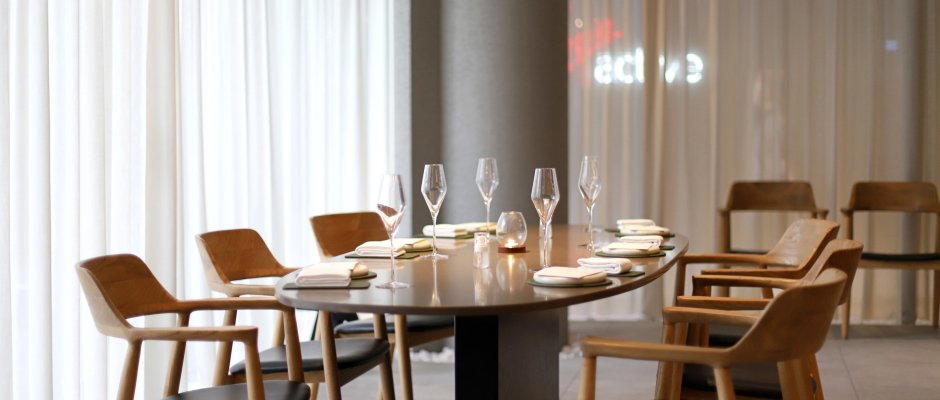
Warm, elegant ambiance with natural sunlight, cozy and professional atmosphere ideal for conversation.