White Dog Cafe
White Dog Cafe on Lancaster Avenue in Haverford, Pennsylvania, occupies a position that Main Line dining has long needed: a neighborhood anchor serious enough about sourcing to earn genuine loyalty without demanding destination-restaurant formality. The kitchen draws from regional farms and producers, placing it in a cohort of farm-to-table Americans that treat ingredient provenance as a structural commitment rather than a menu footnote.
Pearl is the En Primeur Club membership app — saves, bookings, and concierge access live there. Same editors, same standards.
- Address
- 379 Lancaster Ave, Haverford, PA 19041
- Phone
- +16108964556
- Website
- whitedog.com
- Directions
- Get directions
 Saves & bookings on Pearl
Lancaster Avenue and What It Asks of a Restaurant
The stretch of Lancaster Avenue running through Haverford sits at the edge of Philadelphia's Main Line suburbs, a corridor of older storefronts and residential blocks that has never particularly chased dining-scene status. That context matters, because the restaurants that survive here tend to do so on repeat local traffic rather than destination seekers. White Dog Cafe, at 379 Lancaster Ave, is a contemporary American restaurant in Haverford with smart casual dress and reservations recommended; it is a neighborhood restaurant that takes its sourcing seriously, which is a harder combination to sustain than it sounds.
The Room Before the Food
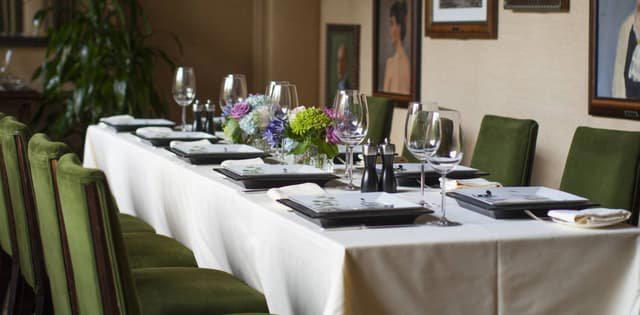
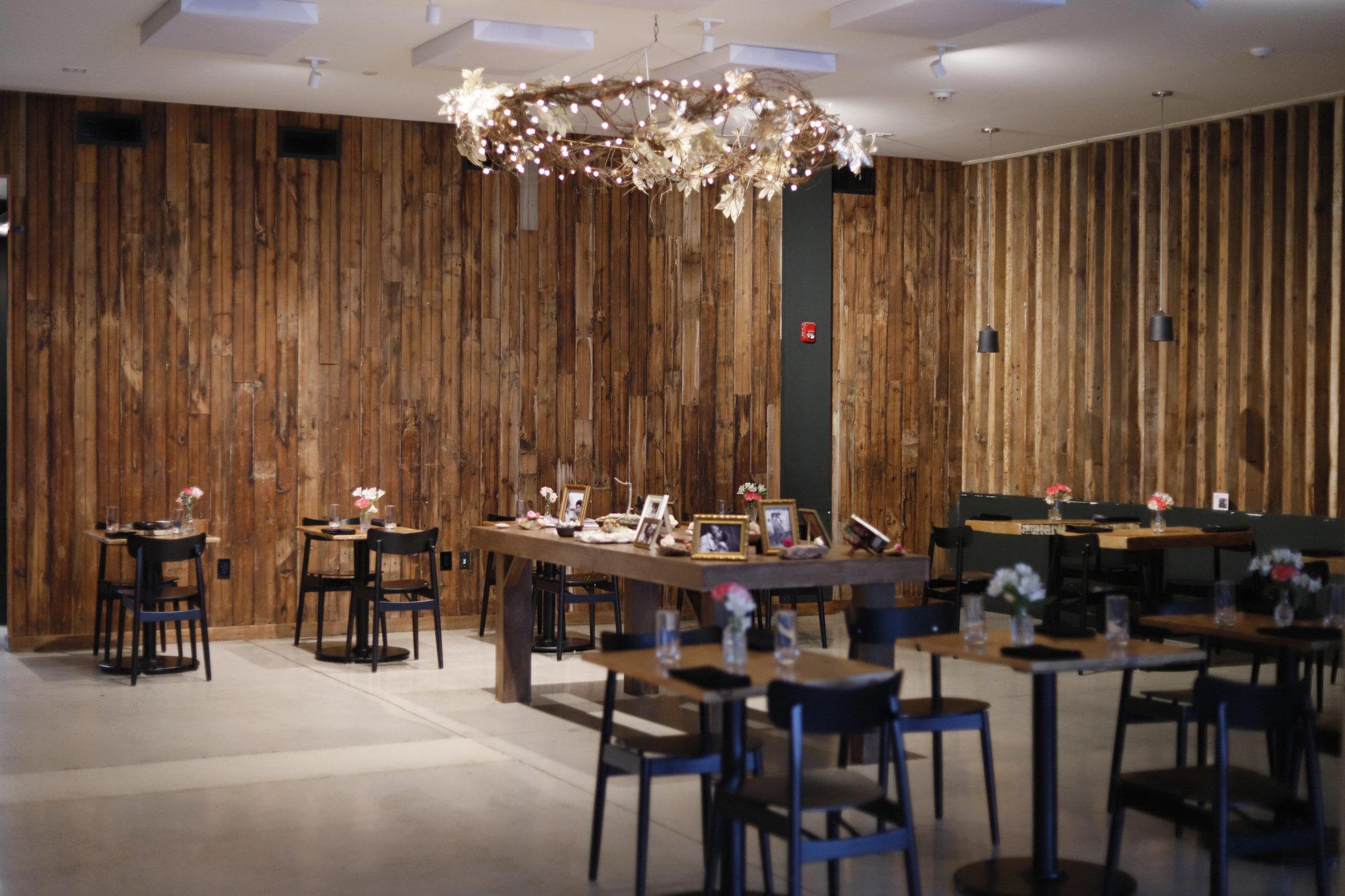
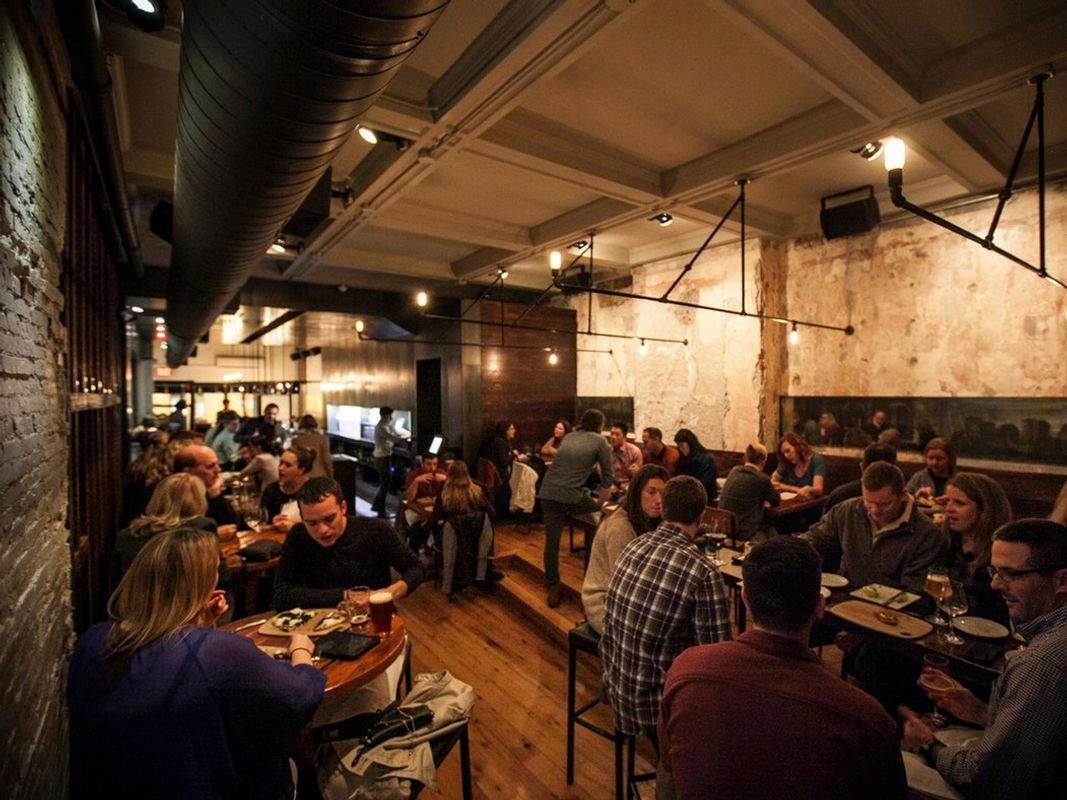
The physical setting on Lancaster Avenue reads as settled rather than designed-for-impact. The building carries the kind of wear that accumulates over years of actual use, exposed brick, wood that has absorbed a decade of dinner-service warmth, dining rooms that feel proportioned for conversation rather than spectacle. The approach from the street gives you a house-converted-to-restaurant quality that positions the meal before you sit down: this is not a room asking to be photographed. It is a room asking you to stay for a second glass of wine and finish the conversation you started on the drive over.
That atmosphere belongs to a recognizable American category: the committed neighborhood restaurant that has chosen depth over novelty. Nationally, this tier sits well below the headline operators, the tasting-menu counters like Alinea in Chicago or Lazy Bear in San Francisco, but it also operates with different ambitions. The point is not to make the room feel like an event; the point is to make the room feel like a place you want to linger.
Where the Food Comes From, and Why That Framing Matters
The farm-to-table designation has been applied so broadly across American dining that it now functions as background noise in many cities. In suburban Philadelphia, it carries more weight than it might in a market saturated with producer-aligned kitchens. The Delaware Valley sits within reasonable distance of Chester County farms, Lancaster County agricultural producers, and a broader Mid-Atlantic growing region that offers genuine seasonal range: brassicas and root vegetables through the colder months, soft fruits and tomatoes through summer, a meaningful shoulder season on either end that a kitchen paying attention can exploit.
Restaurants that treat sourcing as structural, not decorative, build their menus around what is available rather than what photographs well in January. That discipline shows in what a kitchen does not offer as much as in what it does. It also creates the conditions for the kind of incremental, season-by-season consistency that builds a loyal dining room over time. Comparable commitments at the higher end of the national market appear at places like Blue Hill at Stone Barns in Tarrytown or Single Thread Farm in Healdsburg, where the sourcing infrastructure is explicit and the price point reflects it. White Dog operates in a more accessible register, which means the same underlying philosophy has to be executed at a volume and price level that those destination properties do not face.
The American farm-to-table model, when it functions well, also does something that pure technique-driven cooking cannot: it ties the menu to a specific place. The ingredients arriving from regional farms carry a geography that French-trained precision or Korean fermentation tradition at venues like Atomix in New York City do not necessarily invoke. At the neighborhood level, that locatedness is part of what a restaurant like White Dog is actually selling, even if it never says so explicitly.
How It Sits in the Regional Picture
Pennsylvania's dining scene has a handful of nationally recognized nodes, Philadelphia's center city most prominently, but the Main Line suburbs have historically functioned as a support tier rather than a destination in their own right. That positions a restaurant like White Dog in an interesting middle space: it is operating in a market with a sophisticated enough clientele to reward serious cooking, but without the pressure or the platform of a city address. Comparisons to producer-driven operations elsewhere in the country, Bacchanalia in Atlanta, Frasca Food and Wine in Boulder, or Brutø in Denver, are instructive less for their cuisine similarities than for their shared positioning: restaurants that chose to be excellent in markets not primarily defined by dining ambition.
That choice carries its own logic. A restaurant embedded in a residential neighborhood earns its audience through consistency and trust rather than novelty and press cycles. The dining room on a Tuesday in November becomes the real test, not the opening weekend or the harvest-menu feature.
Planning the Visit
White Dog Cafe is reachable from central Philadelphia in roughly 20 to 25 minutes by car via Lancaster Avenue itself, which connects the city's western neighborhoods to the Main Line suburbs without requiring a highway. For visitors staying in Philadelphia, it reads as a comfortable evening excursion rather than a full-day commitment. Reservations are recommended. The address is 379 Lancaster Ave, Haverford, PA 19041. Dress expectations are smart casual.
For readers building a wider picture of farm-aligned American dining, the range runs from accessible neighborhood anchors like this one up through destination operations including The French Laundry in Napa, Providence in Los Angeles, Addison in San Diego, The Inn at Little Washington, Emeril's in New Orleans, Causa in Washington D.C., ITAMAE in Miami, Le Bernardin in New York City, and 8 1/2 Otto e Mezzo Bombana in Hong Kong. The comparison is useful not for cuisine alignment but for understanding what separates a neighborhood-anchored sourcing commitment from the infrastructure-heavy farm programs that underpin the top tier nationally.
A Quick Peer Check
Comparable venues nearby, for context on price, style, and recognition.
| Venue | Cuisine | Price | Notes |
|---|---|---|---|
| White Dog CafeThis venue — the venue you are viewing | Contemporary American | $$ | Not listed |
| Prohibition Taproom | American Gastropub | $$ | Callowhill |
| Morning Glory Diner | American Breakfast & Brunch Diner | $$ | Hawthorne |
| Heritage | American Gastropub with Italian Influences | $$ | Northern Liberties |
| Bourbon & Branch | American Gastropub | $$ | Northern Liberties |
| Philly Tap & Tavern Harrah's Philadelphia | American Gastropub | $$ | Chester |
Continue exploring
More in Haverford
Restaurants in Haverford
Browse all →
Bars in Haverford
Browse all →
Hotels in Haverford
Browse all →
Wineries in Haverford
Browse all →
At a Glance
- Cozy
- Classic
- Whimsical
- Brunch
- Group Dining
- Casual Hangout
- Historic Building
- Extensive Wine List
- Craft Cocktails
- Farm To Table
- Local Sourcing
Current opening hours
- Monday
- 11:30 AM–9 PM
- Tuesday
- 11:30 AM–9 PM
- Wednesday
- 11:30 AM–9 PM
- Thursday
- 11:30 AM–9 PM
- Friday
- 11:30 AM–9:30 PM
- Saturday
- 10 AM–9:30 PM
- Sunday
- 10 AM–8 PM
Hours can change for holidays and private events. Last verified .
Warm and welcoming with playful dog-inspired art, rich wooden bar, and luxurious booths creating a cozy, neighborhood feel.