Vitello's Restaurant
Our verdict
Vitello's Restaurant on Tujunga Avenue has held a place in Studio City's dining consciousness for decades, functioning as both a neighbourhood Italian fixture and a piece of Los Angeles cultural history. The address carries weight beyond its food, drawing locals who treat the room as a regular and visitors drawn by the restaurant's long civic presence in the San Fernando Valley.

Pearl is the En Primeur Club membership app — saves, bookings, and concierge access live there. Same editors, same standards.
- Address
- 4349 Tujunga Ave, Studio City, CA 91604
- Phone
- (818) 769-0905
- Hours
- Mon–Wed 12–9 PMThu–Sat 12–10 PMSun 12–9 PM
- Website
- vitellosrestaurant.com
- Directions
- Get directions
- Booking
- Book on OpenTable
The menu
What to order
- Shrimp Sambuca
- Spaghetti & Meatballs
- Carbonara
Tujunga Avenue and the Weight of the Room
There are restaurants that earn their longevity through reinvention, and there are restaurants that earn it through constancy. Vitello's, at 4349 Tujunga Avenue in Studio City, belongs to the second category. The address sits on a stretch of Tujunga that functions as something of an informal main street for the residential blocks west of Laurel Canyon, and the restaurant has been part of that streetscape long enough to become indistinguishable from it. Walking in, the expectation is not novelty. The expectation is continuity, which in Los Angeles — a city that dismantles its past with unusual speed — is its own form of distinction.
Studio City's dining corridor has shifted considerably around venues like Vitello's. Art's Delicatessen and Restaurant, a few blocks away on Ventura, represents the Jewish deli tradition that once anchored the Valley's casual dining culture. Caioti Pizza Cafe operates in the California-Italian register, lighter and more produce-driven. Feu and Iroha Sushi pull the neighbourhood toward the kind of format-conscious dining that defines contemporary Los Angeles. Vitello's sits apart from that evolution, occupying territory that is more specifically Italian-American, a tradition with its own cultural logic and its own timeline.
Italian-American as a Distinct Culinary Tradition
Italian-American cooking is frequently misread as a lesser version of regional Italian cuisine. That reading misses the point. The tradition that developed in New York, New Jersey, Chicago, and eventually Los Angeles through the mid-twentieth century was a genuine synthesis: Southern Italian techniques adapted to American ingredient availability, reshaped by the economics of feeding large families in urban contexts, and eventually codified into a recognisable canon of dishes that have almost no direct equivalent in Italy. Red-sauce cooking, in its American form, is not an approximation. It is a separate register.
That register has faced serious pressure from two directions over the past two decades. Upward pressure came from the rise of regional Italian fine dining, represented at the highest tier by venues like Le Bernardin in New York City (which, while French, exemplifies the kind of technique-forward European dining that reset American expectations in this era) and the broader shift toward ingredient sourcing and restraint. Lateral pressure came from the explosion of fast-casual Italian formats. Classic red-sauce houses that survived that compression did so by holding a specific audience: diners who want the canon executed reliably, not reimagined.
Vitello's has occupied that position in the San Fernando Valley. The neighbourhood context matters here. Studio City and its adjacent ZIP codes carry a high density of entertainment industry professionals whose relationship with restaurants is pragmatic as much as aspirational, they want places that work, that they can return to without friction, that function as an extension of their professional and social routines. A reliable Italian-American room with decades of neighbourhood standing fits that need precisely.
Cultural Weight Beyond the Menu
The restaurant's place in Los Angeles's public record extends beyond its food. Vitello's has been referenced repeatedly in connection with the 2001 death of actor Robert Blake's wife, Bonnie Lee Bakley, who was shot in a car outside the restaurant while Blake was reportedly inside. The subsequent trial drew national coverage and attached Vitello's name to one of the more extensively documented criminal cases in Los Angeles in that decade. That association is part of the restaurant's factual record, and it has contributed to a particular kind of notoriety that functions differently from critical acclaim or word-of-mouth recommendation. For some visitors, it is part of the reason to come. For regulars, it is simply background.
Los Angeles has a complicated relationship with this kind of place-based cultural memory. The city tears down and rebuilds faster than almost any comparable American metropolis, which gives surviving establishments with layered histories an unusual gravity. Vitello's sits in that category alongside a handful of other Valley restaurants that have become fixtures by outlasting the forces that typically eliminate them.
Studio City in Context
Studio City's dining profile is not as concentrated or as talked-about as Silver Lake, Los Feliz, or the west side neighbourhoods that dominate Los Angeles food coverage. That gap between quality and coverage is partly geographic, the Valley operates as a semi-separate social and professional ecosystem, and partly a function of the neighbourhood's residential character. The dining here serves the community more than it draws visitors from outside it. Katsu-Ya is one of the few Studio City restaurants that consistently appears in city-wide coverage, representing the kind of high-execution Japanese format that travels well across Los Angeles's dining tribes.
For context on the broader California dining spectrum, the gap between a neighbourhood Italian-American fixture and the state's most scrutinised restaurants is significant. Venues like The French Laundry in Napa, Providence in Los Angeles, and Single Thread Farm in Healdsburg operate in a different register entirely, with tasting-menu formats, extensive wine programs, and booking windows measured in months. Nationally, the fine dining tier includes venues like Alinea in Chicago, Lazy Bear in San Francisco, Atomix in New York City, Blue Hill at Stone Barns in Tarrytown, Addison in San Diego, and The Inn at Little Washington in Washington. Internationally, the tier extends to venues like 8½ Otto e Mezzo Bombana in Hong Kong. Vitello's is not in competition with any of those rooms. Emeril's in New Orleans offers a useful parallel: a restaurant whose civic presence and cultural embeddedness matter as much as the food on any given night.
Planning Your Visit
Vitello's is located at 4349 Tujunga Avenue in Studio City, accessible from Ventura Boulevard and well within reach of the 101 freeway. The address is residential-adjacent, which means street parking is the standard approach. For a broader view of the neighbourhood's dining options, the full Studio City restaurants guide covers the range from casual to considered across the area's main dining corridors.
Frequently asked questions
Is Vitello's Restaurant child-friendly?
Vitello's operates as a traditional Italian-American dining room on Tujunga Avenue in Studio City, a format that has historically accommodated family groups without issue. The room's classic setup and straightforward menu style suits adults and older children more naturally than younger ones. For families with toddlers or very young children, the atmosphere leans toward sit-down dinner rather than casual drop-in.
Is Vitello's Restaurant better for a quiet night or a lively one?
Vitello's has the bones of an old-school neighborhood room at 4349 Tujunga Avenue — the kind of place where regulars settle in and the pace is set by the kitchen, not a DJ. It reads better as a table for two or a long dinner with a small group than as a high-energy night out. Studio City's dining strip is low-key compared to Silver Lake or the west side, and Vitello's fits that register.
Why is Vitello's Restaurant historically significant in Los Angeles?
Vitello's at 4349 Tujunga Avenue, Studio City, holds a documented place in Los Angeles public record beyond its Italian-American menu: the restaurant was referenced repeatedly in connection with the 2001 death of Robert Blake's wife, Bonny Lee Bakley, and the subsequent high-profile criminal case. That history gave the room a level of notoriety that few neighborhood restaurants in any city accumulate. It remains one of the more unusual intersections of local dining and major criminal proceedings in LA history.
What should I eat at Vitello's Restaurant?
Vitello's built its reputation on Italian-American classics — the tradition that developed in the United States from southern Italian immigrant cooking, distinct from modern regional Italian cuisine. Pasta, veal preparations, and red-sauce staples form the core of that canon.
Cost Snapshot
Comparable venues nearby, for context on price, style, and recognition.
| Venue | Cuisine | Price | Notes |
|---|---|---|---|
| Vitello's RestaurantThis venue — the venue you are viewing | Classic California-Inspired Italian | $30–50 | Not listed |
| Pagliacci's Trattoria Taverna | Italian Trattoria | $30–50 | Studio City, Italian Trattoria |
| Feu | Studio City, Modern Vietnamese Pho | Not listed | Not listed |
| Mantee Cafe | Lebanese-Armenian Mediterranean | Not listed | Studio City, Lebanese-Armenian Mediterranean |
| Talesai | Classic Thai | $30–50 | Studio City, Classic Thai |
| Teru Sushi | Authentic Japanese Sushi | $50–100 | Studio City, Authentic Japanese Sushi |
Continue exploring
More in Studio City
Restaurants in Studio City
Browse all →
Bars in Studio City
Browse all →
Hotels in Studio City
Browse all →
Wineries in Studio City
Browse all →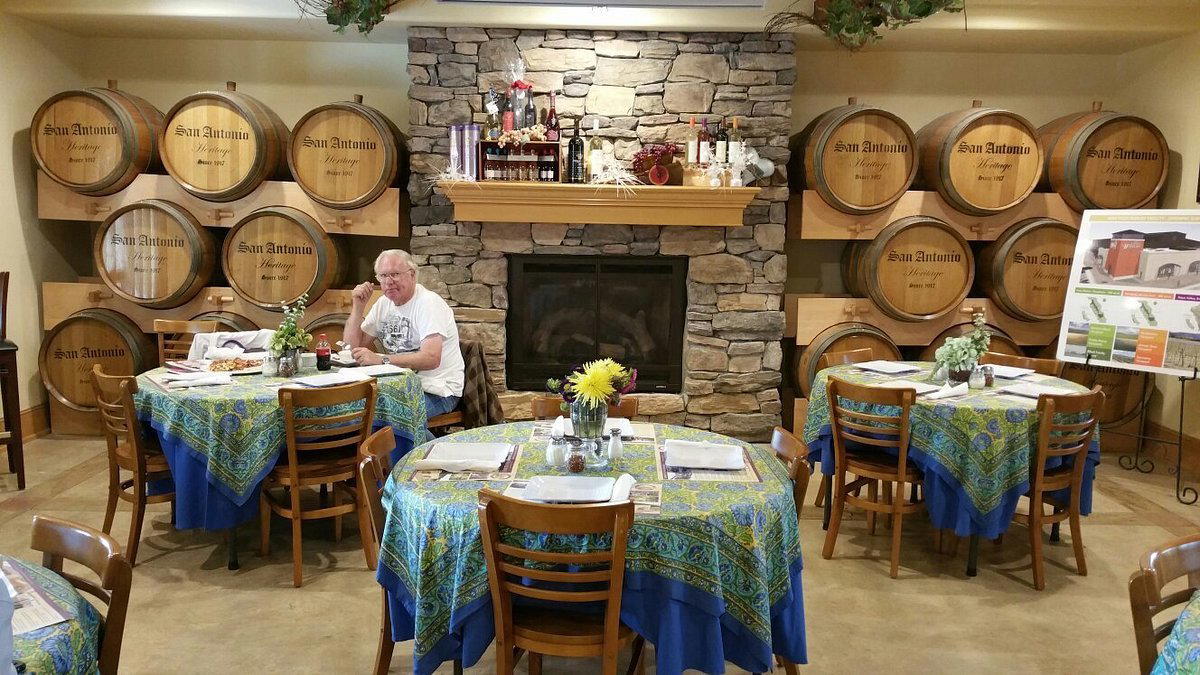
Details
- Classic
- Cozy
- Romantic
- Intimate
- Date Night
- Special Occasion
- Live Music
- Private Dining
- Craft Cocktails
- A La Carte
- Vegetarian Friendly
- Gluten Free Options
Current opening hours
- Monday
- 12–9 PM
- Tuesday
- 12–9 PM
- Wednesday
- 12–9 PM
- Thursday
- 12–10 PM
- Friday
- 12–10 PM
- Saturday
- 12–10 PM
- Sunday
- 12–9 PM
Hours can change for holidays and private events. Last verified .
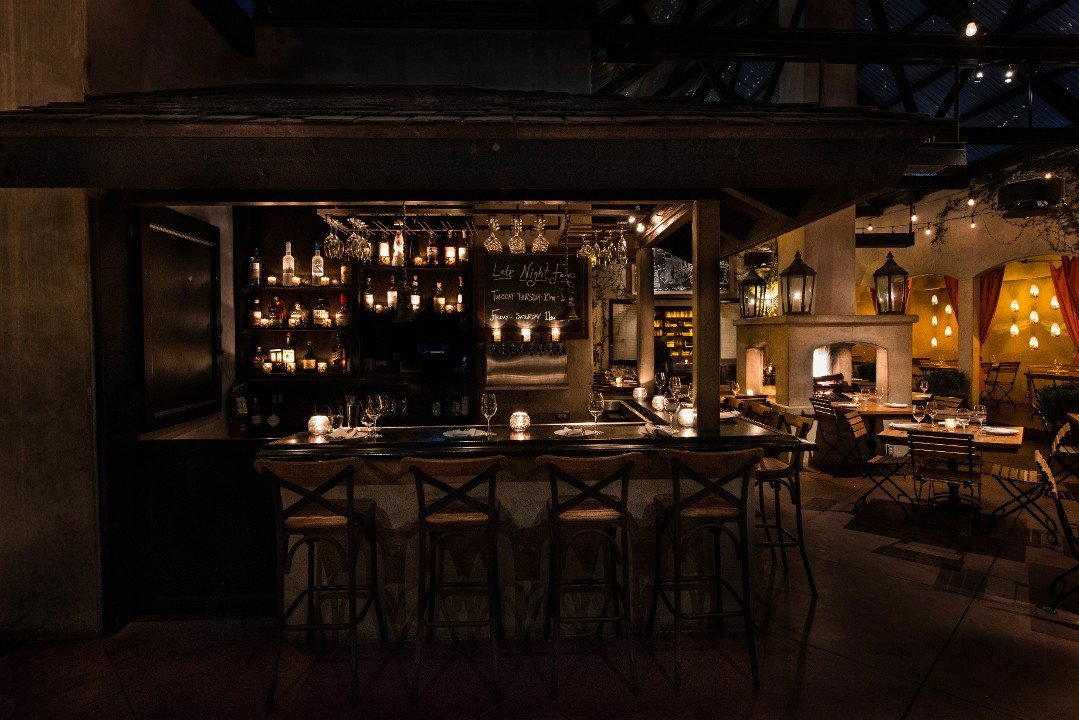
Traditional Italian decor with comfortable booths, modern open atrium, and cozy intimate spaces including speakeasy and jazz supperclub.