Caioti Pizza Cafe
Our verdict
A Studio City fixture on Tujunga Avenue, Caioti Pizza Cafe occupies the casual-neighbourhood tier of Los Angeles pizza culture with a reputation that extends well beyond the San Fernando Valley. The cafe draws a mixed crowd of locals and visitors, operating in a dining tradition that prizes wood-fired craft over fine-dining formality. For context on the wider Studio City scene, see our full restaurant guide.

Pearl is the En Primeur Club membership app — saves, bookings, and concierge access live there. Same editors, same standards.
- Address
- 4346 Tujunga Ave, Studio City, CA 91604
- Phone
- (818) 761-3588
- Hours
- Mon–Thu 9:30 AM–8:30 PMFri 9:30 AM–9:30 PMSat 9 AM–9:30 PMSun 9 AM–8:30 PM
- Website
- caiotipizzacafemenu.com
- Directions
- Get directions
The menu
What to order
- Ladous Barbecue Chicken Pizza
- The Salad
Pizza as Neighbourhood Institution: What Caioti Represents in Studio City
Studio City's Tujunga Avenue corridor has long functioned as the San Fernando Valley's answer to the kind of low-key, high-quality neighbourhood strip that Los Angeles does better than most American cities. Independent restaurants here operate outside the gravitational pull of the Westside's press-hungry openings, and that distance from the hype cycle tends to produce something more durable: places that survive on repeat custom rather than debut-week Instagram traffic. Caioti Pizza Cafe, at 4346 Tujunga Ave, belongs to that tradition. It is the kind of address that local residents cite without hesitation when visitors ask where to eat, which is a different and arguably more meaningful form of endorsement than any awards list.
For a broader picture of what Studio City's dining scene offers across cuisines and price points, the full Studio City restaurants guide maps the neighbourhood's character in detail.
The Cultural Weight Behind California Pizza
California pizza is a specific and frequently misunderstood genre. It emerged from the wood-fired enthusiasm of the 1980s Los Angeles restaurant moment, which drew on Italian craft traditions while introducing locally sourced, seasonally driven toppings that had no precedent in Naples or New York. That synthesis produced a style with genuine regional identity: thinner than Neapolitan at its most theatrical, less doughy than New York, and more attentive to vegetable-forward combinations than either. Caioti sits inside this tradition, operating in a city where pizza culture has stratified considerably over the decades.
Los Angeles now contains everything from certified Neapolitan houses importing Caputo flour and San Marzano tomatoes, to Detroit-style rectangular pies, to Californian wood-fired operations that predate the current artisan pizza wave by two or three decades. Caioti occupies the latter category, which carries its own cultural significance: these are the places that defined what California pizza meant before the term became a marketing label.
The contrast with fine-dining pizza formats elsewhere in the country is instructive. Operations like Providence in Los Angeles or destination restaurants along the lines of The French Laundry in Napa and Le Bernardin in New York City represent the formal, multi-course end of American restaurant culture. Caioti operates at the opposite pole: the neighbourhood cafe format, where the measure of success is whether families return on a Tuesday rather than whether critics arrive on a Saturday.
Where It Sits Among Studio City's Dining Options
Studio City's restaurant mix reflects a neighbourhood that is residential, industry-adjacent, and accustomed to feeding people on a regular-visit basis rather than a special-occasion one. Art's Delicatessen and Restaurant anchors the deli tradition with decades of local loyalty. Iroha Sushi and Katsu-Ya serve the neighbourhood's appetite for Japanese cuisine across different price points. Lala's Argentine Grill covers South American wood-fired cooking. Feu adds a more contemporary edge to the strip.
Within that set, Caioti fills the pizza-focused casual slot, and the cafe format, with its lower price point and family-friendly operation, positions it differently from the wine-bar and date-night options that have multiplied along Tujunga in recent years. It is a daytime and early-evening destination rather than a late-night one, which shapes who shows up and what the room feels like.
The Room and the Atmosphere
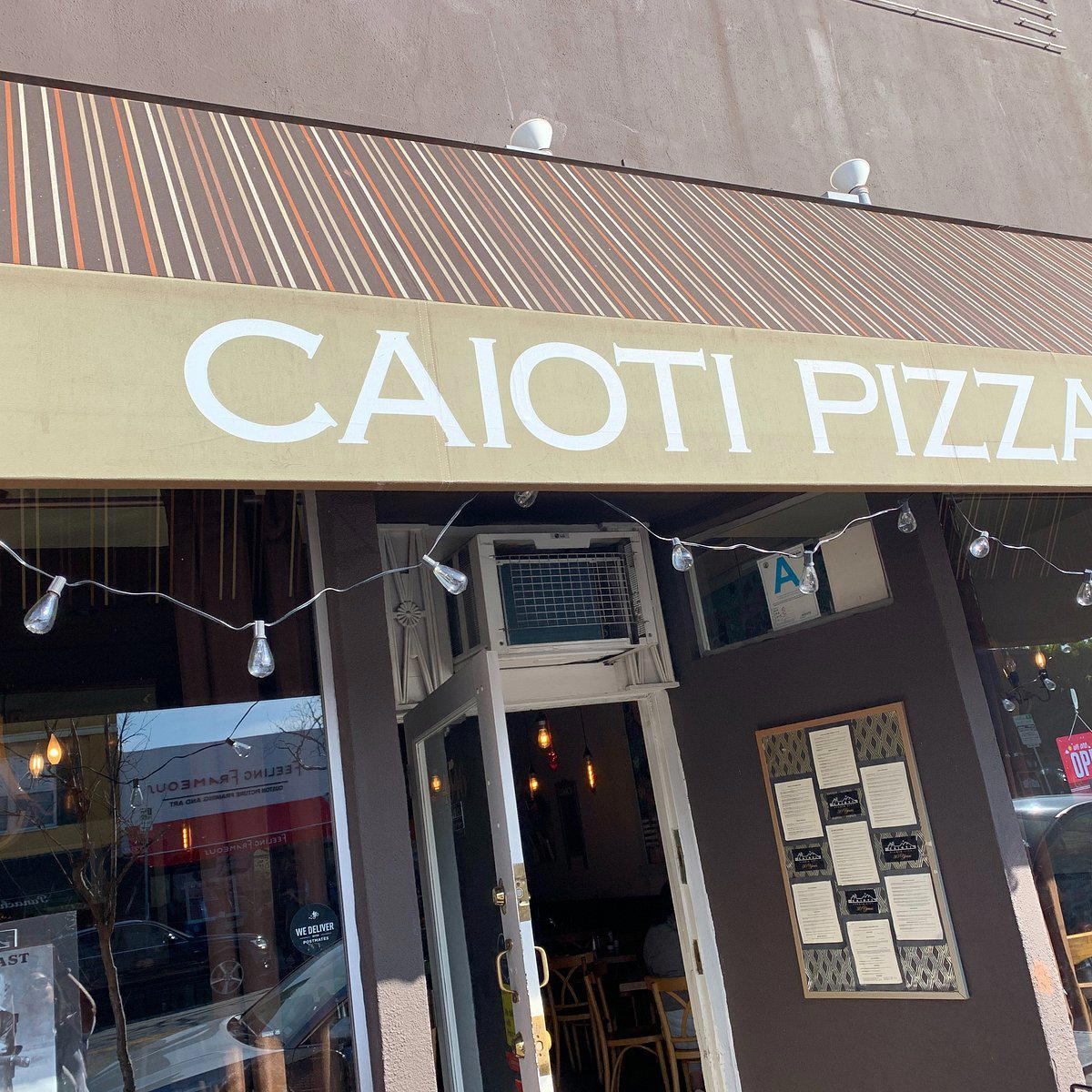
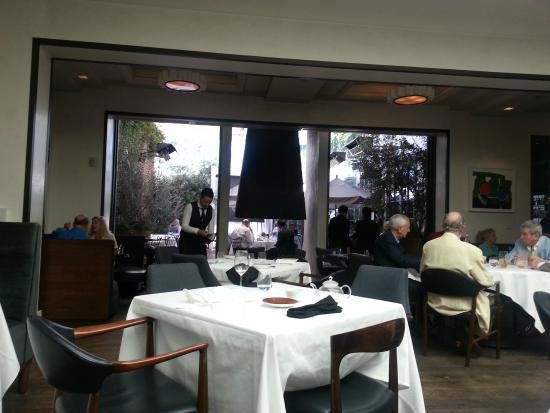
Cafe-format pizza restaurants in California tend to follow a consistent spatial logic: a room that feels improvised rather than designed, walls that have accumulated years of minor changes rather than a single opening-night renovation, and a noise level that settles somewhere between convivial and loud depending on the hour. Caioti fits this pattern. The Tujunga Avenue frontage gives it street presence without grandeur, and the interior communicates longevity rather than investment. That quality, in Los Angeles restaurant culture, reads as authenticity, and it is something that no amount of opening budget can manufacture quickly.
The dining room serves a cross-section of the neighbourhood: families with young children, industry workers from nearby production facilities, couples treating it as a midweek default rather than a destination. The atmosphere that results is relaxed in the specific way that comes from a room that has never tried to be anything other than what it is.
Contextualising the California Pizza Tradition
To understand where Caioti sits culturally, it helps to trace the arc of California pizza more broadly. The 1980s Los Angeles moment that produced this style was partly a reaction to the formality of French-influenced fine dining, and partly an expression of the state's agricultural abundance. Chefs and restaurateurs of that era treated the pizza format as a vehicle for local produce in a way that anticipated the farm-to-table vocabulary that would become mainstream decades later.
That history gives older California pizza institutions a different kind of credential from the Michelin-tracked, chef-biography-driven restaurant narrative that dominates food media. The relevant question is not which awards they hold, in the manner of Addison in San Diego, Smyth in Chicago, or Atomix in New York City, but whether they have maintained quality and community relevance across a period long enough to have shaped local expectations. That is the standard by which neighbourhood institutions are fairly measured, and by that standard, Caioti's continued presence on Tujunga Avenue carries its own weight.
The contrast extends internationally: tasting-menu destination restaurants such as Atelier Moessmer Norbert Niederkofler in Brunico, Blue Hill at Stone Barns in Tarrytown, or Single Thread Farm in Healdsburg operate in a register that is almost categorically separate from the neighbourhood cafe format. Each serves its own purpose in a city's or region's dining ecology. The cafe endures because its purpose, feeding a neighbourhood reliably and affordably, is one that demand never exhausts.
Planning Your Visit
Caioti Pizza Cafe sits at 4346 Tujunga Ave in Studio City, walkable from the main stretch of Ventura Boulevard and accessible by car from the 101 freeway corridor. As a cafe-format operation, it tends to draw families and groups earlier in the evening, which means mid-afternoon and early-dinner windows offer a quieter experience. There is no formal dress code: the room operates at the casual end of the Los Angeles dining spectrum, where the relevant consideration is comfort rather than appearance. Booking practices vary for this format, and checking current availability directly is the sensible approach given that policies at neighbourhood restaurants shift with demand and staffing. The cafe's position on Tujunga means street parking on nearby side streets is typically the most practical arrival option.
For visitors building a broader Studio City itinerary, the neighbourhood rewards a half-day approach: the Tujunga strip, the Ventura Boulevard corridor, and the proximity to Coldwater Canyon Park all sit within a short radius. Other options for the same evening or the surrounding days are covered in the full Studio City restaurants guide.
Frequently asked questions
Is Caioti Pizza Cafe child-friendly?
Cafe-format pizza restaurants along the Tujunga Avenue corridor in Studio City tend to operate in relaxed, neighbourhood-facing environments suited to families. Caioti's positioning as a long-running local institution on Tujunga Ave reinforces that casual, all-ages dynamic.
How would you describe the vibe at Caioti Pizza Cafe?
Caioti occupies the low-key end of Studio City's dining register, sitting on Tujunga Ave rather than the more performative stretch of Ventura Boulevard. The cafe format signals a room that prioritises return visits over occasion dining, consistent with the neighbourhood's residential, industry-adjacent character. Think weekly-regular energy rather than destination-night energy.
Why do people specifically seek out Caioti Pizza Cafe in Studio City rather than a more central Los Angeles pizza destination?
Caioti's address at 4346 Tujunga Ave places it squarely within Studio City's walkable neighbourhood strip, making it a consistent local rather than a cross-city destination. In a city where dining often requires intent and commute, proximity and regularity carry weight, and Caioti has built its reputation on exactly that kind of embedded, repeat-visit presence in the San Fernando Valley.
What's the signature dish at Caioti Pizza Cafe?
Caioti is rooted in the California pizza tradition that emerged from Los Angeles in the 1980s, which means the pizza itself carries the venue's identity.
Where is Caioti Pizza Cafe located?
Caioti Pizza Cafe is located at 4346 Tujunga Ave, Studio City, CA 91604, Studio City.
Budget and Context
Comparable venues nearby, for context on price, style, and recognition.
| Venue | Cuisine | Price | Notes |
|---|---|---|---|
| Caioti Pizza CafeThis venue — the venue you are viewing | California-Style Italian Pizza | $20–30 | Not listed |
| Pagliacci's Trattoria Taverna | Italian Trattoria | $30–50 | Studio City, Italian Trattoria |
| Lucifers Pizza | Modern Italian Pizza | $20–30 | Studio City, Modern Italian Pizza |
| Mantee Cafe | Lebanese-Armenian Mediterranean | Not listed | Studio City, Lebanese-Armenian Mediterranean |
| Terra E Mare | Modern Italian Fine Dining | $50–100 | Studio City, Modern Italian Fine Dining |
| Art's Delicatessen & Restaurant | Traditional Jewish Deli | $20–30 | Studio City, Traditional Jewish Deli |
Continue exploring
More in Studio City
Restaurants in Studio City
Browse all →
Bars in Studio City
Browse all →

Hotels in Studio City
Browse all →

Wineries in Studio City
Browse all →
Details
- Cozy
- Relaxed
- Casual Hangout
- Family
- Brunch
- Open Kitchen
- A La Carte
- Vegetarian Friendly
- Gluten Free Options
Current opening hours
- Monday
- 9:30 AM–8:30 PM
- Tuesday
- 9:30 AM–8:30 PM
- Wednesday
- 9:30 AM–8:30 PM
- Thursday
- 9:30 AM–8:30 PM
- Friday
- 9:30 AM–9:30 PM
- Saturday
- 9 AM–9:30 PM
- Sunday
- 9 AM–8:30 PM
Hours can change for holidays and private events. Last verified .
Relaxed and inviting with excellent, eclectic atmosphere.