Vientiane Café
Our verdict
Vientiane Café on Baltimore Avenue brings Lao cooking into one of West Philadelphia's most food-literate neighborhoods, offering a rare example of Southeast Asian cuisine that operates outside the city's Thai and Vietnamese mainstream. The menu draws from a tradition that rarely surfaces at this scale in the American mid-Atlantic, making the address on the 4700 block a reference point for anyone tracking the region's Southeast Asian dining scene.

Pearl is the En Primeur Club membership app — saves, bookings, and concierge access live there. Same editors, same standards.
- Address
- 4728 Baltimore Ave, Philadelphia, PA 19143
- Phone
- (215) 726-1095
- Hours
- Mon ClosedTue–Sat 4–9 PMSun Closed
- Website
- vientiane-cafe.com
- Directions
- Get directions
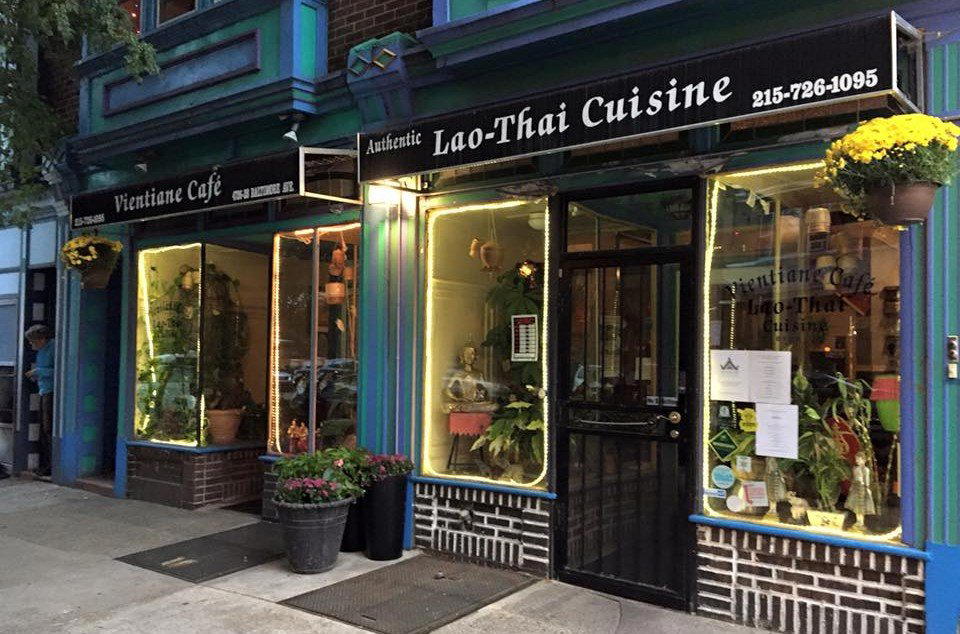
West Philadelphia's Southeast Asian Counterpoint
Baltimore Avenue runs through West Philadelphia as one of the city's more quietly consequential dining corridors. It is not the address that draws food press the way Fishtown or Rittenhouse do, but the stretch between 45th and 50th streets has accumulated a density of independent operators that reflects the neighborhood's economic and cultural mix more honestly than more celebrated zip codes. In that context, Vientiane Café at 4728 Baltimore Ave occupies a specific position: it represents Lao cuisine in a city where Southeast Asian cooking is largely sorted into Thai and Vietnamese categories, with Cambodian just beginning to register through places like Mawn and Thai cooking pushed further upmarket by venues like Kalaya. Lao food sits outside all of those lanes.
That positioning matters more than it might initially appear. Philadelphia's restaurant conversation frequently gravitates toward New American ambition at places like Fork and Friday Saturday Sunday, or toward fine dining tiers that mirror what you'd find at Le Bernardin in New York City or Alinea in Chicago. Vientiane Café operates in a register that has nothing to do with any of that. The restaurant's value is categorical: it holds a cuisine that is genuinely underrepresented in Pennsylvania, and it does so in a neighborhood setting that keeps the price accessible to regulars, not just destination diners.
What the Menu Reveals About a Cooking Tradition
Lao cuisine is often described in relation to Thai food, which is both accurate and reductive. The two share fermented fish as a foundational seasoning element, a reliance on sticky rice as the staple starch, and a preference for aromatic herbs over complex spice blends. But Lao cooking historically leans more sharply into bitter and sour flavor registers, and the role of fresh herbs eaten alongside rather than cooked into a dish is more pronounced than in Thai practice. These are structural differences in how a meal is assembled, not cosmetic variations.
A restaurant menu built around that tradition, as Vientiane Café's is, tends to reveal those priorities in its architecture. Dishes organized around larb, the herb-heavy meat salad that functions almost as a national dish in Laos, signal that the kitchen is working from the cuisine's own internal logic rather than adapting it for a generalized Southeast Asian audience. Similarly, papaya salad in the Lao style, known as tam mak hoong, uses padaek, the fermented fish paste, differently than the Thai som tam variant that most American diners encounter first. These distinctions are what a menu built on this tradition communicates before a single dish arrives at the table.
Sticky rice, served in the traditional woven bamboo basket and meant to be eaten by hand, is another structural marker. When it appears as the default rice offering rather than an alternative, it tells you the menu was designed from inside the tradition. That kind of internal coherence is rarer than it sounds in a city where Southeast Asian menus frequently adapt to perceived customer expectations.
The Baltimore Avenue Context
Understanding where Vientiane Café sits geographically is part of understanding what it does. The University City and West Philadelphia corridor has a long history of ethnic grocery and restaurant operations that serve community needs rather than destination dining ones. That means the customer base is not primarily composed of food tourists making a detour from Center City. The regulars are local, the price points reflect that relationship, and the room tends to operate with the low-key pace of a neighborhood institution rather than a destination with waitlists.
That stands in contrast to the model you see at farm-driven destination restaurants like Blue Hill at Stone Barns in Tarrytown or tasting-menu operations like Single Thread Farm in Healdsburg, where the menu architecture is designed to be the event itself. At Vientiane Café, the food is the point, not the staging. That is a different but equally legitimate relationship between kitchen and customer, and it is the one that keeps places like this operating for years while more conceptually ambitious restaurants cycle through.
The comparison is not about quality. It is about what kind of attention a restaurant is designed to reward. At venues like The French Laundry in Napa or Atomix in New York City, the architecture of the menu is an explicit part of the experience, narrated and sequenced. At neighborhood-rooted places, the menu architecture is legible only if you already know the cuisine well enough to recognize what it is doing. Vientiane Café rewards that kind of knowledge.
How to Approach a Visit
West Philadelphia is accessible by SEPTA's 34 trolley line along Baltimore Avenue, which makes the corridor reachable from Center City without a car. The 4700 block sits in a commercial stretch that includes other independent food operations, so a meal here fits naturally into a longer afternoon or early evening in the neighborhood rather than requiring the kind of planning that applies to tasting-menu reservations at Providence in Los Angeles or Addison in San Diego.
For readers tracking Philadelphia's broader Southeast Asian scene alongside more widely covered addresses, Kalaya and Mawn represent the higher-profile end of that category in the city. Vientiane Café occupies a different tier by design. If you want to understand the full range of what Philadelphia's independent dining scene looks like beyond its most press-covered restaurants, this address is part of that picture. Our full Philadelphia restaurants guide maps the city across price points and neighborhoods.
Frequently asked questions
Where do I go for Vientiane Café?
Vientiane Café is located at 4728 Baltimore Ave, Philadelphia, PA 19143, Philadelphia.
Is Vientiane Café one of the only Lao restaurants in Philadelphia?
Lao cuisine is genuinely sparse across Philadelphia's restaurant listings, and Vientiane Café at 4728 Baltimore Ave is among a very small number of city addresses where the cooking is grounded in Lao rather than broader pan-Asian or Thai tradition. That scarcity is not a marketing distinction — it reflects how underrepresented Lao food remains in American cities outside of specific Lao diaspora communities. West Philadelphia's University City corridor provides the demographic context that makes this address viable.
What should I order at Vientiane Café?
Larb and papaya salad prepared in the Lao style are the most reliable starting point. The Lao version of papaya salad uses padaek, a fermented fish paste, rather than the fish sauce common in Thai preparations — that distinction is worth understanding before you order. These dishes give the clearest read on how Vientiane Café, located at 4728 Baltimore Ave, approaches a cooking tradition that is distinct from its Southeast Asian neighbors.
Do they take walk-ins at Vientiane Café?
Baltimore Avenue restaurants in West Philadelphia's community-oriented dining corridor operate predominantly on a walk-in basis, and Vientiane Café fits that model. Advance reservations are not the standard practice for neighborhood spots of this type. Arriving early or during off-peak hours is the most practical approach, particularly given the café's standing as one of the few Lao addresses in Philadelphia.
Awards and Standing
Comparable venues nearby, for context on price, style, and recognition.
| Venue | Cuisine | Price | Notes |
|---|---|---|---|
| Vientiane CaféThis venue — the venue you are viewing | Authentic Lao-Thai | $20–30 | Not listed |
| Snack Shack at Forest & Main | Elevated American Snack Shack | $20–30 | Fishtown |
| High Street on Market | Modern American with House-Made Breads and Pastas | $30–50 | Washington Square West |
| Hickory Lane American Bistro | New American Bistro | Not listed | Francisville |
| La Llorona Cantina Mexicana | Authentic Mexican Cantina | Not listed | Newbold |
| Little Nonna's | Italian-American Comfort | $30–50 | Gayborhood |
Continue exploring
More in Philadelphia
Restaurants in Philadelphia
Browse all →
Bars in Philadelphia
Browse all →
Details
- Cozy
- Intimate
- Date Night
- Group Dining
- Casual Hangout
- Byob
- Local Sourcing
- A La Carte
- Vegetarian Friendly
- Vegan Options
- Gluten Free Options
Current opening hours
- Monday
- Closed
- Tuesday
- 4–9 PM
- Wednesday
- 4–9 PM
- Thursday
- 4–9 PM
- Friday
- 4–9 PM
- Saturday
- 4–9 PM
- Sunday
- Closed
Hours can change for holidays and private events. Last verified .
Unpretentious and warm with shimmery Lao tapestries, ornate masks, and aromas of lemongrass and Thai basil.