Veda occupies a address on Chestnut Street in Philadelphia's Center City, positioning itself within a dining corridor that has steadily drawn serious restaurants over the past decade. The kitchen operates in a city where Indian-inflected and spice-forward cooking has gained meaningful traction alongside the established New American scene. Veda is worth tracking for readers interested in how Philadelphia's mid-tier to upper-mid restaurant market continues to diversify.
Pearl is the En Primeur Club membership app — saves, bookings, and concierge access live there. Same editors, same standards.
- Address
- 1920 Chestnut St, Philadelphia, PA 19103
- Phone
- +12675192001
- Website
- vedaphilly.com
- Directions
- Get directions
 Saves & bookings on Pearl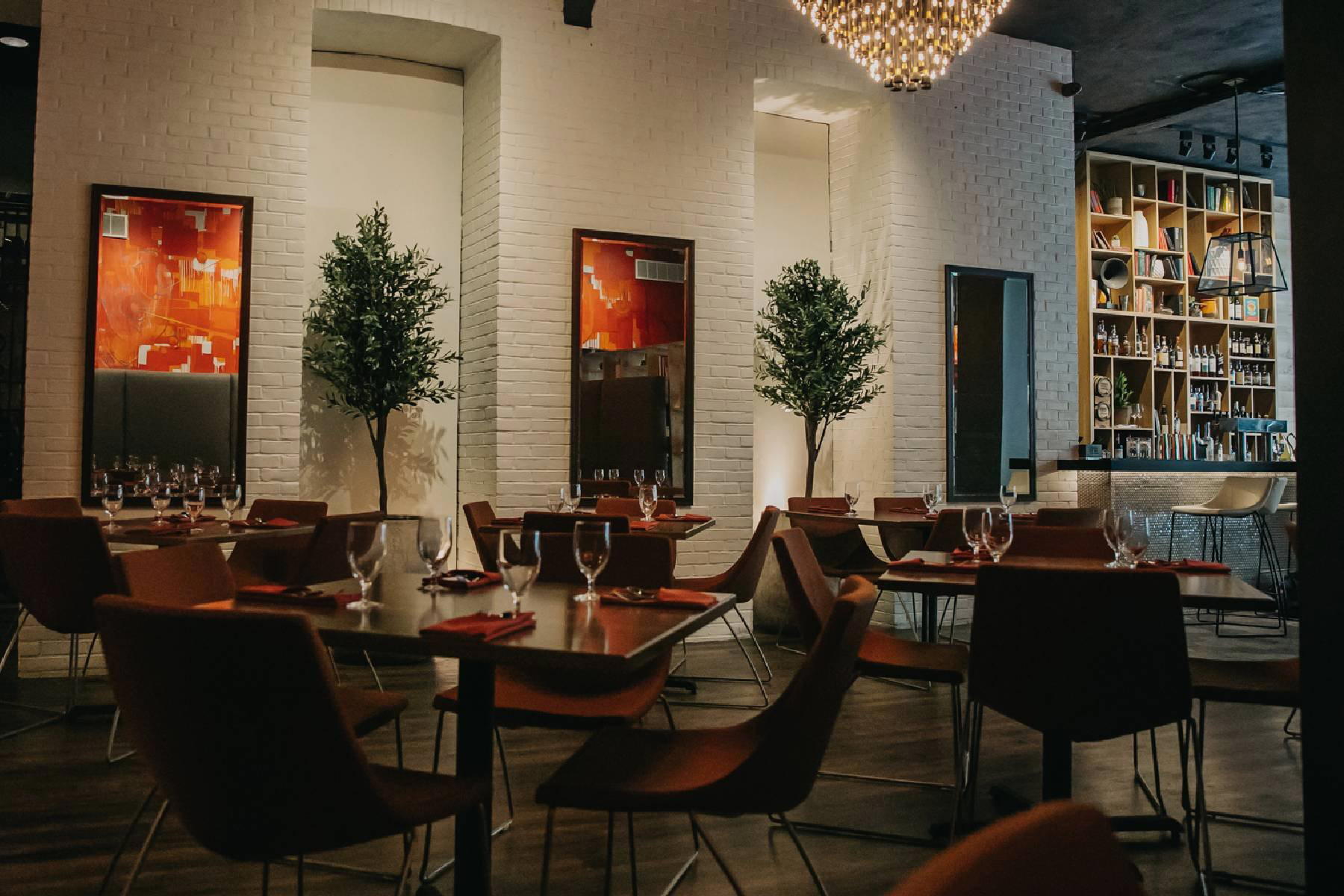
Chestnut Street and the Shifting Center of Philadelphia Dining
Philadelphia's restaurant geography has reorganized itself considerably over the past fifteen years. What was once a dining scene anchored almost exclusively around Rittenhouse Square and Old City has spread outward along corridors like Chestnut Street, where rent structures and foot traffic patterns have allowed a different tier of operator to establish footing. The 1900 block of Chestnut, where Veda sits at number 1920, sits at a crossroads between the residential density of Center City West and the commercial pull of the broader Rittenhouse catchment. That positioning matters: it places a restaurant within walking distance of a high-income residential base while still benefiting from destination traffic drawn to the broader neighborhood.
This geographic logic has played out across several of Philadelphia's more interesting openings in recent years. My Loup, with its French-inflected approach, and Friday Saturday Sunday, whose New American format earned it sustained critical attention, both illustrate how Philadelphia operators have learned to read neighborhood micro-climates before committing to a space. Veda's Chestnut Street address places it in a peer conversation with that cohort, even if its cuisine category points in a different direction.
How the Format Has Evolved
The editorial angle on Veda is most productively framed as one of evolution rather than origin. Philadelphia's Indian restaurant scene has undergone a quiet but meaningful transformation over the past decade. The city historically supported a reliable set of subcontinental restaurants clustered around University City and parts of South Philadelphia, formats that prioritized volume and accessibility over technique or sourcing. What has shifted more recently is the emergence of operators willing to position Indian or Indian-adjacent cooking at a price point and atmosphere level that competes directly with the city's contemporary American and European-influenced rooms.
This is the broader current that Veda enters. The Chestnut Street location places it in a dining corridor where the surrounding competition includes restaurants that have received national editorial coverage, and where a casual format would be commercially misaligned with the foot traffic and rental economics of the block.
For a useful parallel outside Philadelphia, the trajectory of Indian-rooted fine dining in American cities is worth considering. Operators in New York, Chicago, and Los Angeles have demonstrated that there is a durable audience for subcontinental cooking delivered at the same standard of service, sourcing, and ambition as any other serious restaurant category. That shift has been slower to materialize in Philadelphia than in those larger markets, which is precisely why Veda's positioning is worth attention.
Philadelphia's Broader Dining Context
To understand where Veda sits, it helps to understand what surrounds it in the city's competitive field. Philadelphia's most-discussed restaurants in recent years have clustered around a few distinct approaches: ingredient-driven New American formats like Fork, which has maintained a long record of serious cooking in Old City; Southeast Asian kitchens like Kalaya, whose Thai cooking drew national attention and demonstrated that non-European cuisines could reach the city's highest critical tier; and newer arrivals like Mawn, which brought Cambodian and Pan-Asian cooking into the conversation at a moment when the city's appetite for culinary range was clearly expanding.
The pattern across those examples is consistent: Philadelphia has become more willing to grant serious critical and commercial standing to cuisines outside the European-American mainstream, provided the execution and context signal the right level of intent. Veda enters that environment at a moment when the appetite for this kind of validation is arguably higher than it has ever been in the city. The question the venue's evolution will answer is whether it can maintain the discipline of format and execution that the Chestnut Street address implicitly promises.
For readers calibrating Philadelphia against other American dining cities, the national reference points are instructive. Restaurants like Alinea in Chicago, Providence in Los Angeles, and Le Bernardin in New York City represent the best of the American fine dining hierarchy, but the more relevant comparison for a market like Philadelphia is the tier just below: serious, ambitious restaurants in cities where the dining scene is still actively defining its identity. Addison in San Diego and The Inn at Little Washington offer analogies for how regional markets outside the leading coastal cities have built restaurants of genuine national standing. Philadelphia's trajectory is toward that tier, and venues on Chestnut Street are part of that argument.
Readers interested in how Indian or Asian-rooted cooking operates at the fine dining level in other contexts might also look at Atomix in New York City, whose Korean tasting menu format has set a benchmark for how non-European cuisines can compete at the highest levels, or 8 1/2 Otto e Mezzo Bombana in Hong Kong, as a point of comparison for how fine dining ambitions translate across culinary traditions.
Planning a Visit
Veda is located at 1920 Chestnut Street in Philadelphia's Center City, accessible by multiple SEPTA lines with stops along Market Street within a few blocks of the address. The Chestnut Street corridor is walkable from Rittenhouse Square in under ten minutes. The restaurant's position on a well-trafficked commercial block suggests walk-in availability may be possible on slower weeknights, but confirmation from the venue is advisable before assuming that. For a broader map of where Veda sits relative to the city's other serious restaurants, see our full Philadelphia restaurants guide.
Continue exploring
More in Philadelphia
Restaurants in Philadelphia
Browse all →
Bars in Philadelphia
Browse all →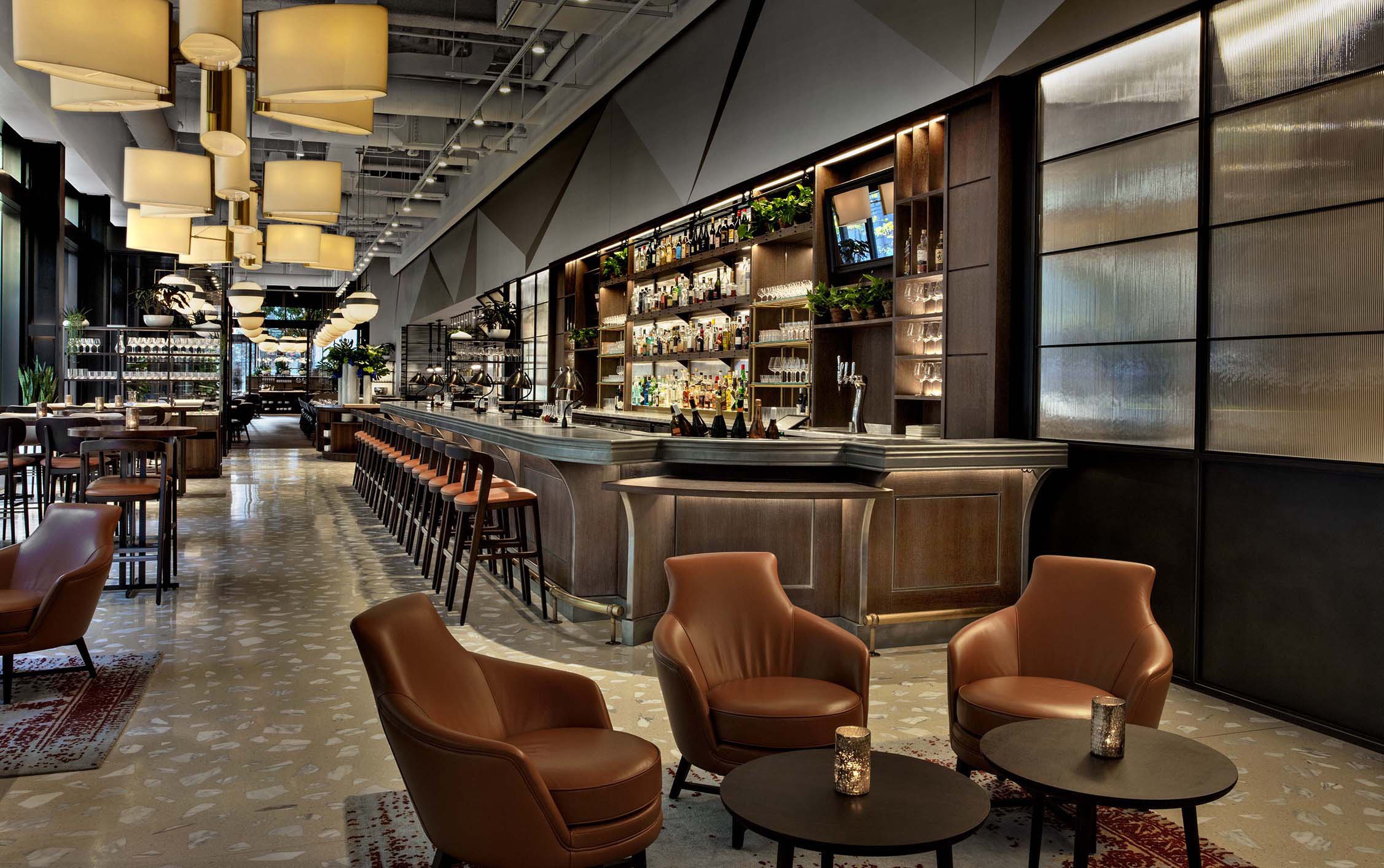
At a Glance
- Elegant
- Modern
- Intimate
- Sophisticated
- Date Night
- Business Dinner
- Group Dining
- Special Occasion
- Open Kitchen
- Craft Cocktails
Current opening hours
- Monday
- 11:30 AM–2:30 PM, 4:30–9:30 PM
- Tuesday
- 11:30 AM–2:30 PM, 4:30–9:30 PM
- Wednesday
- 11:30 AM–2:30 PM, 4:30–9:30 PM
- Thursday
- 11:30 AM–2:30 PM, 4:30–9:30 PM
- Friday
- 11:30 AM–2:30 PM, 4:30–10 PM
- Saturday
- 11:30 AM–2:30 PM, 4:30–10 PM
- Sunday
- 11:30 AM–2:30 PM, 4:30–9:30 PM
Hours can change for holidays and private events. Last verified .
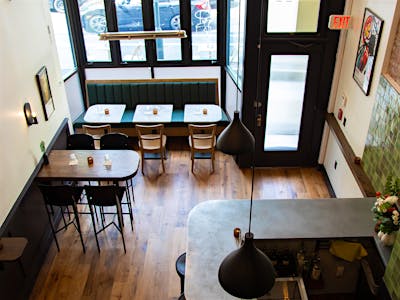
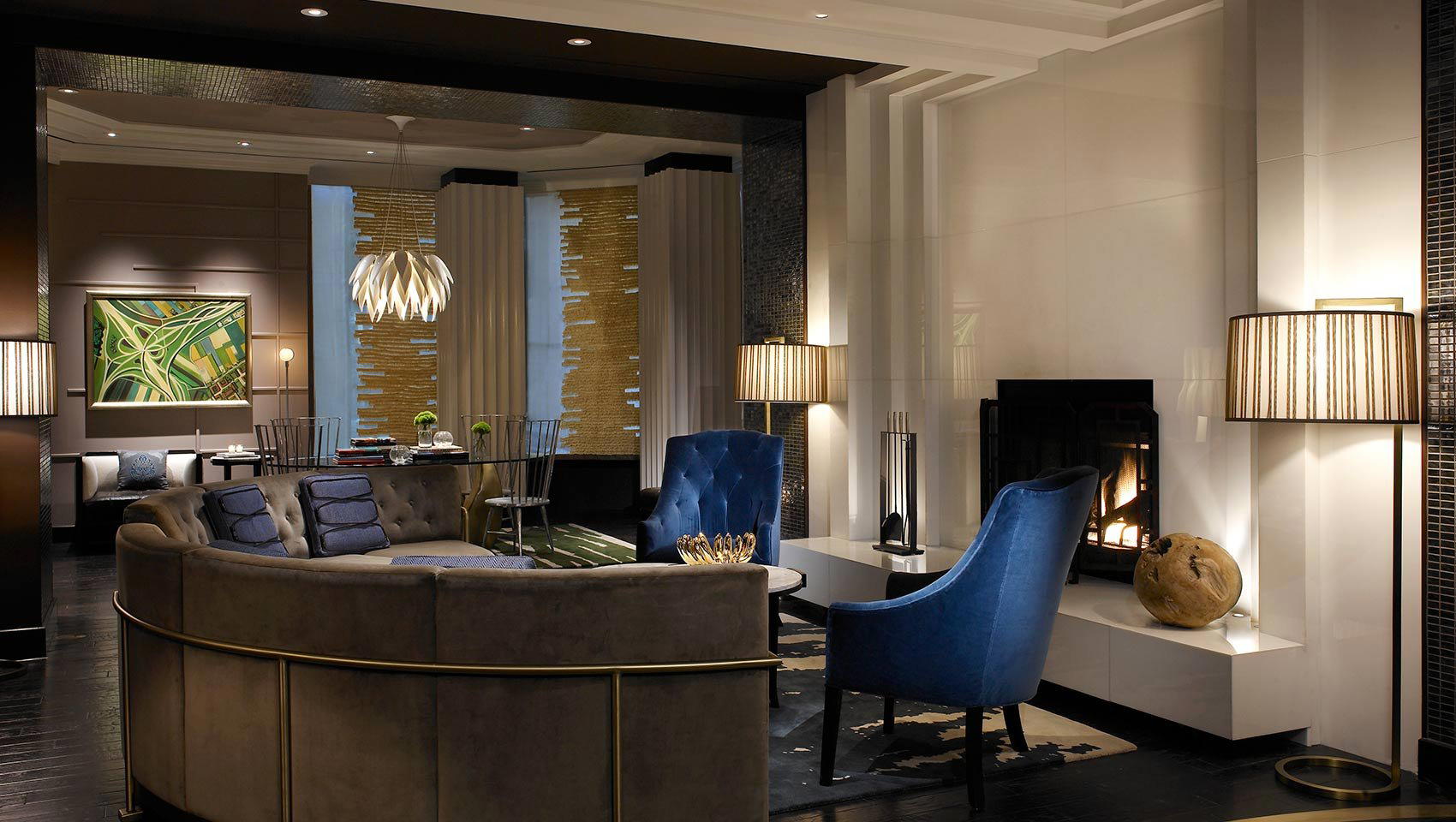
Beautiful monochrome library decor creating an intimate, private feel with light-filled bar area and laid-back yet sophisticated atmosphere.
Know Before You Go
- Getting there
- 1920 Chestnut St, Philadelphia, PA 19103