Umami Taste
On Gallusstrasse in central St. Gallen, Umami Taste addresses a specific gap in the city's dining offer: a kitchen where the fifth taste principle organises the menu rather than decorates it. The address puts it within walking distance of the Old Town's established dining corridor, but the format reads closer to the focused, ingredient-led restaurants gaining ground across German-speaking Switzerland.
Pearl is the En Primeur Club membership app — saves, bookings, and concierge access live there. Same editors, same standards.
- Address
- Gallusstrasse 41, 9000 St. Gallen, Switzerland
- Phone
- +41715702333
- Website
- umami-taste.ch
- Directions
- Get directions
 Saves & bookings on Pearl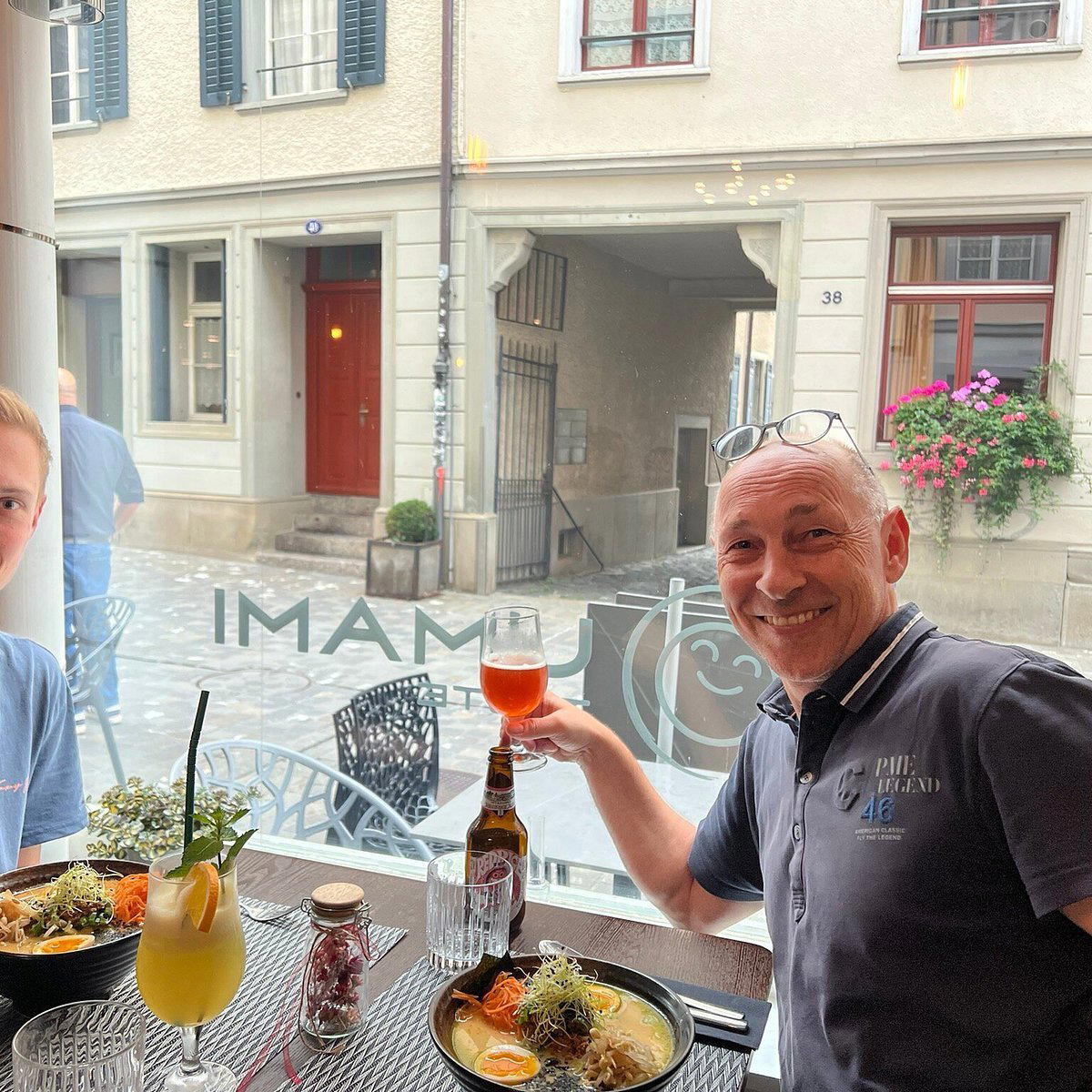
Where St. Gallen's Dining Scene Meets the Sourcing Question
St. Gallen's restaurant culture has long been anchored by its Central European roots, with Am Gallusplatz and Bistro St. Gallen representing the city's confident mid-market tier, and Einstein Gourmet holding down the fine dining end. Between those poles, a smaller group of addresses has been testing whether ingredient provenance can function as the organising logic of a menu rather than simply a marketing footnote. Umami Taste, at Gallusstrasse 41, occupies that middle space.
The name signals intent. Umami as a culinary concept is not a flavour you apply; it emerges from process and from material. Fermented, aged, and slow-cooked ingredients carry it. So do properly raised proteins, dried mushrooms, long-simmered broths, and cured fish. A kitchen that takes the fifth taste seriously tends to be a kitchen that cares where its raw material originates, because shortcut ingredients produce flat results no amount of technique can rescue. That logic, applied consistently, is what separates ingredient-led kitchens from everything else.
The Address and What It Signals
Gallusstrasse runs through a district that connects St. Gallen's commercial centre to its older residential fabric. It is not the obvious tourist corridor of the Abbey district, nor is it the casual, high-turnover zone closer to the main station. Restaurants on this stretch tend to draw a local clientele rather than passing trade, which generally means the format has to hold up to repeat visits rather than relying on novelty. That is a harder test, and it rewards kitchens that keep sourcing discipline consistent across the menu.
For context on what sourcing discipline looks like at the upper end of the Swiss market, it is worth noting what restaurants elsewhere in the country have built on similar principles. Schloss Schauenstein in Fürstenau has made its kitchen garden and regional Alpine producers central to its identity across multiple Michelin stars. Memories in Bad Ragaz works within a similarly ingredient-conscious framework. Even at the Swiss-adjacent end of the fine dining spectrum, venues like Cheval Blanc by Peter Knogl in Basel and Hotel de Ville Crissier in Crissier ground their menus in producer relationships that predate the menu by years. Umami Taste operates at a different scale and price point, but the underlying question it answers is the same: does the food taste like it came from somewhere specific?
The Ingredient-Led Model in Practice
Across German-speaking Switzerland, the restaurants gaining the most critical traction in the mid-2020s share a tendency toward restraint: fewer components per plate, clearer producer attribution, and formats that allow the material to carry the conversation rather than technique alone. That trend has reached St. Gallen through several channels. Blumenmarkt and Baratella both reflect versions of this in the city's current offer, with Banh Mi Bros demonstrating how ingredient focus can operate effectively even within a fast-casual format.
What the umami framework adds to this tendency is a specific editorial lens. Kitchens organised around the fifth taste naturally gravitate toward fermentation programs, aged cheeses and proteins, miso-based preparations, kombu or dried mushroom stocks, and cured or smoked elements. These are not fashionable add-ons; they are techniques that require time, temperature control, and consistent sourcing of base materials. A kitchen that uses them well tends to have supplier relationships that precede the menu cycle, not the kind that get updated when trends shift.
For comparison, the international addresses where this logic operates at its most developed include Atomix in New York City, where Korean fermentation principles drive a tasting menu with multi-year sourcing commitments, and Le Bernardin in New York City, where the precision applied to fish sourcing is the non-negotiable foundation of the kitchen's identity. Closer to the Swiss Alpine context, 7132 Silver in Vals, focus ATELIER in Vitznau, and Da Vittorio - St. Moritz in St. Moritz all demonstrate how regional sourcing can anchor a menu's credibility at the higher end. IGNIV Zürich by Andreas Caminada and Colonnade in Lucerne represent the sharing-format variation of the same ingredient-conscious approach.
Planning Your Visit
Umami Taste sits at Gallusstrasse 41 in central St. Gallen, reachable on foot from the main station in under ten minutes and from the Abbey district in roughly the same time. For a broader map of where Umami Taste fits within St. Gallen's current dining options, the full St. Gallen restaurants guide covers the full range from casual to formal across the city's main neighbourhoods.
How Umami Taste St Gallen compares with similar nearby venues.
| Venue | Cuisine | Price |
|---|---|---|
| Multertor | Modern Cuisine | €€ |
Continue exploring
More in St Gallen
Restaurants in St Gallen
Browse all →
Bars in St Gallen
Browse all →
Hotels in St Gallen
Browse all →

At a Glance
- Cozy
- Trendy
- Casual Hangout
Current opening hours
- Monday
- Closed
- Tuesday
- 12–2 PM, 6–9:30 PM
- Wednesday
- 12–2 PM, 6–9:30 PM
- Thursday
- 12–2 PM, 6–9:30 PM
- Friday
- 12–2 PM, 6–9:30 PM
- Saturday
- 6–9:30 PM
- Sunday
- Closed
Hours can change for holidays and private events. Last verified .
Charming and warm family atmosphere with endearing service.
Know Before You Go
- Getting there
- Gallusstrasse 41, 9000 St. Gallen, Switzerland