Turkey Red
Our verdict
Palmer, Alaska sits inside the Matanuska-Susitna Valley, one of the few places in North America where extreme summer daylight produces vegetables of startling scale and density. Turkey Red works within that agricultural context, drawing on the Valley's farming heritage in a dining room that feels more like a community anchor than a destination restaurant. For visitors arriving from Anchorage, it offers a grounded counterpoint to city dining — local in the most literal sense of the word.

Pearl is the En Primeur Club membership app — saves, bookings, and concierge access live there. Same editors, same standards.
- Address
- 550 S Alaska St, Palmer, AK 99645
- Phone
- (907) 746-5544
- Hours
- Mon ClosedTue–Sat 7 AM–9 PMSun Closed
- Website
- turkeyredak.com
- Directions
- Get directions
The menu
What to order
- Stone hearth pizza
- Alaska seafood pasta
- Prime rib
Dining at the Edge of the Matanuska-Susitna Valley
Palmer, Alaska is not a city that announces itself. The drive north from Anchorage along the Glenn Highway delivers you into a broad agricultural valley flanked by the Chugach and Talkeetna ranges, and the town itself sits quietly at the valley floor, a grid of low buildings and wide streets that still carry the logic of its 1930s agricultural colony origins. It is a place shaped by farming before it was shaped by tourism, and that sequence matters when you are thinking about where and what to eat here. For those exploring the area, our full Palmer restaurants guide maps the broader scene.
Turkey Red sits on South Alaska Street, inside a town where the relationship between restaurant and land is not a branding exercise but a structural fact. The Matanuska-Susitna Valley produces some of the most distinctive agricultural output in the United States: the combination of glacial silt soils, cool temperatures, and up to twenty hours of summer daylight creates growing conditions that push certain vegetables — cabbages, root vegetables, leafy greens — to extraordinary size and density of flavour. A Palmer-area cabbage holds the world record for weight. That is not a marketing detail; it is a climatic reality that any kitchen operating in this valley can draw from if it chooses to engage with local sourcing seriously.
What the Valley Produces and Why It Matters
The farm-to-table framing has become so widespread across American dining that it has nearly lost descriptive value. At establishments like Blue Hill at Stone Barns in Tarrytown or Single Thread Farm in Healdsburg, the sourcing relationship is elaborately documented and built into the premium price architecture. In Palmer, the geography makes the argument differently: there are simply fewer supply chain options, which means the decision to source locally is less a philosophy and more a practical orientation toward what the valley reliably offers.
The Mat-Su Valley's agricultural season is compressed and intense. Growing happens fast under prolonged daylight, and the harvest window is short. Kitchens that work with these rhythms are necessarily seasonal in a way that restaurants in temperate climates often only approximate. What arrives on the plate in July reflects different raw material than what is available in November, and the gap between those moments is wide. This kind of regional constraint, present in colder-climate dining traditions across Scandinavia and northern Canada as much as in Alaska, tends to produce menus with a clearer seasonal logic than those built on year-round supply chains. It is a pattern visible in places like Smyth in Chicago and The Wolf's Tailor in Denver, where seasonal discipline is a deliberate structural choice rather than a geographic inevitability.
Palmer's Dining Context and Where Turkey Red Sits Within It
Palmer is a small city, population under ten thousand, and its restaurant scene operates at a scale that reflects that. It is not a dining destination in the way that Anchorage functions as Alaska's primary culinary hub, and it does not carry the tourist infrastructure that pushes certain coastal Alaska towns toward seafood-forward visitor menus. What it has is a working agricultural community and a visitor corridor that pulls travellers heading toward Hatcher Pass, the Matanuska Glacier, and the broader backcountry of the Mat-Su Borough.
Within that context, a restaurant with genuine roots in local sourcing occupies a different position than it would in a larger city. The competitive reference points are not the tasting-menu counters of urban America, the Le Bernardin tier of New York or the progression-driven formats of Lazy Bear in San Francisco. They are the practical realities of feeding a community that spans agricultural workers, local families, and travellers passing through. A restaurant that does that well, and does it with attention to what the valley grows, is filling a role that matters in a way that is difficult to replicate through import-dependent menus.
For comparison, consider how ingredient-place relationships anchor the identity of restaurants like Frasca Food and Wine in Boulder or Bacchanalia in Atlanta, both of which have built long-term reputations partly through sustained sourcing commitments. In those cases, the sourcing story reinforces a premium positioning. In Palmer, it reinforces something closer to community identity.
Planning a Visit
Palmer sits roughly 42 miles northeast of Anchorage via the Glenn Highway, making it a practical day trip from the city or a natural stop on a longer Mat-Su Valley itinerary. South Alaska Street runs through the commercial core of town, and the address at 550 S Alaska Street places Turkey Red in a walkable section of the downtown area. Hours in smaller Alaska communities frequently adjust between tourist season (May through September) and the quieter winter months, so confirming ahead is advisable particularly if you are travelling outside summer. Visitors combining Palmer with a drive to the Matanuska Glacier or Hatcher Pass should note that the Glenn Highway corridor handles more traffic on summer weekends, and mid-week visits tend to move more smoothly.
For those building a broader Alaska dining picture, Anchorage carries the weight of the state's more ambitious restaurant programming. Palmer's value is different: it offers access to the agricultural source rather than the polished downstream product. That distinction is worth making before you arrive, because it sets the right frame for what you will find. Restaurants anchored in specific place, like Oyster Oyster in Washington D.C. or ITAMAE in Miami, each working closely with particular regional ingredients, tend to reward visitors who come with context about where those ingredients originate. The same logic applies here, in a valley where the soil and the light do something measurably unusual with ordinary crops.
Frequently asked questions
Is Turkey Red child-friendly?
Palmer is a small agricultural community with a relaxed civic character, and Turkey Red's address on South Alaska Street places it in the heart of that everyday local context rather than a formal dining corridor. Nothing in the venue's profile signals a white-tablecloth environment that would make families feel out of place.
What's the overall feel of Turkey Red?
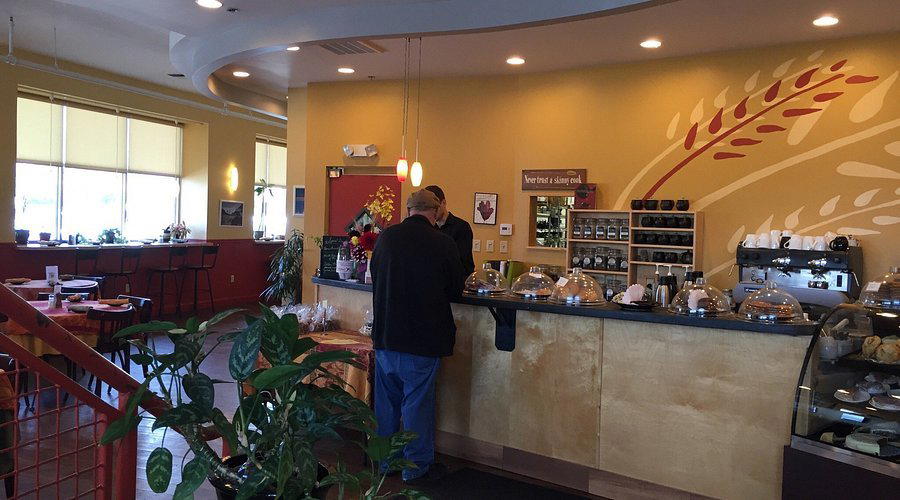
Turkey Red operates in Palmer, a city of under ten thousand people set against the broad agricultural floor of the Matanuska-Susitna Valley. The feel is shaped by that setting: this is a community restaurant in a working valley town, not a destination dining room performing for out-of-town audiences. Expect something closer to a neighbourhood anchor than a special-occasion showpiece.
Is Turkey Red a good dining stop when driving the Glenn Highway between Anchorage and the interior?
Palmer sits roughly 42 miles northeast of Anchorage along the Glenn Highway, which makes it a natural pause point on routes toward Wrangell-St. Elias or the Kenai Peninsula via the long way round. Turkey Red's location at 550 S Alaska Street puts it within easy reach of the main corridor through town. For travellers timing a meal around the drive, Palmer is a practical stop rather than a detour.
What should I eat at Turkey Red?
The surrounding Matanuska-Susitna Valley is one of Alaska's most productive agricultural zones, known in particular for oversized vegetables grown under long summer daylight hours. Checking directly with the restaurant before your visit will give you the clearest picture of what is on the plate.
In Context: Similar Options
Comparable venues nearby, for context on price, style, and recognition.
| Venue | Cuisine | Price | Notes |
|---|---|---|---|
| Turkey RedThis venue — the venue you are viewing | American Eclectic with Local Alaskan Ingredients | $20–30 | Not listed |
| The Bake Shop | American Bakery Cafe | $10–20 | Girdwood |
| Froth & Forage Coffeehouse and Eatery | American Farm-to-Table Cafe | Not listed | Seward Highway |
| Chair 5 Restaurant | American Bar Food with Alaskan Wild Game and Seafood | $20–30 | Girdwood |
| La Baleine Café | Alaskan Farm-to-Table Café | $10–20 | Homer Spit |
| Everest Restaurant | Indian & Nepali | $20–30 | Midtown |
Continue exploring
More in Palmer
Restaurants in Palmer
Browse all →
Details
- Cozy
- Rustic
- Family
- Casual Hangout
- Brunch
- Open Kitchen
- Beer Program
- Farm To Table
- Local Sourcing
- Organic
- A La Carte
- Craft Beer
- Fine Wine
- Vegetarian Friendly
- Vegan Options
- Gluten Free Options
Current opening hours
- Monday
- Closed
- Tuesday
- 7 AM–9 PM
- Wednesday
- 7 AM–9 PM
- Thursday
- 7 AM–9 PM
- Friday
- 7 AM–9 PM
- Saturday
- 7 AM–9 PM
- Sunday
- Closed
Hours can change for holidays and private events. Last verified .
Cozy and welcoming atmosphere with focus on fresh, locally sourced comfort food.