
Michelin Plate
Our verdict
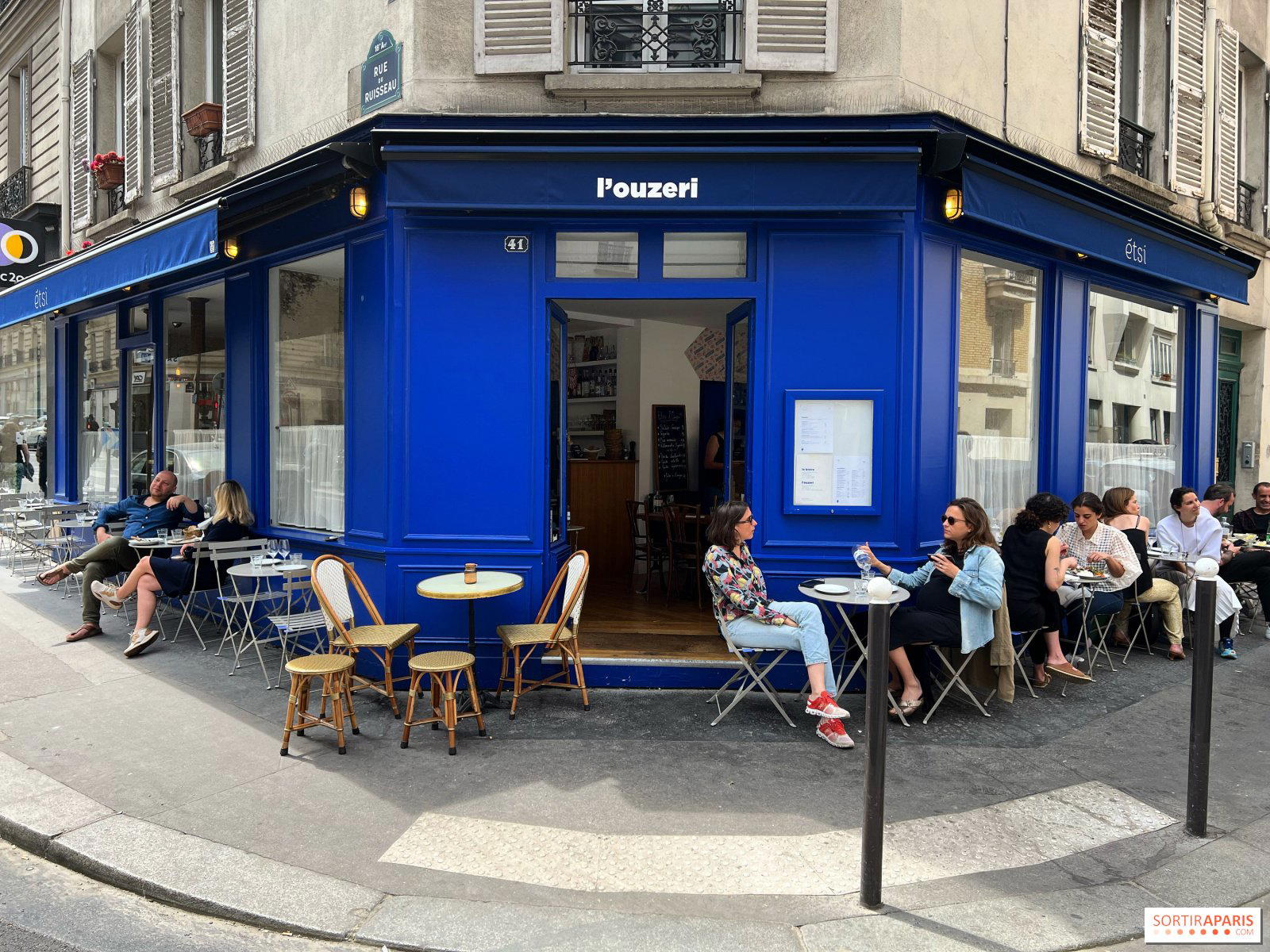
Few restaurants in the 18th arrondissement capture the spirit of Greek taverna culture as directly as étsi - l'ouzeri, the second address from French-Greek chef Mikaela Liaroutsos. Built around shared mezes, traditional music, and the kind of ouzo-forward hospitality that feels borrowed from an Aegean port, it occupies a neighbourhood niche that the grand brasseries of central Paris cannot fill.

Pearl is the En Primeur Club membership app, where members save venues, book tables and use the concierge.
The menu
What to order
- Merida giro
- Saganaki
- Salade de poulpe
- Calamars frits
What the 18th Arrondissement Sounds Like on a Good Evening
Greek restaurants in Paris have long occupied two extremes: the quick-turnover souvlaki counter and the glossy Hellenic dining room pricing itself against the city's Mediterranean competition. The space between those poles, where the food is rooted and the room feels genuinely convivial rather than staged, has been harder to find. Étsi - l'ouzeri, at 41 rue du Ruisseau in the 18th arrondissement, sits in that gap. The soundtrack alone signals the difference: traditional Greek songs play at a volume that suggests accompaniment rather than atmosphere, and on a table loaded with shared plates, a glass of ouzo feels less like an affectation and more like the logical next move.
The venue sits close to chef Mikaela Liaroutsos's original restaurant, the address that established her reputation in the neighbourhood. That proximity matters. Étsi is not a spin-off designed for a different audience; it reads more like a second room serving the same community, formatted for a different occasion. Where her first address required more deliberate dining intent, this ouzeri invites the kind of visit that starts mid-afternoon and extends past any reasonable dinner hour.
The Logic of Mezes in a Parisian Context
The meze format is one of the more honest dining structures in Mediterranean cuisine. Dishes arrive as the kitchen sends them, portions are sized for sharing, and the pacing belongs to the table rather than a set menu clock. In Paris, that format has found a foothold across Levantine and North African kitchens, but the specifically Greek version of it, anchored by saganaki, spanakopita, and the shareable geometry of a gyro merida, carries a different register. The flavours are less reliant on spice complexity and more focused on the quality of cheese, the char on flatbread, and the balance of herb in pastry.
Myzithropita, a cheesecake built on the soft, lightly salty myzithra cheese rather than the cream-cheese base that dominates the French-American version, illustrates how that distinction plays out in practice. It is a dessert that does not need to announce its credentials; regulars know what to expect, and newcomers tend to order it a second time.
The Regulars' Arithmetic
Strongest signal that a neighbourhood restaurant has found its footing is when its regulars develop an unwritten ordering sequence. At étsi, that sequence appears to run predictably: saganaki to open, spanakopita somewhere in the middle, gyro merida as the centrepiece of the table, and the myzithropita as a closer that most tables order regardless of how full they are. That is not an accident of menu design; it reflects dishes that perform consistently enough to anchor a return visit rather than ones that invite exploratory ordering.
Ouzo question is worth addressing directly. In many Parisian contexts, a spirit served before or with food reads as a gesture toward authenticity rather than a drinking choice. At an ouzeri, the ouzo is structural. It is what the format is named for, and the dilution ritual, the gradual louching of clear spirit into milky white as water hits the glass, sets the pace of the meal in a way that wine service at a formal table does not. For regulars, the ouzo marks the transition between arriving and settling in.
Where étsi Sits Against the Wider Paris Dining Map
Paris's restaurant scene has widened considerably over the past decade, and the weight of the city's dining identity is no longer carried entirely by its grand French institutions. The three-Michelin-star tier, represented by addresses like Alléno Paris au Pavillon Ledoyen, Arpège, and L'Ambroisie, anchors one end of the spectrum. Modern French rooms at palace hotels, such as Le Cinq at the Four Seasons George V, and cross-cultural fine dining like Kei define another tier. Étsi operates in an entirely different register: affordable, neighbourhood-specific, and built for frequency rather than occasion.
That positioning is not a lesser version of the above; it is a different function entirely. The same Paris food culture that supports destinations like those institutions also sustains a network of specialist neighbourhood tables where the regulars know the staff by name and the ordering is almost ritual. Étsi has positioned itself to become that kind of address in the 18th, and the meze format makes it structurally suited to repeat visits in a way that a set-menu restaurant cannot be.
For context on how French regional and independent restaurant culture extends beyond Paris, addresses like Flocons de Sel in Megève, Mirazur in Menton, Troisgros in Ouches, Auberge de l'Ill in Illhaeusern, Bras in Laguiole, and Paul Bocuse in Collonges-au-Mont-d'Or all illustrate how deeply embedded the culture of destination dining is across France. Étsi is not competing with that tier, nor is it trying to.
Planning a Visit
The address is 41 rue du Ruisseau in the 18th arrondissement, within reach of the northern end of the line 4 metro or the rue Marcadet corridor. The neighbourhood sits above Montmartre's commercial centre, quieter and more residential in character than the tourist-facing streets around the Sacré-Cœur. Étsi's location near Liaroutsos's original restaurant means the surrounding blocks carry a degree of food-aware foot traffic that sustains independent neighbourhood restaurants, which in practical terms means reserving ahead for weekend evenings. Weekday lunches and early weekday evenings tend to be the more flexible entry points for first-time visitors.
The format, shared mezes, a table-paced structure, and a spirit-forward drinks list, means that étsi rewards a group of three or four more than a solo visit. Two people will eat well, but the table arithmetic of mezes improves with more hands reaching across it. Budget for more dishes than you think you need; the portion calibration on meze plates invites over-ordering, and that is generally the correct decision.
For broader planning around this visit, EP Club's guides to Paris restaurants, Paris bars, Paris hotels, Paris wineries, and Paris experiences cover the wider field. For those tracking the international dimension of French-trained chefs working beyond France's borders, Le Bernardin in New York and Emeril's in New Orleans offer reference points for how French technique travels.
Frequently asked questions
Is étsi - l'ouzeri formal or casual?
Étsi is a neighbourhood taverna in the 18th arrondissement, not a formal dining room. Traditional Greek songs play in the background and the menu runs to saganaki, spanakopita and gyro, the register is relaxed and convivial, closer to a Parisian bistro with a Greek accent than a white-tablecloth Hellenic restaurant.
What's the address for étsi - l'ouzeri?
étsi - l'ouzeri is located at 41 rue du Ruisseau, Paris.
Does étsi - l'ouzeri have a Michelin star or similar recognition?
étsi - l'ouzeri has received recognition including: Saganaki cheese, gyro merida, myzithropita (cheesecake), spanakopita – the menu gives it away: this is French-Greek chef Mikaela Liaroutsos's new Greek taverna, and it's just a stone's throw from the original restaurant that made her name. ….
What do regulars order at étsi - l'ouzeri?
The menu is built around mezes, and the dishes that define the room are saganaki cheese, gyro merida, myzithropita and spanakopita. Ouzo accompanies the meal for those who lean into the full taverna format, and at étsi, that means letting the kitchen set the pace as dishes arrive in sequence.
Just the Basics
Comparable venues nearby, for context on price, style, and recognition.
| Venue | Cuisine | Price | Awards | Notes |
|---|---|---|---|---|
| étsi - l'ouzeriThis venue (the venue you are viewing) | Greek Street Food Mezes | $30–50 | Michelin Plate | Not listed |
| Osmossi - Maison Mavrommatis | Modern Greek Bistro | $50–100 | Michelin Plate | 16th arrondissement, Modern Greek Bistro |
| Les Délices d'Aphrodite | Authentic Greek | $50–100 | Michelin Plate | Latin Quarter, Authentic Greek |
| La Traboule | Modern French Bistronomic | $50–100 | Michelin Plate | Madeleine / Miromesnil, Modern French Bistronomic |
| Hokusaï | Japanese Fusion with Peruvian Accents | $50–100 | Michelin Plate | 16e Arrondissement, Japanese Fusion with Peruvian Accents |
| L'Auberge des Crus | Traditional French Bistro | $50–100 | Michelin Plate | 16ème, Traditional French Bistro |
Recognition history
Dated appearances from independent guides and award organizations, with the underlying list record or original source where available.
Michelin Plate
Michelin · 2026 Michelin Plate
Continue exploring
More in Paris
Restaurants in Paris
All restaurants in Paris →
Bars in Paris
All bars in Paris →

Details
- Lively
- Cozy
- Trendy
- Group Dining
- Casual Hangout
- Special Occasion
- Open Kitchen
- Craft Cocktails
- Small Plates
- A La Carte
- Ouzo
- Retsina
- Vegetarian Friendly
Current opening hours
- Monday
- Closed
- Tuesday
- 7:30–10:15 PM
- Wednesday
- 7:30–10:15 PM
- Thursday
- 7:30–10:15 PM
- Friday
- 12–2 PM, 7:30–10:15 PM
- Saturday
- 12:30–2:15 PM, 7:30–10:15 PM
- Sunday
- 12:30–2:15 PM
Hours can change for holidays and private events. Hours as of .
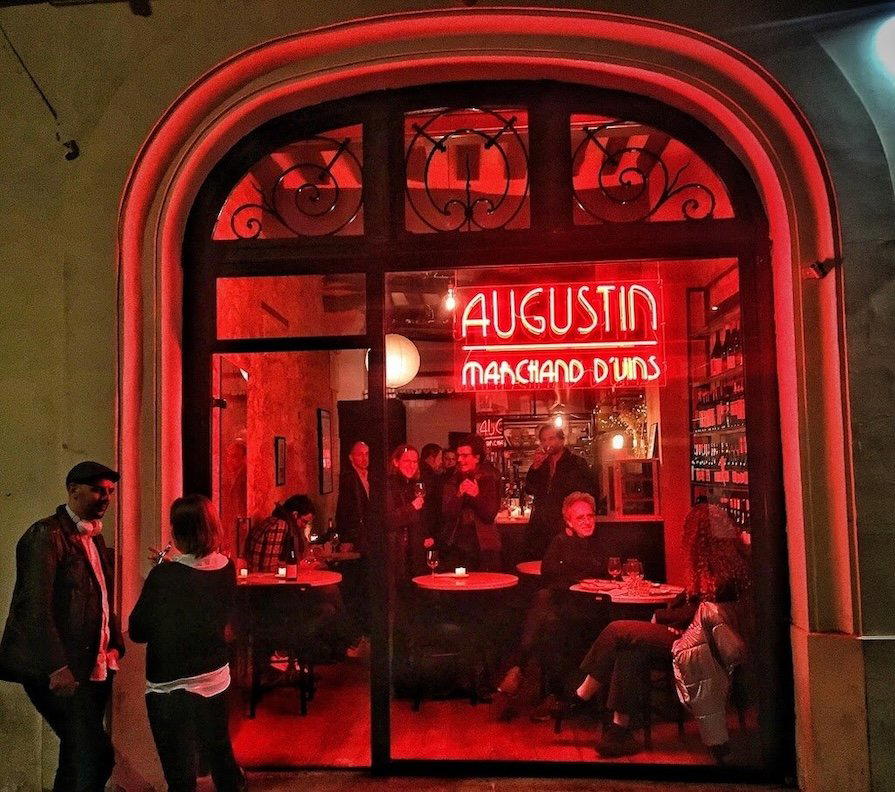
Friendly and welcoming with jamming music, traditional Greek songs, and a busy, authentic atmosphere, though sometimes noisy due to lack of sound insulation.