
Among Paris's small cohort of Greek restaurants holding Michelin recognition, Osmossi - Maison Mavrommatis operates from the first floor of a 16th arrondissement address with consecutive Michelin Plates in 2024 and 2025. The kitchen draws on the Mavrommatis family's decades-long relationship with Hellenic cooking in Paris, translating island and mainland traditions into a format priced at the accessible mid-range of the city's recognised dining tier.
Pearl is the En Primeur Club membership app — saves, bookings, and concierge access live there. Same editors, same standards.
- Address
- 70 Av. Paul Doumer 1er étage, 75116 Paris, France
- Phone
- +33 1 40 50 70 40
- Website
- mavrommatis.com
- Directions
- Get directions
 Saves & bookings on Pearl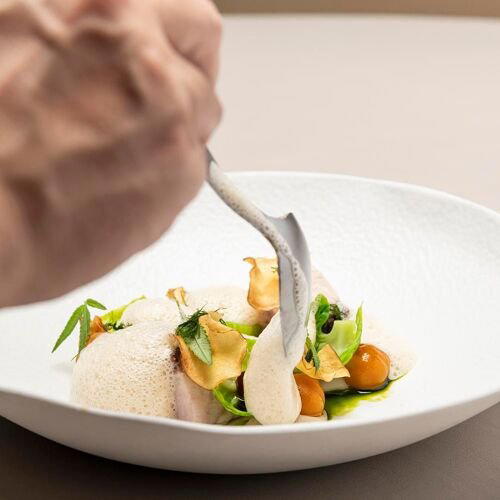
Greek Cooking with Michelin Recognition in the 16th Arrondissement
Paris has supported a serious Greek restaurant scene for longer than most European capitals outside Greece itself. The Mavrommatis name has been part of that story since the 1980s, when the family began building what would become among the more sustained Hellenic dining presences in the city. Osmossi, operating from the first floor at 70 Avenue Paul Doumer in the 16th arrondissement, is the fine-dining expression of that lineage, distinguished from its sibling restaurant Mavrommatis by format and positioning rather than family. Two Michelin Plates, awarded in 2024 and again in 2025, place Osmossi in a small category: Greek restaurants in France with sustained Michelin acknowledgment. That is not a crowded bracket.
The 16th arrondissement address locates the restaurant within one of Paris's more residential, low-traffic dining neighbourhoods, removed from the concentrated Greek presence around the 5th arrondissement, where Les Délices d'Aphrodite and L'Ouzeri operate. The separation is deliberate in positioning terms: Osmossi is not pitching to the neighbourhood taverna circuit.
Island Cooking as a Framework: What Greece's Regional Traditions Bring to the Plate
To understand what a kitchen in the Mavrommatis tradition is working with, it helps to understand how differently Greece's island groups cook. Cycladic cuisine, from islands like Santorini, Mykonos, and Naxos, is defined by constraint and the sea. Fava from Santorini, sun-dried caper leaves, tomatoes grown in volcanic soil, fish from Aegean waters: the Cycladic kitchen is austere in the leading sense, building complexity from quality of raw ingredient rather than elaboration of technique. Dishes tend toward minimalism, where the provenance of a single element carries the full weight of the plate.
Cretan cooking operates from a different premise entirely. The island's culinary identity is among the more documented in Greece, built around wild greens (horta), aged cheeses like graviera and anthotyros, slow-braised meats, and a pantry shaped by centuries of Venetian, Ottoman, and Byzantine influence. The Cretan table is generous and layered in a way that Cycladic cooking typically is not. Olive oil use is prolific. The herb profile, including dictamo (dittany of Crete), adds distinctly local character unavailable from mainland sources.
The Ionian islands, running down Greece's western coast from Corfu to Zakynthos, carry the strongest Venetian culinary imprint of any Greek region. Sofrito, pastitsada, bourdeto: these are dishes that speak to four centuries of Venetian administration in a way that shapes everything from the use of tomato-based sauces to the preference for wine-braised preparations over simple grilling. Ionian cuisine is especially European-inflected among the Greek regional traditions, which may partly explain why it translates well to French fine-dining contexts, where the technique and format language is already familiar.
A kitchen working seriously with Greek island traditions has all three of these repertoires to draw from, plus the mainland. The question for any Greek restaurant in Paris operating at the Michelin-recognised tier is how it negotiates between fidelity to regional source material and the expectations of a French dining audience that reads Greece largely through grilled fish and moussaka. Osmossi's Michelin recognition suggests that negotiation is being made successfully.
Where Osmossi Sits in Paris's Greek Restaurant Tier
Paris's Greek dining options span a wider range than is often assumed. At the casual end, the 5th arrondissement offers neighbourhood-oriented cooking at taverna price points. At the other end, Etsi has carved out a reputation for a more contemporary reading of Greek food. Osmossi, priced at the €€ mid-range tier, occupies a position that is more formal than the taverna circuit but not priced against Paris's upper-tier creative restaurants, where addresses like Alléno Paris au Pavillon Ledoyen operate at €€€€. That positioning is significant: it means Michelin-recognised Greek cooking is available here without the financial commitment of the city's grand tables.
Across Europe, the Greek fine-dining tier has been developing rapidly. In London, OMA has become a reference point for what modern Greek cooking can look like in a capital city context. In Athens itself, Akra represents the domestic high end of that same conversation. Osmossi belongs to this broader shift, one in which Greek cuisine is being taken seriously as a fine-dining tradition rather than as a casual ethnic category. The consecutive Michelin Plates are a formal acknowledgment of that standing within the French critical framework, where Greek restaurants have historically received less sustained attention than Italian, Japanese, or Spanish kitchens operating at comparable levels.
France's own fine-dining reference points, from Paul Bocuse to Mirazur, Flocons de Sel, Bras, Troisgros, and Auberge de l'Ill, define what French critics expect from a serious kitchen. Earning Michelin recognition as a Greek restaurant in that context requires meeting those technical and sourcing standards while remaining coherent as a distinct cuisine. Two consecutive Plates indicate Osmossi has been consistent enough to warrant that recognition across multiple inspection cycles.
Planning Your Visit
The restaurant operates from the first floor of the building at 70 Avenue Paul Doumer, in the 16th arrondissement. The €€€ price positioning means the financial commitment is closer to a considered weeknight dinner than a special-occasion splurge. Given the first-floor format, contacting the restaurant directly to book in advance is advisable.
The Short List
Comparable venues nearby, for context on price, style, and recognition.
| Venue | Cuisine | Price | Notes |
|---|---|---|---|
| Osmossi - Maison MavrommatisThis venue — the venue you are viewing | Greek | $$$ | Not listed |
| Etsi | Not listed | $$ | 18th Arrondissement - Butte-Montmartre, Modern Greek-French Fusion Taverna |
| Mieux | Not listed | $$$ | 9th Arrondissement, Contemporary French Bistro |
| Bombance | Le Marais, Modern French Bistronomic | $$$ | Not listed |
| Le Cotte Rôti | Quinze-Vingts, Modern French Bistro | $$$ | Not listed |
| La Table du Château | French | $$$ | Not listed |
Recognition history
Dated appearances from independent guides and award organizations, with the underlying list record or original source where available.
Michelin Plate
Michelin
Michelin Plate
Michelin
Michelin Plate
Michelin
Continue exploring
More in Paris
Restaurants in Paris
Browse all →

Bars in Paris
Browse all →
Hotels in Paris
Browse all →




At a Glance
- Elegant
- Cozy
- Modern
- Sophisticated
- Date Night
- Special Occasion
- Business Dinner
- Open Kitchen
- Extensive Wine List
- Sommelier Led
Current opening hours
- Monday
- Closed
- Tuesday
- 12–2:15 PM, 7–9:30 PM
- Wednesday
- 12–2:15 PM, 7–9:30 PM
- Thursday
- 12–2:15 PM, 7–9:30 PM
- Friday
- 12–2:15 PM, 7–9:30 PM
- Saturday
- 12–2:15 PM, 7–9:30 PM
- Sunday
- Closed
Hours can change for holidays and private events. Last verified .
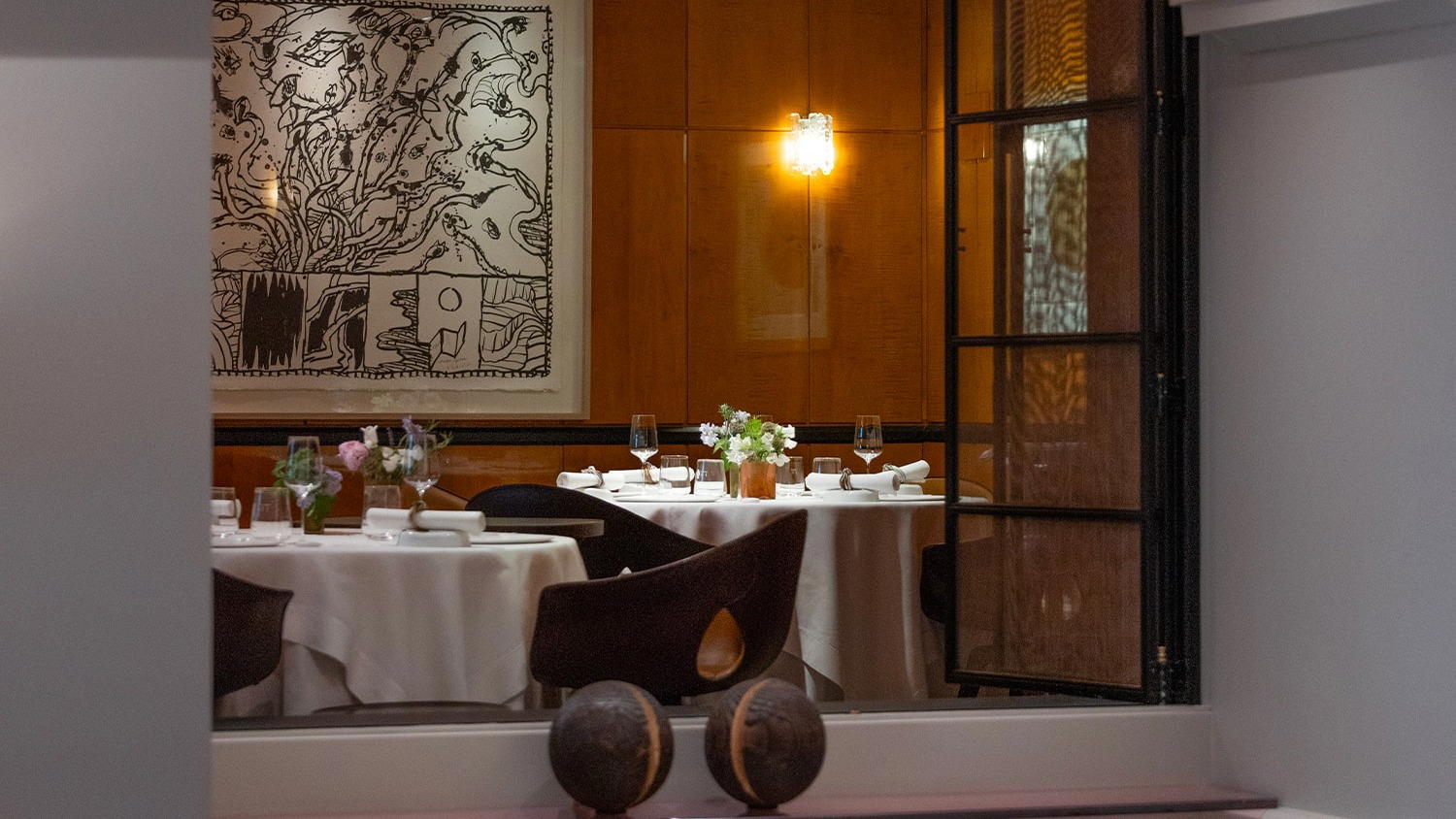
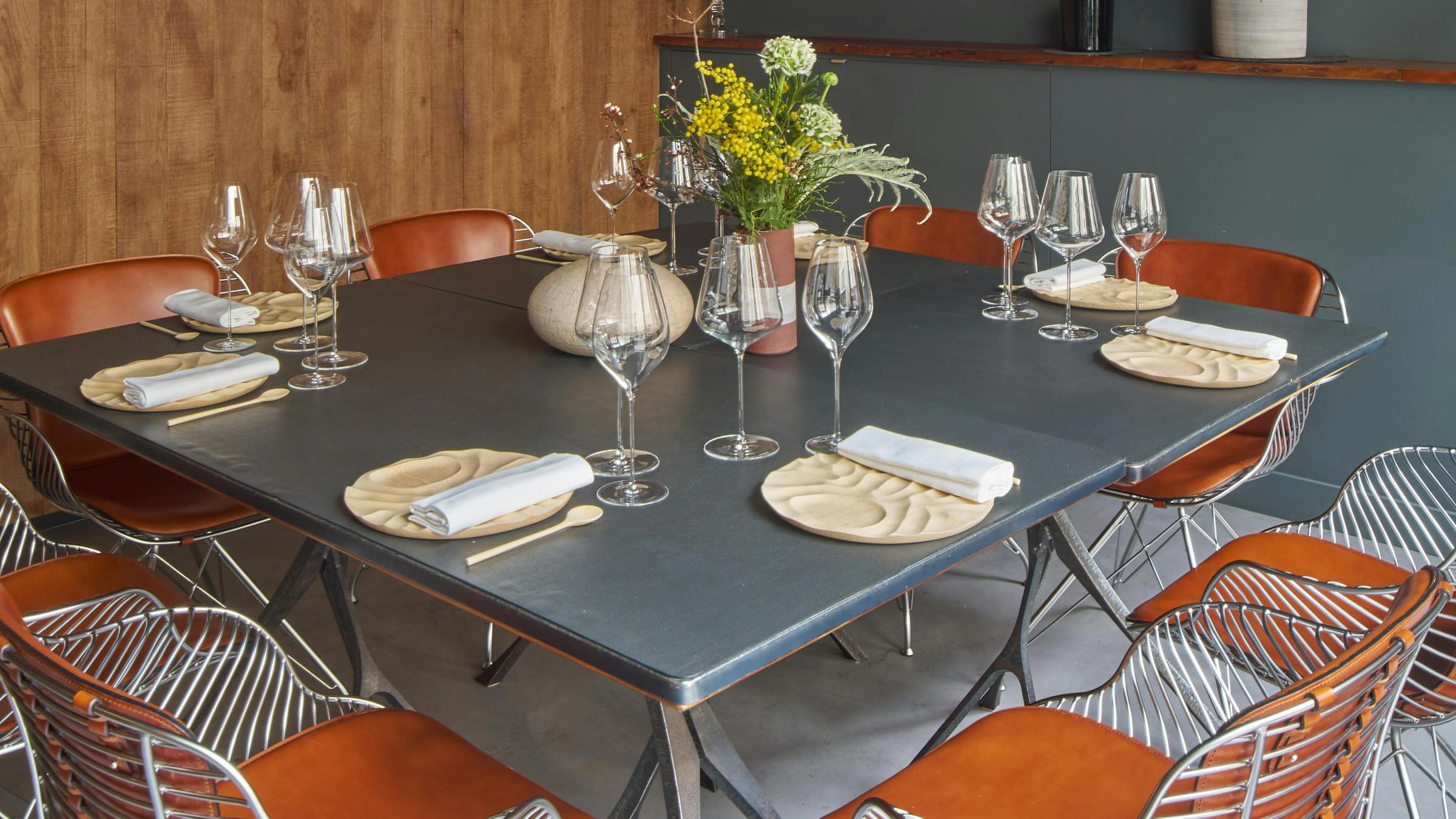
Bright contemporary bistro with natural textures, soft lighting, and an elegant, sunlit atmosphere evoking Greece.