Tsé Fung



1 Michelin Star · Falstaff Restaurant - 93 Falstaff Points
Our verdict
Geneva's sole Michelin-starred Chinese restaurant occupies a terrace-fronted room in Bellevue, where the cooking draws on Cantonese and Sichuan traditions filtered through a family lineage rooted in Shenzhen. The "Diamond" menu anchors the experience around Peking-style duck served across two courses, alongside dim sum of foie gras and wok-based seafood preparations. OAD Classical in Europe ranked it #368 in 2025.

Pearl is the En Primeur Club membership app — saves, bookings, and concierge access live there. Same editors, same standards.
- Address
- Rte de Lausanne 301, 1293 Bellevue, Switzerland
- Phone
- +41 22 959 58 88
- Hours
- Daily 12–2 PM, 7–10 PM
- Website
- lareserve-geneve.com
- Directions
- Get directions
The menu
What to order
- Peking duck
- Dim sum of foie gras
- Fillet of seabass in ginger
Chinese cooking at altitude: Tsé Fung in context
Switzerland's fine-dining scene runs almost exclusively through French, French Contemporary, and Italian idioms. Scan the Michelin-starred tables in Geneva alone and you find L'Atelier Robuchon, Arakel, Il Lago, L'Aparté, and La Micheline — a lineup built almost entirely on European technique and European produce. Against that backdrop, Tsé Fung holds a position with no real equivalent in the city: a Michelin-starred Chinese table, ranked #368 in the 2025 Opinionated About Dining Classical in Europe list, operating at a price point comparable to the city's mid-to-upper European restaurants (€€€).
Across the broader Swiss fine-dining circuit, the competition for Michelin recognition concentrates at institutions like Hotel de Ville Crissier in Crissier, Schloss Schauenstein in Fürstenau, Cheval Blanc by Peter Knogl in Basel, Memories in Bad Ragaz, 7132 Silver in Vals, and Colonnade in Lucerne — all of them rooted in European tradition. Tsé Fung occupies a different tier of comparison: its closest peer restaurants by cuisine and critical standing are places like Restaurant Tim Raue in Berlin or Mister Jiu's in San Francisco, Chinese-rooted fine-dining that earns recognition in cities where European haute cuisine dominates the starred tier. Holding a Michelin star and an OAD ranking in Geneva, where no comparable restaurant exists, makes the credential more specific than the number alone suggests.
The room: terrace, lake, and a deliberately considered interior
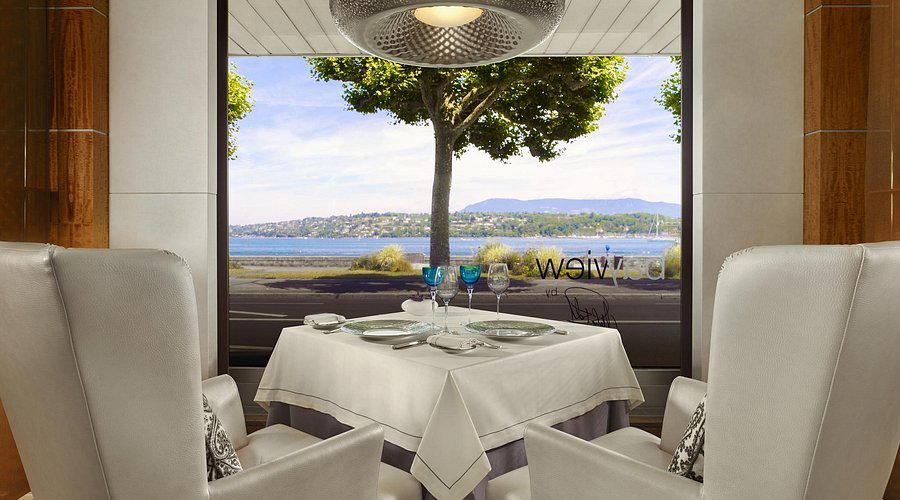
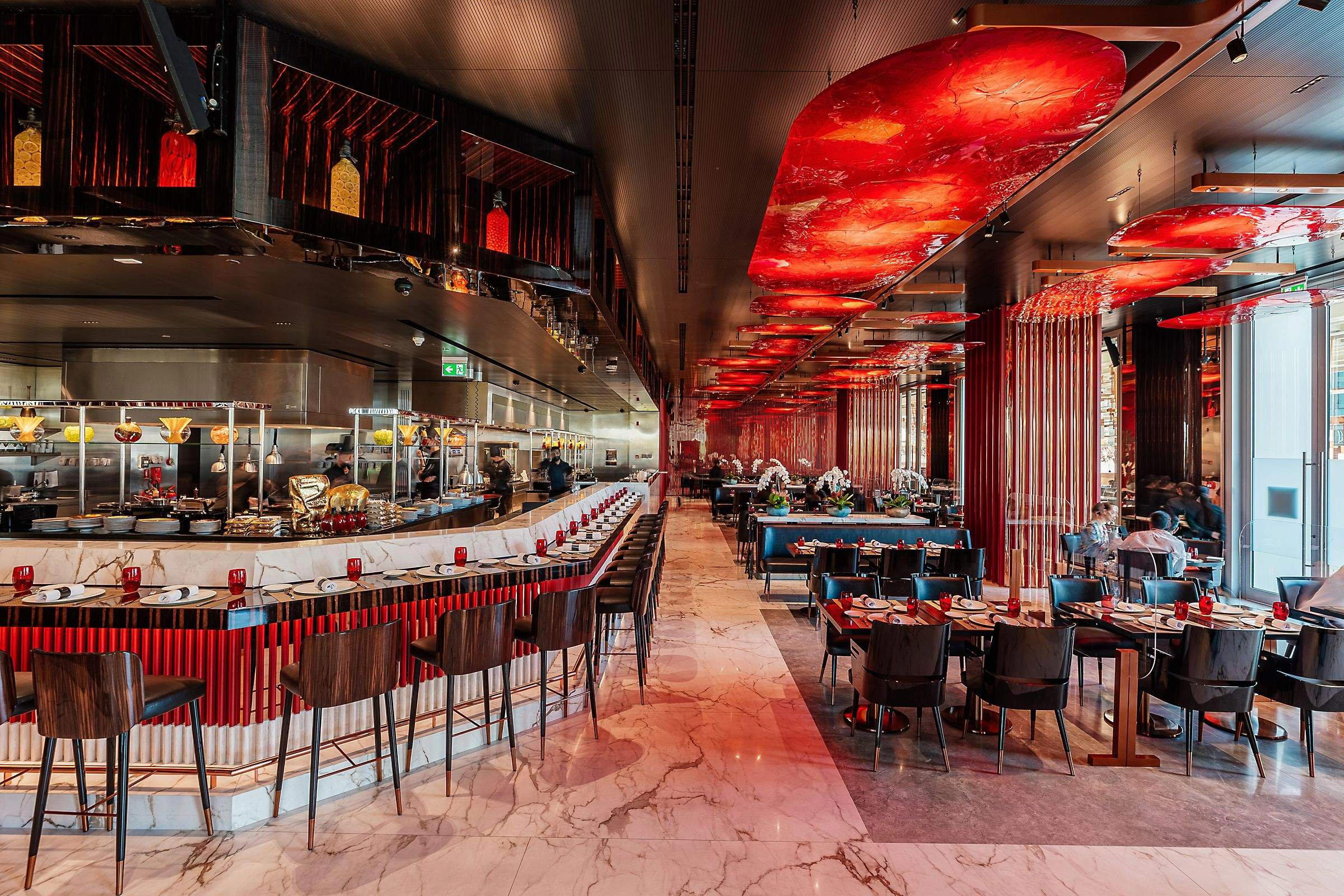
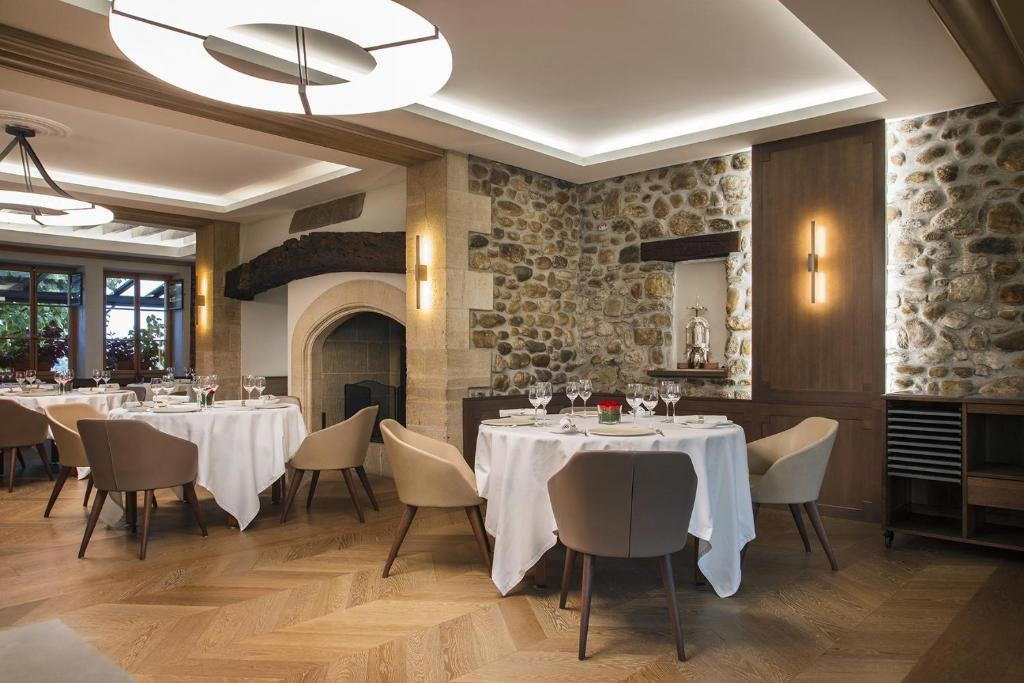
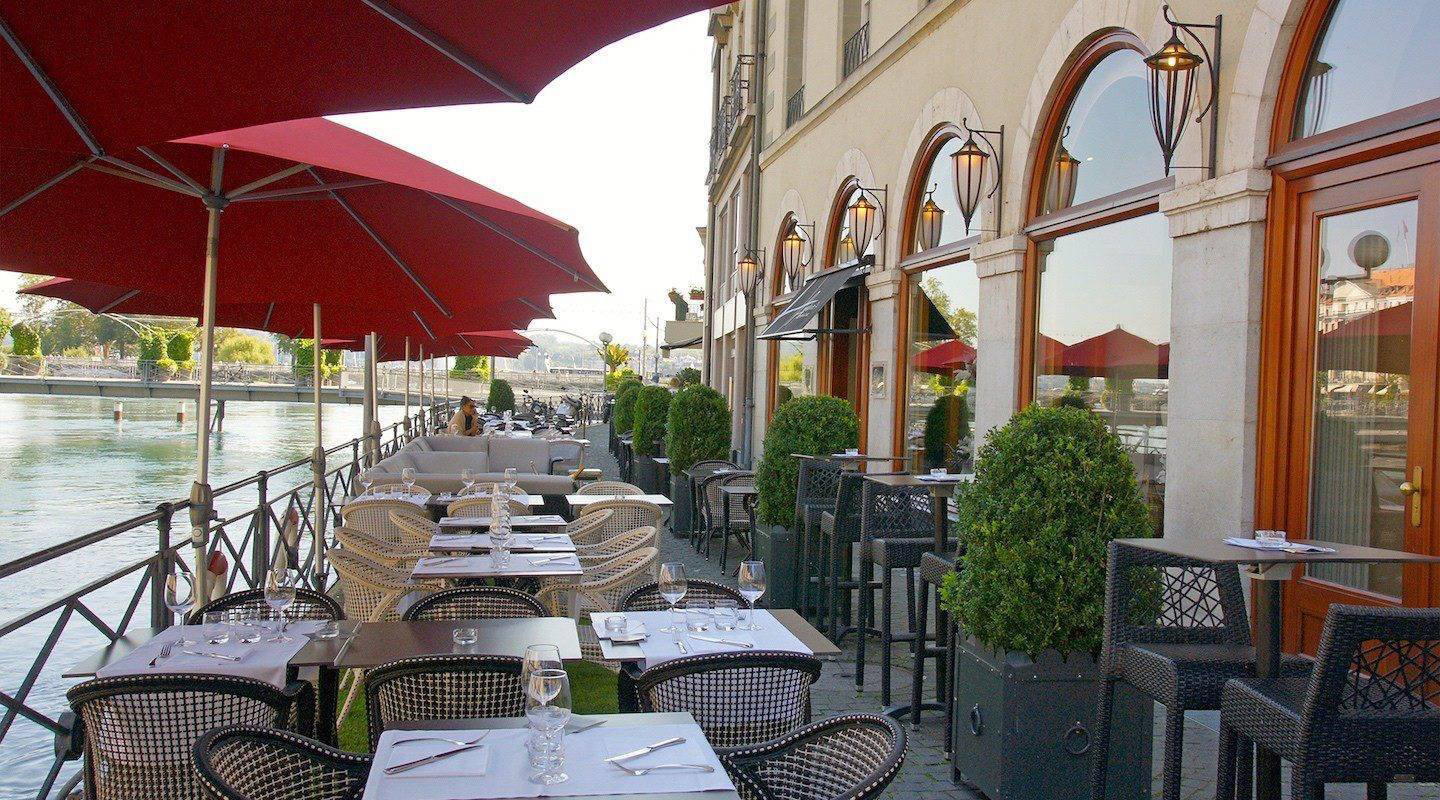
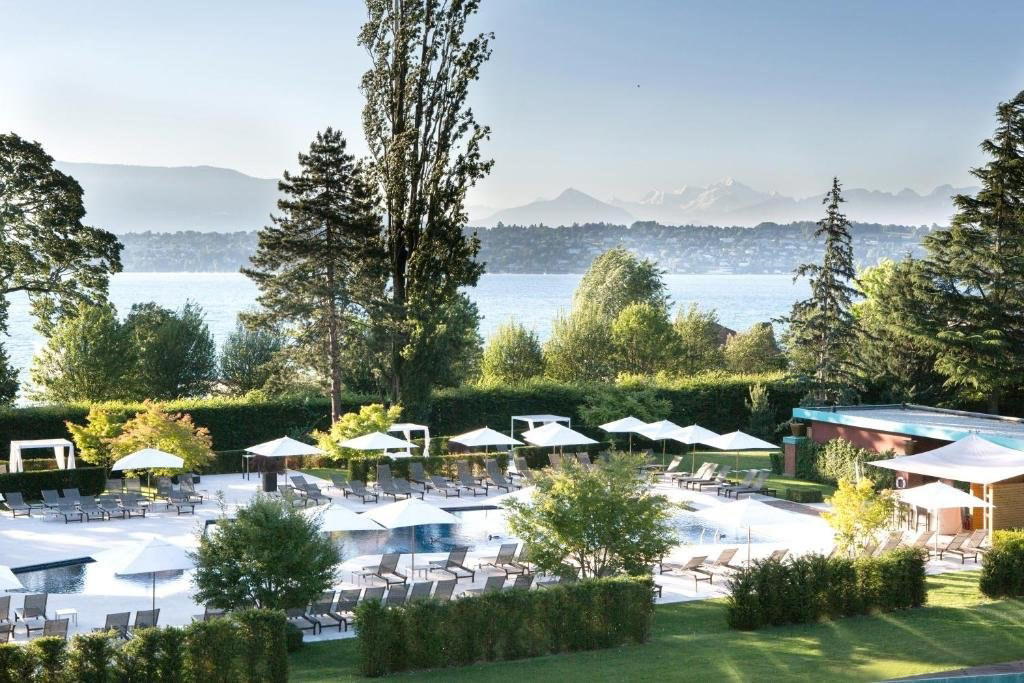
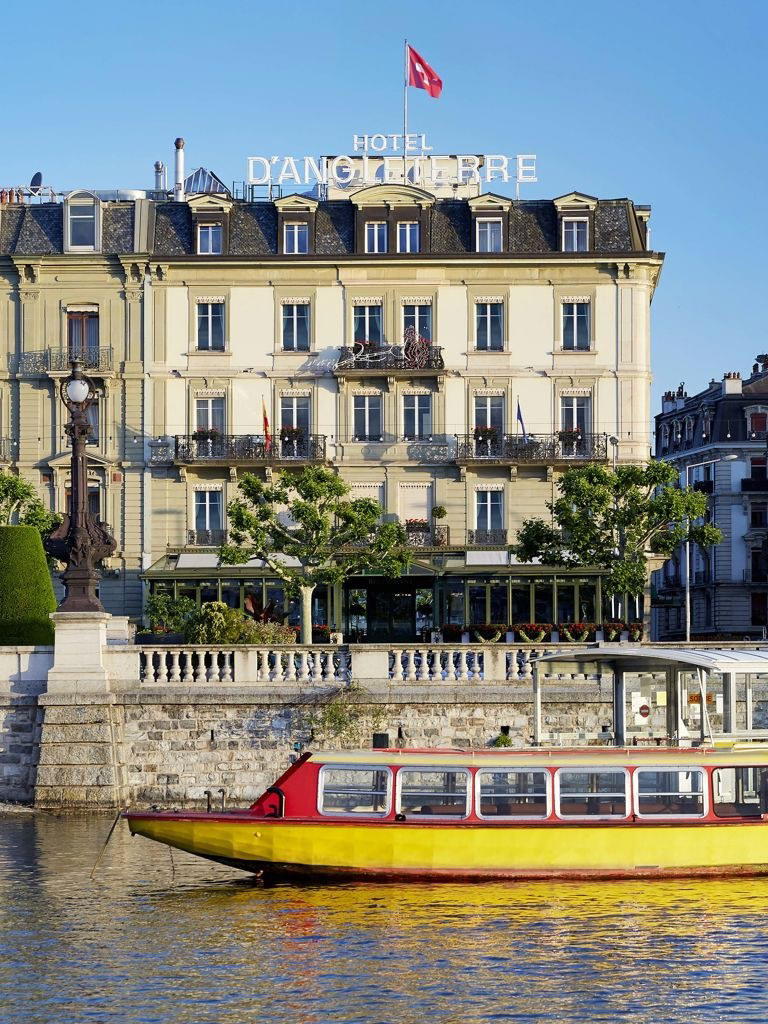
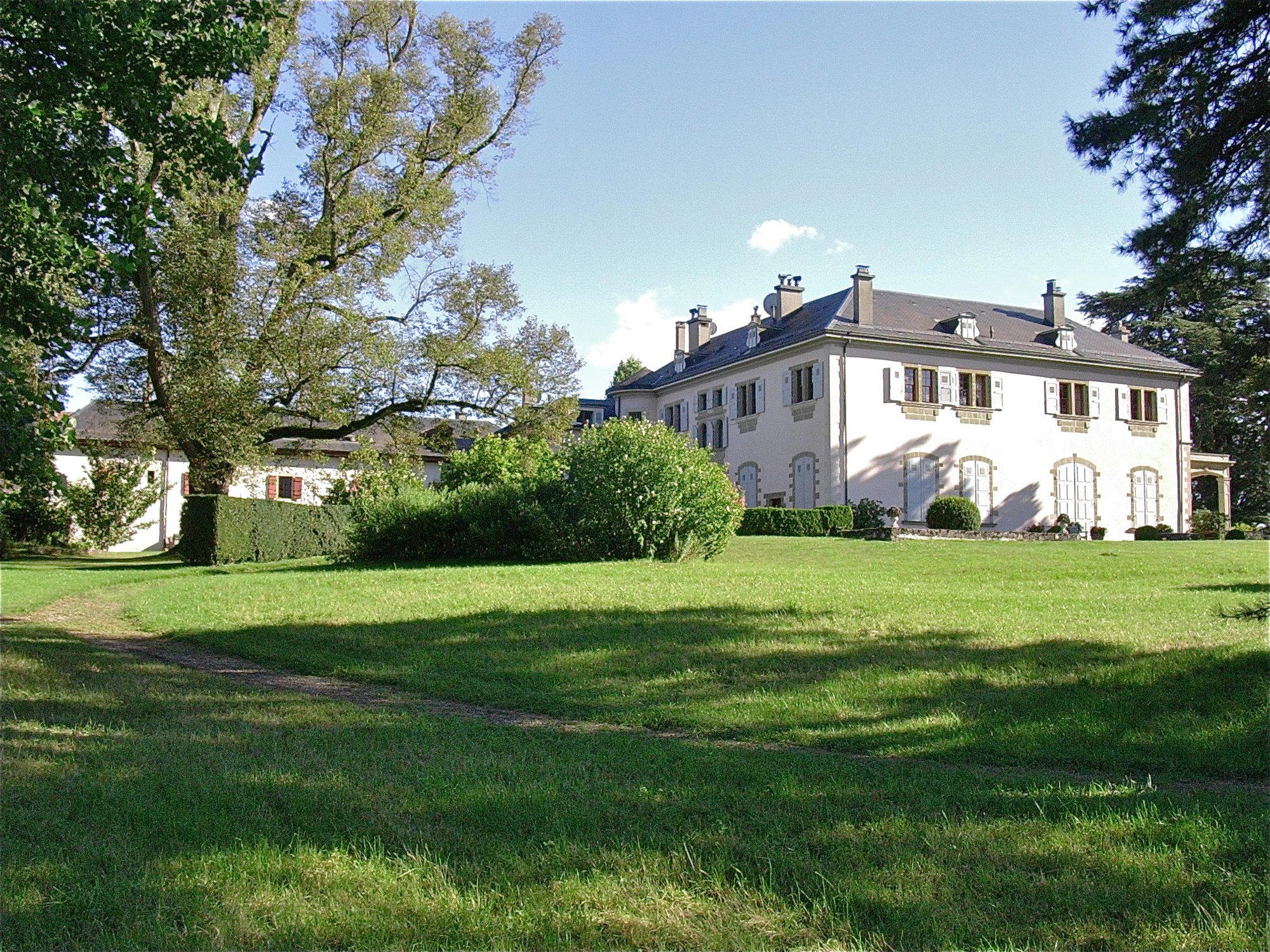
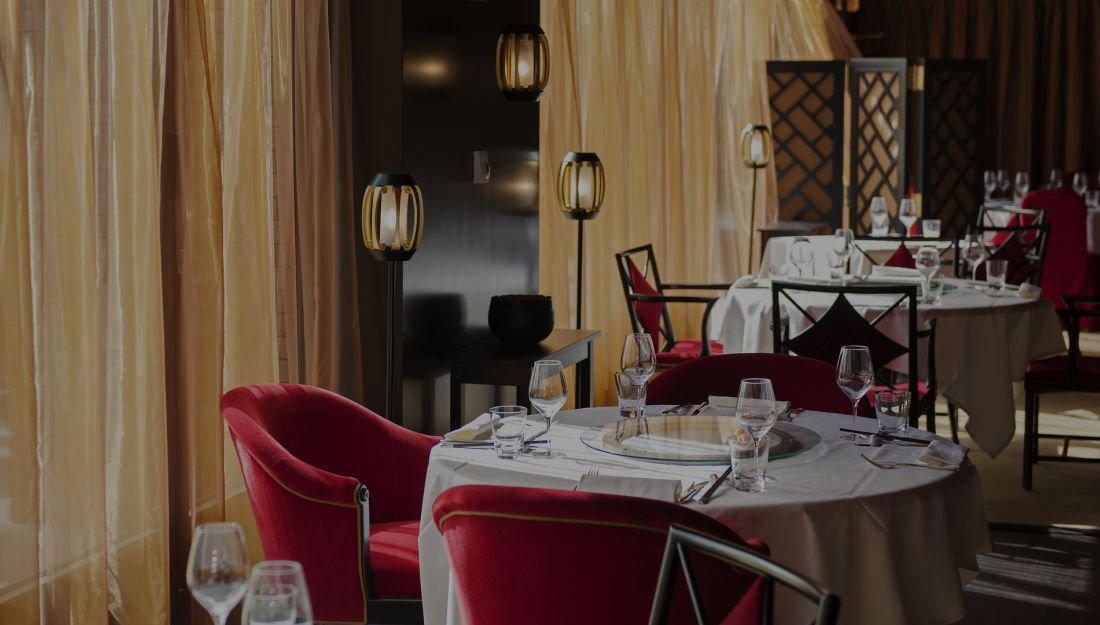
The approach to Tsé Fung, set along Route de Lausanne in the commune of Bellevue just north of Geneva's city centre, frames the experience before any dish arrives. Floor-to-ceiling windows open onto a terrace that overlooks a swimming pool and Lake Geneva, and in the warmer months the terrace functions as the room's primary draw. The interior carries a red, black, and gold scheme, a colour register with deep roots in Chinese decorative tradition, applied here without irony and without being reduced to pastiche. The OAD listing describes the interior as understated and glamorous, a pairing that captures the restraint of the execution. The service model aligns with the setting: attentive without being managed, which is the register most successful fine-dining rooms in Geneva's international-facing hotel and lakeside tier aim for.
Wok hei and the logic of high-heat Chinese cooking
The editorial angle at Tsé Fung is worth examining through the lens of what Chinese restaurant cooking, at its most technically demanding, actually requires. Wok hei, the barely translatable "breath of the wok" that defines the flavour signature of properly executed Cantonese and Shanghainese stir-fries, is a product of extreme heat applied at speed, a BTU output that most domestic and many restaurant kitchens in Europe cannot sustain. The technique demands split-second timing: proteins, aromatics, and sauces need to hit the wok in a sequence calibrated to prevent steaming while achieving caramelisation, smoke, and a clean finish. When it works, the result is a dish that tastes fundamentally different from anything achievable with lower heat, carrying a fleeting scorched-edge intensity that disappears if the wok cools by even a few degrees.
At the starred level, the challenge is integrating that speed-and-heat logic with the pacing and presentation expectations of fine dining. The dim sum of foie gras that appears on Tsé Fung's menu signals one approach to that problem: a preparation that pairs a Chinese format (the folded or wrapped dim sum, often steamed or briefly pan-fried) with an ingredient that anchors the dish in the Western luxury register Geneva's international dining audience recognises. The fillet of seabass in ginger works within a different tradition, Cantonese fish cookery, where ginger acts as both flavour and a vehicle for controlling the heat-transfer rate across the flesh. The shrimps finished with breadcrumbs, garlic, and chili peppers follow a technique closer to the wok-fried preparations of Sichuan and Cantonese crossover cooking, where textural contrast (the crumb) sits against the clean heat of chili and the fat-soluble punch of garlic.
The kitchen operates under chef Frank Xu, whose background traces through a Shenzhen cooking lineage, a provenance that matters in this context. Shenzhen's culinary identity is notably plural: the city draws on Cantonese technique as its base but has absorbed cooking traditions from across mainland China, producing a kitchen culture that is comfortable working across registers. That range is visible in a menu that moves between dim sum, whole-fish preparations, duck served in two courses in the Peking style, and wok-based crustacean dishes.
The "Diamond" menu and the duck as its anchor
The format recommended for a first visit is the "Diamond" menu for two, which places the Peking-style duck at its centre. Peking duck, the lacquered, roasted preparation that requires a hanging and drying period before a high-heat final roast, is one of Chinese cooking's most technically demanding set-pieces. The two-course service format, where the crispy-skinned slices are served first before the remaining meat is prepared in a second preparation (often stir-fried with vegetables or served as a soup), is the classical Peking approach. Executing it at the level a Michelin-starred room requires means the duck is the kitchen's statement dish: the preparation that most directly demonstrates whether the restaurant can hold both Chinese technique and fine-dining plating at once.
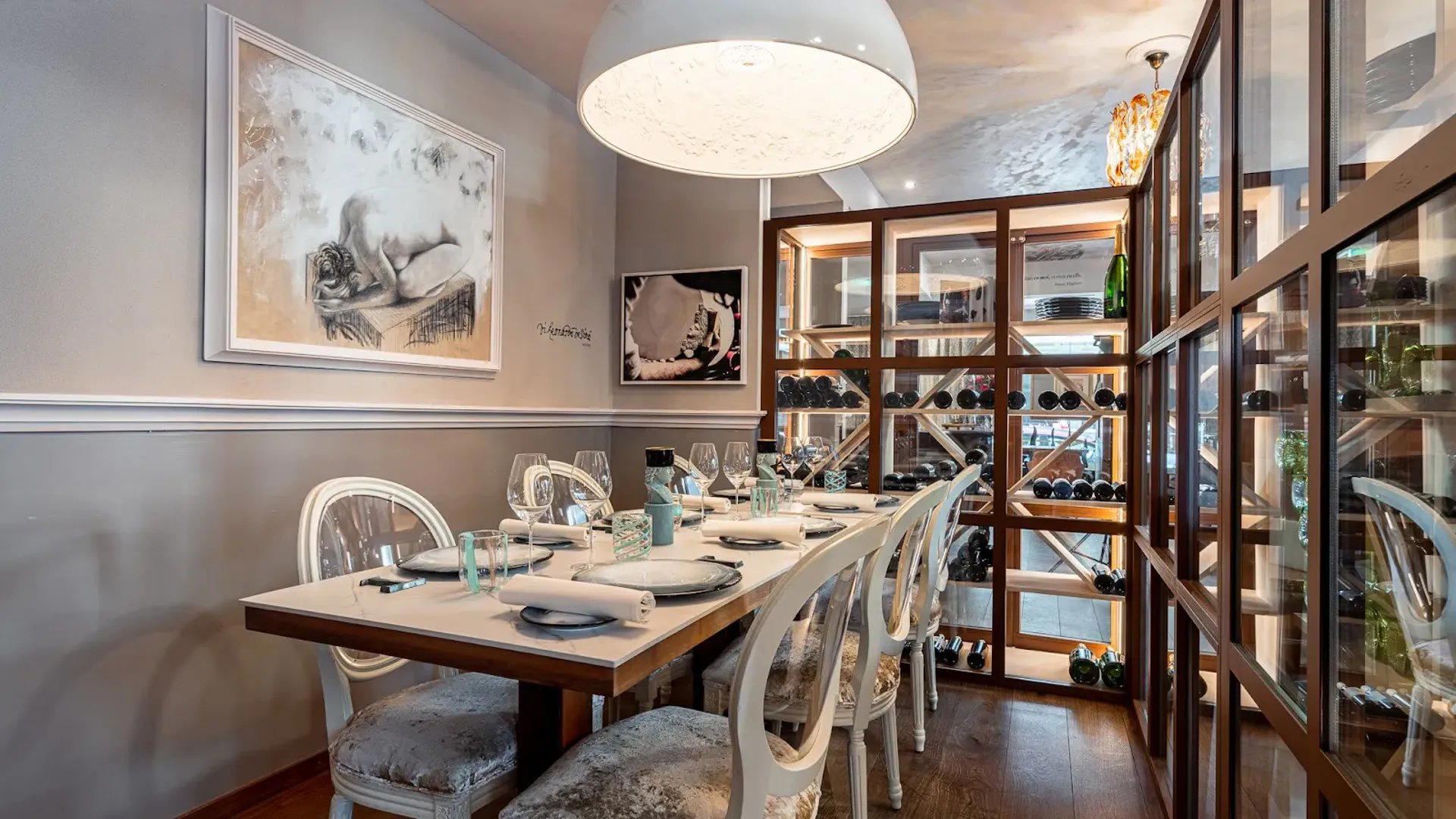
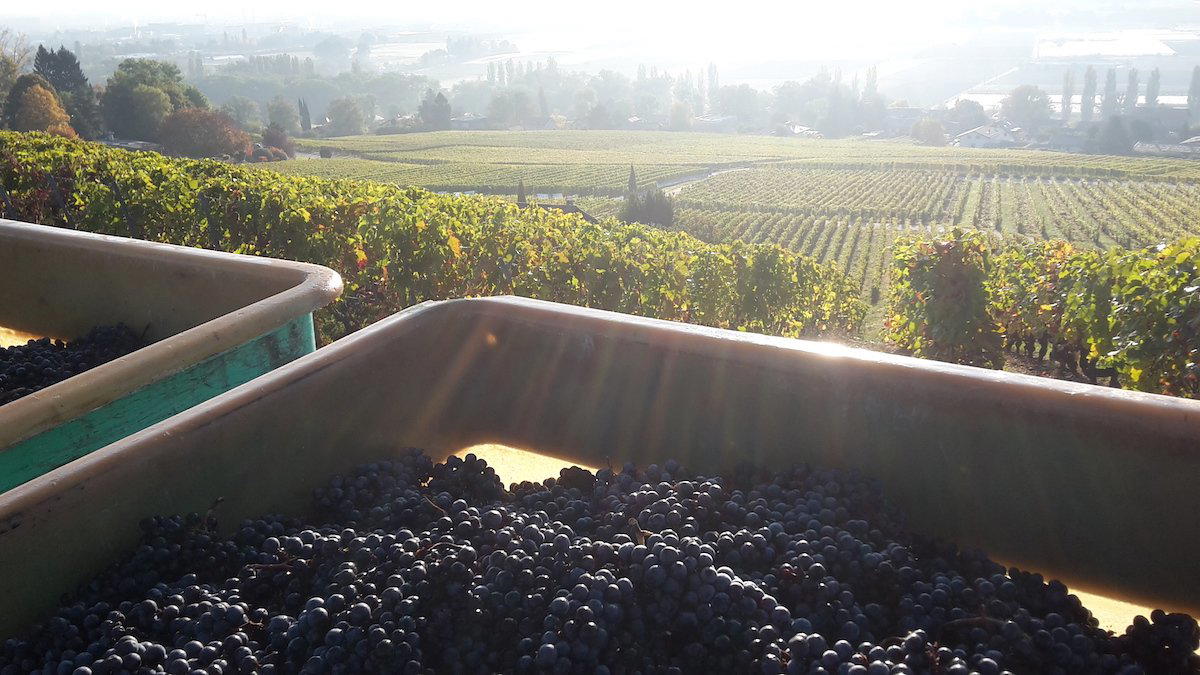
Wine list operates as a secondary editorial statement. Rather than anchoring to a French or Italian programme, which would be the path of least resistance in Geneva, the cellar places Swiss wines at its centre, drawing from what the OAD listing describes as outstanding local wineries. Switzerland's wine production is dominated by Chasselas in the western cantons and Pinot Noir and Merlot in Ticino, with a handful of Gamay and Syrah producers gaining recognition. Pairing Swiss wines with Chinese fine-dining cooking is not an obvious configuration, but Geneva's position in wine-producing country makes it a defensible one, and it aligns the restaurant with the local rather than deferring to the more internationally familiar. Our full Geneva wineries guide covers the regional context in more detail.
Planning your visit
Tsé Fung operates seven days a week with a lunch service running 12 PM to 2 PM and dinner from 7 PM to 10 PM, a schedule that is consistent across the full week and allows the restaurant to anchor both business and leisure dining. The address, Rte de Lausanne 301, 1293 Bellevue, places it in the commune of Bellevue, north of central Geneva along the lake road. The terrace-focused layout means summer reservations, particularly for weekend dinner, warrant booking well ahead. The OAD recognition (ranked for three consecutive cycles: recommended in 2023, then ranked #368 in 2025) provides a reliable signal that the kitchen has maintained consistency rather than delivering a one-cycle performance. For a fuller picture of the city's dining options across cuisine types and price tiers, our full Geneva restaurants guide covers the market. For accommodation planning, our full Geneva hotels guide maps the city's properties, and our full Geneva bars guide and our full Geneva experiences guide extend the itinerary beyond the table.
Frequently asked questions
How do I find Tsé Fung?
Tsé Fung is located at Rte de Lausanne 301, 1293 Bellevue, Switzerland, Geneva.
Who is the chef connected to Tsé Fung?
The chef associated with Tsé Fung is Frank Xu.
What's the must-try dish at Tsé Fung?
The Peking-style duck, served across two courses, is the anchor of the 'Diamond' menu for two and the dish OAD's reviewers single out by name. Frank Xu — whose family background traces to a Shenzhen cooking lineage — also produces foie gras dim sum and shrimp with breadcrumbs, garlic, and chili peppers, both of which appear on the signature roster. For a first visit, the 'Diamond' menu is the format that puts the full range in proper sequence.
What's the cuisine at Tsé Fung?
Is Tsé Fung more mid-range or high-end?
Pricing at Tsé Fung is listed as €€€.
What time does Tsé Fung open and close?
Hours at Tsé Fung: Monday 12 PM-2 PM 7 PM-10 PM Tuesday 12 PM-2 PM 7 PM-10 PM Wednesday 12 PM-2 PM 7 PM-10 PM Thursday 12 PM-2 PM 7 PM-10 PM Friday 12 PM-2 PM 7 PM-10 PM Saturday 12 PM-2 PM 7 PM-10 PM Sunday 12 PM-2 PM 7 PM-10 PM.
Fast Comparison
Comparable options at a glance, pulled from our tracked venues.
| Venue | Cuisine | Price | Awards | Notes |
|---|---|---|---|---|
| Tsé FungThis venue — the venue you are viewing | Michelin-Starred Cantonese | Not listed | 1 Michelin Star · Falstaff Restaurant - 93 Falstaff Points | Not listed |
| Il Lago | Michelin-Starred Italian | $200–300 | 1 Michelin Star · Wine Spectator Best of Award of Excellence | Italian |
| Fiskebar | Nordic Seafood | $100–150 | Michelin Plate | Nordic - Seafood, Modern Cuisine |
| Le Jardinier | Contemporary Seasonal French | Not listed | Michelin Plate | French, French Contemporary |
| L'Atelier Robuchon | Modern French Fine Dining | $200–300 | 2 Michelin Stars · La Liste Top Restaurants | French Contemporary |
| Arakel | Modern French-Swiss Fine Dining | Not listed | 1 Michelin Star · Star Wine List | Modern Cuisine |
Recognition history
Dated appearances from independent guides and award organizations, with the underlying list record or original source where available.
Michelin 1 Star
Michelin
Falstaff Restaurant - 93 Falstaff Points
Falstaff
Opinionated About Dining Classical in Europe Ranked #368
Opinionated About Dining
Full recognition history (6 entries)
Michelin 1 Star
Michelin
Michelin 1 Star
Michelin
Opinionated About Dining Classical in Europe Recommended
Opinionated About Dining