
Tabelog 100 #46
Our verdict
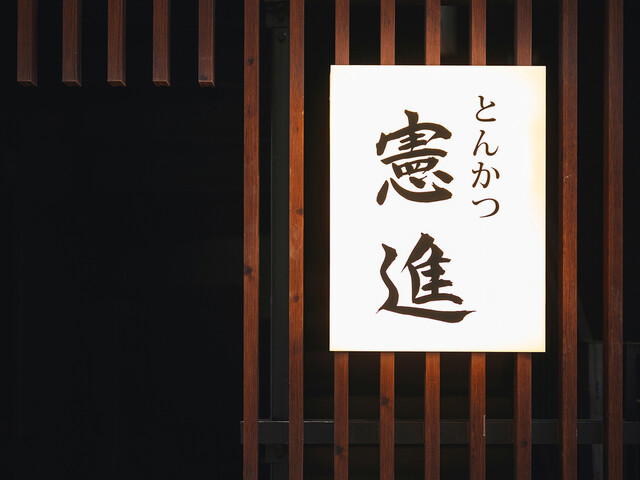
Tonkatsu Kenshin puts Kagurazaka’s pork-cutlet culture into a compact 13-seat format, with Tabelog 100 Tonkatsu 2026 recognition and pricing that sits above casual lunch sets without entering luxury tasting-menu territory. The appeal is menu discipline: tonkatsu as the main argument, sake as the drink cue, take-out as a secondary function, and a room scaled for diners who care about frying technique rather than theatre.

Pearl is the En Primeur Club membership app, where members save venues, book tables and use the concierge.
The menu
What to order
- White tonkatsu
- Hire katsu set meal
- Select-a-pair or trio fried cutlet sets
In Tokyo, Tonkatsu Kenshin presents a focused version of one of the city’s most direct comfort-food forms: tonkatsu, or pork cutlet. The appeal is not a broad luxury script or a decorative dining-room narrative, but a specialist category where timing, oil management, pork selection, and turnover matter more than ceremony. Tonkatsu Kenshin belongs to a Tokyo tradition that looks simple, then turns technical once the cutlet reaches the plate.
Tokyo matters. The city supports everything from fast everyday meals to destination dining, so a pork-cutlet specialist must speak to diners wanting a precise lunch as well as diners treating tonkatsu as the evening’s main event. The listed budget reflects that dual identity: lunch at JPY 2,000 to JPY 2,999, dinner at JPY 4,000 to JPY 4,999. In Tokyo, that sits above basic casual eating while far below many of the city’s most expensive tasting-menu formats.
A compact tonkatsu menu built around the cutlet, not distractions
The menu architecture is the point. Tonkatsu restaurants reveal priorities by how little they add around the pork: rice, cabbage, sauce, condiments, soup, and drinks generally stay in supporting roles. Here the category is explicit, tonkatsu (pork cutlet). It signals a house built around the cutlet as a complete meal, not a broad menu with fried pork treated as one option among many.
Tokyo’s deep tonkatsu culture sits between yoshoku history and Japanese precision. The form is familiar: breaded pork, fried, sliced, served with rice and cabbage. Serious versions depend on variables casual diners may miss: loin versus fillet, bread-crumb texture, oil temperature, resting time, pork thickness, and how the crust holds after slicing. In a focused restaurant, those details have little room to hide. The fryer is not background machinery; it is the engine.
Recognition by Tabelog Hyakumeiten Tonkatsu 2026 is a meaningful trust signal in Japan’s user-driven dining culture. Tabelog’s genre lists matter because they separate specialists by category rather than folding all restaurants into one fine-dining hierarchy. For tonkatsu, that distinction helps: broader international awards rarely define pork-cutlet conversation the way local rankings, repeat customers, and genre-specific recognition do. A 3.70 Tabelog score places the restaurant in a competitive Tokyo bracket against dedicated specialists, not generic Japanese restaurants.
The closest comparisons are not necessarily sushi counters or French tasting rooms, but other narrow-format Tokyo restaurants where one technique carries the experience. Tempura Taku asks diners to judge batter, oil, and sequencing in another fried-food idiom, while Tanimoto, 虎白, VERT, and Private Dining by Chef show how different Tokyo rooms can build identity around focus rather than sprawl. Tonkatsu Kenshin sits in that same technical family: pleasure through repetition done accurately.
Tokyo gives the meal its useful tension
Tokyo’s dining character explains why a focused tonkatsu room works here. The city can absorb a restaurant that is neither simple commuter refuel nor formal counter experience. That range suits tonkatsu, a dish rewarding attention without needing long-tasting-menu solemnity. The pleasure is direct, but the execution is not casual.
The scale of the category shapes access. Tonkatsu is often easy to understand and harder to execute consistently, so the best meals reward a little planning even when the format feels informal. Tonkatsu Kenshin’s listed phone number is +81-3-6826-9862, and its Tabelog recognition means demand may not behave like an anonymous everyday shop. The rules are more approachable than Tokyo’s hardest counters, but the specialist nature still rewards planning.
For a wider Tokyo food itinerary, this stop pairs best with city-led days rather than cross-city sprinting built around too many fixed meals. A tonkatsu lunch can sit alongside Our full Tokyo restaurants guide, while evening routes might branch into Our full Tokyo bars guide or hotel planning through Our full Tokyo hotels guide. Tokyo rewards clustering: one meal can be tightly focused while the rest of the day stays flexible.
That contrast shows across citywide options. Other Tokyo dining rooms may lean into grilled foods, seafood, curry, cafes, or more elaborate tasting formats, but the lesson is the same: the city’s casual categories can be highly specific without adopting fine-dining codes. Tonkatsu fits that pattern perfectly. It is accessible in form, demanding in execution, and memorable when the crust, pork, rice, and timing align.
Who should place it on a Tokyo dining route
This is a strong choice for diners wanting one of Tokyo’s core comfort-food forms treated with specialist seriousness. The practical profile is anchored by the publicly listed category, tonkatsu (pork cutlet), the Tokyo setting, and the published lunch and dinner budgets. Those details do not change the main point: Tonkatsu Kenshin is a focused pork-cutlet address in a city that rewards precise, small-format dining.
The 2026 Tabelog Hyakumeiten Tonkatsu recognition matters. This is not a generic Japanese restaurant being praised in broad terms; it is identified within a specific fried-pork category. In Tokyo’s crowded tonkatsu hierarchy, genre recognition is the more relevant signal, because diners are comparing crust, pork, oil, rice, cabbage, and consistency rather than ambience alone.
Use it when the day calls for a defined meal rather than long ceremony. Diners chasing high-form Japanese cooking can look to comparison points such as Tanimoto, 虎白, VERT, Private Dining by Chef, or Tempura Taku, but tonkatsu asks a different question: how much satisfaction can be built from pork, crumb, oil, rice, cabbage, and timing? In Tokyo, that narrow question is the attraction.
- For broader Japan dining routes beyond Tokyo, compare category-driven meals generically: the same country can move from fried pork to grilled beef, curry, cafes, and other highly focused formats without relying on one fine-dining template.
- For non-restaurant planning around the city, use Tokyo planning resources and keep the meal centered on the genre itself: tonkatsu is one of the clearest examples of how Japanese comfort food can become a specialist destination.
Frequently asked questions
Where is Tonkatsu Kenshin located?
Tokyo.
What's the pricing like at Tonkatsu Kenshin?
Pricing at Tonkatsu Kenshin is listed as JPY 4,000 - JPY 4,999 JPY 2,000 - JPY 2,999, with dinner at JPY 4,000 - JPY 4,999 and lunch at JPY 2,000 - JPY 2,999.
How far ahead should I plan for Tonkatsu Kenshin?
Tonkatsu Kenshin has Tabelog Hyakumeiten Tonkatsu 2026 recognition and a 3.70 Tabelog score, so planning ahead is sensible. For direct confirmation, call +81-3-6826-9862.
What makes Tonkatsu Kenshin worth seeking out?
The draw is specificity: a Tokyo tonkatsu room recognized in Tabelog Hyakumeiten Tonkatsu 2026. Lunch is listed at JPY 2,000–JPY 2,999 and dinner at JPY 4,000–JPY 4,999, which keeps it in a focused, specialist lane for pork cutlet.
What if I have allergies at Tonkatsu Kenshin?
Call the restaurant at +81-3-6826-9862 before you book, then state the allergy clearly when arranging the reservation. Because Tonkatsu Kenshin is a specialist tonkatsu restaurant in Tokyo, advance communication is the safest approach.
Is Tonkatsu Kenshin suitable for children?
Confirm directly with the restaurant before visiting with children. Tonkatsu Kenshin can be reached at +81-3-6826-9862, and the location should be treated simply as Tokyo for planning purposes.
Cuisine and Recognition
Comparable venues at the same tier for side-by-side context.
| Venue | Cuisine | Price | Awards | Notes |
|---|---|---|---|---|
| Tonkatsu KenshinThis venue (the venue you are viewing) | Tonkatsu | Not listed | Tabelog 100 #46 | Not listed |
| Shio Ramen Shinka | Traditional Shio Ramen | $10–20 | Not listed | Machida |
| 虎白 | Modern Japanese Kaiseki | $300–500 | 2 Michelin Stars · La Liste Top Restaurants | Shinjuku |
| Yakitori Doromamire Yotsuya honten | Yakitori & Izakaya | $30–50 | Tabelog 100 #66 | Shinjuku |
| Kirimugi Ya Jinroku | Udon and Tempura | $10–20 | Tabelog 100 #68 | Shinjuku |
| Shimbashi Ippashi | Seafood-focused Japanese Izakaya | $30–50 | Tabelog 100 #91 | Minato |
Recognition history
Dated appearances from independent guides and award organizations, with the underlying list record or original source where available.
Tabelog 100 #46 · No. 46
Tabelog · Tabelog 100 - Tonkatsu - 2026
Continue exploring
More in Tokyo
Restaurants in Tokyo
All restaurants in Tokyo →



Bars in Tokyo
All bars in Tokyo →



Details
- Cozy
- Quiet
- Classic
- Solo
- Family
- Casual Hangout
- Standalone
- A La Carte
- Set Menu
A calm, bright hidden-gem interior that feels relaxed and welcoming rather than flashy, with a modest small-restaurant atmosphere.