
Tabelog 100 #27
Our verdict
Tom Yum Kung. gives Beppu a serious Thai and Asian counterpoint to its onsen-town dining habits: small-scale, ingredient-led, and far more structured than casual curry or izakaya eating. Recognition from Tabelog 100 Asian/Ethnic WEST in 2022, 2023, and 2024, plus a 2018 Michelin Guide Kumamoto Oita Bib Gourmand, puts it in a rare Kyushu category for destination-minded diners.

Pearl is the En Primeur Club membership app, where members save venues, book tables and use the concierge.
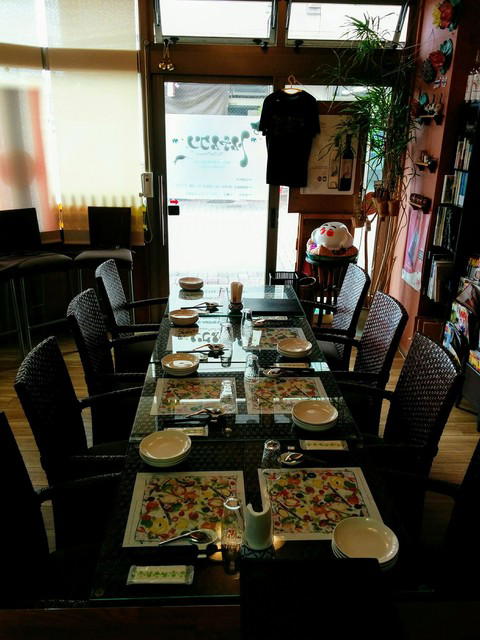
Beppu’s dining rhythm is broader than its station-side drinking streets. Around Tom Yum Kung. the mood fits the city: practical, close to the hot-spring culture that made Beppu famous, yet distinct from hotel buffets and lantern-lit izakaya blocks. In a city where visitors often default to seafood, onsen-steamed vegetables, toriten, or Bungo beef, Thai cooking here feels less like novelty than a pointed itinerary correction. Tom Yum Kung. was selected for Tabelog 100 Asian cuisine / Ethnic cuisine WEST in 2022, 2023, and 2024, and received a Bib Gourmand in the 2018 Michelin Guide Kumamoto Oita.
The distinction is focus. Beppu dining often rewards immediacy: grills, taverns, gyoza counters, and casual seafood rooms for movement between baths and bars. Tom Yum Kung. works in a tighter lane, with Thai, Asian, ethnic, and curry categories rather than the standard local-dining script. In Oita, where the sea is a working pantry, a Thai address gives the city’s food map another register without pretending to replace its local staples.
Thai cooking in Beppu, treated as a focused format
Thai restaurants in Japan usually split between casual urban canteens built around familiar dishes and specialist rooms translating Thai structure through Japanese service expectations. Beppu is not Tokyo or Osaka, so a selective Thai address in Beppu changes the map. Tom Yum Kung. was recognized in the Tabelog Hyakumeiten context for 2024, with a listed score of 3.64. That signal puts it beyond a generic neighbourhood ethnic option.
The venue’s listed categories are Thai, Asian, ethnic, and curry. That combination matters because Thai cuisine depends on acid, herbs, heat, fermented depth, and controlled sweetness, while Japanese regional dining often depends on clarity, season, and ingredient handling. The interest here is not fusion for its own sake, but the way a Beppu meal can step outside the expected sequence of seafood, beef, and casual drinking.
Beppu’s better-known dining references often sit in familiar Japanese lanes. Bungo Beef Steak no Mise Somuri Beppu honten occupies the city’s beef conversation, while other Beppu dining rooms speak to the casual, night-out side of town. Against that field, Tom Yum Kung. is not simply another choice; it is a different tempo, closer to a deliberate specialist meal than a stop between drinks.
Why the format changes the meal
Small, focused restaurants are common in Japan, but the point here is less about size than about intention. Thai food is usually communal in spirit: shared heat, sauces, rice, and pacing. In Beppu, a restaurant built around Thai, Asian, ethnic, and curry categories gives dinner a controlled direction, asking the table to engage with spice, acid, and seasoning rather than simply move through local comfort dishes.
That focus is useful for travellers because Thai seasoning has its own logic. Chilli heat, sourness, herbs, and sweetness do not behave like the flavours of a steakhouse, izakaya, or seafood counter. Choosing Tom Yum Kung. is therefore a technical dining decision as much as a mood decision: it changes what the evening tastes like, and it changes the way Beppu’s restaurant landscape reads.
The 2024 Tabelog Hyakumeiten recognition adds another layer. Sustained attention in a regional Japanese city is a different kind of signal from brief interest in a metropolitan dining district. For Beppu, where many visitors plan around baths first and dinner second, that recognition helps explain why Tom Yum Kung. draws interest beyond the most obvious local-food itinerary.
The comparison set within Beppu clarifies the choice. Norary-Crary, Seafood Izakaya Ren, Karin, Yakiniku Ichiriki, and Bungo Beef Steak no Mise Somuri Beppu honten all point to different ways of eating in the city. Tom Yum Kung. asks diners to choose a narrower, deliberate experience: Thai categories, Asian and ethnic cooking, curry, and a specialist identity over the broader comfort of steak, izakaya, or casual dining.
How it fits into a sharper Beppu itinerary
Beppu rewards visitors who separate daytime bathing culture from dinner planning. The city can look easy from outside, but its stronger meals require deciding the evening: casual drinking, local beef, gyoza, hotel dining, or a smaller specialist room. For the city’s food map, start with Our full Beppu restaurants guide, then use Our full Beppu bars guide if the night is structured around drinks. Travellers pairing meals with ryokan or resort stays should also check Our full Beppu hotels guide.
Within that itinerary, Tom Yum Kung. is better treated as the anchor meal, not a flexible add-on. The category, recognition, and focused cooking point to diners wanting one carefully chosen table rather than a crawl. Other Beppu alternatives change the mood, while Beppu’s wider culture can be mapped through Our full Beppu experiences guide and, for drink-focused travellers, Our full Beppu wineries guide.
The useful comparison beyond Beppu is not another Thai restaurant by name, but Japan’s broader appetite for tightly defined specialists. A cross-country food route can move through many unnamed curry, Vietnamese, cafe, seafood, and compact urban formats. The through-line is not cuisine type, but discipline: small or focused restaurants with a clear point of view rather than catch-all menus.
For international readers, that logic extends beyond Japan as well. Japanese and Asian formats travel best when they retain focus rather than broaden into general-purpose menus. Tom Yum Kung. belongs in that conversation because it proves Beppu’s dining identity is not limited to hot springs, seafood restaurants, and local beef. Its value is the precision of the alternative.
Frequently asked questions
Is Tom Yum Kung. okay with children?
The available listing information does not provide a specific children policy. Treat it as a focused Thai, Asian, ethnic, and curry restaurant in Beppu rather than assuming it is a casual family room.
What kind of setting is Tom Yum Kung.?
Tom Yum Kung. is a Beppu restaurant listed in the Thai, Asian, ethnic, and curry categories. It was recognized in the Tabelog Hyakumeiten context for 2024, with a listed score of 3.64.
Is Tom Yum Kung. expensive?
Pricing at Tom Yum Kung. is listed as Dinner: JPY 8,000 - JPY 9,999; Lunch: JPY 8,000 - JPY 9,999.
Where is Tom Yum Kung. located?
Beppu.
A Quick Peer Check
Comparable venues by cuisine and price in the same metro.
| Venue | Cuisine | Price | Awards | Notes |
|---|---|---|---|---|
| Tom Yum Kung.This venue (the venue you are viewing) | Creative Thai Omakase with Natural Wine | $50–100 | Tabelog 100 #27 | Not listed |
| Norary-Crary | North Indian Spice Restaurant with Taiwanese Breakfast & Moroccan Tagines | $20–30 | Tabelog 100 #29 | Motomachi |
| TANE | South Indian curry & thali | $20–30 | Tabelog 100 #39 | Ekimae Honmachi |
| Yakiniku Ichiriki | Traditional Yakiniku (Japanese BBQ) | $30–50 | Tabelog 100 #70 | Ekimae Honmachi |
| Bungo Beef Steak no Mise Somuri Beppu honten | Bungo Beef Steak / Teppanyaki | $50–100 | Tabelog 100 #74 | Kitahama |
| Ikkyu no Namida | Beppu Cold Noodles (Beppu Reimen) | Not listed | Not listed | Ishigaki Nishi |
Recognition history
Dated appearances from independent guides and award organizations, with the underlying list record or original source where available.
Tabelog 100 #27 · No. 27
Tabelog · Tabelog 100 - Asian cuisine / Ethnic cuisine - WEST - 2024
Continue exploring
More in Beppu
Restaurants in Beppu
All restaurants in Beppu →
Bars in Beppu
Browse all →



Details
- Cozy
- Intimate
- Quiet
- Date Night
- Special Occasion
- Private Event
- Casual Hangout
- Private Dining
- Standalone
- Natural Wine
- Natural Wine
- Tasting Menu
- Omakase
- Prix Fixe
- Natural Wine
- Allergy Accommodating
A quiet hideout-style space with only one table, designed for a relaxed, private experience where guests can focus on inventive Thai fusion dishes and natural wines.