Toloache
Our verdict
Toloache at 251 W 50th St brings Mexican cooking into Midtown Manhattan's competitive dining tier, where the question is no longer whether Mexican cuisine belongs in this company but how well it executes on the intersection of classical technique and indigenous product. The kitchen works a register that separates it from both taqueria-style casual and fusion novelty, positioning it closer to the serious mid-market bracket that defines much of the Theater District's better dining.

Pearl is the En Primeur Club membership app, where members save venues, book tables and use the concierge.

The menu
What to order
- Guacamole
- Lobster tacos
- Quesadilla de camaron
- Tacos chapulines
Mexican Technique in a Midtown Frame
Midtown Manhattan's dining scene has long operated on a clear hierarchy: the four-star French rooms near Sixth Avenue, a cluster of high-concept tasting menus from Atomix and Jungsik New York drawing international attention further downtown, and a wide middle band where Theater District restaurants compete on execution, value, and format. Toloache, at 251 W 50th St, occupies that middle band with a specific argument: that Mexican cooking, built on indigenous ingredients and pre-Columbian technique, can absorb classical European kitchen discipline without losing its identity in the process.
That argument is not unique to this address. Across American cities, a generation of Mexican-heritage kitchens has moved away from the Tex-Mex shorthand that dominated the category for decades, recentering the cooking on chiles, masa, and regional mole traditions while applying the brigade structure and sourcing standards more commonly associated with French or contemporary American dining. Toloache sits inside that broader shift, which makes it legible to a New York dining audience trained on the vocabulary of serious restaurants without requiring any particular loyalty to Mexican food as a category.
Where Indigenous Ingredients Do the Structural Work
The editorial angle that matters here is not fusion, a word that flattens everything it touches, but the specific relationship between imported method and indigenous product. In Mexican cooking at this tier, the product side of that equation is substantial. Dried chiles carry a complexity that functions the way umami does in Japanese cuisine: not as a single flavor note but as a depth modifier that changes how other ingredients register. Mole, the most discussed of Mexico's complex sauces, can involve thirty or more components and hours of preparation; at its serious end, it belongs in the same conversation as the grand sauces of classical French cooking, not as a curiosity but as a technical achievement.
The same logic applies to masa. Where flour-based doughs are relatively forgiving, masa made from nixtamalized corn carries specific texture and flavor characteristics that shift depending on corn variety, grind, and hydration. Getting it right in a New York kitchen, where the corn itself may travel considerable distance, requires sourcing discipline of the kind that restaurants like Blue Hill at Stone Barns have applied to their own product categories. Toloache's position in the Midtown market suggests it is operating at a level where those sourcing decisions matter to the kitchen's overall argument.
The Theater District Context
Block of W 50th St where Toloache sits is defined by pre-theater pressure: a large portion of any given dining room will have tickets for 8 p.m. which compresses service into a specific rhythm and tests a kitchen's ability to maintain quality across rapid table turns. This is not the contemplative pace of a tasting menu counter like Masa or the extended format at Per Se. It is a genuinely difficult operating environment, and Mexican cooking's natural structure, composed plates, proteins with complex sauces, shareable formats, translates well to it. Dishes that can be plated consistently under time pressure without losing the integrity of their components are a practical advantage, not just an aesthetic one.
Restaurants in this neighborhood bracket compete primarily on the reliability of the experience rather than on the novelty of the concept. Diners arriving from out of town, or locals working around a show, are not looking for a challenging experimental meal; they want a kitchen that delivers what it promises, in a room that does not feel rushed even when it is. That reliability is what separates the restaurants in this tier that build long-term reputations from those that cycle through on tourist traffic alone. For context on how this dynamic plays out across the country's serious dining rooms, see what kitchens like Emeril's in New Orleans, Lazy Bear in San Francisco, and Alinea in Chicago have built on long operational track records in their respective markets.
Mexican Cuisine's Position in New York's Competitive Set
New York's restaurant market is unusual in that it has a broad, well-developed serious dining tier across almost every cuisine category, Japanese, Korean, French, Italian, and contemporary American all have multiple entries at the four-star level, but Mexican cooking at the higher end of the price-quality spectrum has taken longer to establish the same density. The reasons are partly historical (the New York Mexican dining scene developed later than in Los Angeles or Chicago), partly about ingredient supply chains, and partly about critical infrastructure: the awards apparatus and press attention that drives reservation demand has historically concentrated on French and Japanese formats.
That is changing. Kitchens applying serious technique to Mexican ingredients are now drawing the kind of scrutiny previously reserved for categories like the progressive Korean cooking at Atomix or the seafood-focused classicism at Le Bernardin. Toloache's long Midtown presence positions it as part of the groundwork for that shift, a restaurant that established the case for serious Mexican cooking in a neighborhood where the default expectation was either French-Continental or generic American. Restaurants at a similar inflection point in their markets include Providence in Los Angeles, Addison in San Diego, and Bacchanalia in Atlanta, each making a case for a cuisine or approach that the local market initially under-indexed.
For travelers building a New York itinerary around serious dining, the broader context across categories is covered in our full New York City restaurants guide. Those tracking the global technical ambition that defines the top end of the current dining moment will also find useful reference points in rooms as different as Single Thread Farm in Healdsburg, The French Laundry in Napa, The Inn at Little Washington, 8 1/2 Otto e Mezzo Bombana in Hong Kong, and Alain Ducasse's Louis XV in Monte Carlo, all kitchens where the dialogue between place, product, and imported technique is the central subject of the meal.
Planning Your Visit
Toloache is located at 251 W 50th St in Midtown Manhattan, within walking distance of several major Broadway theaters, which shapes the rhythm of service on most evenings. Diners planning around a show should time reservations accordingly; early seatings tend to move at a faster pace than later ones. For current hours, reservations, and menu information, contact the restaurant directly or check their official channels, as operational details are subject to change.
Quick reference: 251 W 50th St, New York, NY 10019, Mexican, Midtown Manhattan, Theater District proximity.
Frequently asked questions
What's the signature dish at Toloache?
Toloache's kitchen works within the tradition of composed Mexican plates built on chile-based sauces and masa preparations. What can be said is that kitchens at this tier in the Mexican cooking category typically anchor their identity in mole variations or ceviches that demonstrate both indigenous product knowledge and classical sauce technique.
How hard is it to get a table at Toloache?
In a Theater District location, reservation availability tends to follow predictable patterns: weekend evenings and pre-theater slots (roughly 5:30 to 7 p.m.) carry the most demand, while mid-week lunch and late-evening seatings are generally more accessible. Midtown restaurants at this price-quality tier do not typically carry the same waitlist pressure as destination tasting-menu counters at the level of Masa or Per Se, so planning a week or two ahead is usually sufficient outside peak tourist periods.
What has Toloache built its reputation on?
Toloache's standing in the Midtown market rests on applying consistent kitchen discipline to a cuisine category that New York's dining press and awards infrastructure took time to recognize at this tier. In the context of Mexican cooking in New York City, that consistency over an extended run in a demanding neighborhood represents a form of credential in itself, the restaurant has outlasted many of the concepts that surrounded it at opening, which in the Theater District is not a trivial achievement.
Is Toloache allergy-friendly?
Mexican cooking at this level involves complex sauces with multiple components, including nuts in certain mole preparations and corn-based ingredients throughout the menu, so guests with specific allergies should communicate needs directly to the restaurant before arrival. New York City restaurants at this tier are generally well-practiced in accommodating dietary restrictions with advance notice.
How does Toloache compare to other Mexican restaurants in New York City?
New York's serious Mexican dining tier is smaller than Los Angeles's or Chicago's, which means a restaurant that has held a stable Midtown position across multiple competitive cycles occupies a specific niche: above casual taqueria formats and below the experimental avant-garde register, in the range where technique and product quality are the primary arguments. Toloache's W 50th St address puts it in a neighborhood where the comparison set is defined by longevity and operational reliability rather than by Michelin recognition alone, a different but legitimate measure of standing in a city where real estate and foot-traffic economics are as demanding as critical standards.
At a Glance
Comparable venues nearby, for context on price, style, and recognition.
| Venue | Cuisine | Price | Notes |
|---|---|---|---|
| ToloacheThis venue (the venue you are viewing) | Contemporary Mexican Bistro | $50–100 | Not listed |
| LOLITA | Modern Mexican | $50–100 | Midtown-Times Square, Modern Mexican |
| Limusina | Modern Mexican | $50–100 | Chelsea-Hudson Yards, Modern Mexican |
| Sinigual | Contemporary Mexican | $50–100 | Murray Hill-Kips Bay, Contemporary Mexican |
| Cocina Consuelo | Modern Mexican | $50–100 | Hamilton Heights-Sugar Hill, Modern Mexican |
| Quique Crudo | Mexican Seafood & Crudo | $50–100 | West Village, Mexican Seafood & Crudo |
Continue exploring
More in New York City
Restaurants in New York City
All restaurants in New York City →
Bars in New York City
All bars in New York City →





Details
- Lively
- Trendy
- Sophisticated
- Group Dining
- Brunch
- Late Night
- Celebration
- Open Kitchen
- Craft Cocktails
- A La Carte
- Small Plates
- Tequila
- Mezcal
- Margarita
- Vegetarian Friendly
- Vegan Options
- Gluten Free Options
Current opening hours
- Monday
- 11:30 AM–10:30 PM
- Tuesday
- 11:30 AM–11:30 PM
- Wednesday
- 11:30 AM–11:30 PM
- Thursday
- 11:30 AM–11:30 PM
- Friday
- 11:30 AM–12 AM
- Saturday
- 11:30 AM–12 AM
- Sunday
- 11:30 AM–10:30 PM
Hours can change for holidays and private events. Hours as of .
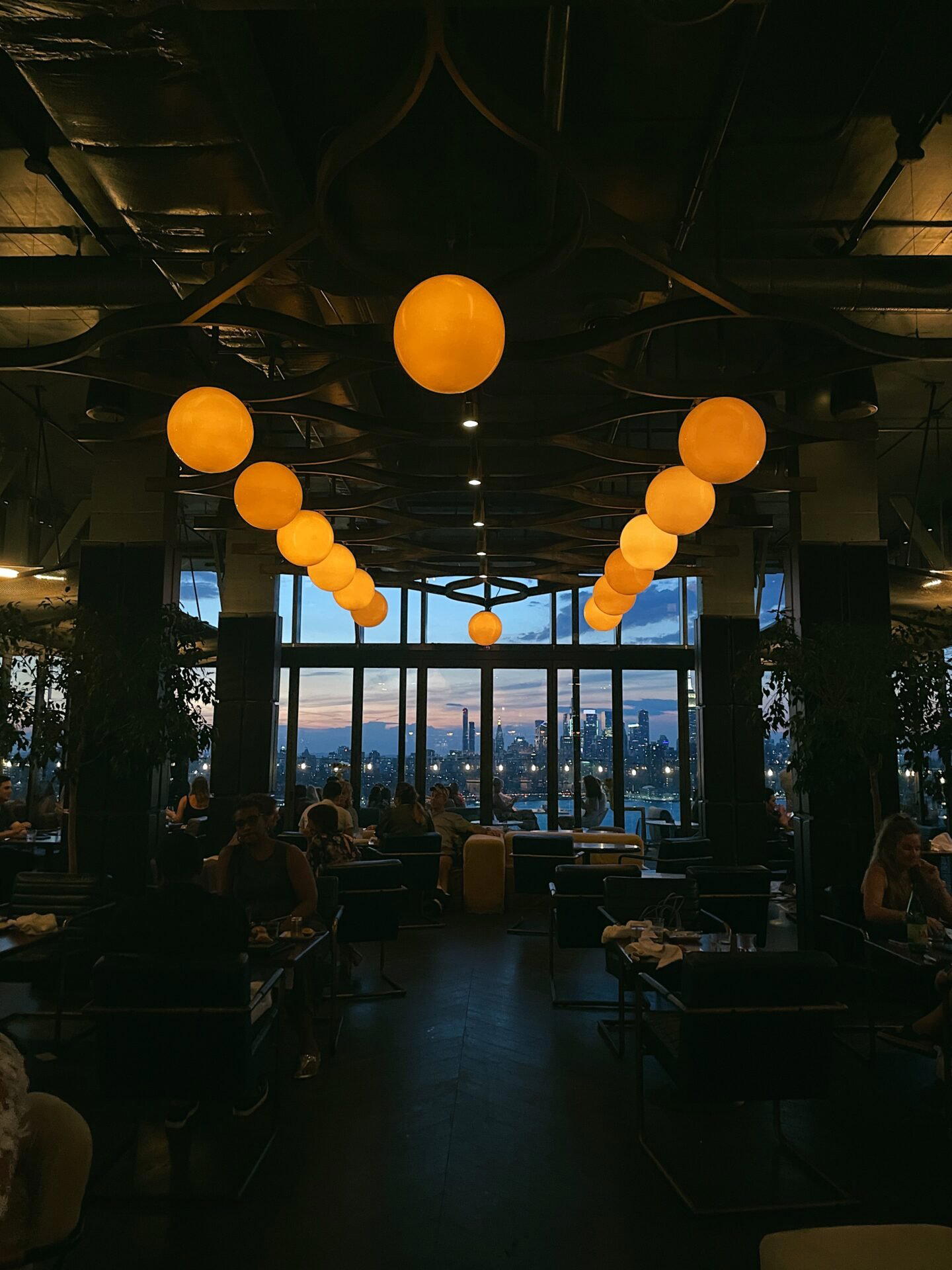
Bustling and lively atmosphere in the Theater District with moderate noise levels, featuring a lively bar area and sophisticated bistro setting.