Tabelog 100 #54
Our verdict
Aichi ramen culture rewards precision at everyday prices, and Tokugawa Cho Josui Nishiharu ten belongs to that serious local tier rather than the luxury dining circuit. Its 2025 Tabelog 100 Ramen AICHI selection, counter-and-table format, and ramen-tsukemen-mazesoba range make it a useful stop for reading how suburban Nagoya-area noodle shops balance speed, repetition, and craft.

Pearl is the En Primeur Club membership app, where members save venues, book tables and use the concierge.
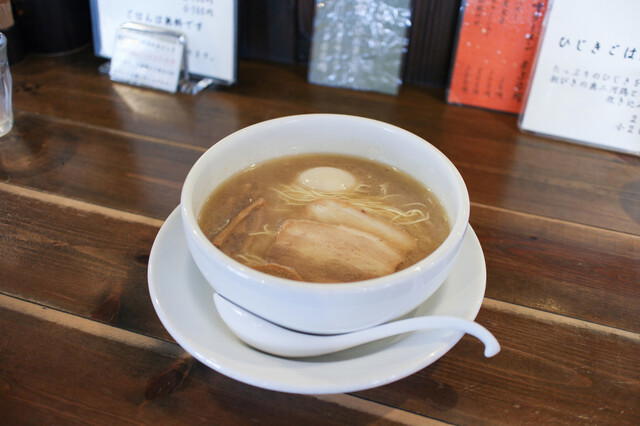
The approach is everyday rather than theatrical: a ramen-focused restaurant in Nagoya, away from the more formal dining formats that shape much of the city’s visitor map. That matters. In Aichi, serious noodle dining is not confined to special-occasion rooms or carefully staged evenings; it can live in practical restaurants where the appeal is direct, repeatable, and closely tied to local eating habits.
Tokugawa Cho Josui Nishiharu ten sits in that pattern. The restaurant’s 2025 recognition through Tabelog’s ramen-focused listings places it among Aichi’s noted noodle specialists, but the format remains firmly accessible: ramen, tsukemen, and Taiwanese mixed noodles, with listed lunch and dinner budgets in the JPY 1,000 - JPY 1,999 range. For travellers using Nagoya as a base, it offers a different reading of the region from the city’s higher-spend dining rooms. For a broader map of the city’s dining range, see Our full Nagoya restaurants guide.
Aichi ramen as a routine, not a performance
Ramen in central Japan has its own grammar. The meal is usually concise, the choices are concentrated, and the strongest shops tend to reveal their priorities through the bowl rather than explanation. Ramen offers the direct pull of broth and noodles; tsukemen adds a slower dipping rhythm; Taiwanese mixed noodles reflect Nagoya’s appetite for assertive, sauce-led bowls without turning the meal into ceremony.
That is the useful context for Tokugawa Cho Josui Nishiharu ten. Its appeal is not built around chef mythology or tasting-menu theatre. It belongs to the category of ramen shop where consistency carries the argument: a focused genre range, a price band that keeps the meal accessible, and enough local recognition to separate it from ordinary convenience dining. The Tabelog score of 3.58 is meaningful in this category because ramen ratings in Japan often compress many serious shops into narrow numerical bands; the 2025 Aichi recognition gives the stronger signal.
The comparison with Nagoya’s higher-spend restaurants is instructive. More formal dining rooms operate in a different decision set, where wine, pacing, and occasion shape the evening. Ramen asks a cleaner question: is the bowl worth the detour, and does the restaurant support the rhythm of regular use? In Nagoya, the answer is tied to utility as much as reputation.
The noodle-shop rhythm
The restaurant is best read through its practical noodle-shop identity, a format that says plenty about the intended experience. This is not a long-form meal built around multiple courses. It is a focused visit shaped by ordering, waiting, eating while the bowl is at its best, and judging the result on flavour, texture, and balance rather than ceremony.
This is where the dining ritual becomes important. Ramen is not a long meal, but it is not casual in the sense of careless. The pacing depends on broth, noodles, toppings, and temperature arriving in sync, and the customer’s role is to meet that timing. Tsukemen changes the tempo by separating noodles and dipping broth; Taiwanese mixed noodles put more emphasis on mixing and texture. Without needing a long menu narrative, those categories show how the shop sits across several local noodle habits rather than a single narrow lane.
Recognition also changes how to read the place. A 2025 Tabelog ramen recognition in Aichi is not the same kind of trust signal as luxury dining, but for ramen it may be more relevant to the decision at hand. It measures the shop inside a competitive prefectural noodle culture, not against formal restaurants. That distinction helps explain why a meal here can matter to a serious traveller even when the price sits in an everyday range.
How it fits into a Nagoya itinerary
Nagoya has more than one dining rhythm, so this is a deliberate ramen stop rather than a meal that should be judged by the standards of a formal night out. That should shape expectations. The value is in seeing the Nagoya food map beyond premium reservations: regional noodle shops, practical dining, and the everyday formats that local diners use repeatedly.
For travellers building a wider food day, this kind of ramen visit pairs better with low-friction planning than with a packed formal schedule. It is not the same occasion as a longer, higher-spend restaurant meal. It is a sharper, shorter meal, useful when the point is to understand Aichi’s noodle culture at ground level. Comparisons with other casual dining in Japan underline the same point: everyday formats can carry serious editorial weight when they express a specific local habit.
Tokugawa Cho Josui Nishiharu ten is strongest for travellers who treat ramen as regional culture rather than a quick substitute for dinner. The draw is the combination of Aichi recognition, accessible pricing, and a listed focus on ramen, tsukemen, and Taiwanese mixed noodles in Nagoya. For the rest of a Nagoya trip, the surrounding guides help separate the city’s other categories: Our full Nagoya hotels guide, Our full Nagoya bars guide, Our full Nagoya wineries guide, and Our full Nagoya experiences guide.
Frequently asked questions
When is Tokugawa Cho Josui Nishiharu ten open?
Opening hours for Tokugawa Cho Josui Nishiharu ten should be checked directly before visiting.
What price level is Tokugawa Cho Josui Nishiharu ten?
Pricing at Tokugawa Cho Josui Nishiharu ten is listed as JPY 1,000 - JPY 1,999 JPY 1,000 - JPY 1,999.
What part of town is Tokugawa Cho Josui Nishiharu ten in?
Nagoya.
What do critics highlight about Tokugawa Cho Josui Nishiharu ten?
The clearest recognition is its 2025 Tabelog ramen listing for Aichi, which gives the shop regional standing. The draw is also practical: a JPY 1,000 - JPY 1,999 price range and a menu built around ramen, tsukemen, and Taiwanese mixed noodles in Nagoya.
A Lean Comparison
Comparable venues to calibrate price, style, and recognition.
| Venue | Cuisine | Price | Awards | Notes |
|---|---|---|---|---|
| Tokugawa Cho Josui Nishiharu tenThis venue (the venue you are viewing) | Ramen shop specializing in salt ramen | $1–10 | Tabelog 100 #54 | Not listed |
| pâtisserie an Du temps pour la maison | Not listed | Not listed | Not listed | JPY 999 |
| Ramen Kazamidori Honten | Not listed | Not listed | Not listed | JPY 999 - JPY 999 |
| Matsuya Choshun | Not listed | Not listed | Not listed | JPY 999 View spending breakdown |
| Shuho | Japanese BBQ (Yakiniku) | $30–50 | Tabelog 100 #79 | JPY 6,000 - JPY 7,999 |
| Yukkuri Wine Shokudo Gocchaponto | Not listed | Not listed | Not listed | JPY 10,000 - JPY 14,999 JPY 6,000 - JPY 7,999 |
Recognition history
Dated appearances from independent guides and award organizations, with the underlying list record or original source where available.
Tabelog 100 #54 · No. 54
Tabelog · Tabelog 100 - Ramen - AICHI - 2025