Tilia
Our verdict
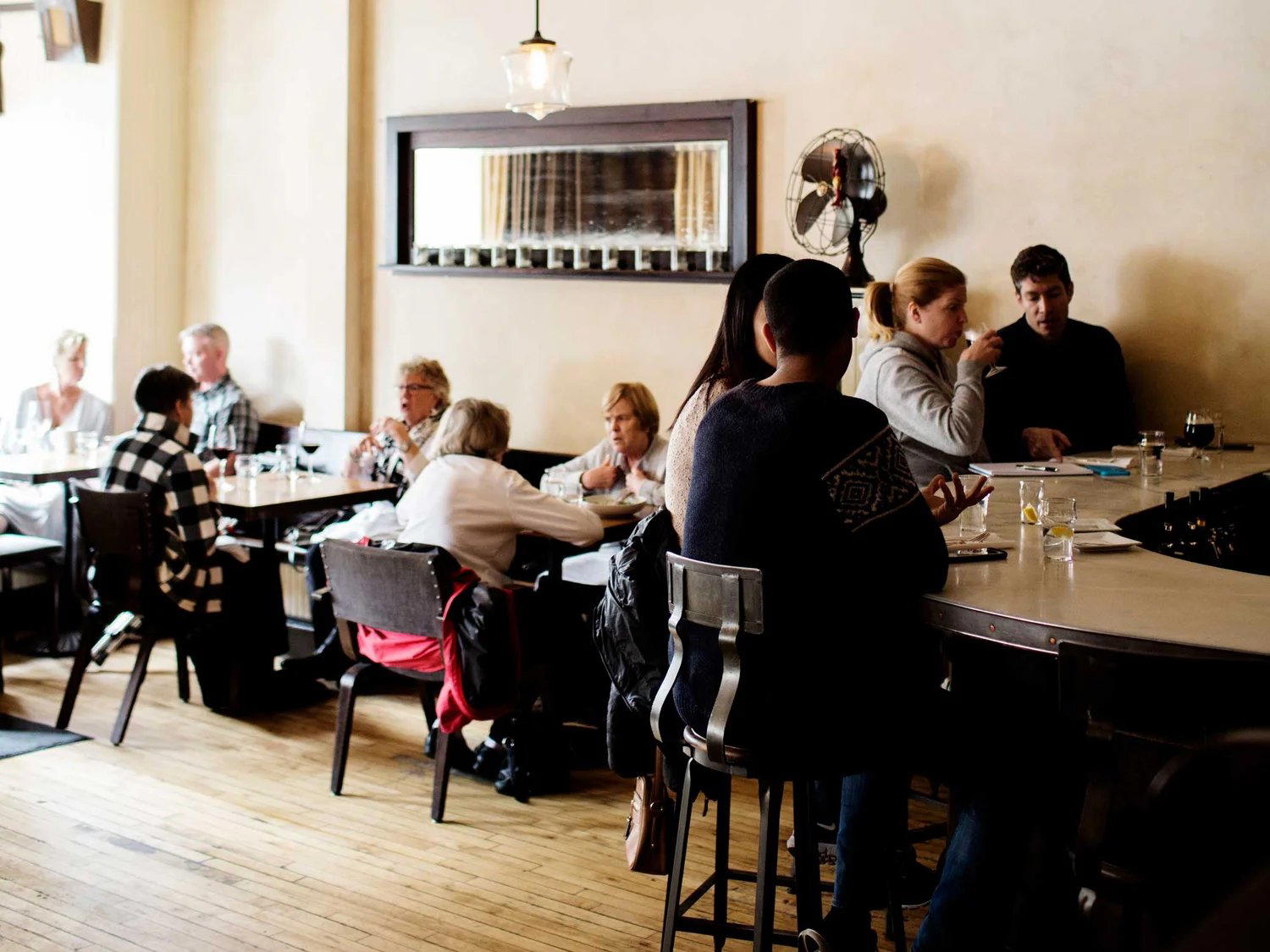
Tilia sits in the Linden Hills neighbourhood of southwest Minneapolis, operating as a neighbourhood anchor restaurant on W 43rd Street. The dining room draws from the residential character of its surroundings, offering the kind of cooking that has made this corner of the city a reference point for how Minneapolis thinks about casual-serious dining. Reservations are advised; walk-ins depend on timing and day of week.

Pearl is the En Primeur Club membership app, where members save venues, book tables and use the concierge.
The menu
What to order
- Fish Taco Torta
- Crab Omelette
- Avocado Toast
- Corned Beef Benedict
- House-made Hot Dogs
Linden Hills and the Southwest Minneapolis Dining Corridor
Southwest Minneapolis has developed a dining identity distinct from the Warehouse District or Eat Street corridors. Where those areas trend toward density and foot traffic, the neighbourhoods clustered around Lake Harriet and Lake Calhoun, Linden Hills chief among them, have produced restaurants that function as genuine community anchors rather than destination draws. The dynamic inverts the usual city logic: residents walk to dinner, tables turn at a residential pace, and the kitchen operates for a crowd that returns weekly rather than annually. Tilia, at 2726 W 43rd Street, occupies that role in Linden Hills with the kind of settled confidence that takes years to earn.
The address places it in the commercial spine of the neighbourhood, a short stretch of W 43rd that runs between the residential streets feeding Lake Harriet to the south. Arriving on foot from the surrounding blocks, the restaurant reads as part of the fabric rather than imposed upon it, a distinction that matters in a neighbourhood where the retail environment has stayed deliberately small-scale. That physical context shapes expectations before you sit down. This is not a room designed to impress on a first visit; it is designed to be comfortable on the fifteenth.
How Linden Hills Compares to Minneapolis's Other Dining Nodes
Minneapolis's restaurant geography has sharpened considerably over the past decade. The North Loop and downtown core house the restaurants that attract national attention: Spoon & Stable operates in the Warehouse District, and 112 Eatery anchors the late-night serious-dining tier near downtown. Further out, Owamni has reframed what Indigenous American cooking can look like in a fine-dining format, drawing national press and resetting the conversation about regional identity. Hai Hai, a James Beard-nominated restaurant, has brought Southeast Asian-inspired cooking into a similar conversation about creative ambition in the city.
Tilia operates in a different register from all of them. The southwest Minneapolis model, represented along corridors like W 43rd and further south toward 4801 S Minnehaha Dr, prizes accessibility and consistency over spectacle. That is not a compromise, it is a specific editorial position that a certain kind of diner actively prefers. The comparison set for Tilia is not the destination-dining tier of the city; it is the category of neighbourhood restaurant that a city like Minneapolis relies upon to hold the fabric of daily dining together.
Nationally, restaurants doing this kind of work in residential neighbourhood contexts tend to receive less press than their downtown counterparts while often serving more meals and building stronger local loyalty. The equivalent conversation plays out in Chicago (see Smyth for the serious-tasting-menu end of that city's residential drift) and in how places like Lazy Bear in San Francisco have made neighbourhood-first programming central to their identity. At the higher end of the national market, the commitment to place and locality reaches its most elaborate expression at properties like Blue Hill at Stone Barns in Tarrytown or Single Thread Farm in Healdsburg, where the surrounding landscape becomes the menu. Tilia's version is quieter, residential, and grounded in a specifically urban Midwestern register.
The Neighbourhood Restaurant as a Category
The neighbourhood anchor restaurant is one of the more demanding formats in dining. Without the draw of a tasting menu, an open kitchen spectacle, or a destination ingredient, it has to earn its repeat business through consistency, in cooking, service, and the feeling of being known. American cities have produced this category in distinct regional flavors: the red-sauce Italian-American institution in New York, the oyster bar in New Orleans (where Emeril's has long anchored a different kind of neighbourhood-celebrity hybrid), the seafood house on the West Coast (as Providence in Los Angeles demonstrates at a higher price tier). In Minneapolis, the format tends toward seasonal American cooking that reflects the agricultural reality of the Upper Midwest, short growing seasons, strong preservation traditions, and an orientation toward warming food that reflects a climate that demands it for a significant portion of the year.
The Linden Hills version of this adds a demographic layer: the neighbourhood skews toward families with children and dual-income households with consistent disposable income and specific tastes. Restaurants that operate here serve dinner to the same tables they served six months ago. The feedback loop is immediate and unforgiving in a way that downtown dining, with its higher proportion of visitors and one-time tables, is not.
Where Tilia Sits in the City's Dining Consideration
For visitors to Minneapolis who have already addressed the obvious destinations, the tasting menus, the James Beard nominees, the more widely covered openings, Tilia represents a different kind of intelligence about the city. Eating at a well-regarded neighbourhood restaurant tells you something about how a city feeds itself on a Tuesday, which is a different and arguably more informative data point than a weekend reservation at a restaurant designed for occasions. Cities that have strong neighbourhood dining ecosystems, where the cooking is serious but not performative, the room is full on a Wednesday, and the menu changes often enough to keep regulars engaged, are the ones worth spending extended time in. Minneapolis qualifies, and Tilia is part of the evidence for that claim.
The southwest dining corridor does not feature in most national coverage of the city, which tends to cluster around the North Loop and the more architecturally obvious dining rooms. For a fuller picture of the city's range, our full Minneapolis restaurants guide maps the dining character of each neighbourhood, including how the southwest compares to the more visited corridors. Context like that matters more in a mid-sized city with a dispersed dining geography than it does in a market like New York, where restaurant clusters are denser and the geography is more intuitive to outsiders.
Planning a Visit
Tilia is located at 2726 W 43rd Street in Linden Hills, a residential neighbourhood in southwest Minneapolis. Street parking is available on the surrounding blocks, and the area is accessible by bicycle along the Midtown Greenway network, which connects to the lakes and the wider southwest. For visitors staying downtown or in the North Loop, the drive runs roughly fifteen to twenty minutes depending on traffic, making it feasible as a dinner detour rather than a full excursion. Reservations are the practical approach for weekend evenings; midweek seating is typically more available, though the restaurant's neighbourhood draw means it operates at a different occupancy pattern than a destination-dining room dependent on reservation surges. Confirming availability in advance is advised regardless of day.
Frequently asked questions
What dish is Tilia famous for?
Can I walk in to Tilia?
What's the defining dish or idea at Tilia?
How does Tilia fit into the broader southwest Minneapolis dining scene compared to restaurants in other parts of the city?
Price and Recognition
A short peer table to compare basics side-by-side.
| Venue | Cuisine | Price | Awards | Notes |
|---|---|---|---|---|
| TiliaThis venue (the venue you are viewing) | Mediterranean and New American | $30–50 | Not listed | Not listed |
| Kincaid’s | Classic Seafood & Steaks | $50–100 | Not listed | Steakhouse |
| Brasa Rotisserie | American Creole Rotisserie | $20–30 | Not listed | American Creole |
| Lobby Bar at the Peninsula | Contemporary American | Not listed | Wine Spectator Best of Award of Excellence | Modern American |
| Punch Neapolitan Pizza | Authentic Neapolitan Pizza | $20–30 | Not listed | Pizzeria |
| Manny’s Steakhouse | Classic American Steakhouse | $100–150 | Wine Spectator Best of Award of Excellence · Esquire Best Martinis in America | Steakhouse |
Continue exploring
More in Minneapolis
Restaurants in Minneapolis
All restaurants in Minneapolis →
Bars in Minneapolis
All bars in Minneapolis →




Details
- Cozy
- Rustic
- Lively
- Brunch
- Casual Hangout
- Group Dining
- Celebration
- Date Night
- Standalone
- Open Kitchen
- Craft Cocktails
- Beer Program
- Local Sourcing
- A La Carte
- Small Plates
- Craft Cocktails
- Wine
- Beer
- Vegetarian Friendly
- Vegan Options
- Gluten Free Options
Current opening hours
- Monday
- Closed
- Tuesday
- 4–9 PM
- Wednesday
- 4–9 PM
- Thursday
- 4–9 PM
- Friday
- 4–9 PM
- Saturday
- 10 AM–9 PM
- Sunday
- 10 AM–9 PM
Hours can change for holidays and private events. Last verified .
Comfortable, friendly neighborhood restaurant with artful food presentation and warm hospitality; features a full bar and accommodates groups with games for children.